
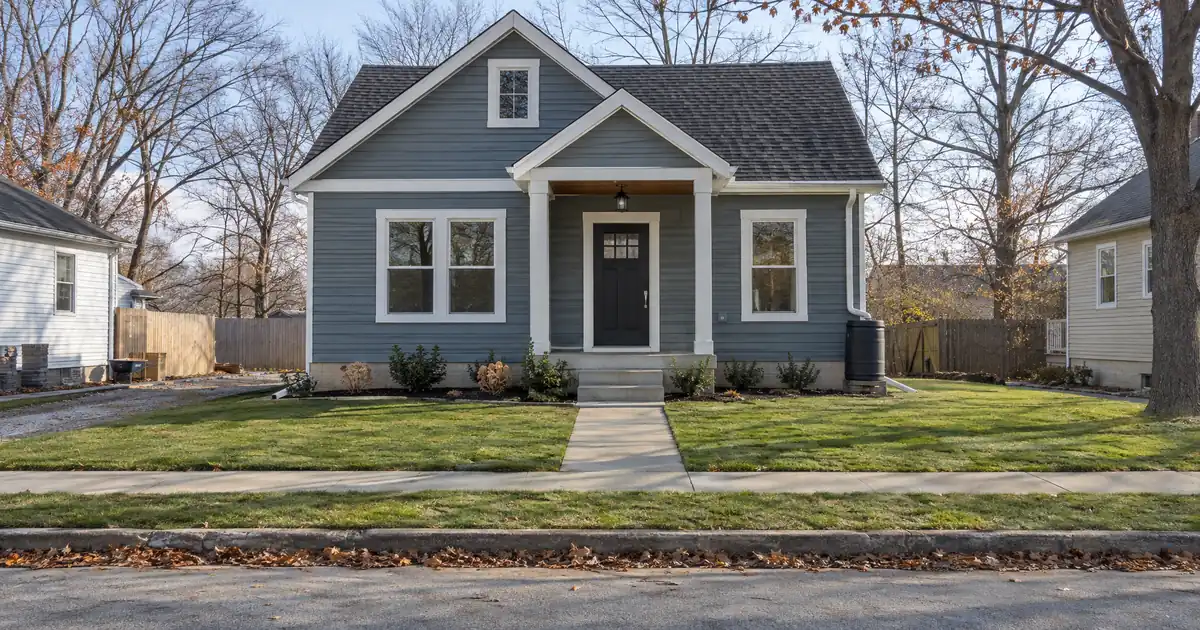
The Quick Read: Yes, a 1099 contractor can usually get a hard money bridge loan, because hard money is underwritten on the property, the plan, and the exit rather than on traditional personal-income documentation, but putting less down depends on the leverage tier the deal and the borrower’s track record earn, not on how the borrower is paid. The tax form matters far less than the project and the experience behind it. Across the wholesale network Lendmire works with, these are the points that decide the cash a contractor brings to the table:
- Fix-and-flip leverage is tiered by completed projects: 85% of project cost with fewer than 2 completed projects, 90% at 2 or more, and 93% at 5 or more, always capped at 75% of after-repair value.
- A bridge purchase with no rehab typically reaches up to 80% of the purchase price.
- Rehab money can reach 100% of the budget, paid out in draws as work is completed. That is a rehab figure, not a purchase figure.
- Credit still matters. A 620 score is the typical minimum, with added conditions below 660.
- Every figure varies by lender, property, and experience, and nothing here is a commitment to lend.
How Does a 1099 Contractor Qualify for a Hard Money Bridge Loan?
A 1099 contractor qualifies mainly through the property, the budget, and the exit plan. Hard money lenders ask what the asset is worth, what it will be worth after work, and how the loan gets repaid. Whether the borrower’s pay arrives on a 1099 or a W-2 is a minor input.
What this loan actually costs to carry.
Hard money is sized against the project and priced by time. Enter the deal and see how much the program will lend, the cash required at closing, the carry while you hold it, and what is left at the exit.
Leverage tiers on the current program: 85% with fewer than 2, 90% with 2 or more, 93% with 5 or more completed projects — every tier capped at 75% of after-repair value. Loan amounts up to $5,000,000, larger by exception; terms of 6 to 18 months, interest-only, no prepayment penalty. The rehab portion funds in draws against completed work, not at closing.
Program parameters shown update from Lendmire’s centralized guideline source. Rate, points, and months are editable assumptions, not quoted terms.
Cost cap sets the loan · positive spread
Illustrative estimate only — not a quote, Loan Estimate, approval, or commitment to lend. Rate, points, and months are editable assumptions. Hard money is business-purpose financing for real estate investors, not a consumer mortgage. Leverage on the current program tops out at 93% of project cost for investors with a documented track record, capped at 75% of after-repair value, with rehab funding up to 100% of the documented budget released in draws; actual terms vary by lender, borrower experience, property, and exit. Lendmire is a mortgage broker, not a lender.
That is the opposite of an income-based mortgage. A 1099 mortgage program asks how steady the borrower’s earnings are. A hard money bridge asks whether the deal holds together. The two products answer different questions, which is why a contractor who struggles to document income can still be a good hard money candidate.
Lenders still review a file. The usual checklist looks like this:
- A purchase contract and a clear scope of work with a line-item budget.
- An exit plan, meaning a sale or a refinance into long-term financing.
- Proof of funds for the cash to close and any reserves the lender wants.
- Entity documents if the property will be held in an LLC.
- A record of completed projects, which sets the leverage tier.
- A credit score, with 620 as the typical floor.
A contractor with patchy 1099 history may be asked for bank statements to show liquidity. Lenders use those to confirm the cash is real, not to size the loan against earnings.
The property itself has to fit. These loans are for non-owner-occupied residential property of one to four units, and ground-up construction can reach ten units. Loan sizes run up to $5,000,000, with larger loans by exception, and smaller balances vary by lender.
What Does Less Down Actually Mean?
Less down means a higher loan-to-cost tier, and that tier is earned through experience, not through a different tax form. The down payment is simply the gap between the purchase price and what the lender will fund. Four numbers get confused here: down payment, loan-to-value, loan-to-cost, and total cash to close.
| Deal type | Typical leverage ceiling | Measured against |
|---|---|---|
| Fix-and-flip, fewer than 2 projects | 85% | Project cost |
| Fix-and-flip, 2+ projects | 90% | Project cost |
| Fix-and-flip, 5+ projects | 93% | Project cost |
| Bridge purchase, no rehab | Up to 80% | Purchase price |
| Cash-out or rate/term refinance | Up to 65% | Property value |
Every flip tier is also capped at 75% of after-repair value. That cap often decides the real down payment. If the margin in a deal is thin, the 75% ARV cap binds before the cost tier does, and the borrower’s cash goes up. A contractor who negotiates a lower purchase price can lower the cash needed more effectively than almost any other move.
Picture a contractor with one completed project buying a distressed duplex to renovate. The 85% tier applies, so the borrower’s cash covers roughly 15% of project cost, as long as the loan also stays under 75% of the finished value. With two completed projects on the record, the same deal moves to the 90% tier. The cash drops to roughly 10% of project cost. Those percentages are illustrations of the tiers, not a quote, and each lender sets its own terms.
One point surprises first-time buyers. No program funds 100% of a purchase. The closest thing is the rehab budget, where up to 100% can be released in draws as completed work is inspected. That helps a contractor’s cash flow during the project. It does not replace the down payment on the purchase itself.
How Can a Contractor Reduce Cash to Close?
A contractor can lower cash to close by raising the leverage tier, buying at a better price, and structuring the rehab so the budget is funded in draws. Each lever has a cost, and none of them is a promise from a lender. Here is how they compare.
| Lever | How it works | Trade-off |
|---|---|---|
| Build a project record | Moves the file to a higher cost tier | Takes time to document |
| Negotiate the price | Shrinks the gap above the cap | Seller must agree |
| Use the draw structure | Rehab funds release as work finishes | Borrower fronts early costs |
| Add other collateral | Some lenders consider it to offset cash | Puts a second property at risk |
| Bring a capital partner | Partner funds part of the equity | Splits the profit |
Contractors have one built-in edge. A realistic budget built on trade pricing and an owner who knows the scope gives a lender more confidence in the plan. Whether a lender gives credit for the borrower’s own labor varies. Some treat it as a stronger plan, others still require the borrower to fund a standard cash contribution. Treat sweat equity as a way to protect margin, not as a down payment substitute.
The strongest lever is experience. The top tiers are reserved for investors with documented completed projects, so a first-time investor should plan on the lower leverage tiers. A contractor who has renovated for clients but never flipped may find the lender wants proof the work was done on a property the borrower owned.
Does Business Purpose Change the Picture?
Yes, but only modestly. These are business-purpose investor loans, so they are reviewed differently from a standard owner-occupied mortgage. That is part of why lenders can focus on the asset. It also means the borrower cannot plan to live in the property.
Lenders look at what the loan is for, not just a box on an application. The CFPB’s summary of the Truth in Lending rules notes that a checked business-purpose box alone may not be enough, and that lenders can look at how proceeds will be used and how the borrower’s occupation relates to that use. A contractor renovating a rental has an obvious business story. A Doss Law guide to the business-purpose exemption adds that expecting to occupy a property for more than 14 days in the coming year can shift a loan toward consumer treatment, with an exception for properties of more than two units. For a buy-to-renovate investor, the practical rule is simple: do not move in.
Where the Exit Decides the Loan
The exit matters more than the down payment, because hard money is short-term and interest-only. Terms run 6 to 18 months with no prepayment penalty. There are no multi-year options on the current program, so the plan has to end in a sale or a refinance.
For a flip, the exit is a sale. For a rental, the usual exit is a long-term refinance once the property is renovated and leased. Many investors refinance out of hard money into DSCR financing, which Lendmire arranges. A DSCR loan is reviewed primarily on property-level rental income covering the payment, subject to lender guidelines, which suits a contractor whose personal income is hard to document. Lendmire’s complete DSCR loans guide explains how that coverage ratio works.
One caution applies here. DSCR compares rent to the full monthly obligation of principal, interest, taxes, insurance, and any association dues. Clearing it does not mean the property cash flows, since repairs, vacancy, management, and utilities sit outside the ratio.
A contractor planning the refinance should start the paper trail during the bridge. Keep 1099s organized, keep business deposits flowing into one account, and keep the lease and rent comparables handy. The exit path is also where a bridge can go sideways, and Lendmire’s piece How to Stabilize a Transitional Rental on a Hard Money Bridge Loan covers that lease-up stage.
What Are the Costs and Risks of Going Lighter on Cash?
Going lighter on cash means a bigger loan, a thinner cushion, and less room for surprises. A contractor who puts less down has more at stake in every delay and every budget overrun.
- Thin margin: the more of the project cost the lender funds, the less the sale price can drop before the numbers break.
- Draw timing: rehab funds release as work is completed, so the borrower fronts early costs.
- Exit pressure: with a term of 6 to 18 months, a stalled renovation or slow sale squeezes the plan.
- Pricing trade-offs: higher leverage and lower credit can change terms. Those vary by lender and are not covered here.
- Concentration: pledging a second property to reduce cash puts that property at risk too.
This is a genuine judgment call. A contractor with a strong project record and a conservative budget may reasonably choose the top tier. A first-time investor stretching to reach the same leverage may be better served by a smaller project, a cheaper purchase, or a partner. If the deal only works at the highest possible leverage, the deal is usually the problem, not the loan.
Which Route Fits Which Contractor?
The right route depends on experience and the plan for the property. The table below sorts four common situations. These are general patterns, not approvals.
| Profile | Likely leverage tier | Main focus |
|---|---|---|
| Contractor, no flips yet | 85% of project cost | Lower price, solid budget |
| Contractor, 2+ flips | 90% of project cost | Hold margin above ARV cap |
| Contractor, 5+ flips | 93% of project cost | Exit timing |
| Buying a finished rental | Up to 80% of price | Refinance plan |
Not every 1099 earner is a builder. A freelancer or consultant with 1099 income who wants to buy and renovate a rental faces the same asset-based review. The difference is the track record. Without completed projects, the lower tiers apply, and the lender will look harder at the budget and who will do the work.
Key Terms Defined
Hard money loan: a short-term, asset-based loan sized against the property and the plan rather than the borrower’s income.
Bridge loan: short-term financing that carries an investor from a purchase or a renovation to a sale or a long-term refinance.
After-repair value (ARV): the estimated value of the property once the planned work is finished.
Loan-to-cost: the share of the total project cost, purchase plus rehab, that the lender funds.
Draw: a release of rehab funds after a portion of the work is completed.
1099 income loan: a non-QM mortgage that documents a self-employed borrower’s income through 1099s or bank statements, which is a different product from hard money.
Where Lendmire Fits
Lendmire is a mortgage broker that arranges hard money and DSCR investor loans through select lenders in its wholesale network, across 41 markets, including Washington, D.C. Leverage tiers, credit conditions, and terms vary by lender, property, and experience. If you are buying, rehabbing or refinancing an investment property and want to see how the numbers work, Lendmire can help you compare hard money options based on the project, the exit plan, leverage, and your goals. The site’s illustrative calculator can give a rough sense of the structure, though it is only an estimate. Reach the team at 828-256-2183.
This article is general information and is not legal or tax advice. Tax treatment varies, so consult a qualified attorney or CPA about your own situation.
Frequently Asked Questions
Do hard money lenders require traditional personal-income documentation from a 1099 contractor?
Often not as the main underwriting basis, since the loan is sized on the property and the plan. Lenders still ask for documents. Expect ID, entity paperwork, proof of funds, a scope and budget, and a record of completed projects. Some may ask for bank statements to confirm liquidity.
Can a hard money loan cover 100% of a purchase?
No. None of the programs fund the full purchase price. The top flip tier reaches 93% of project cost, subject to the 75% ARV cap, and up to 100% of the rehab budget can be released in draws as work is completed. The borrower covers the rest.
What credit score does a contractor need?
A 620 score is the typical minimum, with additional conditions below 660. First-time investors can qualify at the lower leverage tiers. Underwriting stays asset-based, so the property and the exit plan carry real weight.
How long does a hard money bridge last, and can it run longer?
Terms run 6 to 18 months, interest-only, with no prepayment penalty. There are no multi-year options on the current program. An investor who needs a longer hold usually refinances into long-term rental financing.
What types of property qualify?
Non-owner-occupied residential property of one to four units qualifies, and ground-up construction can reach ten units. Owner-occupied homes, commercial property, and land are not part of these programs. Eligibility still depends on the lender and the property.
About Lendmire
Lendmire (NMLS# 2371349) is a mortgage brokerage built around DSCR investor lending, with programs available in 41 markets, including Washington, D.C. DSCR lenders commonly evaluate rental-income coverage instead of personal income paperwork — a practical fit for LLC-owned and multi-property investors. Terms vary by lender, property, leverage, and program. Scotsman Guide named Lendmire a Top Mortgage Workplace in both 2025 and 2026.
Get Started
Ready to find the right loan for you?
In about 30 seconds you can review financing options available for your investment property. No commitment required.
Informational only. Not a Loan Estimate, approval, or commitment to lend. Program availability and eligibility are subject to lender guidelines, credit approval, property review, and underwriting.
References
1. CFPB – Truth in Lending Act summary
2. Doss Law – Business Purpose Exemption Simplified
This article is part of Lendmire’s hard money loan program — full qualification details, guidelines, and scenarios live on the program page.
Related reading: Can You Use a Hard Money Loan to Buy Out Siblings or a Partner? · Hard Money Overrun Documentation for a BRRRR Rehab Into a DSCR Loan · Seasoning Rules for a Two-Step DSCR Cash-Out After Hard Money
Brandon Miller
Founder & CEO, Mortgage Loan Originator, Lendmire LLC
- Mortgage Loan Originator · NMLS# 1129696 · Verify on NMLS Consumer Access
- North Carolina Real Estate Broker · License# 343312 · Verify on NCREC
- North Carolina Insurance Producer · License# 19053198 · Property, Casualty, Life, Health · Verify on NAIC SBS
- Lendmire LLC · Firm NMLS# 2371349 · Verify firm licensure
Important disclosures. Lendmire (NMLS# 2371349) is a licensed mortgage brokerage. Lendmire is not a direct lender, depository institution, or financial advisor. All loan inquiries are subject to lender underwriting; this article does not constitute a commitment to lend. Rates, terms, and program guidelines are subject to change without notice and vary by borrower profile, property type, and state. Information in this article is general in nature and is not financial, legal, or tax advice. Equal Housing Opportunity. NMLS Consumer Access: nmlsconsumeraccess.org.