
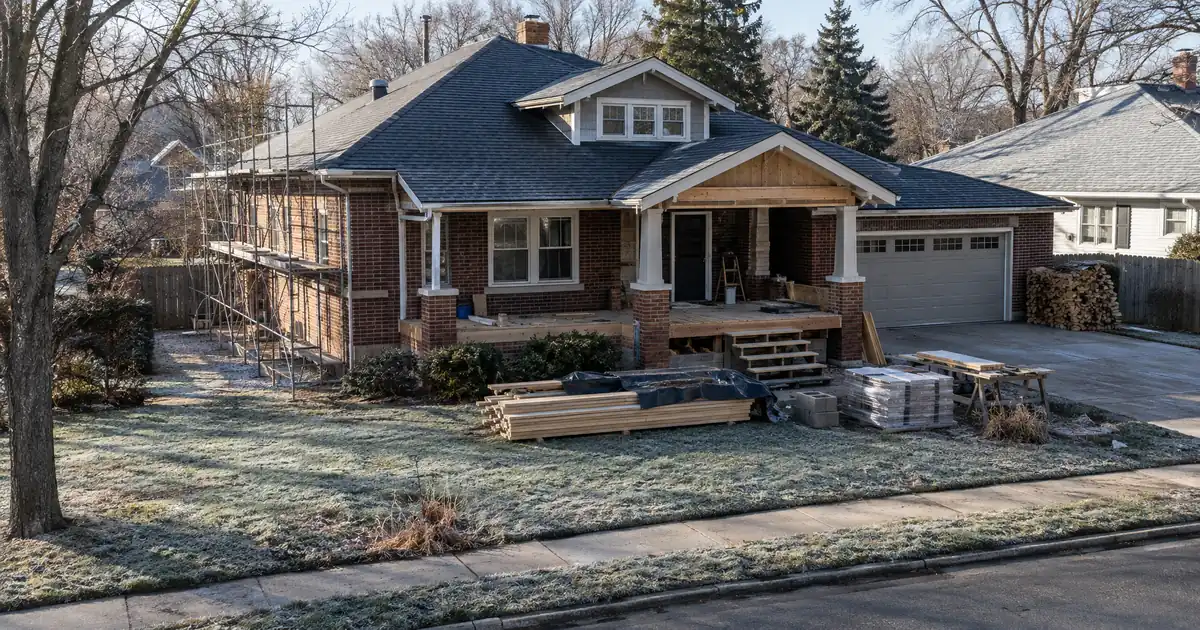
The Quick Read: A small shortfall closes by finding out which test missed, value or rent, and then covering the gap with cash, a payoff-only structure, an extended bridge, or better appraisal evidence. The new loan is sized on the lender’s appraisal, not on your target value. Whatever that loan leaves uncovered on the payoff plus costs is the shortfall.
- The lender’s appraised value sets the loan. Your after-repair estimate does not.
- The break-even appraisal is the payoff plus costs, divided by the leverage cap.
- Bringing cash is usually a more affordable fix for a small gap.
- A DSCR loan can fail on rent even when value passes.
- Payoff statements go stale. Per-diem interest keeps growing the number.
Investors exiting a bridge loan hit this wall more than any other. The rehab is done, the lease is signed, and the appraisal lands a few points light. This piece walks the mechanics in order. It covers how the numbers work, what fixes exist, where the rules break, and how to decide. Program figures below are typical ranges from select lenders in Lendmire’s wholesale network, subject to lender guidelines, and every file is underwritten individually. For the full program picture, see the complete DSCR loans guide.
DSCR Cash-Out Calculator
Run the cash-out numbers in your market
Rate source: Freddie Mac 30-yr average via FRED® — Federal Reserve Bank of St. Louis · effective Oct 15, 2026
Prefilled with starting assumptions — enter your property’s value, balance, taxes, and insurance for a more accurate picture.
Program parameters update from Lendmire’s centralized guideline source. Taxes and insurance are editable estimates.
As of Oct 15, 2026 · General Freddie Mac market benchmark, not a Lendmire loan offer. Property value, balance, taxes, and insurance are editable estimates. Maximum loan-to-value varies by lender, program, property type, and seasoning. Not a Loan Estimate, approval, or commitment to lend. Program availability and eligibility are subject to lender guidelines, credit approval, property review, and underwriting.
Key Terms Defined
Shortfall: the payoff plus closing costs minus the new loan amount.
Payoff statement: the hard money lender’s written figure for principal, accrued interest, fees, and any minimum-interest charge, good through a stated date.
Per diem: the daily interest that gets added while the payoff stays open.
Break-even appraisal: the lowest appraised value at which the new loan covers the payoff plus costs.
Payoff-only refinance: a refinance that retires the old loan and returns no cash. The program label for this is rate-and-term.
Reconsideration of value (ROV): a written request asking the appraiser to review the report based on possible deficiencies or added information.
Which Test Missed: Value, Rent, or Cash to Close?
Start with the diagnosis. The fix depends on which test failed, and a wrong guess wastes the days you have left on the bridge.
| What missed | What it changes | Fixes that apply |
|---|---|---|
| Value | Loan is capped by the leverage ceiling | Cash, payoff-only, ROV, extension |
| Rent | Loan is capped by coverage | Documented lease, smaller loan, payment structure |
| Cash to close | Costs exceed what remains | Cash, fewer costs financed, extension |
A DSCR loan has two limits running side by side. One is the leverage cap applied to appraised value. The other is the coverage test: rent used for lender review divided by the full monthly obligation (principal, interest, taxes, insurance, and any HOA dues). The lower of the two limits sets the loan. On the DSCR cash-out line, the leverage ceiling is 75% of value. On a payoff-only refinance, select lenders in the network go up to 85%. Coverage of 1.00 is where select programs start, and stronger ratios open better terms. A separate select-lender path takes coverage below 1.00, with leverage and terms adjusted.
Here is the catch. Clearing 1.00 is not positive cash flow. The calculation compares rent to PITIA only. Repairs, vacancy, management, and utilities sit outside it. Keep that straight when you decide how much cash to leave in a deal.
How Small Is “Small”? Run the Gap Two Ways
A small gap is one your liquid cash covers without leaving you thin on reserves. Measure it in two ways: in cash and in appraisal points.
Run the numbers on a modeled file. Say the hard money payoff plus costs equals 100 units, and the cash-out ceiling is 75% of value. The break-even appraisal is 100 divided by 0.75, or about 133.3 units. If the appraisal lands at 130 units, the loan is 97.5 units and the shortfall is 2.5 units. Those are index units, not market data.
Now see the effect most investors miss. A one-unit appraisal miss does not cost one unit of loan. It costs 0.75 units, because the cap is a percentage of value. The loan shrinks by the cap percentage. That works in your favor on small misses: a 3.3-unit appraisal miss produces only a 2.5-unit gap.
Rent adds a second squeeze. Taxes and insurance are fixed regardless of loan size, so a smaller loan trims only the principal-and-interest slice. And the reverse holds too. If you win a partial appraisal increase, the larger loan raises the payment and can weaken coverage. A value win and a rent miss can sit in the same file. Run both tests every time the appraisal number moves.
Keep a cushion in the original plan. A thin margin is set when you write the offer, not when the rehab ends. Plan the exit to a number a few points under the cap, and stress-test by cutting assumed rent slightly and re-running the ratio.
The Fix Ladder, Ranked by Cost and Speed
Rank the fixes by what you can do before the bridge matures. Rehab upgrades and rent growth are the right answer to a slow problem. They are the wrong tool here.
| Fix | What it changes | Trade-off |
|---|---|---|
| Bring cash to closing | Covers gap directly | Thins reserves |
| Payoff-only structure | Drops the cash-back request | Gives up cash out; may lift the leverage cap |
| Re-quote insurance | Lowers PITIA, lifts coverage | Helps rent test only |
| Document market rent | Supports the appraiser’s rent figure | Needs a signed lease |
| Restructure the payment | Interest-only or extended term via select lenders | Terms adjust by lender |
| Challenge the value | Raises the loan cap | Needs evidence, no guarantee |
| Extend the bridge | Buys time for reappraisal or seasoning | Extension fee plus carry |
| Sell | Ends the exit problem | Gives up the hold |
Bring cash. For a small gap this is the simplest move. Compare it against the alternatives below before you commit, because it also drains the reserves the lender will want to see. Reserves vary by lender, leverage, and loan size. They commonly run around six months of PITIA, and they step up on larger loans.
Switch to payoff-only. If you asked for cash back and the appraisal came in light, dropping the cash-out request can erase the gap. The rate-and-term line allows higher leverage, up to 85%, but it returns no cash at closing. Be honest with yourself about what you are giving up. The proceeds you planned to recycle into the next rental are gone.
Fix the payment side. Insurance is the quiet lever. A fresh, complete quote can differ from the one in the original model, and it moves coverage directly. Extended terms and interest-only periods exist through select lenders, and they lower the measured payment. Terms and leverage adjust for those structures.
Challenge the value. This is where most files either recover or stall. The next section covers how.
Appraisal Reconsideration: What Works and What Doesn’t
A reconsideration of value is a request asking the appraiser to reassess the report based on potential deficiencies or other information that may affect the value, as defined in Federal Reserve SR 24-3. The related interagency guidance was issued by the Federal Reserve, CFPB, FDIC, NCUA, and OCC for regulated financial institutions. It is a framework many institutions follow. It is not a right a non-bank DSCR borrower can enforce, so treat it as a process to request, never a guarantee.
What lands in practice: arguments about adjustments, and documented rehab evidence such as invoices, permits, and before-and-after photos. What rarely lands: piling on more comps. Appraisers rarely move because you sent a longer list. They move when you show a specific error, like a wrong square footage, a missed upgrade, or a comp that is not comparable.
Package it tight. One page of corrections, the rehab scope with receipts, and two or three better-fit sales. Submit it through the loan channel, not directly to the appraiser.
Bridge-Payoff Mechanics That Create or Hide a Shortfall
Many “small shortfalls” are really stale payoff figures. Get a fresh payoff statement before sizing anything. It should show principal, accrued interest, exit or extension fees, and any minimum-interest clause. Hard money terms commonly run 6 to 18 months, interest-only, and they vary by lender, property, and experience.
Three habits keep the number honest:
1. Confirm the valid-through date on the statement and the per-diem amount after it.
2. Ask whether a minimum-interest clause applies if you pay off early.
3. Re-run the gap each time the closing date moves, because the payoff keeps growing while you wait.
There is a structural mismatch underneath all of this. Hard money is sized on project cost, often as a share of cost up to a cap on after-repair value. The DSCR exit is sized on appraised value and rent. A deal can pass the first test and fail the second. Many investors refinance out of hard money into long-term DSCR financing once the property is stabilized, and the hard money exit refinance program covers that path. The payment on the takeout also differs from the bridge. A light interest-only bridge payment becomes a fully loaded PITIA on the new loan, and the old payment does not count in the new calculation.
Where the General Rule Breaks
Recharacterization. A file built as payoff-only can be treated as cash-out because of something small. Incidental cash back at closing counts. If the label flips, the 75% cash-out ceiling and the roughly six-month seasoning expectation apply instead. Seasoning is measured from title recording. Settle this with the lender before the appraisal, not after.
Delayed financing does not fit. Agency guidance includes a Delayed Financing Exception. It is built around an arm’s-length cash purchase. A purchase funded by hard money carried a lien from day one, which breaks that premise. This is contrast only. Agency rules do not govern DSCR files.
Rent fails while value passes. An appraiser’s market rent figure can come in under the lease. An above-market lease does not carry the ratio. Documentation that cures is a signed lease at market. Plans and intentions do not.
Short-term-rental collateral. On STR files, the cash-out ceiling is 70%, versus 75% on standard rentals. Expect a 640+ score and about 12 months of hosting history. Short-term rental rules can vary by city, county, HOA, and property type, so investors should confirm local rules before relying on projected rental income.
Ineligible property. Manufactured homes, log homes, and barndominiums are not offered in the network’s DSCR programs. No amount of cash closes that gap.
DSCR vs. conventional financing
There are two common ways to finance an investment property, and they qualify you differently — here’s how investors weigh them.
Why investors choose it
- Qualifies on the property’s rental income — no personal tax returns, W-2s, or pay stubs needed to document income.
- No personal debt-to-income ceiling to clear, so existing mortgages and obligations don’t cap your borrowing the same way.
- Can be closed in an LLC, keeping the property inside a business entity.
- Built for scaling — not held to the limit on number of financed properties that conventional financing applies.
- Underwriting centers on the deal: generally qualifies when the rent covers the payment, a 1.00x coverage ratio being a common baseline (confirmed in underwriting).
- Designed specifically for investment property, including long-term and, where the program allows, short-term rentals.
Where it’s strong
- Often the lowest ongoing financing cost for a buyer who fully qualifies on personal income — a fit for a first property or a cost-first purchase.
Trade-offs for investors
- Requires full personal income documentation and must fit within a debt-to-income limit — salary, existing debts, and other mortgages all count.
- Typically held in your personal name rather than a business entity.
- Caps how many financed properties you can carry, which can become a ceiling as a portfolio grows.
- Evaluates you as a borrower as much as the property, which usually means more paperwork.
How investors usually choose: a first or single property often optimizes for the lowest financing cost; portfolio builders often optimize for leverage, vesting in an LLC, and scaling past conventional caps. The right answer depends on your goals, the property, and current guidelines — both paths run through select lenders in Lendmire’s wholesale network, with eligibility and terms confirmed in underwriting.
Close Now, Extend, or Walk?
The decision is a cash-reserve decision. Compare three costs side by side: the cash to close the gap, the extension fee plus carry on the bridge, and the cost of two closings in a two-step plan.
| Situation | Usual move |
|---|---|
| Small gap, ample reserves, short maturity | Bring cash and close |
| Small gap, thin reserves | Payoff-only, then revisit cash-out later |
| Strong evidence the value is wrong | ROV, extend only if the fee is small |
| Gap keeps growing with each extension | Re-underwrite the hold or sell |
Picture an investor with a bridge maturing soon and a gap near the size of a month of carry. Bringing cash costs once. An extension costs a fee and another month of interest, and it only pays off if a second appraisal or added seasoning actually changes the answer. If nothing about the file will change, the extension just spends money.
The two-step play is worth a look. Do a payoff-only refinance now, then pursue cash-out after seasoning. You pay for two closings and you wait, but you avoid forcing a thin file through. Lendmire’s piece Smaller Cash-Out Refinance vs. Waiting for a BRRRR Hard Money Payoff works through that comparison.
Files like these tend to clear when the investor diagnoses the failed test first, holds a fresh payoff statement, and arrives with reserves documented. They tend to stall when they are sized on the investor’s own value target.
Mistakes That Turn a Small Gap Into a Failed Closing
- Sizing the exit on your own after-repair value instead of the lender’s appraisal.
- Assuming the hard money lender will extend on your timeline.
- Committing the proceeds to the next purchase before the report is final.
- Sending more comps when the real issue is an adjustment.
- Using a stale payoff figure and discovering the difference at the table.
- Bringing so much cash that reserves fall under what the lender requires.
When the value target is missed, the difference cuts into the investor’s gains.
Pre-Closing Checklist
1. Fresh payoff statement with valid-through date, per diem, and any minimum-interest clause.
2. Lender’s appraisal in hand, with the value and market rent figures both read.
3. Break-even appraisal calculated, and the gap measured in cash and in coverage.
4. Signed lease at market rent, plus a fresh insurance quote.
5. Reserves documentation that still clears after any cash you plan to bring.
6. A written decision on payoff-only versus cash-out, confirmed with the lender.
7. ROV packet ready if a specific error exists.
For the return side of the same exit, Lendmire’s article How Much a BRRRR Cash-Out Refinance Returns After Hard Money Payoff covers what is left after the payoff clears.
Frequently Asked Questions
Can I close with coverage slightly under 1.00?
Possibly, through select lenders in the network that take coverage below 1.00 with leverage and terms adjusted. Many select programs start at 1.00, so check which path your file fits. Eligibility depends on credit, reserves, and property review, and nothing here is a commitment to lend.
Does paying off hard money count as cash-out?
No, not automatically. The label depends on whether cash comes back to you at closing, not on what you are paying off. A payoff-only structure returns no cash. Incidental cash back can flip the file to cash-out, which brings the 75% ceiling and the seasoning expectation.
Should I bring cash or take a smaller loan?
For a small gap, cash is usually the cleaner fix, as long as reserves stay intact afterward. A smaller loan avoids the cash outlay but may leave the payoff short, which brings you back to the same gap. Choose based on what reserves the lender will still want to see.
What if my payoff statement expires?
Request a new one before closing. Per-diem interest keeps adding to the balance, and extension fees or minimum-interest clauses can change the total. Re-run the gap on the new figure rather than trusting the old one.
Can I stack fixes?
Yes. A fresh insurance quote, a documented lease, and a modest cash contribution often work together on a small gap. Each lowers a different piece of the problem. Just run coverage again after each change, since a larger loan can raise the payment.
If you are buying, rehabbing or refinancing an investment property on a short timeline and want to see how the numbers work, Lendmire can help you compare hard money options based on the project, the exit plan, leverage, and your goals.
A bridge payoff is rarely lost on a big miss; it is lost on a gap nobody measured until the closing table.
About Lendmire
Lendmire — NMLS# 2371349 — is a mortgage brokerage specializing in DSCR investor loans, helping arrange financing across 41 markets, including Washington, D.C., through wholesale and investor-lending channels. The model centers on property-level rental income reviewed by the lender rather than W-2 documentation, subject to lender guidelines, suiting entity-owned and multi-property investors. Lendmire holds Scotsman Guide Top Mortgage Workplace recognition for 2025 and 2026.
Get Started
Ready to find the right loan for you?
In about 30 seconds you can review financing options available for your investment property. No commitment required.
Informational only. Not a Loan Estimate, approval, or commitment to lend. Program availability and eligibility are subject to lender guidelines, credit approval, property review, and underwriting.
References
2. Federal Register, Interagency Guidance on Reconsiderations of Value
This article is part of Lendmire’s hard money loan program — full qualification details, guidelines, and scenarios live on the program page.
Related reading: Can You Refinance Into a DSCR Loan Right After a Hard Money Purchase? · Can a DSCR Refinance Pay Off a Hard Money Loan at Maturity? · Can You Buy a Rental With Hard Money and Refinance Into DSCR?
Brandon Miller
Founder & CEO, Mortgage Loan Originator, Lendmire LLC
- Mortgage Loan Originator · NMLS# 1129696 · Verify on NMLS Consumer Access
- North Carolina Real Estate Broker · License# 343312 · Verify on NCREC
- North Carolina Insurance Producer · License# 19053198 · Property, Casualty, Life, Health · Verify on NAIC SBS
- Lendmire LLC · Firm NMLS# 2371349 · Verify firm licensure
Legal disclosures. Lendmire (NMLS# 2371349) is a state-licensed mortgage brokerage that arranges financing through wholesale lender relationships. Lendmire is not a direct lender, depository institution, or registered financial advisor. The discussion above is general informational content about real estate financing — it is not financial, legal, or tax advice, and readers should consult licensed professionals for guidance on their individual circumstances. Loan inquiries are subject to lender underwriting; this article does not represent a commitment to lend. Loan terms, rates, and qualification standards vary by borrower, property, and state, and are subject to change at any time. Equal Housing Opportunity. NMLS Consumer Access: nmlsconsumeraccess.org.