
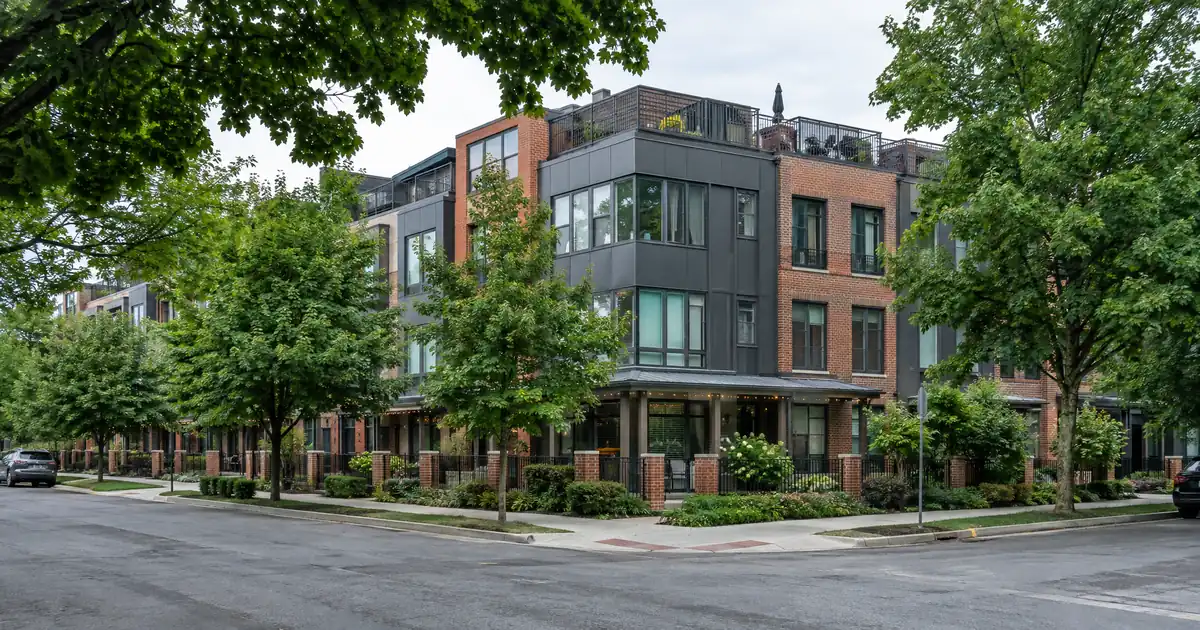
The Quick Read: A condotel DSCR loan is reviewed primarily on property-level rental income covering the full housing payment, subject to lender guidelines. But the lender also reviews the building, the rental program, and whether short-term renting is legally allowed there. The 2026 rule changes matter because they decide whether that income counts at all.
- On a short-term-rental purchase, leverage tops out at 75% LTV on the strongest files. Refinances and cash-outs on short-term-rental collateral top out at 70%.
- Expect a credit score of 640 or higher and about 12 months of host or landlord experience.
- Coverage starts at 1.00 on select programs, for both purchases and refinances. Sub-1.00 coverage is available through select lenders in the network, with leverage and terms adjusted.
- In a rental pool, only the owner’s share of revenue counts. Gross bookings overstate your coverage.
- Short-term rental rules can vary by city, county, HOA, and property type, so investors should confirm local rules before relying on projected rental income. Every figure here varies by lender and program — guidelines, property type, leverage, and credit profile all apply.
What Is a Condotel, and Why Does Underwriting Treat It Differently?
A condotel is a deeded condo unit in a building run like a hotel. It usually has a front desk, housekeeping, and an operator that books your unit when you are not using it. The operating agreement layered on top of the deed is what makes it a condotel.
Short-Term Rental Calculator
Run the STR numbers in your market
Rate source: Freddie Mac 30-yr average via FRED® — Federal Reserve Bank of St. Louis · effective Oct 15, 2026
Prefilled with starting assumptions — enter your nightly rate, occupancy, taxes, and insurance for a more accurate picture.
Short-term rental income is documented with a 12-month history or a market data report. Program parameters update from Lendmire’s centralized guideline source.
As of Oct 15, 2026 · General Freddie Mac market benchmark, not a Lendmire loan offer. Nightly rate, occupancy, taxes, and insurance are editable estimates. Qualifying income for short-term rentals varies by program — some use appraisal market rent, others use documented STR history or projections — and is confirmed in underwriting. Not a Loan Estimate, approval, or commitment to lend. Program availability and eligibility are subject to lender guidelines, credit approval, property review, and underwriting.
Underwriters read that agreement closely. Who controls booking? Who sets the rates? How is revenue split? Can you block off dates for yourself? Those answers decide how reliable your income is.
Many buildings sit in a gray zone. An ordinary condo can allow Airbnb stays without operating like a hotel. A heavy footprint on booking sites can still get a building treated like a condotel. So the first step on any file is classification: is this a true condotel, or an ordinary condo that allows short-term rentals?
For the file-level walkthrough, Lendmire’s piece How to Get a Short-Term Rental Loan on a Condotel Airbnb covers the same ground from the buyer’s side. For the basics of how these loans work, start with the complete DSCR loans guide.
Key Terms Defined
Condotel: A deeded condo unit in a building run like a hotel, with an operator that handles bookings.
Rental pool: An arrangement where a management company books units and splits income with owners under the project’s operating agreement.
Net-of-operator income: The share of rental revenue that actually reaches you after the operator and program take their cut.
DSCR (debt service coverage ratio): Monthly property income divided by the full monthly housing payment. At 1.00, income equals the payment.
PITIA: Principal, interest, taxes, insurance, and association dues. This is the full payment that DSCR is measured against.
Non-warrantable condo: A condo project that falls outside standard agency eligibility. Every condotel is non-warrantable, but not every non-warrantable condo is a condotel.
LTV (loan-to-value): The loan balance as a percentage of the property’s value.
Why Does a Condotel Need a DSCR Lender?
Agency-backed financing largely shuts the door on these buildings. That pushes condotel buyers toward non-QM, DSCR, and portfolio lenders.
One contrast is enough here. The Fannie Mae Selling Guide lists projects managed and operated as a hotel or motel as ineligible, even when the units are individually owned. The agency’s condo Q&A defines a primarily transient project as one where the predominant use of units is short-term rentals of less than 30 days. The same Q&A says a project that permits seasonal rentals while owners live in their units much of the year does not meet that definition.
The practical takeaway: an ordinary condo that allows Airbnb may still fit mainstream financing. A hotel-style building generally does not. DSCR loans are built for investment property, and they qualify primarily on rental income rather than your personal paychecks. Don’t mistake that for a light file, though. The project review, the insurance, and the rental agreement all still apply.
How Does a Lender Underwrite a Condotel, Step by Step?
Here is the sequence a file usually follows.
1. Classify the building. True condotel, or ordinary condo that allows short-term stays?
2. Confirm legal use. The city or county, the HOA, and the declaration all have to allow short-term renting. Regulation stacks in layers, and the layers sometimes conflict.
3. Gather project documents. Expect the project questionnaire, budget, project insurance, and the rental-program or management agreement. That agreement shows your revenue share and any owner-use limits.
4. Establish income. This comes from platform or operator statements, bank deposits, an appraiser’s short-term rental analysis, or a market-data projection.
5. Count only your share. The numerator is what you receive, not what guests pay.
6. Compute coverage. Divide that net income by the full payment, dues included.
7. Appraise for value. The appraiser may default to a long-term rent figure, which is a common reason files stall.
The deciding factors are building classification, who controls the rental authority, documented legal use, and net income against the full housing obligation.
Which Income Evidence Do Lenders Prefer?
Lenders weigh evidence by how hard it is to dispute. Actual operator statements beat projections, because they show money that already moved.
| Method | Best when | Weak spot |
|---|---|---|
| Trailing operator statements | Unit has a track record | Past results may not repeat |
| Bank deposits | Statements are thin | Hard to separate fees and owner use |
| Appraiser’s rental analysis | Little history exists | Depends on comp quality |
| Market-data projection | New or no-history unit | Projection, not proof |
A data-provider estimate supports income. It usually does not replace the appraisal for value, per AirDNA’s financing guide, which describes the ratio as property income divided by principal, interest, taxes, insurance, and HOA fees.
How Does the Operator Split Change Your Coverage?
The split is the single biggest swing factor. In a rental pool you receive only a share of gross revenue. Condotel HOA dues also tend to run higher than ordinary condo dues, because they cover hotel-level amenities, per LegalClarity’s condotel guide. The haircut hits the top of the fraction. The full payment on the bottom never shrinks.
Run the numbers on this modeled example. These are assumptions for illustration, not market data. Say gross bookings alone would cover the full payment at 2.00x.
| Scenario (modeled) | Coverage |
|---|---|
| Gross bookings counted | 2.00x |
| Owner keeps 60% | 1.20x |
| Owner keeps 50% | 1.00x |
| Owner keeps 40% | 0.80x |
| Owner keeps 50%, payment up 10% from higher dues | about 0.91x |
Same unit. Same guests. Four very different files. That is why a condotel can look strong on a gross-revenue pro forma and still miss the floor once it is netted out.
Clearing 1.00 also does not mean the unit makes money. DSCR compares rent to PITIA only. Repairs, vacancy, management, utilities, and capex sit outside the calculation.
What Do the 2026 Short-Term Rental Law Changes Mean for a Condotel File?
They change whether the income can legally exist, and underwriting tests exactly that. No federal rule changes how DSCR lenders count short-term income. The changes come from states, localities, HOAs, and platform enforcement, and they cut both ways.
Obie Insurance’s roundup says the year split the map. Some state laws now protect hosts from local bans, while other places gained data-sharing enforcement tools. Idaho’s HB 583 and Indiana’s HEA 1210 both took effect July 1. Idaho requires cities to treat short-term rentals like other residential uses. Indiana bars caps on the number of rental properties.
State protection has a ceiling, though. Houfy’s state guide notes that HOA and condo association rules can prohibit short-term rentals entirely, even when local law permits them. A friendly statute does not rewrite your declaration.
For a condotel file, three practical points follow:
- Get legal use in writing. Lenders want documents that show short-term use is permitted for the building and the unit. A permissive city is not enough.
- Expect a legal-durability question. A new ordinance or HOA amendment can erase the income premium. The same strategy can be newly protected in one state and newly impossible in the next.
- Don’t count on grandfathering. A unit protected today can lose that status later.
That is the line to take seriously before you sign, not after.
Where Does the General Rule Break?
Most of the exceptions come from the rental agreement and the building’s structure.
Mandatory versus optional pools. Some projects require pool participation. Opting a unit out could violate the declaration. Some programs also decline mandatory-pool buildings, so the structure gets checked against each program before you spend money on appraisal.
New or no-history units. Little operating data pushes underwriting toward projections. Programs also tend to expect about 12 months of host or landlord experience, so a first-time host buying a brand-new unit faces more questions.
Owner-use limits. Condotel documents often cap personal use or impose peak-season blackouts. That matters because a DSCR loan is for investment use.
Resale and pool continuation. Resale buyers may be required to continue pool participation, per EZ Home Search’s condo hotel guide. The buyer pool is narrower, which affects both exit and refinance.
Long-term rent fallback. When short-term income can’t be supported, a program may look at the long-term rent figure instead. Whether that helps or hurts depends on the program and the unit.
Size. Very small units can meet extra scrutiny with some programs. Treat that as program-specific, not universal.
DSCR vs. conventional financing
There are two common ways to finance an investment property, and they qualify you differently — here’s how investors weigh them.
Why investors choose it
- Qualifies on the property’s rental income — no personal tax returns, W-2s, or pay stubs needed to document income.
- No personal debt-to-income ceiling to clear, so existing mortgages and obligations don’t cap your borrowing the same way.
- Can be closed in an LLC, keeping the property inside a business entity.
- Built for scaling — not held to the limit on number of financed properties that conventional financing applies.
- Underwriting centers on the deal: generally qualifies when the rent covers the payment, a 1.00x coverage ratio being a common baseline (confirmed in underwriting).
- Designed specifically for investment property, including long-term and, where the program allows, short-term rentals.
Where it’s strong
- Often the lowest ongoing financing cost for a buyer who fully qualifies on personal income — a fit for a first property or a cost-first purchase.
Trade-offs for investors
- Requires full personal income documentation and must fit within a debt-to-income limit — salary, existing debts, and other mortgages all count.
- Typically held in your personal name rather than a business entity.
- Caps how many financed properties you can carry, which can become a ceiling as a portfolio grows.
- Evaluates you as a borrower as much as the property, which usually means more paperwork.
How investors usually choose: a first or single property often optimizes for the lowest financing cost; portfolio builders often optimize for leverage, vesting in an LLC, and scaling past conventional caps. The right answer depends on your goals, the property, and current guidelines — both paths run through select lenders in Lendmire’s wholesale network, with eligibility and terms confirmed in underwriting.
What Do Program Terms Look Like on a Condotel Purchase or Refinance?
Here is what the wholesale network Lendmire places files with generally shows for short-term-rental collateral. These are typical ranges, subject to lender guidelines, and every file is underwritten individually.
| Item | Typical range |
|---|---|
| Purchase LTV | Up to 75% on the strongest files |
| Refinance or cash-out LTV | Up to 70% on short-term-rental collateral |
| Credit score | 640 or higher |
| Coverage | 1.00 on select programs, purchase and refinance |
| Experience | About 12 months of host or landlord history |
| Loan size | Up to $3,000,000 on standard programs |
Reserves vary by lender, leverage, loan size, and transaction type. About six months of PITIA is common, and larger loans typically step up. A condotel adds project review on top of all this, so the lender pool is narrower than for a house or ordinary condo. A house avoids building-level review entirely. For an equity-rich owner weighing a refinance, Lendmire’s guide to how short-term rental loans work for equity-rich owners refinancing covers that path.
Here is a pattern that shows up often on these files. The unit looks fine on gross bookings, then coverage drops once the operator’s share and the dues are netted out. Strong files tend to arrive with operator statements, the rental agreement, and written proof of legal short-term use already in hand.
What If the Ratio Falls Short?
You have several levers, and they stack.
- Put more down. A larger down payment lowers the monthly payment and can lift coverage. It never erases leverage caps, credit floors, reserve rules, or property eligibility. The strongest files clear both tests: enough equity and enough rental coverage.
- Shrink the loan. A lower loan amount raises the ratio directly.
- Use a stronger income method. Actual operator statements may support a better number than a projection.
- Look at a sub-1.00 program. Coverage below 1.00 is available through select lenders in the network, with leverage and terms adjusted.
- Consider a different term structure. Extended terms and interest-only periods are available through select lenders in the network.
Not every lever works for every unit. If the ratio only works under the most optimistic assumptions, walk away. (A deal that needs the best booking season every year is not a deal.)
Documents to Gather Before You Apply
Pull these in this order:
1. Written confirmation that short-term use is allowed by the municipality, the HOA, and the declaration.
2. The rental-program or management agreement, showing your revenue share, owner-use limits, and fee terms.
3. Trailing operator or platform statements, if the unit has history.
4. The project questionnaire, budget, and project insurance.
5. Your entity documents if you plan to close in an LLC, subject to lender program eligibility.
Who Should Skip a Condotel?
Skip it if your numbers only clear on gross revenue. Skip it if the declaration limits your use or the operator controls rates you cannot live with. Skip it if you need easy resale.
Consider a warrantable condo run as an owner-managed short-term rental instead. It avoids the hotel-structure review, if the HOA and municipality allow it. For a 1.00-or-better file with real operating history and clean legal-use documents, a condotel can work. Just size the risk first.
Tax treatment varies, so consult a qualified professional before relying on any deduction.
Frequently Asked Questions
Can I use a DSCR loan on a condotel?
Often yes, through select lenders in the network, since hotel-style projects fall outside standard agency eligibility. The lender reviews the building, the rental agreement, and your income evidence. Eligibility depends on the program, the project, and your file.
What DSCR do I need?
Coverage of 1.00 is where select short-term-rental programs start, for both purchases and refinances. Stronger ratios open better pricing and leverage.
Does short-term rental regulation affect approval?
Yes, indirectly. Lenders want proof that short-term use is legally allowed, and a rule change can undercut the income they are counting. State preemption does not override HOA documents, so check the declaration as well as the local rules.
Do I need operating history?
Programs generally expect about 12 months of host or landlord experience. A unit with no history leans on projections or an appraiser’s rental analysis. Operator statements usually give the stronger file.
Can I close in an LLC or live in the unit?
An LLC is possible, subject to lender program eligibility. Living in it is a different matter. DSCR loans are for investment property, and condotel owner-use caps may limit your personal stays anyway.
If you are buying or refinancing a rental property and want to see how the numbers work, Lendmire, a broker arranging DSCR financing across 41 markets, including Washington, D.C., can help you compare DSCR loan options based on the property income, credit profile, leverage, and investor goals.
About Lendmire
A non-QM mortgage broker (NMLS# 2371349), Lendmire arranges DSCR financing for real estate investors in 41 markets — 40 states plus Washington, D.C. Because deals are underwritten primarily on property cash flow rather than personal income documentation, the structure suits self-employed buyers and entity-owned portfolios. Lendmire places loans through wholesale investor lenders; it is not a direct lender. Scotsman Guide named Lendmire a Top Mortgage Workplace in both 2025 and 2026.
Get Started
Ready to find the right loan for you?
In about 30 seconds you can review financing options available for your investment property. No commitment required.
Informational only. Not a Loan Estimate, approval, or commitment to lend. Program availability and eligibility are subject to lender guidelines, credit approval, property review, and underwriting.
References
1. Fannie Mae Selling Guide, B4-2.1-03 Ineligible Projects
3. AirDNA, How to Finance Your Vacation Rental
4. LegalClarity condotel guide
5. Obie Insurance, Short-Term Rental Regulations: What’s Changed
6. Houfy, Short-Term Rental Laws by State
7. EZ Home Search condo hotel guide
This article is part of Lendmire’s short-term rental loan program — full qualification details, guidelines, and scenarios live on the program page.
Related reading: DSCR Inspection and Insurance Requirements for Rentals in Three Markets · No-Ratio DSCR Loan Credit Score Requirements for a Rental Buyer · Can You Get Cash From a 2-4 Unit Rental With a DSCR Loan?
Brandon Miller
Founder & CEO, Mortgage Loan Originator, Lendmire LLC
- Mortgage Loan Originator · NMLS# 1129696 · Verify on NMLS Consumer Access
- North Carolina Real Estate Broker · License# 343312 · Verify on NCREC
- North Carolina Insurance Producer · License# 19053198 · Property, Casualty, Life, Health · Verify on NAIC SBS
- Lendmire LLC · Firm NMLS# 2371349 · Verify firm licensure
Compliance and disclosures. Lendmire (NMLS# 2371349) is a licensed mortgage broker and is not a direct lender, depository institution, financial advisor, or tax professional. Content in this article is general market analysis and educational information — not financial, legal, or tax advice for any specific situation. Lendmire does not guarantee loan approval; every transaction is subject to underwriting by the funding lender. Mortgage pricing and loan program guidelines are subject to change at any time without notice and vary by borrower characteristics, property type, and state regulations. Lendmire complies with Equal Housing Opportunity. Licensure verification: NMLS Consumer Access.