
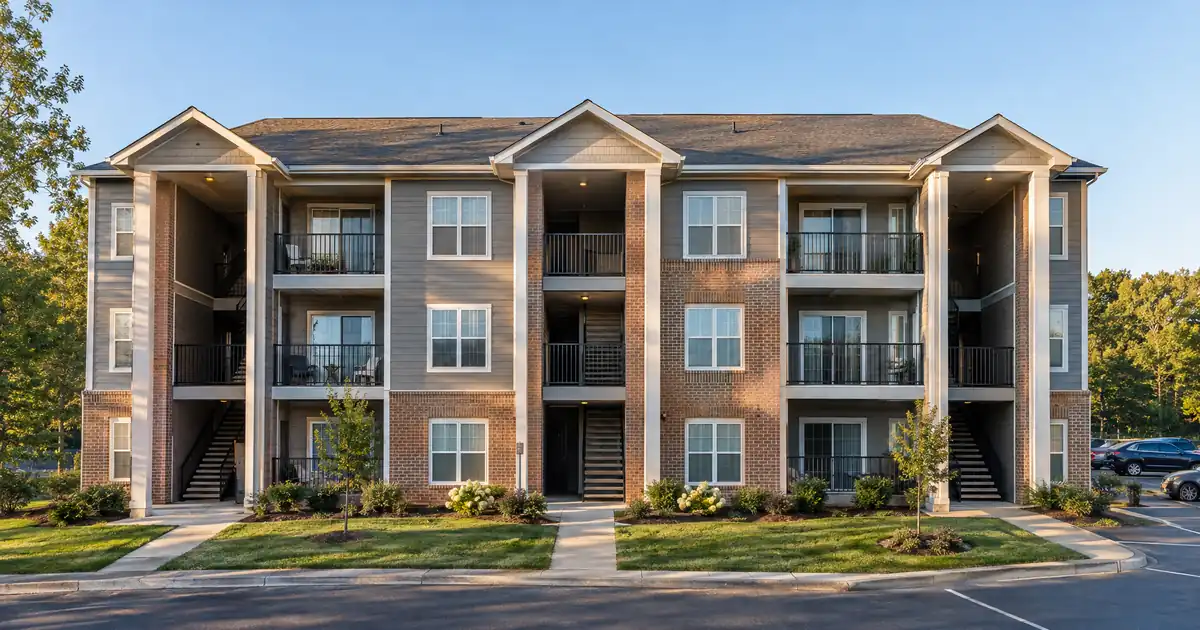
The Quick Read: A 2-4 unit flip file comes in two stacks: the documents you submit so the lender can judge the borrower, the deal, and the rehab plan, and the documents you sign so the loan is legally enforceable and secured by the property. Underwriting rests on the property, the plan, and the exit, so the paperwork is light on personal income and heavy on deal detail. Duplexes, triplexes, and fourplexes add more trades, more draw requests, and more rent-schedule lines than a single-family flip.
Key takeaways
- You submit a borrower package, an entity package if you use an LLC, a property package, and a rehab package.
- You sign a promissory note, a recorded security instrument, a loan agreement, usually a personal guaranty, and a rehab draw agreement.
- The scope of work, the budget, and the after-repair value have to agree with each other. When they do not, the loan shrinks or stalls.
- Rehab money is held back and released in draws against inspected work, so you fund each phase before you are reimbursed.
- Leverage, credit minimums, and terms vary by lender, property, and experience. Nothing here is a commitment to lend.
What this loan actually costs to carry.
Hard money is sized against the project and priced by time. Enter the deal and see how much the program will lend, the cash required at closing, the carry while you hold it, and what is left at the exit.
Leverage tiers on the current program: 85% with fewer than 2, 90% with 2 or more, 93% with 5 or more completed projects — every tier capped at 75% of after-repair value. Loan amounts up to $5,000,000, larger by exception; terms of 6 to 18 months, interest-only, no prepayment penalty. The rehab portion funds in draws against completed work, not at closing.
Program parameters shown update from Lendmire’s centralized guideline source. Rate, points, and months are editable assumptions, not quoted terms.
Cost cap sets the loan · positive spread
Illustrative estimate only — not a quote, Loan Estimate, approval, or commitment to lend. Rate, points, and months are editable assumptions. Hard money is business-purpose financing for real estate investors, not a consumer mortgage. Leverage on the current program tops out at 93% of project cost for investors with a documented track record, capped at 75% of after-repair value, with rehab funding up to 100% of the documented budget released in draws; actual terms vary by lender, borrower experience, property, and exit. Lendmire is a mortgage broker, not a lender.
Key Terms Defined
After-repair value (ARV): the estimated market value of the property once the planned renovation is finished.
Scope of work: the line-by-line description and budget of every repair, unit by unit.
Holdback: the part of the loan reserved for rehab and released in stages instead of at closing.
Draw: one release of holdback funds after work has been completed and inspected.
Security instrument: the recorded deed of trust or mortgage that pledges the property as collateral.
Personal guaranty: a signed promise by an individual to answer for the loan if the borrowing entity cannot.
Lien waiver: a contractor’s written release of claims against the property for work already paid.
What Hard Money Loan Documentation Actually Covers
Hard money loan documentation is everything the lender collects to underwrite the deal plus everything signed to document and secure the loan. The two halves have different jobs. The first half answers whether the project makes sense. The second half makes sure the lender can enforce its rights if it does not.
Requirements vary by lender and by loan type. Most programs Lendmire places files with are asset-based. They look hard at the property, the rehab plan, and your exit, and they look lightly at your traditional personal-income documentation and pay stubs. Lighter on income is not the same as light on paper. A flip file is document-heavy on the deal side.
Lendmire’s hard money programs cover non-owner-occupied residential property with one to four units. Owner-occupied purchases are outside that scope. That single fact shapes the whole stack, because every document assumes you are buying to renovate and sell, or renovate and hold, as a business.
The Submission Package for a 2-4 Unit Flip
The submission package has four parts: the borrower, the entity, the property, and the rehab. Each document proves something specific. Lenders get frustrated when the pieces contradict each other, not when a piece is missing.
| Document | What it proves | 2-4 unit note |
|---|---|---|
| ID and credit authorization | Who you are, your credit profile | Same for any unit count |
| Entity papers | The borrower exists and who signs | Name must match contract and title |
| Purchase contract | Price and terms of acquisition | Lists all units being conveyed |
| Proof of funds | Cash for down payment and carry | Carry runs longer with more units |
| Scope of work and bids | What gets fixed and at what cost | Itemize by unit and by common area |
| Comps and ARV support | What the finished building is worth | Multifamily comps are scarcer |
| Insurance quote | The asset is covered during rehab | Must fit a vacant or renovating building |
| Rent roll and leases | Income on any occupied units | Only applies if tenants stay |
Borrower documents. Expect a loan application, a government ID, a credit authorization, and bank statements showing cash for the down payment, closing costs, and carry. Experience matters more here than in a bank loan. In the programs Lendmire places files with, a track record of completed projects moves you up the leverage tiers, which the structures section below spells out.
Entity documents. If the borrower is an LLC, add formation papers, the operating agreement, evidence of good standing, and an authorization to borrow. Because the entity has no credit history, lenders typically require a personal guaranty from the person behind it. LLC borrowing is available subject to program terms, and the names on every document must match exactly.
Property documents. You supply the purchase contract, a title report or commitment, and insurance quotes. The lender orders the appraisal. Occupied units add a rent roll and the leases. Vacant units need nothing beyond the building itself.
Rehab documents. This is where flip files are won or lost. The lender wants a detailed scope of work, contractor bids, a timeline, and the comps behind your ARV. On a 2-4 unit building, break the scope out unit by unit. A lump-sum budget for a fourplex invites questions.
How Underwriting Reads the File, Step by Step
Underwriting is a reconciliation exercise. The lender checks that your scope, your budget, and the ARV tell the same story, then checks that you can carry the project. Here is the sequence in practice.
1. Intake. The lender confirms the property type, the occupancy, and that the loan is for business purposes.
2. Appraisal. One assignment typically supports both the as-is value and the ARV based on the scope you submit. If the scope handed to the appraiser is incomplete, the ARV can come in low and the loan shrinks with it.
3. Reconciliation. The lender compares purchase price plus rehab budget against ARV. Loan size is tied to cost and capped against ARV, so the lower number wins.
4. Title. A clean title and a properly executed, recorded security instrument establish lien priority. The Note Servicing Center, a loan-servicing company, explains how the note, the deed of trust, and the loan agreement each carry a separate legal job.
5. Borrower strength. Completed projects, credit, and liquid cash decide your leverage tier and whether the deal works forward. Programs typically want at least a 620 score, with added conditions below 660, and the figure varies by lender, property, and experience.
6. Exit. The lender asks how it gets repaid, through a sale or a refinance, and whether the numbers support that path.
One practitioner observation: stalled files rarely fail on a big issue. They stall on mismatches, such as an LLC name that differs between the contract and the insurance binder, or a scope total that does not match the budget line on the application.
The Documents You Sign
At closing you sign a stack that turns a term sheet into an enforceable loan. Read each one, because each does a different job.
- Promissory note. Your written promise to repay. It states the loan amount, the payment schedule, and the maturity date.
- Security instrument. The deed of trust or mortgage pledges the building as collateral and gets recorded in public records. It is what lets the lender foreclose on a default.
- Loan agreement. This carries the representations, covenants, default triggers, and remedies, and it references the note and the security instrument.
- Personal guaranty. On entity loans, this ties the sponsor personally to the debt.
- Rehab draw agreement. It sets the budget, the draw schedule, the inspection process, and what you must submit before each release.
Check three things before signing: that the budget in the draw agreement matches your scope of work, that the maturity matches your project timeline, and that no prepayment charge appears. Programs of this type are typically structured as interest-only with no prepayment penalty, though that varies by lender.
Here is the one compliance point worth knowing. DSCR and hard money loans are designed for non-owner-occupied investment properties. Because they are business-purpose investor loans, they are reviewed differently from a standard owner-occupied mortgage. Federal rules generally exempt credit made primarily for a business purpose, which is why consumer mortgage disclosure forms like TRID do not apply. Purpose decides the classification, though, not the box you check. The OCC’s Comptroller’s Handbook on TILA notes that a business-purpose checkbox without documentation of how the proceeds will be used can be weak evidence. Keep your contract, your scope, and your budget as the paper trail.
How Draws Work on a Duplex, Triplex, or Fourplex
The loan funds in two pieces. The acquisition portion closes like a normal purchase. The rehab portion sits in a holdback and is released as work is completed and inspected. Up to 100% of the documented rehab budget can fund through draws against completed work, though that is a rehab-budget figure, never a purchase leverage figure, and it varies by lender, property, and experience.
The draw schedule is agreed before closing. When you finish a phase, you submit a draw package. A typical package includes contractor invoices, an updated schedule of values, any change orders, lien waivers, and a short progress overview. An inspector then verifies the work before funds release.
Draws reimburse completed work. That means you front the money for each phase, and your own cash is tied up between releases. Some lenders reimburse only part of a phase. Others allow an advance at closing or pay for materials on site against receipts and photos. Ask which approach your lender uses before you build your contractor payment schedule.
Unit count multiplies the paperwork. A fourplex with four kitchens, four baths, and a roof can generate more draw requests than a single-family house, because trades work across units at different paces. Organize invoices and waivers by unit from day one. Interest generally accrues on drawn funds and stops at payoff, but that also varies by lender.
Structures and Variations
The document stack shifts with the loan structure. These are typical ranges from select lenders in Lendmire’s wholesale network. They vary by lender, property, and experience, and nothing here is a commitment to lend.
| Structure | Typical leverage | What changes in the file |
|---|---|---|
| Fix-and-flip, 5+ projects | 93% of project cost | Experience evidence matters most |
| Fix-and-flip, 2+ projects | 90% of project cost | Track-record documents required |
| Fix-and-flip, under 2 projects | 85% of project cost | Tighter scope review expected |
| Bridge without rehab | Up to 80% of purchase price | No scope or draw package |
| Refinance (cash-out or rate/term) | Up to 65% of value | Value-based, no purchase contract |
Every flip tier is capped at 75% of ARV. Run the numbers on a fourplex where the rehab is heavy relative to the finished value. The cost-based tier might suggest one loan size, while the ARV cap suggests a smaller one. The smaller number governs, and the gap is your cash. That is why a thin ARV estimate hurts twice: it lowers the loan and raises your required equity.
Loan amounts run up to $5,000,000 on these programs, with larger sizes by exception. Terms run 6 to 18 months. There is no true 100% purchase financing, and the top leverage tier is reserved for experienced investors. First-time investors do qualify at the lower tiers.
Where the General Rule Breaks
The standard stack above fits most files. These edge cases change it.
Owner-occupancy. A 2-4 unit is a dwelling, so intended occupancy matters. If you plan to live in a unit, you are in a different file with a different document set. Owner-occupied purchases are not offered in this hard money program, which is built for business-purpose, non-owner-occupied property.
Entity versus individual. Lending to an entity is simpler on classification, since law firm commentary from Hunton notes the exemption is more nuanced when the borrower is an individual. The same commentary warns that business purpose does not mean compliance-exempt, and that wrongly treating a loan as exempt can create exposure. The practical result is the same: guaranties and recorded liens still attach to the sponsor either way.
Occupied units. If tenants stay during the rehab, the lender wants the rent roll and leases. If you plan to clear the building, say so in the scope, because vacant and occupied buildings are insured and appraised differently.
Bridge with holdback on a property you already own. Here the loan is sized on as-is value instead of a purchase price. Your documents shift from a purchase contract to proof of ownership and a current payoff statement.
Non-recourse and cross-collateral structures. These exist but vary widely by lender, so the paperwork changes with the lender. Ask for the structure in writing before you build assumptions around it.
Exit into long-term rental financing. Many investors who decide to hold refinance out of hard money into long-term DSCR financing once the building is stabilized, and Lendmire brokers that path. The appraiser completes a rent schedule on Form 1025 for 2-4 units (Form 1007 is for single-family). Many programs use the lower of the lease rent and the market-rent opinion, so a strong lease does not rescue a low market-rent opinion. DSCR compares rent to the full monthly obligation of principal, interest, taxes, insurance, and any association dues. Clearing that test is not the same as positive cash flow, because repairs, vacancy, management, and utilities sit outside it. Lendmire’s complete DSCR loans guide covers how that second loan works.
Mistakes and Misconceptions That Stall Files
Most delays trace to a short list of avoidable errors.
- Vague scope. A one-line budget for a four-unit building gives the appraiser nothing to support an ARV and gives the lender nothing to reconcile.
- Name mismatches. The entity on the contract, the title commitment, the insurance policy, and the loan application must be identical.
- Insurance that does not fit the project. A standard landlord policy may not cover a vacant or actively renovated building. Get a quote that does.
- Assuming the rehab money arrives at closing. It does not. It is held back and released against inspected work.
- Assuming 100% financing is standard. There is no true 100% purchase program. The rehab portion can fund up to 100% of the documented budget through draws, but your acquisition side still requires cash.
- Treating the 70% rule as a requirement. It is a rule of thumb investors use to size offers. A lender’s cap is set by the program, which for these flips is 75% of ARV.
- Believing hard money needs no documents. It is lighter on personal income and heavy on deal documents.
What the Decision Looks Like in Practice
Picture an investor with two completed projects buying a triplex. The cost-based tier for that experience level is 90% of project cost, still capped at 75% of ARV. The lender reviews unit-by-unit scope, bids, and comps. The investor funds each phase out of pocket and is reimbursed after inspection, so the real question is not whether the loan can be placed but whether the investor’s liquidity can carry the gap between draws.
Before you sign, run this short review:
1. Does the scope total match the budget on the application and in the draw agreement? 2. Does the maturity give you room if the rehab runs long, given terms of 6 to 18 months? 3. Do all names match across contract, title, insurance, and loan documents? 4. Do you know exactly what each draw package must contain? 5. Is your exit documented, whether a sale or a refinance?
Tax treatment varies by how funds are used and how the property is held, so consult a qualified professional before relying on any deduction.
Frequently Asked Questions
Do I need traditional personal-income documentation and pay stubs for a hard money flip loan?
Usually not in the way a bank loan does. Hard money underwriting is asset-based, so the lender focuses on the property, the rehab plan, and your exit. You still provide bank statements for cash on hand, a credit authorization, and ID. Requirements vary by lender, property, and experience.
Do I need an LLC to borrow?
No. Individuals can borrow on many programs, and entities are also common. If you borrow through an LLC, expect formation documents, an operating agreement, evidence of good standing, an authorization to borrow, and typically a personal guaranty.
What does the lender need for the rehab?
A detailed scope of work, contractor bids, a timeline, and the comps supporting your ARV. On a 2-4 unit property, itemize by unit and common area. The appraisal commonly values the building as-is and as completed from that scope.
Who orders and pays for the appraisal?
The lender typically orders it, and the cost is generally passed to the borrower. The key point for you is what you hand the appraiser. A complete scope supports a stronger ARV, and an incomplete one can reduce the loan.
What happens if the rehab runs past the term?
Terms on these programs run 6 to 18 months, so a delay creates refinance or payoff pressure. Ask in advance how extensions work, what they require in paperwork, and what the maturity date means for your exit plan.
Next Step
If you are buying, rehabbing, or refinancing an investment property on a short timeline and want to see how the numbers work, Lendmire can help you compare hard money options based on the project, the exit plan, leverage, and your goals. Lendmire is a broker that arranges financing through select lenders in its wholesale network across 41 markets, including Washington, D.C. Request a quote through the site or call 828-256-2183.
About Lendmire
As a non-QM mortgage broker (NMLS# 2371349), Lendmire facilitates DSCR investor loans across 41 markets, including Washington, D.C. DSCR eligibility is generally reviewed around property-level rental income instead of personal income documentation, subject to lender guidelines, serving LLC-structured portfolios and self-employed borrowers who don’t fit conventional boxes. A two-time Scotsman Guide Top Mortgage Workplace (2025, 2026).
Hard money often opens the deal, and a refinance typically closes the chapter – see the hard money loan overview.
Get Started
Ready to find the right loan for you?
In about 30 seconds you can review financing options available for your investment property. No commitment required.
Informational only. Not a Loan Estimate, approval, or commitment to lend. Program availability and eligibility are subject to lender guidelines, credit approval, property review, and underwriting.
References
1. noteservicingcenter.com: Essential Documents for Speedy Secure Hard Money Loan Closings
2. Cornell Legal Information Institute, 12 CFR 1024.5 (RESPA coverage)
3. OCC Comptroller’s Handbook, Truth in Lending Act
4. Hunton, Beware of Business Purpose
This article is part of Lendmire’s hard money loan program — full qualification details, guidelines, and scenarios live on the program page.
Related reading: Can You Use a Hard Money Loan to Buy and Flip a House? · Is a Hard Money Fix and Flip Loan Worth It for a Business Owner? · Can You Use Hard Money to Flip a Triplex or Fourplex?
Brandon Miller
Founder & CEO, Mortgage Loan Originator, Lendmire LLC
- Mortgage Loan Originator · NMLS# 1129696 · Verify on NMLS Consumer Access
- North Carolina Real Estate Broker · License# 343312 · Verify on NCREC
- North Carolina Insurance Producer · License# 19053198 · Property, Casualty, Life, Health · Verify on NAIC SBS
- Lendmire LLC · Firm NMLS# 2371349 · Verify firm licensure
Disclosure information. Lendmire is a state-licensed mortgage brokerage under NMLS# 2371349. Lendmire is not a depository institution, direct lender, or financial advisor — all loans referenced are placed through wholesale lender partners and are subject to each lender's underwriting standards. This article is provided for general informational purposes and is not a commitment to lend, nor does it constitute financial, legal, or tax advice. Loan programs, terms, rates, and qualification standards change without notice and depend on borrower profile, property type, and the state in which the subject property is located. Equal Housing Opportunity provider. NMLS Consumer Access: nmlsconsumeraccess.org.