
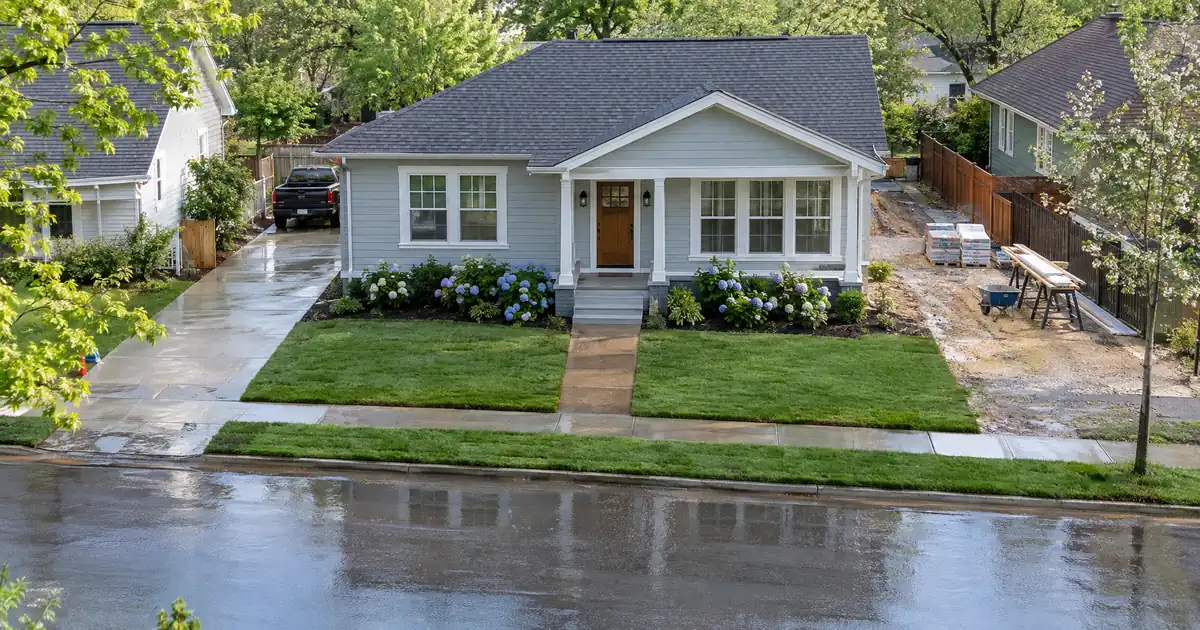
The Quick Read: A hard money project loan funds a purchase and a rehab in two pieces: an acquisition advance at closing and a rehab holdback that releases in draws against completed, inspected work. The loan is sized by the lower of a cost-based limit and a cap on after-repair value, and leverage steps up with documented completed projects. “Funded” does not mean the lender fronts the work, because the borrower usually floats each phase before reimbursement. Figures vary by lender, property, and experience, and nothing here is a commitment to lend.
- Fix-and-flip leverage runs 85% of project cost with fewer than 2 completed projects, 90% at 2+, and 93% at 5+, all capped at 75% of after-repair value.
- Up to 100% of the rehab budget can fund through draws. That is a budget figure, not a purchase leverage figure.
- Terms run 6 to 18 months, interest-only, with no prepayment penalty.
- A 620 credit score is the minimum, with added conditions below 660.
- The property must be non-owner-occupied residential, 1 to 4 units. Terms vary by lender guidelines, property type, leverage, credit profile, and full file review.
What Does “Funded Rehab Budget” Actually Mean?
A funded rehab budget means the lender has approved a scope of work and agreed to reimburse it in stages. It does not mean the money sits in your account on day one.
What this loan actually costs to carry.
Hard money is sized against the project and priced by time. Enter the deal and see how much the program will lend, the cash required at closing, the carry while you hold it, and what is left at the exit.
Leverage tiers on the current program: 85% with fewer than 2, 90% with 2 or more, 93% with 5 or more completed projects — every tier capped at 75% of after-repair value. Loan amounts up to $5,000,000, larger by exception; terms of 6 to 18 months, interest-only, no prepayment penalty. The rehab portion funds in draws against completed work, not at closing.
Program parameters shown update from Lendmire’s centralized guideline source. Rate, points, and months are editable assumptions, not quoted terms.
Cost cap sets the loan · positive spread
Illustrative estimate only — not a quote, Loan Estimate, approval, or commitment to lend. Rate, points, and months are editable assumptions. Hard money is business-purpose financing for real estate investors, not a consumer mortgage. Leverage on the current program tops out at 93% of project cost for investors with a documented track record, capped at 75% of after-repair value, with rehab funding up to 100% of the documented budget released in draws; actual terms vary by lender, borrower experience, property, and exit. Lendmire is a mortgage broker, not a lender.
At closing, the lender advances the acquisition portion. The rehab portion goes into a holdback, which is an escrow-style balance the lender controls. You request a draw when a phase of work is done. An inspection confirms the work. Then funds release against the approved line items.
That sequence is why a “100% rehab” structure still takes working capital. The budget is eligible for reimbursement. It is not prepaid. Across the wholesale network, the files that stall are the ones where the investor treated the holdback like a cash deposit.
There is also no true 100% purchase program. When a lender talks about funding the full project, it is talking about the rehab budget in draws plus a cost-based advance on the purchase. The top leverage tier is reserved for experienced investors.
Key Terms Defined
Acquisition advance: the portion of the loan that funds the purchase at closing.
Rehab holdback: the portion of the loan held back to pay for renovation work as it is completed.
Draw: a request to release part of the holdback after a phase of work is finished.
Scope of work: the written list of repairs and upgrades, broken out by trade and area.
Loan-to-cost: the loan as a percentage of the total project cost, meaning purchase price plus rehab budget.
After-repair value (ARV): the appraised value of the property once the work is complete.
Contingency: a budget line set aside for costs the scope did not foresee.
What Do Lenders Require on a Hard Money Project Loan?
Lenders require a property that fits the program, a budget that holds up, a borrower with enough cash and credit, and a believable exit. Underwriting stays asset-based. The property, the plan, and the exit carry the file.
| Requirement | Why the lender asks | What you provide |
|---|---|---|
| Eligible property | Collateral must fit the program | Contract, address, unit count |
| Realistic scope and budget | Draws are checked against it | Itemized scope, bids |
| After-repair value support | Caps the loan amount | Comps, appraisal or valuation |
| Credit review | Confirms the borrower profile | 620+ score, with conditions under 660 |
| Cash and reserves | You float work between draws | Bank statements |
| Experience | Sets the leverage tier | Completed project history |
| Entity documents | Title and signing authority | Operating agreement, formation papers |
| Exit plan | Short term must end somehow | Sale plan or refinance plan |
The collateral rules are plain. Non-owner-occupied residential property of 1 to 4 units qualifies. Ground-up construction can go to 10 units. Commercial, industrial, land, hospitality, and owner-occupied property are not on the program sheet.
Hard money project loans are business-purpose loans for non-owner-occupied property, so they are reviewed differently from a standard owner-occupied mortgage. Loan amounts run up to $5,000,000, with larger balances by exception, and smaller balances vary by lender. LLC borrowers are common, subject to program terms.
Credit still matters, even though the loan is asset-based. A 620 score is the floor. Below 660, the lender adds conditions. First-time investors qualify at the lower leverage tiers, not the top one.
How Is the Loan Amount Sized?
The loan is the lower of two tests. One test applies a percentage to project cost. The other caps the loan at 75% of after-repair value. Whichever number is smaller governs.
Leverage tiers by documented completed projects are:
- Fewer than 2 projects: 85% of project cost.
- 2 or more projects: 90% of project cost.
- 5 or more projects: 93% of project cost.
- Every tier: capped at 75% of after-repair value.
Other structures use different figures. Bridge purchases without rehab go up to 80% of purchase price. Cash-out and rate-and-term refinances go up to 65% of value. Ground-up construction goes up to 90% of cost and 75% of completed value at 3+ completed projects.
Here is how the two tests interact. The scenarios are modeled assumptions, not market data, and they express values as multiples of ARV (1.00x is the full after-repair value). Take the 85%-of-cost tier.
| Modeled scenario | All-in cost | Cost-test loan | ARV cap | Governs |
|---|---|---|---|---|
| A: modest rehab | 0.70x ARV | 0.595x ARV | 0.75x ARV | Cost test |
| B: thin margin | 0.85x ARV | 0.723x ARV | 0.75x ARV | Cost test |
| C: very thin margin | 0.95x ARV | 0.808x ARV | 0.75x ARV | ARV cap |
In scenario A, the cost test is lower, so it binds. The investor’s own cash is the gap between cost and loan, about 0.105x ARV. In scenario B, the cost test still sits just under the cap, so it binds and the investor covers about 0.128x ARV. In scenario C, the cost test lands above the cap, so the cap binds. The investor covers the remaining 0.20x ARV out of pocket.
That is why a low appraisal hurts. When the appraiser’s ARV comes in under your projection, the cap drops with it, and the cap is the number that matters on thin-margin deals. The lender uses the ARV the appraiser concludes, not the one you wrote on the deal sheet.
What Does a Lender-Ready Rehab Budget Look Like?
A lender-ready budget is itemized by trade and area, so an inspector can decide what to release against each line. A single line reading “Interior” gives the inspector nothing to verify. Break it out.
A workable budget has these parts:
1. Trade-level lines. Roofing, electrical, plumbing, HVAC, flooring, kitchen, bath, paint, and exterior each get their own line.
2. Labor and materials separated. This lets the lender see where money goes and test unit costs.
3. Bid backup. Contractor bids support the larger lines. Licensed and insured contractors make the file stronger.
4. A contingency line. Costs surface once walls open. A contingency tells the lender you planned for it.
5. Small, verifiable chunks. Lenders release money when a line item is complete and installed. Smaller chunks let you draw sooner and more often.
Underwriters also test whether the scope fits the property. Some files stop because the property is too far gone or the budget is not realistic. A budget that is too low looks as bad as one that is padded.
Scope type changes the leverage. Light cosmetic rehab usually needs less experience but may carry a leverage reduction. Heavier renovation and ground-up work lean on track record. Ground-up requires the 3+ completed-project tier to reach the top leverage listed above.
How Does the Draw Cycle Work?
The draw cycle runs in a loop: finish a phase, request a draw, pass an inspection, receive funds. You pay for the work first. The lender reimburses after verification.
Lenders differ on inspection timing and on who inspects. Some use a third-party inspector. Some work from photos. Ask before you sign.
| Stage | Who funds it | Borrower cash exposure |
|---|---|---|
| Closing | Lender advances acquisition | Down payment and closing costs |
| Phase 1 work | Borrower | Full cost of phase 1 |
| Draw request and inspection | Borrower still carrying cost | Phase 1 cost still outstanding |
| Release | Lender reimburses approved lines | Drops as funds arrive |
| Final draw | Lender releases remaining balance | Floated money returns |
The cash curve is the part investors under-plan. You start the first phase on your own money. You get reimbursed. You fund the next phase. Peak exposure is roughly one phase of work, plus whatever the inspector declines to release.
A typical draw package includes invoices, photos, lien waivers, and proof of payment. Missing lien waivers are among the most common reasons a release gets held. Keep a folder per phase.
Can the Budget Change or Run Over?
The approved budget is the budget. Overruns are your cost. Discovered repairs that were not in the submitted scope may not be credited on the next draw.
Handle changes this way:
- Scope changes: submit them to the lender in writing before you do the work.
- Overruns: plan for them with the contingency line and with your own reserves.
- Unused budget: treatment varies by lender, so confirm it in the loan terms.
- Interest on undrawn funds: some lenders charge interest only on funds disbursed and others on the full loan amount. Both are negotiated terms, and the difference matters most on large budgets.
For the mid-project question in detail, see Lendmire’s piece Can a Hard Money Lender Increase the Rehab Budget Mid-Project?.
Where the General Rule Breaks
Several edge cases change how the draw rules apply.
Advance draws. Some lenders advance a small portion of the rehab at closing so work can start. It is the exception, not the default.
Ground-up construction. Leverage is lower than on a rehab, and prior ground-up experience is expected. The top tier needs 3+ completed projects.
First-time investors. They qualify at the lower leverage tiers. Expect more cash in and tighter draw control.
Cosmetic-only scopes. These can read as less value-add than a full renovation. Lenders may reduce leverage or ask for more support on the value story.
Government rehab programs. FHA’s 203(k) program is owner-occupant only, so it does not apply to investors. It is still a useful contrast. HUD’s handbook requires a 10% holdback on intermediate draws and a formal draw package. HUD’s inspection guidance allows four inspections plus a final one. Private investor loans have no such rulebook. The loan agreement, the approved budget, and the lender’s draw policy control everything.
What Mistakes Stall a Funded Rehab Budget?
Most delays trace back to a documentation gap, not a credit problem.
- A one-line budget with no trade detail.
- An ARV built on projections instead of recent comps.
- No cash cushion to float the first phase.
- Paying the contractor up front. Phase-based payments tied to draws protect both sides.
- Missing lien waivers or proof of payment at draw time.
- Starting work outside the approved scope.
- Entity documents that do not match the title or signer.
- An exit plan with no date or no buyer or refinance path.
A Pre-Application Self-Check
Before you submit, run this list:
1. Does the purchase contract match the entity that will sign?
2. Is the scope itemized by trade, with labor and materials split?
3. Do bids back the largest lines?
4. Is there a contingency line?
5. Have you tested both sizing limits with your own ARV, and then with a lower one?
6. Can you float at least one full phase of work?
7. Does your completed-project history support the leverage tier you expect?
8. Is the property 1 to 4 units and non-owner-occupied?
If the answer to any of these is no, fix it first.
What About the Exit?
Terms of 6 to 18 months are interest-only, so the loan has to end by sale or refinance. Many investors who buy, rehab, and hold refinance out of hard money into long-term DSCR investor loans once the property is stabilized. Lendmire brokers that path.
The DSCR loan is a separate underwriting event, so plan the maturity around its rules. Across the network, 1.00 is where many select programs start for coverage, and a separate select-lender path goes below 1.00 with leverage and terms adjusted. Cash-out refinances top out around 75% LTV, and about 6 months of seasoning is the common expectation. DSCR compares rent to PITIA only, so clearing 1.00 is not the same as positive cash flow. The complete DSCR loans guide covers the mechanics in full. Exact terms depend on the lender’s guidelines, property type, leverage, and a full review of the borrower’s file.
Tax treatment varies; consult a qualified professional.
Frequently Asked Questions
Does a hard money lender fund 100% of the rehab?
Usually it funds up to 100% of the rehab budget through draws, but only against completed work. The money reimburses you after inspection. You still float each phase first. That makes it a budget figure, not a purchase leverage figure.
How much cash do I need to close?
It depends on your leverage tier and on which sizing test binds. With fewer than 2 completed projects, the lender funds 85% of project cost, capped at 75% of after-repair value. You cover the rest, plus closing costs and the cash you need for the first phase. Figures vary by lender, property, and experience.
Does credit matter on an asset-based loan?
Yes. A 620 score is the minimum, and conditions are added below 660. The property and plan carry the file, but the lender still reviews the borrower. Credit that falls short can limit the leverage tier you land in.
What happens if the appraisal comes in low?
The maximum loan falls with it, because the ARV cap is tied to the appraiser’s number. On thin-margin deals the cap is the binding limit, so you bring more cash to cover the gap. Pressure-test your deal at a lower ARV before you submit.
Can first-time investors get a project loan?
First-time investors qualify at the lower leverage tiers. The top tier is reserved for experienced investors with several completed projects. Expect more cash in and closer draw oversight.
Next Steps
If you are buying, rehabbing, or refinancing an investment property on a short timeline and want to see how the numbers work, Lendmire can help you compare hard money options based on the project, the exit plan, leverage, and your goals. The brokerage arranges these loans through select lenders in its wholesale network across 41 markets, including Washington, D.C.
About Lendmire
As a non-QM mortgage broker (NMLS# 2371349), Lendmire facilitates DSCR investor loans across 41 markets, including Washington, D.C. DSCR eligibility is generally reviewed around property-level rental income instead of personal income documentation, subject to lender guidelines, serving LLC-structured portfolios and self-employed borrowers who don’t fit conventional boxes. A two-time Scotsman Guide Top Mortgage Workplace (2025, 2026).
Get Started
Ready to find the right loan for you?
In about 30 seconds you can review financing options available for your investment property. No commitment required.
Informational only. Not a Loan Estimate, approval, or commitment to lend. Program availability and eligibility are subject to lender guidelines, credit approval, property review, and underwriting.
References
1. HUD – Handbook 4240.4 REV-2, Chapter 5
2. HUD – FHA Connection inspection page
This article is part of Lendmire’s hard money loan program — full qualification details, guidelines, and scenarios live on the program page.
Related reading: How to Get a Hard Money Loan for a First Flip With No Track Record · 2-4 Unit vs. 5-to-10-Unit Hard Money Loan for a Multi-Project Flipper · Can a Two-Project Rehabber Use Gap Funding With Hard Money?
Brandon Miller
Founder & CEO, Mortgage Loan Originator, Lendmire LLC
- Mortgage Loan Originator · NMLS# 1129696 · Verify on NMLS Consumer Access
- North Carolina Real Estate Broker · License# 343312 · Verify on NCREC
- North Carolina Insurance Producer · License# 19053198 · Property, Casualty, Life, Health · Verify on NAIC SBS
- Lendmire LLC · Firm NMLS# 2371349 · Verify firm licensure
Compliance and disclosures. Lendmire (NMLS# 2371349) is a licensed mortgage broker and is not a direct lender, depository institution, financial advisor, or tax professional. Content in this article is general market analysis and educational information — not financial, legal, or tax advice for any specific situation. Lendmire does not guarantee loan approval; every transaction is subject to underwriting by the funding lender. Mortgage pricing and loan program guidelines are subject to change at any time without notice and vary by borrower characteristics, property type, and state regulations. Lendmire complies with Equal Housing Opportunity. Licensure verification: NMLS Consumer Access.