
The Quick Read: Estimate the post-sale tax bill by multiplying the price you expect to pay by the local effective tax rate. Then cross-check that number against a recently sold comparable property’s first tax bill. Run your coverage ratio on three tax inputs: the seller’s bill, your own estimate, and your estimate plus a buffer. The seller’s bill rarely predicts yours.
- Property tax sits in the bottom half of the DSCR ratio, so a higher tax bill lowers coverage even when rent never moves.
- Some jurisdictions reset the assessed value to the purchase price after a sale. Others do not.
- Homeowner-type exemptions usually do not follow a rental buyer.
- A reassessed bill can arrive months after closing, so keep cash available.
- Clearing 1.00 on a DSCR file does not mean the property cash flows.
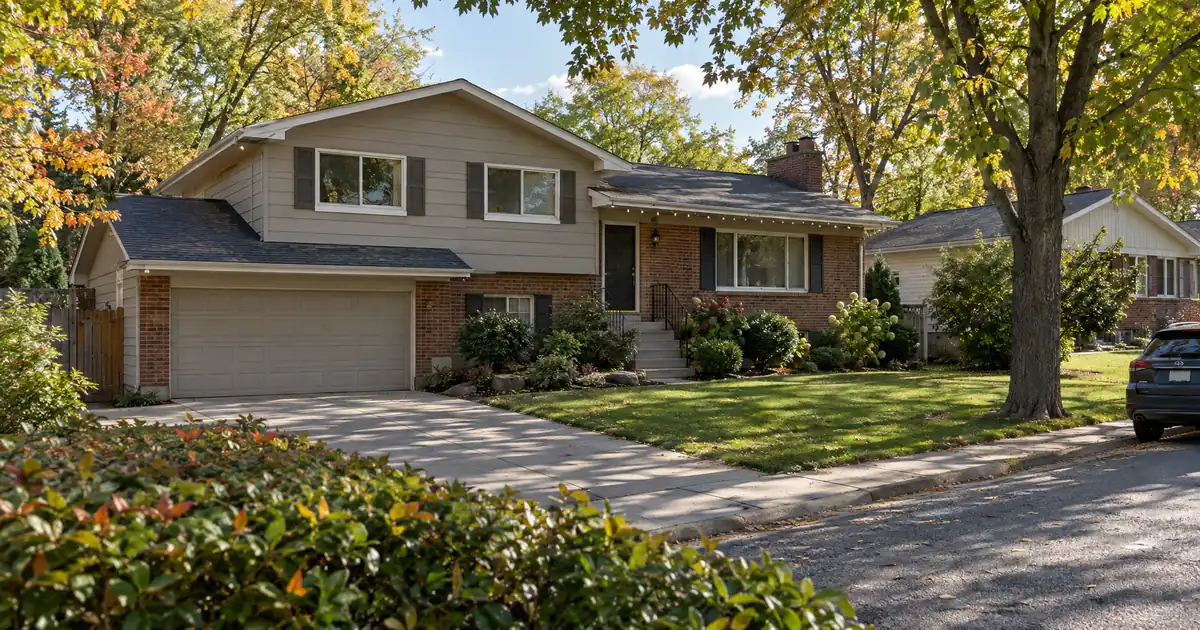
Here is the problem in one picture. You find a small rental, the listing shows a modest tax bill, and your coverage looks comfortable. Then the county reassesses the property at your purchase price. Nothing about the building changed. The tax line did, and your ratio slid.
DSCR Calculator
Run the numbers in your market
Rate source: Freddie Mac 30-yr average via FRED® — Federal Reserve Bank of St. Louis · effective Oct 22, 2026
Prefilled with starting assumptions — enter your own rent or nightly figures, taxes, insurance, and HOA for a more accurate picture.
Program parameters update from Lendmire’s centralized guideline source. Taxes and insurance are editable estimates.
As of Oct 22, 2026 · General Freddie Mac market benchmark, not a Lendmire loan offer. Rent, nightly rate, occupancy, taxes, and insurance are editable estimates. Short-term rental figures are estimates only and vary significantly by season, property type, management approach, and local short-term-rental rules — confirm local regulations before relying on them. Qualifying income for short-term rentals varies by program — some use appraisal market rent, others use documented STR history or projections — and is confirmed in underwriting. Not a Loan Estimate, approval, or commitment to lend. Program availability and eligibility are subject to lender guidelines, credit approval, property review, and underwriting.
This guide walks through how to catch that before you make an offer. It covers what reassessment is, how a DSCR file treats the tax number, and a repeatable estimation method. It also names the places where the usual rule breaks.
Key Terms Defined
Assessed value is the value the county uses to calculate your tax. It is not always the same as market value.
Effective tax rate is the annual tax bill divided by the property’s price. It already folds in assessment ratios and exemptions, which makes it the most practical shortcut.
Reassessment is a new valuation by the county. A sale, new construction, or a scheduled cycle can trigger one.
Supplemental bill is an extra tax bill some places issue after a change of ownership, on top of the regular annual bill.
PITIA is principal, interest, taxes, insurance, and any association dues. It is the monthly obligation the lender compares to rent.
DSCR is the debt service coverage ratio: monthly rent divided by PITIA.
Why Does the Seller’s Tax Bill Mislead You?
The seller’s bill reflects the seller’s assessed value, exemptions, and ownership history, not yours. A long-time owner may carry an assessment far below today’s market. After a sale, that gap can close.
HousingWire makes the point with a commercial-scale illustration: a $20,000 bill rising to roughly $60,000 once the property is reassessed near its new market value. That is not a typical one-to-four unit rental, but the mechanism is the same. Find out how the jurisdiction values property after a sale, and estimate taxes on the value you expect after acquisition.
Residential gaps can be large too. The Lincoln Institute shows that a just-purchased median-valued home in Miami would owe $9,205 against $3,104 for a long-time owner of an identical home, using values from the same year. That is one dated example, not a forecast for your property.
Why does this matter for financing? Because DSCR compares rent to the full monthly obligation. Taxes are part of that obligation. Across the wholesale network where Lendmire places files, some programs lean on the current bill and others use a projected figure. Either way, the higher bill can still reach you after closing, and your escrow can rise with it.
Does Your Jurisdiction Reset on Sale?
Start here, because the answer decides which estimation method you use. Reset-on-sale is not universal.
| Jurisdiction type | What changes at sale | What to check |
|---|---|---|
| Acquisition-value reset | Assessed value moves to the new price | Purchase price × effective rate |
| Capped, resets on sale | Seller’s cap ends; full value applies | Timing of the reset |
| Capped, no reset | Limits stay with the property | Whether price × rate overstates |
| Periodic cycle | Review comes on a schedule | Next cycle date; early review risk |
The Lincoln Institute’s report on assessment limits describes California’s system, where a change of ownership triggers reassessment at market value, usually based on the new purchase price. Between sales, growth in assessed value is limited to 2% per year. Another Lincoln paper says assessment limits exist in all but four states, and describes a lock-in effect where a transfer triggers reassessment at market value.
Now the exception. Lincoln notes that in New York City and Oregon, assessment limits do not reset when a property is resold. In a place like that, purchase price × rate could overstate your taxes. Check the county assessor’s website and your state’s revenue department before you pick a method.
How Do You Estimate the Bill in Eight Steps?
The core answer is one line: expected price × local effective rate, minus only the exemptions you will actually receive. The steps below make it reliable.
Step 1: Identify the jurisdiction type. Use the table above. Confirm with the county assessor.
Step 2: Pull the seller’s bill and read what is baked into it. Look at the assessed value, any owner-occupant or homestead exemption, and any capped value that has fallen behind the market.
Step 3: Estimate the post-sale assessed value. In reset jurisdictions, that is close to your purchase price. The full formula is assessed value × assessment ratio × mill rate, as TrueCap’s explainer lays out. Its shortcut is purchase price × local effective rate. To find that rate, take a recently sold comparable and divide its post-sale tax bill by its sale price.
Prefer county assessor estimators and local millage tables over generic online calculators.
Step 4: Strip exemptions you will not get. Homestead-type exemptions generally do not carry over to a non-owner-occupied rental. In Florida, for example, the Miami-Dade Property Appraiser says a homestead filing removes the non-homestead cap, which tells you how differently the two classes are treated.
Step 5: Check timing. Reassessment may not land at closing. In California, the State Board of Equalization explains that a change of ownership is a supplemental event, producing a supplemental bill on top of the regular annual one. The assessor subtracts the prior assessed value from the new value, and the bill is prorated for the rest of the fiscal year. Practitioners note these bills can arrive months after closing.
Florida works differently. The seller’s cap stays for the balance of the purchase year, then the property is reassessed at full market value the year after the sale.
Step 6: Add other levies. Include school, special-district, and non-ad-valorem assessments. Appraisers do not set millage rates or those assessments, so pull them from the tax collector.
Step 7: Run coverage on two tax inputs first. Calculate DSCR on the seller’s bill and on your projected bill. Compare both to the program’s floor. Step 8 adds the third, buffered run.
Step 8: Add a buffer. Build some cushion into your coverage calculation beyond the program’s floor, so a modest rise in taxes, insurance or vacancy does not push the property below it. A buffer still beats a surprise.
What Does the Math Look Like Side by Side?
Run the numbers on a modeled duplex, using inputs that are assumptions, not market data. Say a duplex’s rent is steady and the loan is fixed. The only thing that changes between scenarios is the tax line.
The effect. A seller’s bill of $3,400 becomes a reassessed $6,000 at a 1.5% effective rate. Net operating income falls from $25,280 to $22,680, and coverage drops from 1.00 to below it. Same building, same rent.
Here is how that plays out on a DSCR file in plain terms:
| Scenario | Tax input | What happens to coverage |
|---|---|---|
| Low | Seller’s bill carries over | Looks strongest |
| Base | Price × effective rate | Moderate drop |
| High | Base plus 5–10% buffer | Tests your margin |
Run all three before you offer. If the high case still clears the program’s floor with room to spare, the file has real cushion. If only the low case clears, you are buying on the seller’s tax number.
One more reminder. DSCR compares rent to PITIA only. Clearing 1.00 is not the same as positive cash flow, because repairs, vacancy, management, utilities, and capital expenses sit outside the calculation.
What Is the Reverse Math?
Reverse math tells you how much tax the deal can absorb. Start with the coverage you need and work backward.
Take monthly rent and divide it by your target ratio. The result is the most PITIA the file can carry at that ratio. Subtract principal and interest, insurance, and any association dues. What remains is the tax room.
If your estimated tax exceeds that room, you have three levers:
- Lower the price. In a reset jurisdiction, a lower price lowers both the loan and the assessed value.
- Put more down. A larger down payment lowers the monthly payment and can lift the ratio. It does not erase leverage caps, credit floors, reserve rules, or property eligibility.
- Walk away. A deal that only works on the seller’s tax bill is a deal that works on paper.
For reference, purchase leverage on most files in the network lands at 75%–80% LTV, meaning 20%–25% down. Loan-to-value, or LTV, is the loan amount divided by the property’s value. Select high-leverage programs go higher, subject to lender guidelines and credit. The strongest files clear both tests: enough equity and enough rental coverage.
How Does a DSCR Lender Treat the Tax Number?
Practice varies, and that is the honest answer. Across the network, a lender may use the current bill, a county estimate, or a projection built from the purchase price. The choice depends on the program and on how likely a reset is in that county.
Keep two numbers in your head. The lender’s coverage figure decides whether the file fits the program. Your budgeting number decides whether you can live with the property. They can differ, and the lender’s estimate may differ from the county’s eventual bill. So build your own.
On coverage, 1.00 is where many select programs start, and stronger ratios open better pricing and leverage. A separate select-lender path takes coverage below 1.00, with leverage and terms adjusted. Most programs want credit around 660, a 620 floor exists in parts of the network, and 700+ unlocks the strongest leverage tiers. Reserves commonly run around 6 months of PITIA, stepping up to about 9 months on loans above $1,500,000. All of it is subject to lender guidelines. For the full picture, see the complete DSCR loans guide.
Here is a pattern that shows up across comparable files. Coverage looks fine at application, the first reassessed bill arrives, and the servicer raises the escrow requirement. Focal Invest describes the escrow adjustment as often following the first post-close bill that shows higher taxes. The loan rate may be fixed, but the monthly payment is not frozen.
DSCR vs. conventional financing
There are two common ways to finance an investment property, and they qualify you differently — here’s how investors weigh them.
Why investors choose it
- Qualifies on the property’s rental income — no personal tax returns, W-2s, or pay stubs needed to document income.
- No personal debt-to-income ceiling to clear, so existing mortgages and obligations don’t cap your borrowing the same way.
- Can be closed in an LLC, keeping the property inside a business entity.
- Built for scaling — not held to the limit on number of financed properties that conventional financing applies.
- Underwriting centers on the deal: generally qualifies when the rent covers the payment, a 1.00x coverage ratio being a common baseline (confirmed in underwriting).
- Designed specifically for investment property, including long-term and, where the program allows, short-term rentals.
Where it’s strong
- Often the lowest ongoing financing cost for a buyer who fully qualifies on personal income — a fit for a first property or a cost-first purchase.
Trade-offs for investors
- Requires full personal income documentation and must fit within a debt-to-income limit — salary, existing debts, and other mortgages all count.
- Typically held in your personal name rather than a business entity.
- Caps how many financed properties you can carry, which can become a ceiling as a portfolio grows.
- Evaluates you as a borrower as much as the property, which usually means more paperwork.
How investors usually choose: a first or single property often optimizes for the lowest financing cost; portfolio builders often optimize for leverage, vesting in an LLC, and scaling past conventional caps. The right answer depends on your goals, the property, and current guidelines — both paths run through select lenders in Lendmire’s wholesale network, with eligibility and terms confirmed in underwriting.
Where Does the General Rule Break?
Price × rate is a good starting point. These are the places it misleads you.
Florida’s non-homestead cap. It applies to rentals and other non-homestead property, and the Lee County Property Appraiser says it covers multi-family with fewer than 10 units and most non-residential property. The Miami-Dade appraiser says it excludes School Board assessments, and the Monroe County appraiser says school assessments are taxed at 100% of just value. The cap resets on a sale. It limits assessed value growth, not the tax rate or the total bill.
Entity transfers. Florida’s Pinellas County Property Appraiser says a cumulative transfer of more than 50% of an entity’s ownership can count as a change of ownership or control. If you buy in an LLC, that matters later, at transfer or exit. LLC purchases are available subject to lender program eligibility.
No-reset systems. New York City and Oregon, covered above. Price × rate can overstate.
A seller already assessed at market. If the seller’s assessment is at or above your price, reassessment may not raise the bill. It can even lower it, since a supplemental assessment can move taxable value either direction.
Low history from recent construction or an old exemption. A thin tax record may reflect unfinished construction or a seller exemption, not the long-run bill.
Family transfers. California’s Proposition 58 exempts certain parent-child transfers, per the Lincoln report. That does not apply to a standard arm’s-length purchase.
Ineligible property types. Manufactured homes, log homes, and barndominiums are not offered in the network’s DSCR programs, so the estimate is moot there.
What Is the First-Timer Timeline?
Match each task to the moment it matters.
1. Before the offer. Identify the jurisdiction type. Pull the seller’s bill. Compute price × effective rate and the comparable-sale cross-check.
2. During the contingency period. Ask the assessor how a sale is treated. Ask for the millage table and any non-ad-valorem charges. Re-run coverage on the seller’s bill, your estimate, and your buffered estimate.
3. During underwriting. Ask your broker which tax figure the program uses. Hold your own estimate beside it.
4. After closing. Watch for supplemental or catch-up bills. Keep reserves liquid. Recheck coverage when the first real bill arrives, since it also shapes a later refinance.
Documents worth gathering: the current tax bill, the county assessor or tax-collector record, the purchase contract, the appraisal, and the title commitment.
One related read. If you plan to buy with partners, Lendmire’s piece How to Structure a First DSCR Rental Purchase With Friends in an LLC covers the entity side.
Common Mistakes
- Using the listing’s tax number as your number.
- Treating price × current rate as the whole answer. Exemptions, timing, and local practice still matter.
- Assuming every state reassesses on sale.
- Believing a cap protects you. In Florida, it does not carry to a buyer.
- Expecting the hit at closing, when it may arrive as a supplemental bill or the next January’s assessment.
- Reading a DSCR above 1.00 as safe. It can fall below after reassessment.
Be honest about the limits of all this. No national figure gives an average tax jump after a sale, and the buffer and effective-rate shortcut are rules of thumb. Your county assessor holds the final word. Tax treatment varies; consult a qualified professional.
Frequently Asked Questions
Can I just use the seller’s tax bill?
Only as the low case. The seller’s bill reflects their assessed value and exemptions, not yours. Model a projected bill built from your expected price and the local effective rate, then compare coverage both ways.
Will the lender use a higher number than the seller’s bill?
It depends on the program and the jurisdiction. Some programs use the current bill, others a county estimate or a projection from the purchase price. Ask your broker which one applies, and budget on your own estimate regardless.
What if my state does not reset on sale?
Then price × effective rate may overstate your taxes. New York City and Oregon are examples where limits do not reset on resale. Confirm with the county assessor before relying on either method.
Can I appeal a reassessment?
Appeal rights, deadlines, and caps are local. Ask the assessor’s office about the process. Do not underwrite on the assumption that an appeal will succeed.
Does clearing 1.00 mean the rental cash flows?
No. DSCR compares rent to PITIA only. Repairs, vacancy, management, utilities, and capital expenses sit outside it, so a thin ratio can still lose money.
If you are buying or refinancing a rental property and want to see how the numbers work, Lendmire can help you compare DSCR loan options based on the property income, credit profile, leverage, and investor goals. Qualification is subject to lender guidelines and is not a commitment to lend.
About Lendmire
Lendmire is a DSCR-focused mortgage brokerage, NMLS# 2371349, placing investor loans across 41 markets, including Washington, D.C. DSCR eligibility is generally reviewed by the lender around a property’s rental income rather than personal income documentation, which fits LLC-held rentals, self-employed investors, and portfolios scaling past conventional financed-property limits. Scotsman Guide named Lendmire a Top Mortgage Workplace in both 2025 and 2026.
Get Started
Ready to find the right loan for you?
In about 30 seconds you can review financing options available for your investment property. No commitment required.
Informational only. Not a Loan Estimate, approval, or commitment to lend. Program availability and eligibility are subject to lender guidelines, credit approval, property review, and underwriting.
References
1. HousingWire – Property Tax Reassessment Risk
2. lincolninst.edu: Property Tax Report Highlights Large Inequities Assessment Limits
3. Lincoln Institute – Property Tax Assessment Limits
4. Lincoln Institute – Assessment Limits Create Tax Disparities
6. Miami-Dade Property Appraiser – Non-Homestead Cap
7. California State Board of Equalization – Supplemental Assessment
8. Focal Invest
9. Lee County Property Appraiser – 10% Assessment Limitation FAQ
10. Monroe County Property Appraiser – Non-Homestead Cap
This article is part of Lendmire’s DSCR loan program — full qualification details, guidelines, and scenarios live on the program page.
Related reading: Repriced DSCR Lender vs Broker for a First-Time Landlord · How to Refinance a Ten-House Rental Pool Into One DSCR Loan · How to Take an Existing Rental Through a DSCR Refinance
Brandon Miller
Founder & CEO, Mortgage Loan Originator, Lendmire LLC
- Mortgage Loan Originator · NMLS# 1129696 · Verify on NMLS Consumer Access
- North Carolina Real Estate Broker · License# 343312 · Verify on NCREC
- North Carolina Insurance Producer · License# 19053198 · Property, Casualty, Life, Health · Verify on NAIC SBS
- Lendmire LLC · Firm NMLS# 2371349 · Verify firm licensure
Legal disclosures. Lendmire (NMLS# 2371349) is a state-licensed mortgage brokerage that arranges financing through wholesale lender relationships. Lendmire is not a direct lender, depository institution, or registered financial advisor. The discussion above is general informational content about real estate financing — it is not financial, legal, or tax advice, and readers should consult licensed professionals for guidance on their individual circumstances. Loan inquiries are subject to lender underwriting; this article does not represent a commitment to lend. Loan terms, rates, and qualification standards vary by borrower, property, and state, and are subject to change at any time. Equal Housing Opportunity. NMLS Consumer Access: nmlsconsumeraccess.org.