
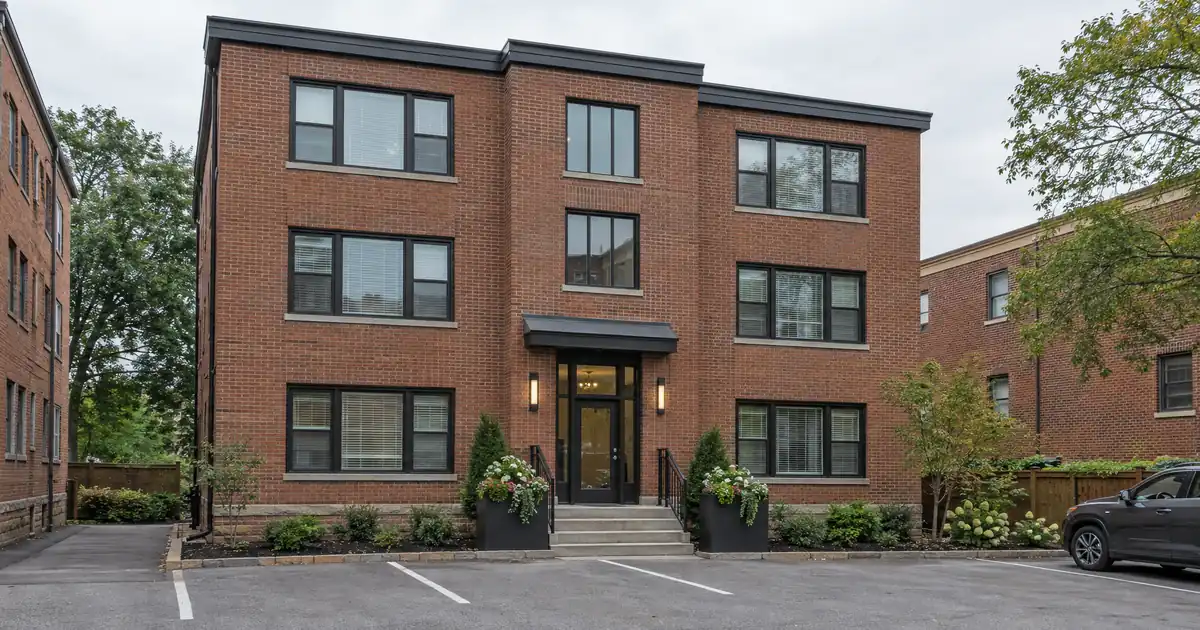
The Quick Read: A coastal six-unit is financed as a specialty multifamily file, not as a standard 1-4 unit super jumbo DSCR loan, because five or more units move the building into a different program, a different appraisal and often a different coverage formula. The rent still drives the deal, but insurance and flood treatment frequently decide whether the numbers hold.
- Across our wholesale network, the super jumbo ladder is written for 1-4 units. A six-unit routes through a rental portfolio term loan, subject to underwriting.
- Unit count sets the lender pool, the appraisal and the math before loan size does.
- Some programs divide gross rent by the full payment. Others divide net operating income by debt service. Find out which one before you run the numbers.
- On the coast, hazard, wind and flood policies can shift the ratio more than any rent change.
- Get insurance quotes and a flood determination before you make an offer.
Super jumbo is not a legal category. It is a label lenders use for loans above the usual limits, and every program draws its own line. That is why the first question on a six-unit is never “how big is the loan?” It is “which program reads a building this size at all?”
DSCR Calculator
Run the numbers in your market
Rate source: Freddie Mac 30-yr average via FRED® — Federal Reserve Bank of St. Louis · effective Oct 22, 2026
Prefilled with starting assumptions — enter your own rent or nightly figures, taxes, insurance, and HOA for a more accurate picture.
Program parameters update from Lendmire’s centralized guideline source. Taxes and insurance are editable estimates.
As of Oct 22, 2026 · General Freddie Mac market benchmark, not a Lendmire loan offer. Rent, nightly rate, occupancy, taxes, and insurance are editable estimates. Short-term rental figures are estimates only and vary significantly by season, property type, management approach, and local short-term-rental rules — confirm local regulations before relying on them. Qualifying income for short-term rentals varies by program — some use appraisal market rent, others use documented STR history or projections — and is confirmed in underwriting. Not a Loan Estimate, approval, or commitment to lend. Program availability and eligibility are subject to lender guidelines, credit approval, property review, and underwriting.
Is a Six-Unit a Super Jumbo DSCR Candidate?
Yes, a six-unit can be a large-balance DSCR candidate, but not on the same rails as a duplex or fourplex. In our network, the super jumbo ladder covers 1-4 units. A building with five or more residential units is eligible only inside a rental portfolio term loan, subject to underwriting and program terms.
Why does the line fall at five? Residential investor loans are built to be bundled and sold into pools that expect 1-4 unit collateral. Five or more units is generally treated as multifamily and grouped with commercial real estate lending. Some DSCR programs reach into the 5-10 unit range, but those are the exception rather than the norm, and the same building can be reviewed very differently from one lender to the next.
The term loan side has its own shape. Balances can reach $10,000,000, and terms are fixed for 3, 5, 7 or 10 years with a balloon at the end, so you need a refinance or exit plan from day one. Mixed-use buildings, where commercial space sits under the apartments, are not eligible in that pool.
| Building type | Likely path |
|---|---|
| 1-4 units, large balance | Super jumbo DSCR ladder |
| 5+ residential units | Rental portfolio term loan |
| Residential over retail | Not eligible in that pool |
| Condotel unit | Separate condotel limits |
If you are weighing this route against a smaller-balance agency product, Lendmire’s comparison of super jumbo DSCR versus agency small-balance financing on a coastal six-unit covers that decision directly.
How Underwriting Treats a Six-Unit, Step by Step
Underwriting a six-unit runs in a fixed order: classify the building, pick the coverage formula, price the insurance, document the income, then size the loan. Skipping ahead is how investors end up with a ratio that looks fine on a napkin and fails in review.
Step 1: Classify the building. A six-unit is commercial multifamily for lending purposes. That narrows the lender pool and changes the paperwork.
Step 2: Choose the coverage formula. Programs differ here, and it matters more than most buyers expect. The next section covers it in detail.
Step 3: Price the insurance. Do this before you finalize the ratio. Underwriting counts insurance either inside the monthly obligation or as an operating expense, depending on the formula.
Step 4: Document the income. Expect a rent roll listing each unit, tenant, rent and lease end date, plus signed leases and trailing operating statements. Loans of this type qualify primarily on property-level rental income covering the obligation, subject to lender guidelines. They do not run on your traditional personal-income documentation. The building still has to prove it earns what the seller says.
Step 5: Size the loan. Appraised value, coverage and sponsor strength set the proceeds. Reserves and leverage run tighter than on a 1-4 unit file, and the portfolio term loan sets its own figures for a six-unit, reviewed case by case.
Which Coverage Formula Applies?
Two formulas are in use. The residential method divides monthly gross rent by the full monthly obligation: principal, interest, taxes, insurance and any association dues. The multifamily method divides stabilized net operating income by annual debt service. Net operating income is rent minus vacancy and operating costs, before the loan payment.
| Factor | Rent over PITIA | NOI over debt service |
|---|---|---|
| Income counted | Gross rent | Rent less vacancy |
| Taxes and insurance | In the payment | Operating expense |
| Operating costs | Not deducted | Deducted first |
| Typical result | Higher ratio | Lower ratio |
The same six-unit can show a materially lower ratio under the second formula, because costs come out before the lender compares income to debt. A residential-style estimate can therefore overstate coverage on a building this size. This is a recurring surprise on 5+ unit files.
Ask the lender these questions before you spend money on an appraisal:
- Is coverage gross rent over the payment, or net operating income over debt service?
- Does the lender use lease rent, market rent, or the lower of the two?
- Are taxes and insurance in the denominator or the expense line?
- What vacancy factor does the lender apply?
- What are the reserve and experience requirements for this unit count?
The lender’s answer tells you which version of your own numbers to trust. Federal bank examiners describe the same logic: in the OCC’s Commercial Real Estate Lending handbook, repayment on income property depends on the cash flow the building produces, and collateral value follows net operating income.
What Coastal Insurance Does to the Ratio
Coastal insurance often does more to your coverage than rent growth ever will. A coastal building can carry hazard, windstorm and flood policies at the same time, and each one is its own line. Underwriters want full replacement-cost coverage, acceptable hurricane deductibles, wind-mitigation evidence and compliant flood coverage. They care more about whether the coverage is adequate than about which carrier wrote it.
Flood is where the collateral math gets sharp. Federal rules require mortgage flood coverage to equal at least the lesser of three values: the outstanding principal balance, the maximum available under the National Flood Insurance Program (NFIP), or the building’s insurable value, as the Federal Reserve’s Consumer Compliance Outlook explains. The NFIP building limit is $250,000 for 1-4 family buildings, and a Congressional Research Service overview of the NFIP confirms that figure. For residential buildings with five or more units, the limit rose to $500,000 in a June 1, 2014 change, as Cullen and Dykman summarizes.
A six-unit worth more than that cap usually needs private excess flood coverage. That protects you and the lender, and it adds cost. Budget for it as a separate line, and do not assume the federal policy covers the whole building.
Three more coastal details change the file:
- Flood zone severity. An elevated building in a moderate-risk zone with affordable private flood cover can work. A building in a high-velocity zone, or one sitting below base flood elevation with a very high premium, is much harder to place.
- Premium movement. Statute caps annual NFIP premium increases for primary residences, but the CRS report on Risk Rating 2.0 does not say that cap reaches investor-owned rentals. Do not assume it protects you.
- Percentage deductibles. A hurricane deductible written as a percentage of the insured value can become a large cash obligation on a big building. Reserves have to be able to absorb it.
Salt air also matters. Roofs, exteriors, balconies and decks on the water age faster, and an appraiser may flag condition items that a lender then wants fixed or reserved against.
The Same Building, Run Twice
The ratio swings with the formula and the insurance, so run the same six-unit four ways. The figures below are illustrative coverage ratios, not program terms, and not a quote.
| Scenario | Rent over PITIA | NOI over debt service |
|---|---|---|
| Inland-priced insurance | About 1.25x | About 1.05x |
| Coastal-priced insurance | About 1.10x | About 0.90x |
Nothing changed except the insurance quote. Under the first formula, a bigger premium sits in the denominator and trims the ratio. Under the second, it comes out of income as an expense and hits harder. That is not a rule, but it shows how fast a floor can slip away.
What do you do when the coastal run falls short? Several levers exist, and none carries a guarantee:
- Put more equity into the deal, which lowers the loan and the debt service.
- Restructure the insurance, such as a different deductible, a different carrier mix, or documented wind-mitigation credits.
- Ask whether an interest-only period is available under the program, which lowers the qualifying obligation.
- Move to a different loan type altogether, such as bridge or commercial financing.
Each of these is reviewed by the lender, and eligibility depends on guidelines, credit, reserves and property review.
Large-Balance Mechanics: How Loan Size Changes the File
Loan size changes leverage, credit and reserves, and the figures below belong to the super jumbo ladder for 1-4 units. They show how the network steps down as balances climb. A six-unit is set under its own portfolio program, so treat this table as context rather than a six-unit quote. Every figure is a ceiling through select wholesale programs at coverage of 1.00 or higher, subject to underwriting.
| Loan amount band | Purchase | Rate-and-term | Cash-out |
|---|---|---|---|
| $150K-$1M | 80% | 80% | 75% |
| $1M-$1.5M | 75% | 75% | 70% |
| $1.5M-$2M | 75% | 75% | 60% |
| $2M-$3M | 75% | 75% | 60% |
| $3M-$4M | 65% | 65% | — |
| $4M-$6M | 60% on review | 60% on review | — |
| $6M-$10M | 60% on review | 60% on review | — |
The bands are loan amounts, not purchase prices. Multiply price by leverage first, then read the band that loan falls in. Credit works the same way. The floor is 660 on loans to $3,000,000 and 700 above that. The top leverage cell in each band needs a stronger score: 660 or better in the first band, 700 or better in the second, and 720 or better from $1.5M to $3M. A lower score takes a lower cell in the same band. Above $4,000,000, every request is reviewed case by case before submission.
Other typical guidelines on that ladder: reserves of six months on the subject property (twelve for first-time investors), two appraisals above $2,000,000, and a 120-month interest-only period available on 30- and 40-year terms up to 75% leverage, subject to underwriting. Entity vesting is welcome, with no layered entities, per program requirements. For the broader picture, the complete DSCR loans guide walks through how these programs fit together. Final terms depend on the lender’s guidelines, the property type, and the borrower’s complete credit picture.
Documents and Pre-Application Checklist
Gather the coastal items first, because they are the ones that change the answer. In order:
1. Order a flood zone determination for the address.
2. Collect actual hazard, windstorm and flood quotes, including excess flood if the building exceeds the federal cap.
3. Pull the wind-mitigation report, and confirm it is current.
4. Assemble the rent roll, signed leases and trailing operating statements.
5. Check the rent roll against reality. Below-market month-to-month units, a delinquent tenant or padded laundry income can make a seller’s package look stronger than the building is.
6. Confirm reserves are liquid and not borrowed. On the super jumbo ladder, cash-out proceeds never satisfy reserves.
7. Ask the lender which coverage formula and which appraisal approach apply.
Then the deal works to appraisal and underwriting. Run your offer numbers on the insurance quotes, not on a placeholder.
DSCR vs. conventional financing
There are two common ways to finance an investment property, and they qualify you differently — here’s how investors weigh them.
Why investors choose it
- Qualifies on the property’s rental income — no personal tax returns, W-2s, or pay stubs needed to document income.
- No personal debt-to-income ceiling to clear, so existing mortgages and obligations don’t cap your borrowing the same way.
- Can be closed in an LLC, keeping the property inside a business entity.
- Built for scaling — not held to the limit on number of financed properties that conventional financing applies.
- Underwriting centers on the deal: generally qualifies when the rent covers the payment, a 1.00x coverage ratio being a common baseline (confirmed in underwriting).
- Designed specifically for investment property, including long-term and, where the program allows, short-term rentals.
Where it’s strong
- Often the lowest ongoing financing cost for a buyer who fully qualifies on personal income — a fit for a first property or a cost-first purchase.
Trade-offs for investors
- Requires full personal income documentation and must fit within a debt-to-income limit — salary, existing debts, and other mortgages all count.
- Typically held in your personal name rather than a business entity.
- Caps how many financed properties you can carry, which can become a ceiling as a portfolio grows.
- Evaluates you as a borrower as much as the property, which usually means more paperwork.
How investors usually choose: a first or single property often optimizes for the lowest financing cost; portfolio builders often optimize for leverage, vesting in an LLC, and scaling past conventional caps. The right answer depends on your goals, the property, and current guidelines — both paths run through select lenders in Lendmire’s wholesale network, with eligibility and terms confirmed in underwriting.
Key Terms Defined
DSCR (debt service coverage ratio): Rental income divided by the loan’s monthly obligation, used to test whether the property pays for itself.
PITIA: Principal, interest, taxes, insurance and any association dues, the full monthly obligation on the loan.
NOI (net operating income): Rent less vacancy and operating costs, before the loan payment.
Super jumbo: A lender label for very large loans, not a legal category.
Rent roll: A unit-by-unit list of tenants, rents and lease end dates.
Reserves: Liquid cash a lender wants left over after closing.
Flood determination: A check of whether the property sits in a mapped flood zone.
Wind mitigation: Documented roof, opening and construction features that reduce storm damage risk and can earn insurance credits.
NFIP: The National Flood Insurance Program, the federal flood policy with capped building limits.
When This Route Doesn’t Fit
A six-unit through this route is a poor match when you need long-term, loan-style flexibility with no balloon, when the building is mixed-use, or when the insurance cannot be placed at a cost the building can carry. Fixed terms of 3 to 10 years with a balloon demand an exit plan. If you would rather avoid that, look at agency small-balance financing, commercial loans, bridge loans or a different property mix. Lendmire’s piece Can a Coastal Six-Unit Building Get a Super Jumbo DSCR Loan? takes the eligibility question head-on.
Coastal states differ in how insurance markets work, how common mapped flood zones are, and what local rules apply. Check the specifics for your building rather than assuming one coast looks like another. Tax treatment can depend on how the funds are used and how the property is held; investors should keep clear records and speak with a qualified tax professional before relying on any deduction.
Frequently Asked Questions
Can a six-unit building qualify for a super jumbo DSCR loan?
Not on the standard ladder, which is written for 1-4 units in our network. Eligibility depends on the building, the sponsor and the lender’s guidelines, and nothing here is a commitment to lend.
Do lenders use gross rent or net operating income on a six-unit?
It depends on the program. Some use gross rent over the full payment, and others use net operating income over debt service. The second method usually produces a lower ratio on the same building, so confirm the formula before you rely on any estimate.
How much flood insurance can the NFIP provide on a six-unit?
The NFIP building limit for a residential building with five or more units is $500,000, versus $250,000 for 1-4 family buildings. If the building is worth more, private excess coverage is typically needed. Lenders require flood coverage equal to the lesser of the loan balance, the NFIP maximum or the building’s insurable value.
What happens if the building fails the coverage test after insurance is added?
You can add equity, restructure the insurance, ask about interest-only terms where the program allows, or move to a different loan type. Each option is reviewed by the lender, and none is guaranteed.
Does a first-time investor need to plan differently?
Yes. Reserves run higher for first-time investors, at twelve months on the super jumbo ladder, and 5+ unit lenders often weigh sponsor experience. Programs differ on how much, so ask early.
If You’re Ready to Run the Numbers
If you are buying or refinancing a high-balance rental property and want to see how the numbers work, Lendmire can help you compare super jumbo DSCR loan options based on the property income, the loan balance, credit profile, leverage and investor goals. Lendmire is a broker that arranges business-purpose investor financing through select lenders in its wholesale network across 41 markets, including Washington, D.C. On a coastal six-unit, the building’s insurance quote deserves as much attention as its rent roll.
Lendmire’s self-employed mortgages page presents both super jumbo programs, bank statement and DSCR, side by side.
About Lendmire
A DSCR-focused mortgage broker, Lendmire (NMLS# 2371349) places investor financing across 41 markets — 40 states plus Washington, D.C. — with DSCR eligibility generally reviewed by the lender on property cash flow instead of tax returns, subject to lender guidelines. Scotsman Guide named Lendmire a Top Mortgage Workplace in 2025 and 2026.
Get Started
Ready to find the right loan for you?
In about 30 seconds you can review financing options available for your investment property. No commitment required.
Informational only. Not a Loan Estimate, approval, or commitment to lend. Program availability and eligibility are subject to lender guidelines, credit approval, property review, and underwriting.
References
1. Federal Reserve Consumer Compliance Outlook – Commercial Flood Insurance
2. Congressional Research Service – NFIP overview
3. Cullen and Dykman – Maximum flood insurance for multifamily buildings
This article is part of Lendmire’s super jumbo DSCR loan program — full qualification details, guidelines, and scenarios live on the program page.
Related reading: Can a Luxury Rental Qualify on Its Rent With a Super Jumbo DSCR Loan? · Super Jumbo DSCR vs Agency Small-Balance Financing on a Coastal Six-Unit · Can a Penthouse Get a Super Jumbo DSCR Loan With No Comparable Sales?
Brandon Miller
Founder & CEO, Mortgage Loan Originator, Lendmire LLC
- Mortgage Loan Originator · NMLS# 1129696 · Verify on NMLS Consumer Access
- North Carolina Real Estate Broker · License# 343312 · Verify on NCREC
- North Carolina Insurance Producer · License# 19053198 · Property, Casualty, Life, Health · Verify on NAIC SBS
- Lendmire LLC · Firm NMLS# 2371349 · Verify firm licensure
Compliance and disclosures. Lendmire (NMLS# 2371349) is a licensed mortgage broker and is not a direct lender, depository institution, financial advisor, or tax professional. Content in this article is general market analysis and educational information — not financial, legal, or tax advice for any specific situation. Lendmire does not guarantee loan approval; every transaction is subject to underwriting by the funding lender. Mortgage pricing and loan program guidelines are subject to change at any time without notice and vary by borrower characteristics, property type, and state regulations. Lendmire complies with Equal Housing Opportunity. Licensure verification: NMLS Consumer Access.