
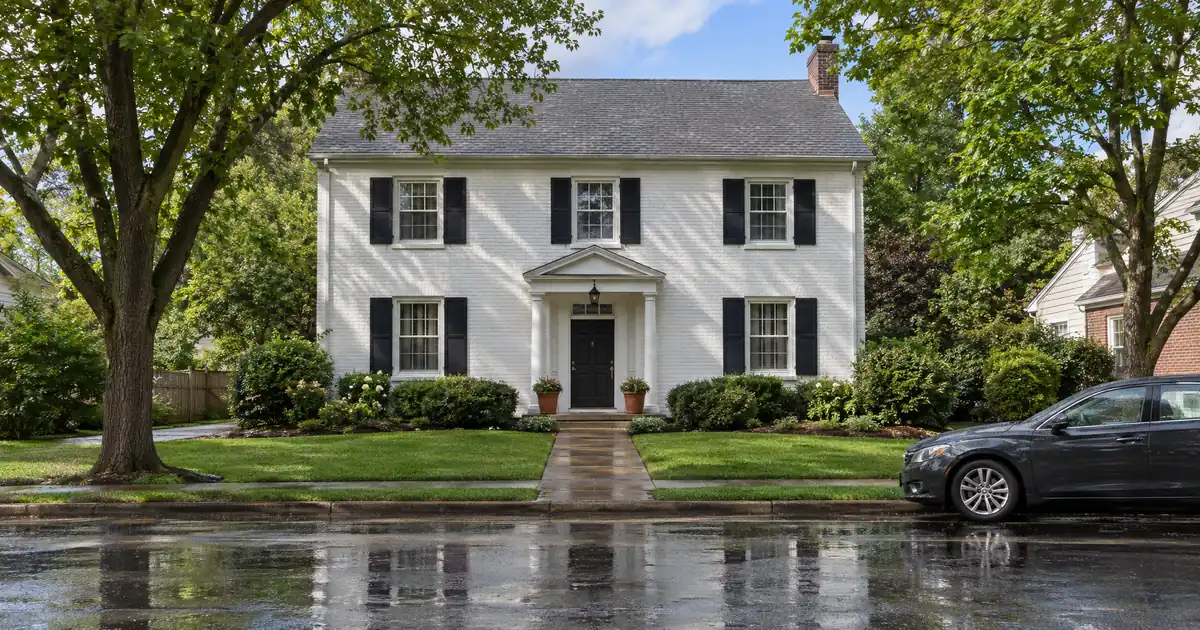
The Quick Read: A DSCR loan lends against what a property can rent for today, so it works when repairs are light and the home could be leased as it stands. It does not fund rehab work. Major repairs usually mean a short-term loan first, then a DSCR refinance once the property is rentable.
- Light, cosmetic work is generally fine. Roof, HVAC, electrical, plumbing, and structural problems generally are not.
- The appraiser’s condition rating and any “subject to repairs” note are the real gatekeepers.
- DSCR programs generally have no repair holdback built into the loan.
- Heavy rehab usually means two loans: a bridge or hard money loan, then a DSCR refinance.
- Most files sit at 75%-80% LTV on a purchase. Clearing 1.00 coverage does not mean the property cash flows.
You found a deal with potential, and the roof has seen better decades. Can DSCR financing handle it? Sometimes. The answer depends on which repairs, and the line between “fine” and “not yet” is sharper than most investors expect. This guide walks through where that line sits and what to do on each side of it. For the full program picture, see Lendmire’s complete DSCR loans guide.
DSCR Calculator
Run the numbers in your market
Rate source: Freddie Mac 30-yr average via FRED® — Federal Reserve Bank of St. Louis · effective Oct 29, 2026
Prefilled with starting assumptions — enter your own rent or nightly figures, taxes, insurance, and HOA for a more accurate picture.
Program parameters update from Lendmire’s centralized guideline source. Taxes and insurance are editable estimates.
As of Oct 29, 2026 · General Freddie Mac market benchmark, not a Lendmire loan offer. Rent, nightly rate, occupancy, taxes, and insurance are editable estimates. Short-term rental figures are estimates only and vary significantly by season, property type, management approach, and local short-term-rental rules — confirm local regulations before relying on them. Qualifying income for short-term rentals varies by program — some use appraisal market rent, others use documented STR history or projections — and is confirmed in underwriting. Not a Loan Estimate, approval, or commitment to lend. Program availability and eligibility are subject to lender guidelines, credit approval, property review, and underwriting.
Key Terms Defined
- DSCR (debt service coverage ratio): the property’s monthly rent divided by its monthly payment of principal, interest, taxes, insurance, and any HOA dues.
- PITIA: that full monthly payment, with each piece spelled out.
- Rent-ready: a property a tenant could move into today without repairs.
- Holdback (escrow holdback): money set aside at closing to pay for repairs afterward.
- Bridge loan: a short-term loan, often from a hard money lender, used to buy and fix a property.
- Subject-to appraisal: a value opinion that depends on repairs being finished.
- ARV (after-repair value): your estimate of what the property is worth once the work is done.
- Seasoning: the waiting period a lender wants before it will refinance a property you recently bought or fixed.
Why Does a DSCR Loan Need a Rentable Property?
Because the loan is reviewed primarily on property-level rental income covering the payment, subject to lender guidelines. That income has to exist, or be credibly supported by the appraisal, on the day of closing. A home with no working kitchen or a failing roof does not produce rent that anyone can count.
DSCR loans are designed for non-owner-occupied investment properties. Because they are business-purpose investor loans, they are reviewed differently from a standard owner-occupied mortgage. The lender is not betting on your paycheck to carry a project. It is betting on the building to carry itself.
That is why condition works as a separate gate. The lender checks that the property is livable first. Only then does the coverage math matter.
How Does Underwriting Treat Repairs, Step by Step?
Underwriting treats repairs as a pass-or-fail condition check that comes before the ratio. Here is the sequence on a typical file.
1. Appraisal. The appraiser rates the property’s condition and notes defects. The key signal is whether value is reported “as is” or “subject to” repairs.
2. Eligibility screen. Light, cosmetic, and wear-and-tear items generally pass. Safety, soundness, structural, or major-system problems generally do not. Treatment varies by program.
3. Rent support. The appraisal supports a market rent for the property in the condition it is in.
4. Coverage math. Only then does the lender compare that rent to PITIA. Repairs, vacancy, and capex never enter the formula.
A subject-to note is the usual trip wire. It tells the lender the value depends on work not yet done, and most programs we place files with will not move forward on that basis.
Where Is the Line Between Light and Disqualifying Repairs?
Cosmetic wear passes. Failing major systems do not. The table shows how most programs in our network react, though every file is reviewed individually.
| Repair type | Typical lender reaction | What to do |
|---|---|---|
| Paint, flooring, dated finishes | Usually fine as-is | Close, then update |
| Minor deferred maintenance | Usually fine | Fix after closing |
| Roof near end of life | Often a problem | Repair first or bridge |
| HVAC not working | Often a problem | Repair first or bridge |
| Electrical or plumbing defects | Often a problem | Repair first or bridge |
| Structural or safety issue | Generally disqualifying | Bridge loan, then refinance |
| Missing kitchen or bath | Not rent-ready | Bridge loan, then refinance |
Vacancy itself is not the disqualifier. An empty property can work if the appraisal supports market rent and a tenant could move in without repairs. Unrentable condition is what stops a file.
What Do the Appraiser’s Condition Ratings Mean?
Appraisers rate condition on a scale from C1 to C6, and DSCR lenders care most about the bottom of it. McKissock, an appraiser education provider, describes C5 as noticeable deferred maintenance with significant repair needs. It describes C6 as major damage or serious deferred maintenance. If any part of the dwelling warrants a C6, the whole dwelling is rated C6.
McKissock also explains that the appraiser reports an “as is” condition rating. When needed, the appraiser adds a “condition subject to repair” rating backed by documented defects and repair estimates. That second rating is where DSCR files often stall.
Most DSCR programs want a property around the middle-to-good end of that scale, with the roof, HVAC, electrical, and plumbing all working. The scale is shared across the industry. The cutoffs are not. A government-backed agency may accept a rougher grade, as the Fannie Mae Selling Guide shows by treating C1 through C5 as eligible as-is. DSCR lenders generally draw the line tighter. Do not assume agency rules apply to your DSCR file.
Why Is There Usually No Repair Holdback?
DSCR programs generally have no built-in repair escrow, so the loan amount is not stretched to cover renovation costs. That surprises investors who know renovation products. An FHA 203(k) loan, summarized by the FDIC, is built to finance purchase and rehab together. DSCR loans are built to finance a property already producing rent.
This creates a catch-22 for value-add buyers. The property needs repairs to be rentable. It must be rentable to qualify. Cash and a second loan break the loop.
Many investors ask whether they can close first and fix things afterward. For light work, generally yes. The condition that matters is the one at closing, and the appraisal should carry no subject-to-repairs note on value. Heavy work that drives value is a different story, which brings us to the two-loan path.
If you are weighing other rehab-friendly routes, Lendmire’s piece How to Keep an FHA Purchase on Schedule When the Home Needs Repairs covers the owner-occupant side of this problem.
How Does the Two-Loan Path Work?
For heavy repairs, you fund the purchase and rehab with a bridge or hard money loan, then refinance into a DSCR loan once the property is rentable. It is the standard workaround, and it is not a trick. It matches each loan to what it does well.
1. Buy with the bridge loan. It funds the purchase and the repair budget.
2. Complete the work. The property reaches rent-ready condition.
3. Lease it up, or document market rent. The appraisal supports the rent.
4. Refinance into DSCR. The lender reappraises the property in its new condition and runs the coverage test.
5. Pay off the bridge. The new loan retires the short-term debt.
Two points deserve attention. First, your ARV is a planning number. The lender’s own appraisal governs, and receipts show what you spent, not what the property is worth. Second, seasoning varies by lender. Some programs want a few months after the bridge purchase and others want longer, so ask before you pick a bridge term. A term that expires before you can refinance is how a good project turns into an expensive scramble.
DSCR vs. conventional financing
There are two common ways to finance an investment property, and they qualify you differently — here’s how investors weigh them.
Why investors choose it
- Qualifies on the property’s rental income — no personal tax returns, W-2s, or pay stubs needed to document income.
- No personal debt-to-income ceiling to clear, so existing mortgages and obligations don’t cap your borrowing the same way.
- Can be closed in an LLC, keeping the property inside a business entity.
- Built for scaling — not held to the limit on number of financed properties that conventional financing applies.
- Underwriting centers on the deal: generally qualifies when the rent covers the payment, a 1.00x coverage ratio being a common baseline (confirmed in underwriting).
- Designed specifically for investment property, including long-term and, where the program allows, short-term rentals.
Where it’s strong
- Often the lowest ongoing financing cost for a buyer who fully qualifies on personal income — a fit for a first property or a cost-first purchase.
Trade-offs for investors
- Requires full personal income documentation and must fit within a debt-to-income limit — salary, existing debts, and other mortgages all count.
- Typically held in your personal name rather than a business entity.
- Caps how many financed properties you can carry, which can become a ceiling as a portfolio grows.
- Evaluates you as a borrower as much as the property, which usually means more paperwork.
How investors usually choose: a first or single property often optimizes for the lowest financing cost; portfolio builders often optimize for leverage, vesting in an LLC, and scaling past conventional caps. The right answer depends on your goals, the property, and current guidelines — both paths run through select lenders in Lendmire’s wholesale network, with eligibility and terms confirmed in underwriting.
What Does a Worked Example Look Like?
Run the numbers on a duplex in a mid-priced rental market. These inputs are modeled assumptions, not market data.
- Purchase: a distressed duplex with a failing roof and outdated systems.
- Step one: a bridge loan covers the purchase and a repair budget.
- Step two: after the work, the appraisal supports market rents on both units.
- Step three: the DSCR refinance is sized at up to 75% LTV on a cash-out basis, or within the purchase tiers if structured as a rate-and-term payoff. Coverage clears roughly 1.2x.
- Result: the bridge is repaid, and you hold a long-term loan on a stabilized rental. The exact numbers vary by lender and program and follow a full review of property, leverage, and credit.
Now the failure modes. If the rehab runs over budget, you carry the bridge longer. If the appraisal comes in low, leverage shrinks and you may need to bring cash to the payoff. If rents come in light, coverage may land near or below 1.00. Financing below 1.00 coverage is available through select lenders in the network, with leverage and terms adjusted. That path exists, but plan on a smaller loan for the same property.
This is why modeling conservatively matters. Assume a lower rent, a lower value, and a longer timeline. If the deal still works, it is a deal.
Can You Pay Cash for Repairs Instead?
Yes, and for many investors it is the simplest path. If you can fund the work from your own capital, you buy with cash or other financing, fix the property, and then refinance into a DSCR loan. You skip the bridge’s second set of closing costs only if you skip the bridge. You still face seasoning rules on the refinance, so check them first.
Light-condition properties may not need any of this. If the home is rent-ready with cosmetic needs only, it can often go straight to a DSCR purchase loan, which avoids the bridge step entirely. On purchases, most files land at 75%-80% LTV, and select high-leverage programs reach 85% with roughly a 700+ credit score. Your credit tier and reserves matter too. Most programs want around a 660 score, a 620 floor exists in parts of the network, and reserves commonly run about 6 months of PITIA, stepping up to about 9 months above $1,500,000 in loan size. All of it is subject to lender guidelines.
What About “Renovation” DSCR Products?
Read the label carefully. Some marketing uses renovation or construction-to-permanent language around DSCR financing. In practice, that usually describes a two-step structure under one roof, a short-term loan followed by a DSCR takeout. It does not usually mean repair money rolls into one standard DSCR loan.
Rare lender exceptions exist, and the network does have lenders with unusual structures. Treat them as exceptions to evaluate on their own terms, not as the baseline. Ask which loan funds the work, who holds the repair money, and what happens if the refinance does not happen.
Which Path Fits You?
| Your situation | Likely path |
|---|---|
| Property is rent-ready, cosmetic needs only | Direct DSCR purchase |
| Moderate repairs, you have cash | Buy, repair, then DSCR refinance |
| Heavy rehab, limited cash | Bridge loan, then DSCR refinance |
| Want to skip the work altogether | Buy a turnkey rental |
| Plan to live in it first | An owner-occupant renovation product |
Cash-out on standard rentals tops out around 75% LTV across most of the network, with about 6 months of seasoning the common expectation. Final terms depend on the lender’s guidelines, the property type, and the borrower’s complete credit picture.
One more reality check. Clearing 1.00 is not the same as positive cash flow. DSCR compares rent to PITIA only. Repairs, vacancy, management, utilities, and capex all sit outside the calculation, so your own budget has to cover them.
What Should You Have Ready for the Refinance?
Lenders want proof that the work is finished and the property is rentable. Gather these before you apply:
- The scope of work and contractor invoices or receipts.
- Photos showing completed work in each major system.
- A lease, or the documentation the appraiser needs to support market rent.
- Proof of insurance in your name or your entity’s name (subject to lender program eligibility for entity-titled loans).
- Your bridge loan payoff details and maturity date.
- Reserve statements.
A half-finished rehab cannot go to a DSCR file. The answer there is a bridge extension or a new bridge loan, so keep a buffer in your timeline.
Tax treatment varies; consult a qualified professional.
Frequently Asked Questions
Can I use a DSCR loan on a fixer-upper?
Only if the property is rent-ready or needs light cosmetic work. A fixer-upper with failing major systems or structural problems generally needs a bridge or hard money loan first. The DSCR loan then becomes your refinance once the property is rentable. Every file is reviewed individually, and eligibility is subject to lender guidelines.
Can I get a repair holdback with a DSCR loan?
Generally no. DSCR programs do not typically include a built-in repair escrow, unlike renovation products such as the FHA 203(k). If you need the loan itself to fund repairs, a DSCR loan is the wrong tool for that stage.
What happens if the appraisal says value is subject to repairs?
That note usually stops the file, because it tells the lender the value depends on work not yet done. You can complete the repairs and have the property reappraised, or switch to a bridge loan and refinance later. The lender’s appraisal governs, not your estimate.
Can I roll rehab costs into the DSCR loan amount?
Generally not. Rehab money comes from a separate loan or your own cash. After the work, a cash-out refinance can return capital within the leverage caps of the program, around 75% LTV on standard rentals, subject to lender guidelines.
Can I close first and make repairs afterward?
For light work, generally yes. The condition at closing is what counts, and the appraisal should not carry a subject-to-repairs note. Heavy work that drives significant value is better handled with a bridge loan first.
Next Step
If you are buying or refinancing a rental property and want to see how the numbers work, Lendmire can help you compare DSCR loan options based on the property income, credit profile, leverage, and investor goals. Lendmire is a broker that arranges financing through select lenders in its wholesale network across 41 markets, including Washington, D.C. Programs change, and every file is underwritten individually. This is not a commitment to lend.
About Lendmire
Lendmire — NMLS# 2371349 — is a DSCR and non-QM mortgage brokerage with investor loan programs in 41 markets, including Washington, D.C. DSCR eligibility is commonly reviewed by the lender around property-level rent rather than personal income documentation, subject to lender guidelines, and the brokerage helps arrange financing for LLC-owned portfolios beyond conventional financed-property limits. Recognized by Scotsman Guide as a Top Mortgage Workplace in 2025 and 2026.
Get Started
Ready to find the right loan for you?
See your offer in seconds. No credit pull, no obligation.
Informational only. Not a Loan Estimate, approval, or commitment to lend. Program availability and eligibility are subject to lender guidelines, credit approval, property review, and underwriting.
References
1. McKissock Learning – Understanding Appraisal Condition Ratings C1 to C6
2. Fannie Mae Selling Guide B4-1.3-06
3. FDIC – FHA 203(k) Rehabilitation Mortgage Insurance summary
This article is part of Lendmire’s DSCR loan program — full qualification details, guidelines, and scenarios live on the program page.
Related reading: How to Qualify for a DSCR Loan on a Month-to-Month Rental · How a DSCR Loan Works on a Luxury Multifamily Property · Can You Get a DSCR Loan With a Lower Credit Score?
Brandon Miller
Founder & CEO, Mortgage Loan Originator, Lendmire LLC
- Mortgage Loan Originator · NMLS# 1129696 · Verify on NMLS Consumer Access
- North Carolina Real Estate Broker · License# 343312 · Verify on NCREC
- North Carolina Insurance Producer · License# 19053198 · Property, Casualty, Life, Health · Verify on NAIC SBS
- Lendmire LLC · Firm NMLS# 2371349 · Verify firm licensure
Disclosure information. Lendmire is a state-licensed mortgage brokerage under NMLS# 2371349. Lendmire is not a depository institution, direct lender, or financial advisor — all loans referenced are placed through wholesale lender partners and are subject to each lender's underwriting standards. This article is provided for general informational purposes and is not a commitment to lend, nor does it constitute financial, legal, or tax advice. Loan programs, terms, rates, and qualification standards change without notice and depend on borrower profile, property type, and the state in which the subject property is located. Equal Housing Opportunity provider. NMLS Consumer Access: nmlsconsumeraccess.org.