
The Quick Read: DSCR financing is permanent rental debt that qualifies primarily on property-level rental income covering the payment, subject to lender guidelines, while hard money is short-term, asset-based debt built on the property’s value, your plan, and your exit, and on a rental under 75K, loan-size floors and property condition often settle the choice first.
- Rent-ready and leased (or leasable): permanent financing is the natural home, if the loan amount clears the program minimum.
- Needs work: short-term money usually comes first, with a refinance planned after the property is rented.
- Standard DSCR loan sizes in Lendmire’s wholesale network start at roughly $100,000 and run up to $3,000,000 on standard programs (smaller balances available through select lenders), so a very cheap property can fall below the floor.
- Hard money terms in the network run 6-18 months, interest-only, so the exit plan matters more than monthly cash flow.
- Manufactured homes, log homes, and barndominiums are not offered on DSCR loans in the network, and many sub-75K properties fall into those categories.
The Honest Answer
A DSCR loan is for the investor who owns, or is buying, a rental that already works as a rental. The lender looks at whether the rent covers the full monthly obligation, and then holds that loan for the long term. A hard money loan is for the investor who needs a bridge. It suits a property that needs work, a purchase that needs speed of structure rather than a long hold, or a plan that ends in a sale or a refinance.
What this loan actually costs to carry.
Hard money is sized against the project and priced by time. Enter the deal and see how much the program will lend, the cash required at closing, the carry while you hold it, and what is left at the exit.
Leverage tiers on the current program: 85% with fewer than 2, 90% with 2 or more, 93% with 5 or more completed projects — every tier capped at 75% of after-repair value. Loan amounts up to $5,000,000, larger by exception; terms of 6 to 18 months, interest-only, no prepayment penalty. The rehab portion funds in draws against completed work, not at closing.
Program parameters shown update from Lendmire’s centralized guideline source. Rate, points, and months are editable assumptions, not quoted terms.
Cost cap sets the loan · positive spread
Illustrative estimate only — not a quote, Loan Estimate, approval, or commitment to lend. Rate, points, and months are editable assumptions. Hard money is business-purpose financing for real estate investors, not a consumer mortgage. Leverage on the current program tops out at 93% of project cost for investors with a documented track record, capped at 75% of after-repair value, with rehab funding up to 100% of the documented budget released in draws; actual terms vary by lender, borrower experience, property, and exit. Lendmire is a mortgage broker, not a lender.
At a purchase price under 75K, neither is a clean fit by default. DSCR loans have loan-size minimums that very cheap homes can miss. Hard money works on small balances in some places, but smaller balances vary by lender, and the fixed costs of any loan weigh more on a small number. So the decision usually isn’t “which is better.” It is “which one will actually accept this property, and what comes after.”
Side-by-Side
The DSCR column reflects what Lendmire sees across its wholesale network. The hard money column reflects published industry norms and the way these loans are commonly structured. Every cell varies by lender, property, and borrower experience.
| Factor | DSCR Loan | Hard Money Loan |
|---|---|---|
| Review basis | Rent vs. full monthly payment | Property value, plan, and exit |
| Personal income docs | Not the focus; credit still reviewed | Not the focus; credit still reviewed |
| Typical purpose | Long-term rental hold | Rehab, bridge, or short-term hold |
| Term structure | Long-term, 30-year fixed spine | Short term, 6-18 months typical |
| Payment style | Amortizing; interest-only select | Interest-only; balloon at end |
| Property condition | Must be rentable as-is | Distressed properties can fit |
| Loan size | Roughly $100K-$3M standard | Varies by lender for small loans |
| Reserves | Often about 6 months of PITIA | Varies; liquidity for carry and rehab |
| Leverage basis | Percent of value (LTV) | Often percent of cost, capped on value |
| Main risk | Rent falling short of payment | Term ending before the exit |
Two notes on the table. First, entity ownership: DSCR loans commonly allow an LLC as the borrower, depending on program guidelines, and hard money lenders commonly do as well. Second, “PITIA” means principal, interest, taxes, insurance, and any association dues, which is the full monthly housing payment the rent is measured against.
Why a Rental Under 75K Changes the Math
Price changes the question because lending has fixed workload. An appraisal, title work, and legal documents take about the same effort on a small loan as on a large one. Lenders therefore set minimum loan amounts. Across the network, standard DSCR loan sizes start around $100,000. Even at the highest purchase leverage, a loan on a property priced under 75K would land below that floor. Market surveys report that minimums vary across the industry. The network figure is the one that matters for the files Lendmire places.
Fixed costs also take a bigger bite. Third-party fees and lender charges don’t shrink in proportion to the property price. On a cheap house, the same costs take a larger share of the loan and of your equity. That is a reason to ask for every cost in writing before choosing a structure, on either product.
Property type matters just as much. DSCR loans in the network are not offered on manufactured homes (single-wide or double-wide), log homes, or barndominiums. Low-priced rentals often fall into those categories, so check this before anything else. Hard money eligibility for such properties varies by lender and is not something to assume.
Finally, rent is established by the appraiser’s rent estimate or a documented lease basis, not by what you hope to charge. On a cheap property in a thin rental market, that estimate may land lower than your pro forma. Ask what rent figure the lender will use before you price the deal.
When a DSCR Loan Is the Better Fit
A DSCR loan is the better fit when the property is rent-ready, the loan amount clears the program minimum, and you plan to hold. These are the signs you are in that lane:
- The property is leased or leasable today. There is rent to measure, so the ratio means something.
- You want a long runway. The 30-year fixed structure is the spine of the product. Extended terms and interest-only periods are available through select lenders in the network.
- You’d rather not document personal income. The loan is reviewed on documented income under the applicable program, subject to lender guidelines, which here means mainly the property’s rent. Credit is still reviewed.
- You are buying with real equity. Most purchases land at 75%-80% LTV on an investment property, with select high-leverage programs reaching 85% LTV at roughly a 700+ score.
Credit expectations are straightforward. A 620 floor exists in parts of the network, most programs want around 660, and 700+ unlocks the strongest leverage tiers. Reserves vary by lender, leverage, loan size, and transaction type, and commonly sit around 6 months of PITIA.
Here is how the coverage test works. The lender divides monthly rent by the full monthly payment. A result of 1.00 means rent equals the payment. Select programs start at 1.00, and stronger ratios open better terms and leverage. A separate select-lender path goes below 1.00, with leverage and terms adjusted. No-ratio structures are available only through select lenders, generally for borrowers who already own a primary residence.
Clearing 1.00 is not the same as positive cash flow. Repairs, vacancy, management, utilities, and capital expenses sit outside the calculation. On a cheap, older property, those costs can be a bigger share of rent, so run your own numbers on top of the lender’s ratio.
For a full walkthrough of how these loans work, see Lendmire’s complete DSCR loans guide.
When Hard Money Is the Better Fit
Hard money is the better fit when the property can’t be financed as a rental yet, or when the plan is shorter than a long hold. The lender sizes the loan against the property rather than your paychecks. Per Corporate Finance Institute, the loan is set as a percentage of the real estate’s value, which serves as the collateral.
These are the signs you are in this lane:
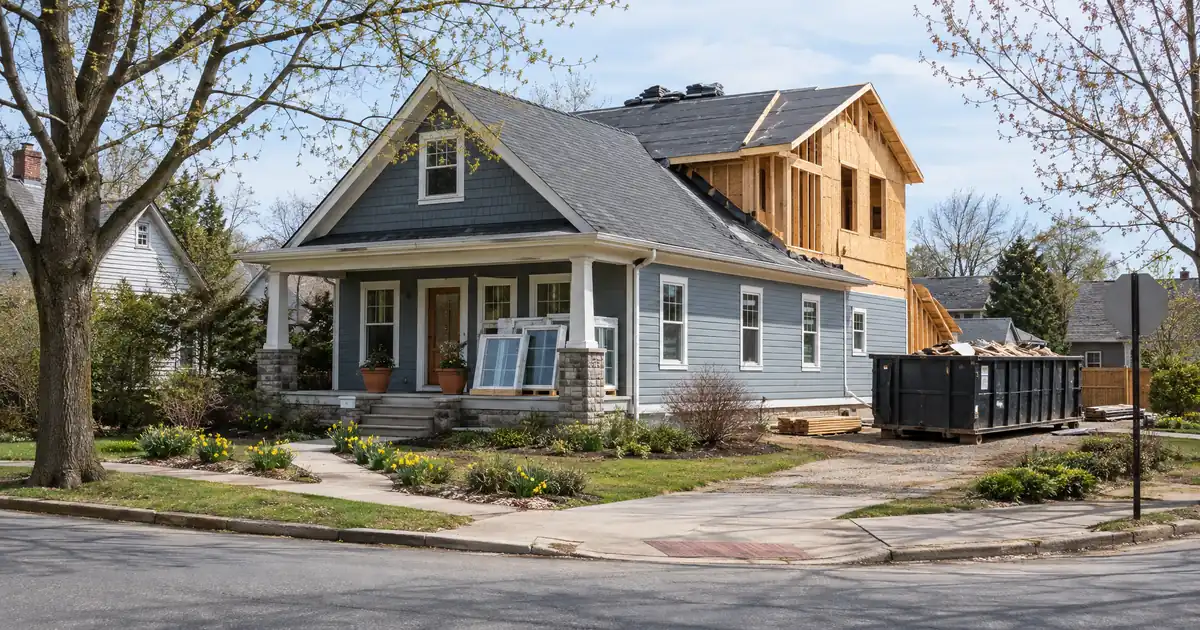
- The property needs work to be rentable. A house with no kitchen or a failed roof has no rent to underwrite. Rehab money comes first.
- The plan ends in a sale or a refinance. Terms in the network run 6-18 months, interest-only, with no prepayment penalty. There are no multi-year options on the current program.
- You want leverage tied to cost. Fix-and-flip leverage runs from 85% to 93% of project cost depending on documented completed projects, with every tier capped at 75% of after-repair value. Bridge purchases without rehab go up to 80% of purchase price. Up to 100% of the rehab budget funds in draws against completed work. These figures vary by lender, property, and experience, and the top tier is reserved for experienced investors.
- You are earlier in your investing career. First-time investors qualify at the lower leverage tiers.
Credit still counts. The network’s hard money program has a 620 minimum score, with additional conditions below 660. Underwriting stays asset-based, meaning it rests on the property, the plan, and the exit. Collateral is non-owner-occupied residential property, 1-4 units.
Hard money is a bridge, so the exit deserves more attention than the monthly payment. A short term that ends before the exit is ready is the central risk.
Using Both in Sequence
For many cheap rentals, the real answer is both, in order. Buy and rehab with short-term money. Get the property leased. Then move to long-term financing. Many investors refinance out of hard money into long-term DSCR financing once the property is stabilized, and Lendmire brokers that path. Lendmire’s piece Sell the Flip vs. Refinance Out of Hard Money Into a DSCR Rental covers that decision in detail.
The sequence has three failure points worth planning for:
1. The loan may be too small for the program. If the finished value still leaves the loan below the DSCR minimum, the refinance target may not exist. Check the floor before you buy, not after.
2. Seasoning. A cash-out refinance across most of the network tops out around 75% LTV, and about 6 months of seasoning is the common expectation. Seasoning is the waiting period a lender wants between an acquisition and the refinance. The exact numbers vary by lender and program and follow a full review of property, leverage, and credit.
3. The rent comes in short. If the appraiser’s rent estimate doesn’t cover the payment at the leverage you want, you may need a lower loan amount, more cash in, or a different structure.
If the refinance doesn’t work, the fallbacks are to extend with the bridge lender where that is allowed, bring in cash to pay the loan down, sell, or hold the property under a different structure. Know which one you would choose before the term starts, since a short term leaves little time to decide.
One business-purpose note applies to both products. DSCR loans are designed for non-owner-occupied investment properties. Because they are business-purpose investor loans, they are reviewed differently from a standard owner-occupied mortgage. The CFPB’s text of the RESPA coverage rule exempts business-purpose credit from that rule. Per Compliance Alliance, the purpose of the loan, not the type of property, controls that classification. Calling a loan “hard money” doesn’t change that analysis.
Other Routes for Very Small Deals
If the price is too low for either product, investors commonly look at paying cash, seller financing, private money from a known lender, or a local portfolio lender that sets its own minimums. These are outside the network’s programs, and terms vary widely, so compare them on structure and exit rather than headline terms. A cheap property can also be a candidate for the “buy small, trade up” path: build equity and a rental track record, then use long-term financing on a larger asset.
Key Terms Defined
- DSCR (debt service coverage ratio): monthly rent divided by the full monthly payment on the property.
- PITIA: principal, interest, taxes, insurance, and association dues combined.
- Loan-to-cost: the loan as a percentage of what the project costs, used by hard money lenders alongside value.
- After-repair value: what the property is expected to be worth once the work is finished.
- Interest-only: payments cover interest, and the principal comes due at the end of the term.
- Seasoning: the waiting period a lender wants before refinancing a recent purchase.
The Balanced Verdict
If the property is rent-ready and the loan clears the program minimum, a DSCR loan is usually the better long-term home, because it is built for holding. If the property needs work or can’t clear the size floor, hard money is often the only practical route, but it comes with a short clock and an exit you have to plan. On a rental under 75K, check three things first: the loan minimum, whether the property type is eligible, and the rent the appraiser will use. Those answers usually point to the right product before any other factor does.
Tax treatment varies; consult a qualified professional.
Frequently Asked Questions
Is a DSCR loan the same as a hard money loan?
No. A DSCR loan is long-term rental financing that qualifies primarily on property-level rental income covering the payment, subject to lender guidelines. Hard money is short-term and asset-based, with a plan and an exit behind it. They are often used one after the other.
Can a DSCR loan fund a fixer-upper?
Usually not. The property generally needs to be rentable so there is income to measure. Investors with a distressed property commonly use short-term financing first and refinance once the work is done and a tenant is in place.
Will a DSCR lender look at a property under 75K?
It depends on the loan amount and property type. Smaller balances are available through select lenders, but a very low price can still fall below a lender’s minimum loan size. Manufactured homes, log homes, and barndominiums are not offered. Final terms depend on the lender’s guidelines, the property type, and the borrower’s complete credit picture.
Do I need good credit for hard money?
Credit is secondary but not irrelevant. The network’s program has a 620 minimum score, with additional conditions below 660, and first-time investors qualify at the lower leverage tiers. Everything varies by lender, property, and experience.
Can I refinance out of hard money into a DSCR loan?
Often, yes, if the property is stabilized, leased, and meets the program’s size and eligibility rules. Cash-out refinances commonly expect about 6 months of seasoning and top out around 75% LTV. Every file is underwritten individually, and nothing here is a commitment to lend.
Next Step
If you are buying, rehabbing or refinancing an investment property on a short timeline and want to see how the numbers work, Lendmire can help you compare hard money options based on the project, the exit plan, leverage, and your goals. Lendmire is a broker that arranges financing through select lenders in its wholesale network across 41 markets, including Washington, D.C.
About Lendmire
A non-QM mortgage broker (NMLS# 2371349), Lendmire arranges DSCR financing for real estate investors in 41 markets — 40 states plus Washington, D.C. Because deals are underwritten primarily on property cash flow rather than personal income documentation, the structure suits self-employed buyers and entity-owned portfolios. Lendmire places loans through wholesale investor lenders; it is not a direct lender. Scotsman Guide named Lendmire a Top Mortgage Workplace in both 2025 and 2026.
Get Started
Ready to find the right loan for you?
See your offer in seconds. No credit pull, no obligation.
Informational only. Not a Loan Estimate, approval, or commitment to lend. Program availability and eligibility are subject to lender guidelines, credit approval, property review, and underwriting.
References
1. Corporate Finance Institute – Hard Money Loan
2. CFPB – 12 CFR 1024.5, Coverage of RESPA
3. Compliance Alliance – Regulation Z and “Investment” Properties
This article is part of Lendmire’s hard money loan program — full qualification details, guidelines, and scenarios live on the program page.
Related reading: How to Buy a Business and Its Rental Building With a DSCR Loan · DSCR Loan vs Conventional Loan on Occupancy Rules for a Rental · How to Buy a First Rental With a DSCR Loan After a DTI Denial
Brandon Miller
Founder & CEO, Mortgage Loan Originator, Lendmire LLC
- Mortgage Loan Originator · NMLS# 1129696 · Verify on NMLS Consumer Access
- North Carolina Real Estate Broker · License# 343312 · Verify on NCREC
- North Carolina Insurance Producer · License# 19053198 · Property, Casualty, Life, Health · Verify on NAIC SBS
- Lendmire LLC · Firm NMLS# 2371349 · Verify firm licensure
Disclosure information. Lendmire is a state-licensed mortgage brokerage under NMLS# 2371349. Lendmire is not a depository institution, direct lender, or financial advisor — all loans referenced are placed through wholesale lender partners and are subject to each lender's underwriting standards. This article is provided for general informational purposes and is not a commitment to lend, nor does it constitute financial, legal, or tax advice. Loan programs, terms, rates, and qualification standards change without notice and depend on borrower profile, property type, and the state in which the subject property is located. Equal Housing Opportunity provider. NMLS Consumer Access: nmlsconsumeraccess.org.