
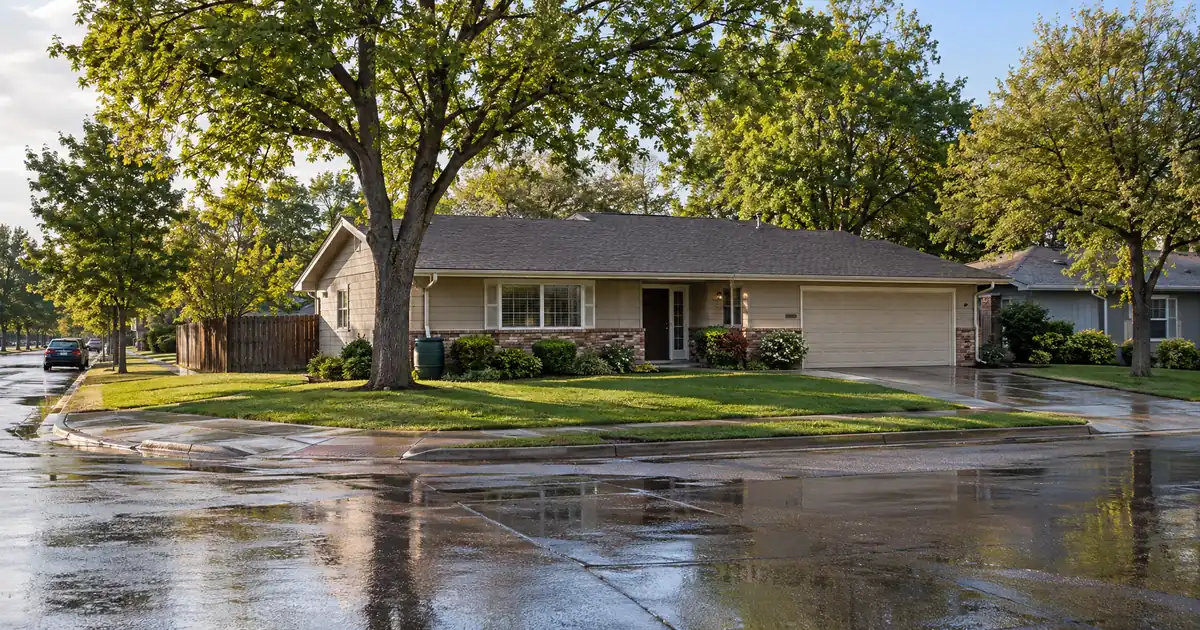
The Quick Read: A deed transfer fits a rental with no mortgage, or one where the existing lender agrees in writing. A DSCR refinance fits an investor who wants a new loan anyway, because it pays off the old lien and vests the property in the LLC at the same closing. Both reach the same end state. They carry very different risk along the way.
- A deed moves title only. The old loan, and your personal liability on it, stay exactly where they were.
- A refinance replaces the old loan, so the old lender’s right to call the debt due goes away at payoff.
- A deed on a financed rental can put the existing loan in technical default.
- A refinance means new underwriting on the property’s rent, plus entity paperwork.
- Local transfer, reassessment, and title-policy questions apply to both routes, because the deed to the LLC is recorded either way.
The Honest Answer First
The deed route is for investors who have no loan to protect, or who hold a loan worth keeping and can get the lender’s consent in writing. It is cheap on paper and light on paperwork. It is also the route most likely to go wrong when the investor skips the lender call.
DSCR Cash-Out Calculator
Run the cash-out numbers in your market
Rate source: Freddie Mac 30-yr average via FRED® — Federal Reserve Bank of St. Louis · effective Oct 29, 2026
Prefilled with starting assumptions — enter your property’s value, balance, taxes, and insurance for a more accurate picture.
Program parameters update from Lendmire’s centralized guideline source. Taxes and insurance are editable estimates.
As of Oct 29, 2026 · General Freddie Mac market benchmark, not a Lendmire loan offer. Property value, balance, taxes, and insurance are editable estimates. Maximum loan-to-value varies by lender, program, property type, and seasoning. Not a Loan Estimate, approval, or commitment to lend. Program availability and eligibility are subject to lender guidelines, credit approval, property review, and underwriting.
The refinance route is for investors who would refinance anyway. Maybe they want cash out, a different term structure, or a loan built for entity borrowers. In that case the LLC vesting rides along with the closing. The extra cost of the LLC step is close to zero, and the due-on-sale question disappears.
Neither path is universally better. The deciding variables are whether the property is financed today, whether the current loan is worth keeping, and whether you need new money.
Side-by-Side
| Factor | Deed Transfer | DSCR Refinance |
|---|---|---|
| Review basis | None, no new underwriting | Property rent vs. monthly obligation |
| Existing loan | Stays in place, due-on-sale live | Paid off at closing |
| Documentation | Deed, recording, insurance updates | Entity package plus property file |
| Entity vesting | LLC takes title by deed | LLC takes title at closing |
| Title insurance | Owner’s policy may need review | New policy issued to the LLC |
| Property types | Any title that can be deeded | Eligible rental types only |
| Reserves | None required | Commonly about 6 months of PITIA |
| Personal liability | Unchanged on the old loan | Often a personal guarantee requested |
The deed column reflects general legal norms, not a loan program. The refinance column reflects ranges seen across select lenders in Lendmire’s wholesale network, subject to lender guidelines and program eligibility.
Key Terms Defined
Due-on-sale clause: A loan provision that lets the lender demand full repayment if the property, or an interest in it, is sold or transferred without consent.
Quitclaim deed: A deed that passes whatever interest the signer has, with no promise about the quality of title.
Vesting: How title is held. “Vested in an LLC” means the LLC is the recorded owner.
DSCR: Debt service coverage ratio. It compares a rental’s income with its full monthly obligation: principal, interest, taxes, insurance, and any HOA dues.
Seasoning: The period a borrower has held title or an existing loan before a lender will treat the property as established for a new loan, especially a cash-out.
Personal guarantee: A written promise by the individual behind an LLC to repay the loan if the entity does not.
What Each Path Actually Does
A deed changes the name on title. That is all it does. A quitclaim moves title and leaves the loan unchanged, so you still owe the old debt in your own name while the LLC owns the building.
A DSCR refinance is a new loan. It qualifies primarily on property-level rental income covering the payment, subject to lender guidelines. The title company records the deed into the LLC and pays off the old lien at the same closing. One closing, one title event, one new lender relationship.
DSCR loans are designed for non-owner-occupied investment properties. Because they are business-purpose investor loans, they are reviewed differently from a standard owner-occupied mortgage. The complete DSCR loans guide covers the full qualification picture if you want the basics first.
Why a Deed Can Trip the Existing Loan
Most mortgage notes carry a due-on-sale clause, and the federal statute behind it is 12 U.S.C. §1701j-3. It lets a lender call the loan due when title moves without consent. The law does list protected transfers. They include a transfer to a spouse or children, a transfer after a divorce decree, and a transfer into a living trust where you remain a beneficiary.
A transfer into an LLC is not on that list. A Connecticut real estate law firm says so directly. The protected list also applies only to residential property with fewer than five dwelling units. On a larger building, none of the exceptions help at all.
You will hear that lenders rarely enforce this. Sometimes that is true. It is still the lender’s choice, not your protection. A rental carrying a loan you like should not rest on a lender’s silence. If the deed is the path you want, ask the servicer for written consent before you record anything.
When a Deed Transfer Is the Better Fit
The deed route wins in a few clear situations.
The rental is free and clear. With no mortgage, no due-on-sale clause is in play. The deed is still a title, tax, and insurance event, but it is the simplest way into the LLC. You can take a DSCR loan later with the LLC already holding title.
The lender consents in writing. If the existing loan is one you want to keep, consent turns a risky transfer into a managed one. Keep the letter with your closing records.
You are not borrowing again. A long-held loan at modest leverage, with no plan for cash-out or a new structure, gives you no reason to refinance. A refinance just to change the name on title adds cost with little to show for it.
The structure is a trust, not an LLC. A living trust can sit inside the statutory exceptions. An LLC cannot. That difference matters if asset protection is not your main goal.
The tradeoff is real even in the good cases. The deed does not fix personal liability on the old loan. Local transfer and reassessment rules can bite. And the title policy needs a look.
When a DSCR Refinance Is the Better Fit
The refinance route wins when a new loan is already on your list.
You want cash out. Cash-out refinances on standard rentals generally top out around 75% LTV across most of the network, and about 6 months of seasoning is the common expectation. A short-term rental on cash-out carries a lower ceiling, around 70%. Pulling equity and moving into the LLC in one closing avoids doing two separate title events.
The current loan is a problem. Maybe it is a loan that will not allow an LLC. Maybe it is a balloon or a short term. Replacing it removes the due-on-sale question entirely.
You are building a portfolio in an entity. Most investors who hold several rentals prefer one clean structure. A refinance vests the property in the LLC with a lender who knows the entity is the borrower. The refinance can be placed with LLC vesting, subject to lender program eligibility.
You want a loan built around the rental. A DSCR loan looks at rent against the full monthly obligation. A coverage of 1.00 is where select programs start. Stronger ratios open better terms and leverage. If coverage runs below 1.00, a separate select-lender path exists in the network, with leverage and terms adjusted.
Clearing the coverage test does not mean the property cash-flows. Repairs, vacancy, management, utilities, and capex sit outside the calculation.
Know what you give up. The refinance needs underwriting, and the file generally needs a credit score in the range the program expects: a 620 floor exists in parts of the network, most programs want around 660, and 700+ unlocks the strongest leverage. Reserves commonly run about 6 months of PITIA, stepping up toward 9 months on loans above $1,500,000. Standard programs go up to $3,000,000. Those are guideline ranges, and each file is reviewed individually.
Property type also matters. Manufactured homes, log homes, and barndominiums are not offered through these programs, so a rental of that type has no refinance path here.
A Worked Example: One Rental, Two Paths
Picture a single-family rental held in your personal name with a loan you like. This is a modeled scenario, not a market figure.
Path one, deed. You form the LLC and call the loan servicer. You ask your title company about the owner’s policy and your insurer about the named insured. You record the deed. The loan stays in your name. If the servicer objects, you have created a problem you could have solved with a letter.
Path two, refinance. You form the LLC and gather the entity package. That typically means articles, an operating agreement, an EIN confirmation, and a good-standing certificate. Say the rent clears the payment at roughly 1.2x. The lender reviews the property and the guarantor. At closing, the title company pays off the old loan and records title in the LLC’s name. You sign the new note, often with a personal guarantee.
Path two costs more up front and only makes sense if you wanted a new loan. Path one costs less up front but keeps the risk on the old note. If you only needed the LLC, and the old loan is cheap and stable, the deed with consent may win. If you needed money or a better structure, the refinance usually does.
DSCR vs. conventional financing
There are two common ways to finance an investment property, and they qualify you differently — here’s how investors weigh them.
Why investors choose it
- Qualifies on the property’s rental income — no personal tax returns, W-2s, or pay stubs needed to document income.
- No personal debt-to-income ceiling to clear, so existing mortgages and obligations don’t cap your borrowing the same way.
- Can be closed in an LLC, keeping the property inside a business entity.
- Built for scaling — not held to the limit on number of financed properties that conventional financing applies.
- Underwriting centers on the deal: generally qualifies when the rent covers the payment, a 1.00x coverage ratio being a common baseline (confirmed in underwriting).
- Designed specifically for investment property, including long-term and, where the program allows, short-term rentals.
Where it’s strong
- Often the lowest ongoing financing cost for a buyer who fully qualifies on personal income — a fit for a first property or a cost-first purchase.
Trade-offs for investors
- Requires full personal income documentation and must fit within a debt-to-income limit — salary, existing debts, and other mortgages all count.
- Typically held in your personal name rather than a business entity.
- Caps how many financed properties you can carry, which can become a ceiling as a portfolio grows.
- Evaluates you as a borrower as much as the property, which usually means more paperwork.
How investors usually choose: a first or single property often optimizes for the lowest financing cost; portfolio builders often optimize for leverage, vesting in an LLC, and scaling past conventional caps. The right answer depends on your goals, the property, and current guidelines — both paths run through select lenders in Lendmire’s wholesale network, with eligibility and terms confirmed in underwriting.
Sequencing Mistakes That Cost Investors
Order of operations causes most of the trouble. Three patterns show up again and again.
Deeding first, then shopping for a loan. A recent deed can interact with seasoning on a later cash-out. Programs differ, and some look through to the member’s earlier ownership while others restart the clock. Ask the lender before you record, not after.
Deeding out of the LLC for a conventional loan, then back in. Big retail lenders often will not lend to an LLC borrower. Investors then deed the property to their own name, refinance, and deed it back. The deed back is itself a transfer, and no protected exception covers an entity. A DSCR refinance can often close with the LLC as borrower from the start, subject to program terms.
Forgetting the insurance. The named insured has to follow the new owner. A mismatch between the deed, the hazard policy, and the loan documents creates problems at claim time. Use the LLC’s exact name on every document.
And if you hold the property in an LLC and want to place a DSCR loan on it directly, Lendmire’s piece How to Transfer an LLC-Owned Rental Into a DSCR Loan at Closing covers that mechanic.
Title Insurance, Taxes, and Local Rules
Title insurance is where deeds get messy. Modern ALTA owner’s policy forms can extend coverage to an LLC grantee wholly owned by the insured. Older policies, or an LLC with other members, may need an endorsement. Coverage depends on the policy version and the ownership structure, so ask the title company in writing before recording. A refinance sidesteps part of this because a new policy is issued with the LLC as the vested owner.
Local rules vary. Some places charge transfer tax on a deed into an LLC, and some exempt a single-member entity. Some reassess property when ownership changes. A refinance that records a deed to the LLC can raise the same questions, because the deed is the same event. Ask a local attorney or title company about both.
Tax treatment can depend on how the funds are used and how the property is held; investors should keep clear records and speak with a qualified tax professional before relying on any deduction.
The Existing Loan Is Already DSCR
Investors with a DSCR loan already in place face a slightly different question. Many notes, DSCR included, carry a due-on-sale clause. Read yours. Some DSCR loans were originated in an LLC, which makes the question moot. Others were placed in a personal name. If you want the LLC on title, ask your servicer for consent or plan a refinance. Programs differ on what they allow, so confirm the terms before you move anything.
Common Mistakes
- Assuming a quitclaim to your own LLC is automatically safe.
- Assuming that moving title removes you from the old loan.
- Recording the deed before the title company confirms the policy.
- Using slightly different entity names across the deed, insurance, and loan documents.
- Treating the refinance as a way to avoid personal liability. Many programs ask for a personal guarantee from the individual behind the LLC, so confirm per program.
- Skipping the lender call because “lenders never notice.”
The Verdict
If the rental is free and clear, or the lender agrees in writing, a deed into the LLC is clean and inexpensive. If you want a new loan anyway, or the existing loan is a problem, vest in the LLC through a DSCR refinance and let one closing do both jobs.
If you are unsure, start with the loan itself. Is it worth keeping? Will the servicer consent? Do you want cash out or a different structure? Those three answers settle most cases. For portfolios, make the call property by property, since a free-and-clear unit and a financed one rarely belong on the same path.
If you are buying or refinancing a rental property and want to see how the numbers work, Lendmire can help you compare DSCR loan options based on the property income, credit profile, leverage, and investor goals. Reach the team at 828-256-2183 or through the quote page.
This article is general information, not legal or tax advice. Transfers into an LLC carry title, lender, and local-law consequences, so consult a qualified attorney or CPA about your own situation before you record a deed or sign a loan.
Frequently Asked Questions
Will a quitclaim deed into my LLC trigger the due-on-sale clause?
Yes, it can. A transfer of title without the lender’s consent is the event the clause is written to cover, and no protected exception names an LLC. Whether the lender acts is its choice. Get written consent first, or refinance so the old loan is paid off.
Do I need an LLC to get a DSCR loan?
No. Many programs lend to individuals as well as entities. An LLC is a choice about liability and structure, not a requirement. If you use one, entity borrowing is subject to lender program eligibility, and the file typically includes the formation documents and a guarantor.
Does a refinance remove my personal liability?
Not necessarily. Many programs ask for a personal guarantee from the person behind the LLC, so you may stay on the hook. The LLC separates the property from your other assets in some respects, but it does not make you unreachable. Ask the lender what it requires.
Can I deed a free-and-clear rental into an LLC and then get a DSCR loan?
Yes, in many cases. With no mortgage, there is no due-on-sale issue. A later lender may look at how long the LLC has held title for seasoning, especially on cash-out, so ask before you record. Local transfer tax and title-policy questions still apply.
Does moving a rental into an LLC void my title insurance?
Not always. Coverage depends on the policy version and who owns the LLC, and a wholly owned LLC is often covered under modern forms. Older policies or multi-member LLCs may need an endorsement. Ask your title company for written confirmation.
About Lendmire
Lendmire — NMLS# 2371349 — is a mortgage brokerage specializing in DSCR investor loans, helping arrange financing across 41 markets, including Washington, D.C., through wholesale and investor-lending channels. The model centers on property-level rental income reviewed by the lender rather than W-2 documentation, subject to lender guidelines, suiting entity-owned and multi-property investors. Lendmire holds Scotsman Guide Top Mortgage Workplace recognition for 2025 and 2026.
Get Started
Ready to find the right loan for you?
See your offer in seconds. No credit pull, no obligation.
Informational only. Not a Loan Estimate, approval, or commitment to lend. Program availability and eligibility are subject to lender guidelines, credit approval, property review, and underwriting.
References
1. Deeds.com, does a quitclaim deed remove you from the mortgage
2. Cornell LII, 12 U.S.C. §1701j-3
3. Mancuso Carey, quitclaim deeds and due-on-sale
5. IR Global, conveying property to an LLC and title insurance
This article is part of Lendmire’s DSCR loan program — full qualification details, guidelines, and scenarios live on the program page.
Related reading: How Much a DSCR Lender Will Lend on a Vacation Rental in an LLC? · DSCR Loans in an LLC vs Personal Name for a Many-Rental Investor · Can You Get a DSCR Loan on a Vacant Rental With No Lease?
Brandon Miller
Founder & CEO, Mortgage Loan Originator, Lendmire LLC
- Mortgage Loan Originator · NMLS# 1129696 · Verify on NMLS Consumer Access
- North Carolina Real Estate Broker · License# 343312 · Verify on NCREC
- North Carolina Insurance Producer · License# 19053198 · Property, Casualty, Life, Health · Verify on NAIC SBS
- Lendmire LLC · Firm NMLS# 2371349 · Verify firm licensure
Disclosure information. Lendmire is a state-licensed mortgage brokerage under NMLS# 2371349. Lendmire is not a depository institution, direct lender, or financial advisor — all loans referenced are placed through wholesale lender partners and are subject to each lender's underwriting standards. This article is provided for general informational purposes and is not a commitment to lend, nor does it constitute financial, legal, or tax advice. Loan programs, terms, rates, and qualification standards change without notice and depend on borrower profile, property type, and the state in which the subject property is located. Equal Housing Opportunity provider. NMLS Consumer Access: nmlsconsumeraccess.org.