
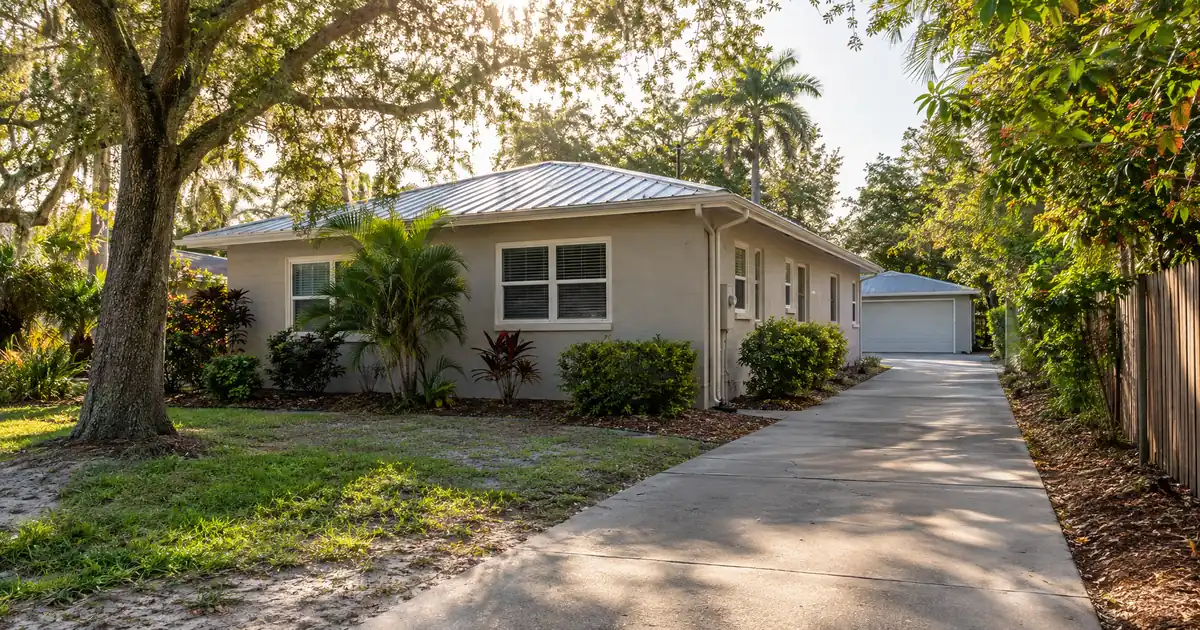
The Quick Read: A DSCR loan does not use a tenant’s Basic Allowance for Housing (BAH) as qualifying income. The property’s rent counts, and that comes from a signed lease, the appraiser’s market-rent opinion, or the lower of the two. BAH is a tenant-side pricing reference, not an underwriting figure, and every file is reviewed individually, subject to lender guidelines.
- BAH is the service member’s allowance. It is not the property’s income.
- On a leased property, most programs we place files with credit the lower of the lease or the appraised market rent.
- A lease above market earns no extra credit. A lease below market sets the ceiling.
- 1.00 is where many select programs start. Stronger coverage opens better leverage and terms.
- Clearing 1.00 does not mean the property cash flows. Repairs, vacancy, and management sit outside the calculation.
Tampa has a large military presence, so many investors there price rent against what a service member’s housing allowance can bear. That is smart pricing. It is not a way to qualify. This piece referees the two numbers fairly: rent set around BAH and documented by a lease, versus rent set by the appraiser’s market-rent schedule.
DSCR Calculator
Run the numbers in your market
Rate source: Freddie Mac 30-yr average via FRED® — Federal Reserve Bank of St. Louis · effective Oct 29, 2026
Prefilled with starting assumptions — enter your own rent or nightly figures, taxes, insurance, and HOA for a more accurate picture.
Program parameters update from Lendmire’s centralized guideline source. Taxes and insurance are editable estimates.
As of Oct 29, 2026 · General Freddie Mac market benchmark, not a Lendmire loan offer. Rent, nightly rate, occupancy, taxes, and insurance are editable estimates. Short-term rental figures are estimates only and vary significantly by season, property type, management approach, and local short-term-rental rules — confirm local regulations before relying on them. Qualifying income for short-term rentals varies by program — some use appraisal market rent, others use documented STR history or projections — and is confirmed in underwriting. Not a Loan Estimate, approval, or commitment to lend. Program availability and eligibility are subject to lender guidelines, credit approval, property review, and underwriting.
Here is the honest answer on who each option is for. If your property is leased and the lease sits at or near market, the lease and the appraisal will tell the same story, and the choice barely matters. If you priced to a tenant’s allowance and that number runs below comps, the lease will likely control and your coverage ratio takes the hit. If the property is vacant or newly bought, the appraiser’s market rent is the only rent on the table.
Side-by-Side
No DSCR program treats BAH as its own income basis. The real comparison is between the rent actually collected under a lease, often priced around a tenant’s BAH, and the appraiser’s market-rent opinion. The columns show published industry norms, which vary by program.
| Factor | Lease rent (BAH-priced) | Appraiser market rent |
|---|---|---|
| Review basis | Signed lease, usually capped at market | Form 1007 or 1025 opinion |
| Best fit | Leased, stabilized property | Vacant or newly purchased property |
| Documentation | Lease plus deposit and payment proof | Appraisal with rent schedule |
| Tenant’s BAH letter | Supporting evidence only | Not used |
| Property types | One to four units, per program rules | One to four units, per program rules |
| Entity vesting | LLC allowed, subject to lender program eligibility | Same |
| Reserves | Commonly around 6 months of PITIA | Same |
| Timeline | Depends on appraisal and file completeness | Depends on appraisal scheduling |
A quick definition set before going further. DSCR (debt service coverage ratio) is the property’s monthly rent divided by its full monthly housing obligation. PITIA is that obligation: principal, interest, taxes, insurance, and any association dues. BAH is the tax-free housing allowance paid to a service member, set by pay grade, dependency status, and military housing area.
What BAH Actually Is (and Is Not)
BAH is an allowance paid to the tenant. It is not a rent schedule for your property. The DoD BAH Primer explains that the allowance is built from private-sector civilian rental costs: local median rent plus average utilities for civilians with comparable incomes.
Three consequences follow.
First, BAH is set by military housing area, not by your street or neighborhood. A Tampa-area rental is only BAH-relevant if the tenant’s housing area is Tampa. The official lookup lives on the Defense Travel Management Office BAH page. Use it rather than a third-party table, because aggregator sites conflict with each other.
Second, nothing obligates a service member to spend BAH on rent. They may pay less and keep the difference, or pay more.
Third, BAH resets every January 1. A rise in the allowance does not automatically raise the appraiser’s market rent, and a mid-lease change only reaches your lease at renewal.
How a Lender Picks the Rent
Most programs we place files with use a simple rule. Leased property: the lower of the signed lease or the appraiser’s market rent. Vacant property: market rent only. Month-to-month tenant: usually market rent, with the lease as support. A few lenders in the network lean on one source only, so the rule is confirmed per program.
The appraiser’s number comes from Form 1007 for a one-unit property and Form 1025 for two to four units. Fannie Mae’s appraiser guidance describes the 1007 as the estimate of monthly market rent built on comparable properties leased monthly. These are appraisal forms only. They do not set DSCR eligibility.
The appraiser does not consider your tenant’s rank or BAH. A property marketed to a particular pay grade is priced against comps, not against the allowance. Our complete DSCR loans guide walks through the full qualification flow.
| Situation | Rent typically counted | Effect on coverage |
|---|---|---|
| Lease above market | Market rent | Excess earns no credit |
| Lease at market | Either (same) | Neutral |
| Lease below market | Lease rent | Ratio pulled down |
| No lease, vacant | Market rent | Depends on appraisal |
When Lease Rent Is the Better Fit
Lease rent is the stronger basis when the property is already occupied, the tenant has paid on time, and the lease sits at or near what the comps support. In that case the documentation is straightforward: executed lease, deposit proof, and payment history. A refinance on a seasoned tenancy typically leans on actual rent.
It also fits when your BAH-informed pricing is sound. Say you own a Tampa-area single-family rental and priced it near what a mid-grade service member’s allowance supports. If the appraiser’s comps land in the same neighborhood, the lease carries the file and the coverage ratio holds. Clean paperwork matters more than the BAH figure.
The weakness is a lease priced below comps. A legacy lease, a family discount, or a rent trimmed to fit a tenant’s allowance caps your counted rent at the lease amount. Picture an investor whose lease is meaningfully under the appraised number: coverage might land near the edge of 1.00 when comps would have supported something near 1.2x. That gap can limit eligibility or loan size.
When Market Rent Is the Better Fit
Market rent is the stronger basis on a vacant property, a new purchase, or a month-to-month tenancy running below comps. There, the appraiser’s number is the whole story, and it is independent of any one tenant’s pay.
It also helps when you plan to re-lease at current rates. Run a purchase of a vacant duplex in Tampa: the 1007 or 1025 sets the rent, and you can often price to comps without worrying that a legacy lease drags the ratio down.
The catch is that you are relying on an opinion, not a payment history. If the appraisal comes in short, coverage drops with it. Run conservative rent numbers before you apply.
Short-term and furnished rentals are a different path. The same Fannie Mae guidance says the 1007 cannot document nightly rates, and multiplying a nightly rate by 30 is incorrect. If you run furnished rentals aimed at service members on temporary orders, the file follows a separate short-term documentation path. Across our network, short-term rental purchases reach 75% LTV, refinances sit around 70%, and cash-out on short-term rental collateral tops out at 70%, with a 640+ score and about 12 months of hosting history expected. Exact numbers vary by lender and program and follow a full review of property, leverage, and credit.
Where the Lease Is Weaker Than It Looks
A lease to a service member carries one extra risk. Under the Servicemembers Civil Relief Act, a member who receives permanent change of station orders or deployment orders of 90 days or more after signing can end the lease. Per Military OneSource, termination takes effect 30 days after the next rent due date following notice.
Underwriters already cap the lease at market, so this risk shows up in your vacancy planning more than in the ratio. A 12-month lease to a service member is not the same durable evidence as a civilian lease. Budget for turnover.
Pricing Strategy: BAH Band or Comps?
Price to comps, and use BAH as a sanity check. The tenant pool shapes who you rent to. The appraiser shapes what the lender counts. When the two disagree, the lender’s number controls.
A common investor rule of thumb is that military tenants often look for housing around 80 percent of BAH. That is education, not underwriting. Treat it as a way to avoid over- or under-pricing, then confirm against comps.
Two cautions. BAH reflects median rents plus utilities, so it can lag a fast-moving submarket. And there is concern that landlords raise rents to capture BAH increases. Pegging every rent increase to the allowance is a reputational choice, not a lending rule.
DSCR vs. conventional financing
There are two common ways to finance an investment property, and they qualify you differently — here’s how investors weigh them.
Why investors choose it
- Qualifies on the property’s rental income — no personal tax returns, W-2s, or pay stubs needed to document income.
- No personal debt-to-income ceiling to clear, so existing mortgages and obligations don’t cap your borrowing the same way.
- Can be closed in an LLC, keeping the property inside a business entity.
- Built for scaling — not held to the limit on number of financed properties that conventional financing applies.
- Underwriting centers on the deal: generally qualifies when the rent covers the payment, a 1.00x coverage ratio being a common baseline (confirmed in underwriting).
- Designed specifically for investment property, including long-term and, where the program allows, short-term rentals.
Where it’s strong
- Often the lowest ongoing financing cost for a buyer who fully qualifies on personal income — a fit for a first property or a cost-first purchase.
Trade-offs for investors
- Requires full personal income documentation and must fit within a debt-to-income limit — salary, existing debts, and other mortgages all count.
- Typically held in your personal name rather than a business entity.
- Caps how many financed properties you can carry, which can become a ceiling as a portfolio grows.
- Evaluates you as a borrower as much as the property, which usually means more paperwork.
How investors usually choose: a first or single property often optimizes for the lowest financing cost; portfolio builders often optimize for leverage, vesting in an LLC, and scaling past conventional caps. The right answer depends on your goals, the property, and current guidelines — both paths run through select lenders in Lendmire’s wholesale network, with eligibility and terms confirmed in underwriting.
What the Lender Network Looks At
Here is what we see across the wholesale network on files like this. Purchase leverage mostly lands at 75%-80% LTV on an investment property, with select high-leverage programs reaching 85% at roughly a 700+ score. Rate-and-term refinance can reach 85% on select programs; cash-out on a standard rental tops out around 75%. Most programs want a score near 660, with a 620 floor in parts of the network. Reserves run commonly about 6 months of PITIA, stepping to about 9 months above $1,500,000. Standard loan sizes run up to $3,000,000. All of this is subject to lender guidelines.
Coverage is where this topic bites. 1.00 is where many select programs start. A separate select-lender path takes coverage below 1.00, with leverage and terms adjusted. Stronger ratios open better leverage. A larger down payment can lift the ratio, but it never erases credit floors, reserve rules, or property eligibility. The strongest files clear both tests: enough equity and enough rental coverage.
One more caution, and it matters for military-tenant properties. DSCR compares rent to PITIA only. Clearing 1.00 is not positive cash flow. Repairs, vacancy, management, and PCS turnover all sit outside the calculation. Tampa investors should also feel the insurance line in the payment, which is where many Florida files tighten. Manufactured homes, log homes, and barndominiums are not offered in the network.
Related Reading
If you are comparing lease rent with appraisal rent in a different setting, Lendmire’s piece Signed Leases vs Market Rent for a DSCR Cash-Out on a Triplex covers how the lower-of rule plays out on a refinance.
Key Terms Defined
- Form 1007: the appraiser’s rent schedule for a one-unit investment property.
- Form 1025: the equivalent schedule for two to four units.
- Lease rent: the monthly rent written in the signed lease.
- Market rent: the appraiser’s opinion of what the unit would rent for, based on comparable monthly rentals.
- PCS: permanent change of station, a service member’s reassignment to a new duty location.
- Seasoning: the waiting period a lender wants between buying and refinancing.
A Balanced Verdict
Neither option wins on its own. Lease rent wins on stabilized, sensibly priced properties because the paperwork proves itself. Market rent wins on vacant or newly purchased properties because it is the only rent available. In both cases the lender uses the lower number when both exist, so BAH shapes your pricing and your tenant pool but never your qualifying income.
If you are buying or refinancing a rental property and want to see how the numbers work, Lendmire can help you compare DSCR loan options based on the property income, credit profile, leverage, and investor goals. Reach the team at 828-256-2183 or request a quote.
Frequently Asked Questions
Can I use my tenant’s BAH as the rent on a DSCR loan?
Not as income. The rent that counts comes from the lease or the appraiser’s market rent, whichever the program credits. BAH is useful for pricing, but it is the tenant’s allowance, not the property’s income.
What if my lease is higher than the appraiser’s market rent?
Most programs cap the counted rent at market, so the excess does not help coverage. Some lenders treat this differently, so the rule is confirmed per program before you apply.
What if the lease is below market because I priced to BAH?
The lease amount typically sets the ceiling, which pulls the ratio down. If that leaves coverage under 1.00, select lenders in the network offer a separate path with leverage and terms adjusted, subject to lender guidelines.
Does a service member tenant make approval easier?
A reliable tenant supports the file, but approval rests on the property’s rent covering the payment, credit, reserves, and property review. Tenant occupation is not an underwriting factor on its own.
Can a service member break the lease early?
Yes, with qualifying orders under federal law. The lease is therefore weaker evidence of durable rent than a civilian lease, though the underwriter already relies on it only up to market rent.
For current guidelines and terms, see Lendmire’s DSCR loan programs page.
About Lendmire
As a DSCR and non-QM mortgage broker, Lendmire — NMLS# 2371349 — connects investors with wholesale lending channels across 41 markets, including Washington, D.C. The property’s rental income, not the borrower’s tax returns, is central to lender review, which works for self-employed operators and portfolios beyond four financed properties. Scotsman Guide named Lendmire a Top Mortgage Workplace in both 2025 and 2026.
Get Started
Ready to find the right loan for you?
See your offer in seconds. No credit pull, no obligation.
Informational only. Not a Loan Estimate, approval, or commitment to lend. Program availability and eligibility are subject to lender guidelines, credit approval, property review, and underwriting.
References
2. Defense Travel Management Office, Basic Allowance for Housing
3. Fannie Mae Appraiser Update, June 2024
4. Military OneSource, SCRA lease termination
This article is part of Lendmire’s DSCR loan program — full qualification details, guidelines, and scenarios live on the program page.
Related reading: How Much an Interest-Only DSCR Loan Lends a Scaling W-2 Investor · How Rent-by-Room Income Works on a DSCR Loan · Blanket DSCR Loan vs Individual Loans for an Investor With Four Rentals
Guides: DSCR Loans in Tampa, FL · DSCR Loans in Florida
Brandon Miller
Founder & CEO, Mortgage Loan Originator, Lendmire LLC
- Mortgage Loan Originator · NMLS# 1129696 · Verify on NMLS Consumer Access
- North Carolina Real Estate Broker · License# 343312 · Verify on NCREC
- North Carolina Insurance Producer · License# 19053198 · Property, Casualty, Life, Health · Verify on NAIC SBS
- Lendmire LLC · Firm NMLS# 2371349 · Verify firm licensure
Required disclosures. Lendmire (NMLS# 2371349) operates as a licensed mortgage broker, not a direct lender or depository. The discussion in this article is general in nature and should not be relied upon as financial, legal, or tax advice — every investment scenario is unique and should be reviewed by a qualified professional. Any loan inquiry is subject to lender underwriting, and this article is not a commitment to lend or a guarantee of approval. Mortgage rates, loan terms, and program guidelines vary by borrower, property, and state, and may change without notice. Equal Housing Opportunity. Verify licensure at NMLS Consumer Access.