
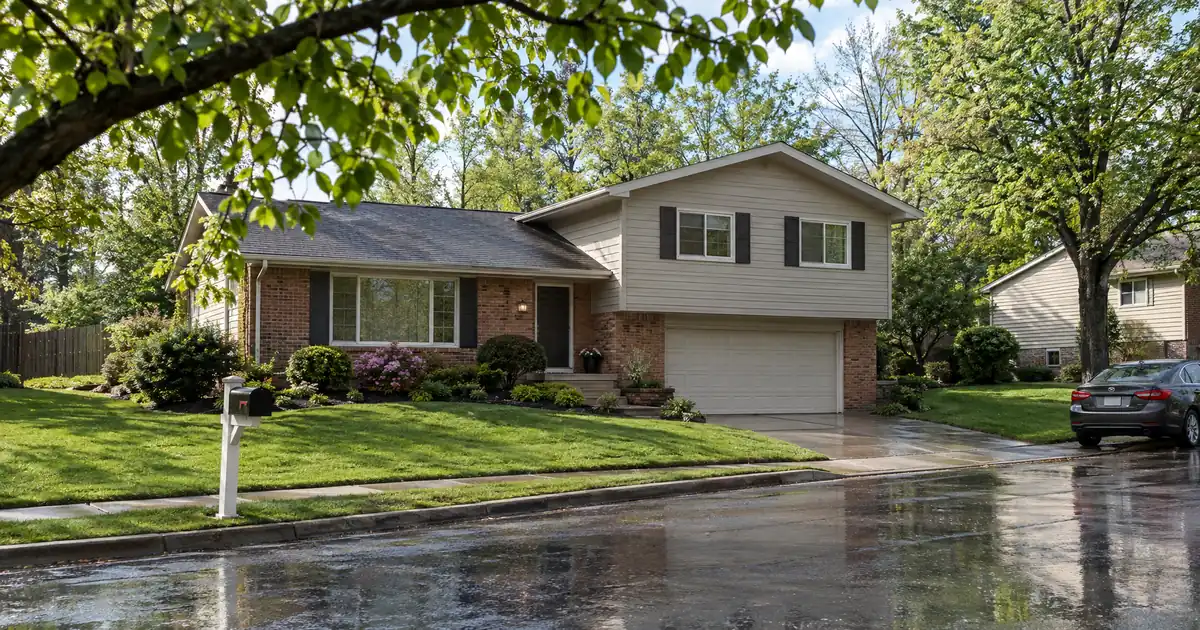
The Quick Read: A DSCR lender underwrites the rental’s income and the borrower’s own credit, not the spouse’s, so a spouse who is not on the loan generally stays out of the qualification. The spouse can still be asked to sign the lien document if state law or the way title is held requires it. That signature does not make the spouse a borrower.
- Qualification runs on the property’s rent against its full monthly payment, plus the borrower’s or guarantor’s credit.
- Title and state law decide whether a spouse signs anything, not the date you bought the rental.
- A cash-out on a standard rental tops out around 75% LTV, with about 6 months of ownership expected.
- Adding a spouse to the deed before the refinance can change both the paperwork and your property rights.
- Settle the ownership structure before you apply, not at the closing table. Terms vary by lender guidelines, property type, leverage, credit profile, and full file review.
Here is the situation. You bought a rental before you got married. Now you want to pull equity out of it. Does your spouse have to be on the loan? On the deed? At the closing table? The answers are different, and mixing them up is how files stall.
DSCR Cash-Out Calculator
Run the cash-out numbers in your market
Rate source: Freddie Mac 30-yr average via FRED® — Federal Reserve Bank of St. Louis · effective Oct 29, 2026
Prefilled with starting assumptions — enter your property’s value, balance, taxes, and insurance for a more accurate picture.
Program parameters update from Lendmire’s centralized guideline source. Taxes and insurance are editable estimates.
As of Oct 29, 2026 · General Freddie Mac market benchmark, not a Lendmire loan offer. Property value, balance, taxes, and insurance are editable estimates. Maximum loan-to-value varies by lender, program, property type, and seasoning. Not a Loan Estimate, approval, or commitment to lend. Program availability and eligibility are subject to lender guidelines, credit approval, property review, and underwriting.
What Does a DSCR Lender Actually Underwrite?
A DSCR lender reviews the property’s rental income. DSCR stands for debt service coverage ratio, which is the monthly rent divided by the full monthly payment (principal, interest, taxes, insurance, and any HOA dues). Across the wholesale network Lendmire works with, a loan is reviewed primarily on property-level rental income covering the payment, subject to lender guidelines.
The borrower still matters. Credit is part of the file. A 620 score is the floor in parts of the network, most programs want around 660, and 700 or higher opens the strongest leverage tiers. Reserves, meaning liquid money left after closing, commonly run around 6 months of PITIA (the full monthly payment including taxes and insurance), and step up to about 9 months on loans above $1,500,000. All of this is subject to lender guidelines, and every file is underwritten individually.
Your spouse’s paycheck is not in the picture. Neither is your spouse’s credit score, unless your spouse chooses to join the loan. That is the first thing to understand, and it surprises people who have only dealt with owner-occupied mortgages.
DSCR loans are designed for non-owner-occupied investment properties. Because they are business-purpose investor loans, they are reviewed differently from a standard owner-occupied mortgage. If you and your spouse live in the property, it is not a DSCR candidate.
For the full picture of how these loans work, see Lendmire’s complete DSCR loans guide.
Does Buying Before Marriage Change the Spouse’s Role?
Mostly no. What counts is how title is held today, not when you bought. A rental still in your sole name is, on paper, your asset alone. Your spouse is not a record owner and has no reason to be on the loan.
The marriage date matters in a different way. It can affect whether the property is treated as separate property or marital property under your state’s law. That is a legal question, not a lender decision. IRS Publication 555 explains that the law of the state where you are domiciled generally governs whether property and income are community or separate.
Picture three owners who all bought before the wedding:
1. Sole name, never retitled. The spouse is off title. The lender typically has nothing to ask of the spouse, though state law can add requirements.
2. Spouse added to the deed after marriage. The spouse is now a title holder. The lender will usually want that person to sign the mortgage or deed of trust so the lien covers the whole property.
3. Property sits in an LLC the couple owns together. The spouse is a member. The lender may ask for a guaranty because of that ownership.
Same rental. Three different closings.
Note, Lien, Guaranty: Who Signs What?
This is the core mechanic, and most confusion comes from blending three documents into one.
- The note is the promise to repay. Only borrowers sign it.
- The lien (a mortgage or deed of trust) is the claim on the property if the loan defaults. Title holders sign it.
- The guaranty is a personal promise to repay, typically required when an LLC is the borrower. The guarantor is usually an owner of the LLC.
A spouse can sign the lien without signing the note. Signing the lien does not make the spouse a borrower. It lets the lender reach the whole property if the loan goes bad.
The federal equal-credit rule backs this up. Under Regulation B, section 1002.7, a lender generally cannot require a spouse to sign as a cosigner when the applicant qualifies alone. The same rule covers a guarantor’s spouse. The official regulation text and commentary add the secured-credit exception: if the spouse’s signature on the security instrument is enough to make the property available on default, the lender may not require the note signature as well. If state law requires both spouses to sign the note to create an enforceable lien, the lender may require it.
Here is how it plays out by situation:
| Situation | Note | Lien | Guaranty |
|---|---|---|---|
| Spouse off title, sole-name owner | No | Usually no | No |
| Spouse added to title | No | Yes | No |
| LLC, spouse is a member | No | Depends on title | Often yes |
| LLC, spouse has no ownership | No | Usually no | Cannot be forced |
| Community-property state | No | Depends on state law | Depends on role |
This table is a general map. State law and the title company decide the final answer on any given file.
How Can State Law Add Signatures?
State law is the wild card. The IRS names the community-property states in Publication 555, and a secondary reference lists them as Arizona, California, Idaho, Louisiana, Nevada, New Mexico, Texas, Washington, and Wisconsin (Recording Law).
Two practical points:
- Property already owned before the wedding generally starts as separate property. That can change if the spouse’s name goes on the deed, or if community money and effort pay down or improve the asset. A legal-information explainer from Deeds.com notes that once a spouse’s name goes on the deed, even separate property can become community property.
- The title company often decides. It reads state law and your vesting, then tells the lender who must sign. Some will ask a spouse for a consent or quitclaim to clear a possible marital interest, even when the spouse never touches the loan.
Whether a rent-based loan changes how a state treats the refinance proceeds is a legal question. Ask a family-law or real-estate attorney in your state. The lender cannot answer it for you.
Should You Add Your Spouse to Title Before the Cash-Out?
Think hard before you do it. Adding a spouse “to help” can backfire in three ways.
It changes ownership. A deed transfer can turn a separate asset into a shared one. That affects asset protection and estate planning, which is why it is a decision for you and your attorney, not a favor to the loan file.
It changes the paperwork. A new title holder means a new signer on the lien. If the property moves into an LLC, the lender reviews the new entity and its owners.
It can interact with seasoning. Seasoning is the waiting period between buying a property and refinancing it. For a cash-out, the network typically expects about 6 months of ownership measured from title recording. A retitling can prompt a lender to take a closer look at what changed and when. Lenders treat this differently, so raise it before you record anything.
Compare the usual sequences:
| Sequence | What it does | Main risk |
|---|---|---|
| Refinance first, retitle later | Keeps title simple for the loan | Later transfers can raise lender questions |
| Retitle first, then refinance | Spouse signs the lien at closing | Ownership change and seasoning review |
| Vest at closing | One closing handles both | Needs lender and title company agreement |
No sequence is right for everyone. The point is to choose on purpose.
Which Spouse Should Be the Borrower or Guarantor?
Often the answer is the owner. The person whose name is on the rental, and whose credit and experience the lender is reviewing, is the natural borrower or guarantor.
Sometimes the spouse has the stronger credit file. If the owner cannot meet the lender’s credit floor, the lender may ask for a cosigner or guarantor, but under the equal-credit rule it cannot dictate that the person be the spouse. If you choose to bring your spouse in, that is voluntary. It also changes the file: the spouse’s credit gets pulled, and the spouse becomes personally liable.
That liability point deserves attention. Most DSCR loans on 1-4 unit properties carry personal liability for the borrower or guarantor, even when an LLC holds title. Putting a rental in an LLC changes title. It does not remove the guarantor.
What Happens If the Spouse Will Not Sign?
If the spouse’s signature on the lien is required, the file cannot proceed without it. A lender that needs to be sure the lien is enforceable will not waive that. Signing costs the spouse nothing in credit terms, since the spouse is not a borrower, but it can feel like a bigger commitment than it is. Explain the note-versus-lien difference before closing day.
If the signature is not legally required, a lender should not force it. Ask the title company which documents your spouse must sign, and ask for the answer in writing before you apply.
DSCR vs. conventional financing
There are two common ways to finance an investment property, and they qualify you differently — here’s how investors weigh them.
Why investors choose it
- Qualifies on the property’s rental income — no personal tax returns, W-2s, or pay stubs needed to document income.
- No personal debt-to-income ceiling to clear, so existing mortgages and obligations don’t cap your borrowing the same way.
- Can be closed in an LLC, keeping the property inside a business entity.
- Built for scaling — not held to the limit on number of financed properties that conventional financing applies.
- Underwriting centers on the deal: generally qualifies when the rent covers the payment, a 1.00x coverage ratio being a common baseline (confirmed in underwriting).
- Designed specifically for investment property, including long-term and, where the program allows, short-term rentals.
Where it’s strong
- Often the lowest ongoing financing cost for a buyer who fully qualifies on personal income — a fit for a first property or a cost-first purchase.
Trade-offs for investors
- Requires full personal income documentation and must fit within a debt-to-income limit — salary, existing debts, and other mortgages all count.
- Typically held in your personal name rather than a business entity.
- Caps how many financed properties you can carry, which can become a ceiling as a portfolio grows.
- Evaluates you as a borrower as much as the property, which usually means more paperwork.
How investors usually choose: a first or single property often optimizes for the lowest financing cost; portfolio builders often optimize for leverage, vesting in an LLC, and scaling past conventional caps. The right answer depends on your goals, the property, and current guidelines — both paths run through select lenders in Lendmire’s wholesale network, with eligibility and terms confirmed in underwriting.
Where the General Rule Breaks
A few edge cases deserve naming:
- Spouse added to title right before the cash-out. This changes the vesting and invites a seasoning and title review.
- Quitclaim to remove a spouse. Removing a name from the deed does not remove that person from an existing note. A payoff, refinance, or lender-approved assumption is needed.
- Rental in one state, residence in another. Different states can apply different rules, and some lenders look at both.
- Mismatch between the application and the operating agreement. If the application says sole owner but the LLC agreement shows your spouse holding a share, underwriting stops until the file is corrected.
- Opt-in community property. A few states let couples elect community treatment, which is different from the default nine.
- Ineligible property types. Manufactured homes, log homes, and barndominiums are not offered in the network’s DSCR programs, whoever signs.
What Experienced Brokers See on These Files
Most delays on married-borrower files come from a mismatch, not from the credit box. The application says one thing, the deed says another, and the operating agreement says a third. Tell the loan team how the property is titled, who owns the LLC, and where you live, before the preliminary title report arrives. Clean facts up front keep the file moving.
Another pattern: the spouse hears “you’re not on the loan” and assumes nothing will be signed. Then a lien document or consent shows up at closing. Set that expectation early.
What About the Numbers Themselves?
Your spouse’s role does not change the math. A standard-rental cash-out on this network tops out around 75% LTV (short-term-rental collateral is lower, around 70%), with about 6 months of seasoning. Select programs start at a 1.00 coverage floor, and stronger ratios open better pricing and leverage. A separate select-lender path takes coverage below 1.00, with leverage and terms adjusted. Loan sizes run up to $3,000,000 on standard programs, and above $1,500,000 reserves typically step up.
Remember what coverage measures. DSCR compares rent to PITIA only. Clearing 1.00 is not the same as positive cash flow, because repairs, vacancy, management, utilities, and capital expenses sit outside the calculation. How much cash you can pull depends on rent used for lender review, the payment, reserves, and the LTV ceiling. It is not a guaranteed figure.
Tax treatment varies; consult a qualified professional. For more on this loan type, see Lendmire’s page on DSCR cash-out refinances on investment property.
Pre-Application Checklist
Before you apply, gather and confirm:
1. The recorded deed showing exactly who holds title.
2. If an LLC is involved, the operating agreement and entity documents.
3. Your marital status and state of residence, plus the property’s state.
4. Any prenuptial or postnuptial agreement that touches the property.
5. The title company’s answer on who must sign which documents.
6. Proof of ownership for the seasoning period.
7. Your plan for the cash-out proceeds, since deposits into joint accounts can blur separate-property tracing in some states. Ask an attorney.
Common Mistakes
- Assuming “off the loan” means “off all the paperwork.”
- Adding a spouse to the deed as a favor to the file.
- Telling a spouse nothing will be signed before the title report says so.
- Believing an LLC removes the spouse question or the guarantor requirement.
- Treating the quitclaim as a way to remove someone from an existing loan.
For related situations, Lendmire’s piece How a Lender Treats an Inherited Rental on a Cash-Out Refinance covers another case where title history drives the paperwork.
Key Terms Defined
- Note: the signed promise to repay the loan. Only borrowers sign it.
- Lien (mortgage or deed of trust): the claim on the property that secures the loan if it defaults.
- Guarantor: a person who personally promises to repay if the borrower does not, typically an LLC owner.
- Separate property: an asset that belongs to one spouse, often because it was owned before marriage.
- Community property: an asset treated as owned equally by both spouses under the law of certain states.
- Seasoning: the waiting period between buying a property and refinancing it.
- Cash-out refinance: a new loan larger than the payoff, with the difference paid to you.
Frequently Asked Questions
Does my spouse have to be on a DSCR cash-out if I owned the rental before we married?
Generally not. If you qualify alone on the property’s rent and your own credit, your spouse can stay off the note. Your spouse may still need to sign the lien document if your spouse is on title or state law requires it, subject to lender guidelines and the title company’s read of local law.
Will my spouse’s credit or income be checked?
Not unless your spouse joins the loan or becomes a guarantor. A rent-qualified file looks at the property’s income against its full payment and at the borrower’s or guarantor’s credit. A spouse who signs only the lien is not underwritten as a borrower.
Does signing the deed of trust make my spouse liable for the loan?
No. The lien lets the lender reach the property on default. It is not a promise to repay. Personal liability comes from signing the note or a guaranty. A spouse who is an LLC member and signs a guaranty is a different case, and that spouse would be personally exposed.
Can I put the rental in an LLC to keep my spouse out of it?
An LLC changes how title is held, but most files still need a personal guarantor, and a spouse who is a member may be asked to sign. State-law marital interests can also remain. Eligibility depends on lender program requirements. Talk to an attorney before moving title.
What if my state is a community-property state?
Property owned before marriage generally starts as separate property, but the rules differ by state and can shift if the spouse is added to title or community funds are used on the property. The title company may ask for a consent or quitclaim. That is a legal question to settle with a local attorney.
If you are buying or refinancing a rental property and want to see how the numbers work, Lendmire can help you compare DSCR loan options based on the property income, credit profile, leverage, and investor goals. Reach the team at 828-256-2183 or request a quote.
About Lendmire
Lendmire (NMLS# 2371349) is a DSCR-focused mortgage broker arranging investor financing through select lenders in its wholesale network, with DSCR programs available in 41 markets, including Washington, D.C. Lendmire is a broker, not a lender, and all loans are subject to lender guidelines and credit approval. Scotsman Guide named Lendmire a Top Mortgage Workplace in both 2025 and 2026.
Get Started
Ready to find the right loan for you?
See your offer in seconds. No credit pull, no obligation.
Informational only. Not a Loan Estimate, approval, or commitment to lend. Program availability and eligibility are subject to lender guidelines, credit approval, property review, and underwriting.
References
1. IRS Publication 555, Community Property
2. CFPB Regulation B § 1002.7 (official text and commentary)
3. Recording Law, Community Property States
4. Deeds.com, Married and Not on the Deed
This article is part of Lendmire’s investment property cash-out refinance program — full qualification details, guidelines, and scenarios live on the program page.
Related reading: Should You Take Cash Out on a DSCR Refinance or Skip It? · Can a DSCR Lender Do a High-LTV Cash-Out on a Rental? · Should a Paid-Off Rental Use DSCR Cash-Out or a Second Lien?
Brandon Miller
Founder & CEO, Mortgage Loan Originator, Lendmire LLC
- Mortgage Loan Originator · NMLS# 1129696 · Verify on NMLS Consumer Access
- North Carolina Real Estate Broker · License# 343312 · Verify on NCREC
- North Carolina Insurance Producer · License# 19053198 · Property, Casualty, Life, Health · Verify on NAIC SBS
- Lendmire LLC · Firm NMLS# 2371349 · Verify firm licensure
Required disclosures. Lendmire (NMLS# 2371349) operates as a licensed mortgage broker, not a direct lender or depository. The discussion in this article is general in nature and should not be relied upon as financial, legal, or tax advice — every investment scenario is unique and should be reviewed by a qualified professional. Any loan inquiry is subject to lender underwriting, and this article is not a commitment to lend or a guarantee of approval. Mortgage rates, loan terms, and program guidelines vary by borrower, property, and state, and may change without notice. Equal Housing Opportunity. Verify licensure at NMLS Consumer Access.