
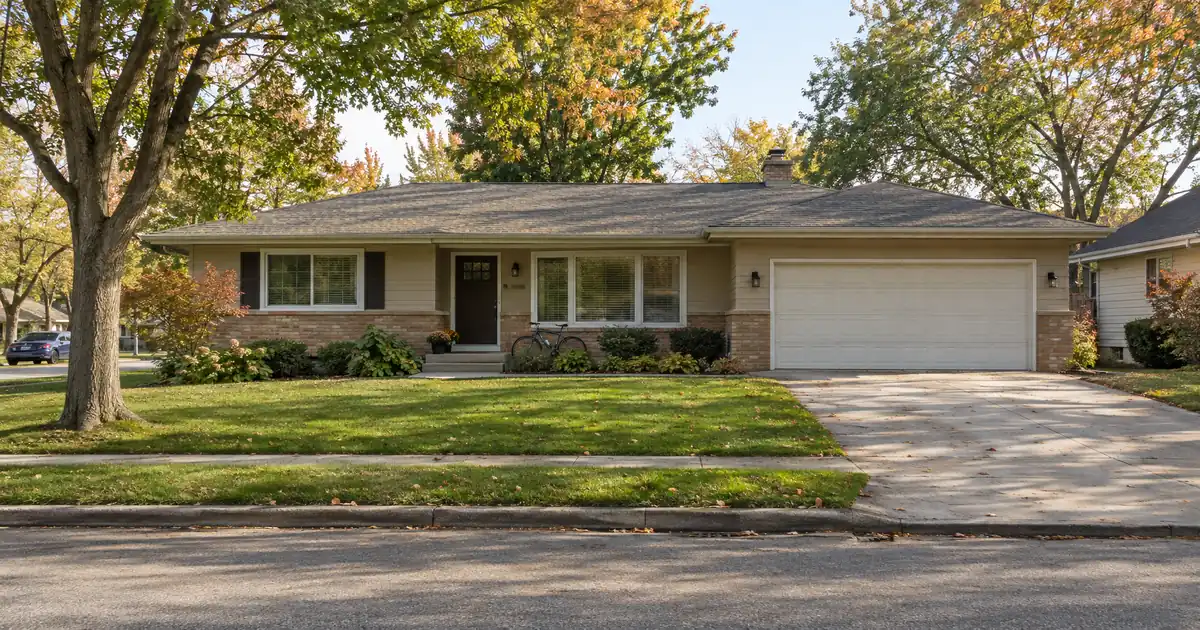
The Quick Read: A DSCR loan can still work when comparable data is scarce, because the appraiser can widen the search and explain the choices, though the lender can still trim the result. Two numbers come out of one appraisal: a value that sets leverage and a market rent that sets coverage. Thin data can hurt either one, and the fix for one does not fix the other.
- Thin sales comps hit value, and value sets the loan size.
- Thin rental comps hit market rent, and market rent sets the coverage ratio.
- No published mileage cutoff exists for DSCR files. The appraiser’s written explanation carries the weight.
- A smaller loan lowers the payment, which can partly offset a low rent opinion.
- Clearing 1.00 is not the same as positive cash flow.
“Gettysburg” is the working hook here. This article is national and mechanical. Any small, low-activity market behaves the same way: a borough with a few recent sales, a ring of townships, a tourism economy and older or unusual housing.
DSCR Calculator
Run the numbers in your market
Rate source: Freddie Mac 30-yr average via FRED® — Federal Reserve Bank of St. Louis · effective Oct 29, 2026
Prefilled with starting assumptions — enter your own rent or nightly figures, taxes, insurance, and HOA for a more accurate picture.
Program parameters update from Lendmire’s centralized guideline source. Taxes and insurance are editable estimates.
As of Oct 29, 2026 · General Freddie Mac market benchmark, not a Lendmire loan offer. Rent, nightly rate, occupancy, taxes, and insurance are editable estimates. Short-term rental figures are estimates only and vary significantly by season, property type, management approach, and local short-term-rental rules — confirm local regulations before relying on them. Qualifying income for short-term rentals varies by program — some use appraisal market rent, others use documented STR history or projections — and is confirmed in underwriting. Not a Loan Estimate, approval, or commitment to lend. Program availability and eligibility are subject to lender guidelines, credit approval, property review, and underwriting.
What Does “Thin Comps” Mean on a DSCR File?
“Thin comps” means two separate problems. Sales comps are recent closed sales of similar homes. They drive value. Rental comps are similar homes leased on a monthly basis. They drive market rent.
On the files our wholesale network sees, investors lump these together and then fix the wrong one. Distant sales comps hurt leverage. Scarce rentals hurt the ratio. A rent-side fix does nothing for a value-side miss.
Small markets tend to produce both problems at once. A historic district home, a custom build and a tourist-corridor property rarely have clean twins nearby. The appraiser has to stretch.
How Does One Appraisal Produce Two Numbers?
The appraisal is ordered with a rent schedule attached. Form 1007 covers a one-unit property. Form 1025 covers two to four units. The appraisal returns a value and a market rent.
Freddie Mac’s Form 1000 is the same single-family rent schedule, and its purpose is to give the lender a market rent from the appraiser. DSCR programs borrow the form. Agency rules do not govern DSCR loans.
| Output | What it controls | How thin comps hurt it |
|---|---|---|
| Value | Leverage and loan size | Distant or dated sales get discounted |
| Market rent | Coverage ratio | Few, far or mismatched rentals |
For a deeper walk through the file itself, see the complete DSCR loans guide.
How Does an Appraiser Build Value When Sales Are Scarce?
Appraisers widen the net in a set order, then explain what they did. When a neighborhood has no recent sales, the usual step is to extend the time frame 12 to 24 months back. Distant sales should then be justified with supporting data such as price per square foot or median-price comparisons.
The usual sequence:
1. Extend the time frame back to older closed sales, with market-condition adjustments.
2. Extend the distance to neighboring townships or similar areas.
3. Accept less similar homes and apply larger adjustments for size, age and condition.
4. Add active listings or pending contracts as supporting evidence.
5. Write commentary that says why the search was widened.
That last step matters most. An appraiser who simply swaps in far-off sales with no reasoning hands the underwriter a reason to discount the report. One who explains the choice gives the file support.
Then the lender reads it. The underwriter can accept the comps, trim the value, resize the loan or reject the report. Expect that review to be tougher in a thin market.
How Do Rental Comps Work in a Thin Market?
The rent schedule compares the subject with a small set of leased homes. Hotaling Moody, an appraisal firm, describes the form as comparing the subject against three rentals. It lines up location, design and appeal, age and condition, room count and living area.
In a small market those three rentals can be scarce, far apart or a different size. Adjustments are meant only for significant differences.
The basis is also narrow. Fannie Mae’s June 2024 Appraiser Update says the form calls for indicated monthly market rent, meaning competing homes leased on a monthly basis. Multiplying a nightly rate by 30 is not a valid substitute.
That matters in a tourism town. A home that books well on a nightly basis does not get a long-term rent opinion built from those bookings. Short-term-rental programs use different income methods, and select lenders in the network typically want about 12 months of hosting history. Short-term rental rules can vary by city, county, HOA, and property type, so investors should confirm local rules before relying on projected rental income.
How Does Coverage Get Calculated?
DSCR is the rent used for review divided by PITIA: principal, interest, taxes, insurance and any HOA dues. Many programs use the lower of in-place lease rent and the appraiser’s market rent. Where a lease exists, the numerator may be the lower of the two. For a vacant property, the appraiser’s market rent alone sets the numerator.
Programs typically start at 1.00 coverage, and stronger ratios open better pricing and leverage. Coverage below 1.00 is available through select lenders in the network, with leverage and terms adjusted. Those are different paths, not one program with a moving floor.
Taxes and insurance do not shrink when rent comes in low. So a rent shortfall cuts the supportable loan by more than the shortfall percentage. A modeled case on our own site shows a 10% rent gap trimming the loan by roughly 13% when rent is the binding limit. See that lease versus appraiser rent gap explainer. It is illustrative, not a prediction.
Where Does Value Hit the Loan Instead?
Value sets leverage. Most purchase files across the network land at 75% to 80% LTV on an investment property purchase. If the appraisal comes in under the contract price, leverage is recalculated on the lower figure. The loan shrinks or the cash to close rises. Terms depend on the lender’s guidelines, the property type, the leverage, and a full review of the credit profile.
Value does not touch the ratio directly. The ratio is rent against PITIA. This trips people up. A low value cuts loan size, and a smaller loan lowers the payment, which lifts coverage.
The binding limit is the smaller of the value-based cap and the rent-based cap.
What Do the Three Failure Cases Look Like?
Run a modeled Gettysburg-style purchase three ways. These are labeled assumptions, not market data.
| Case | What happens | Typical effect |
|---|---|---|
| Value miss only | Appraisal lands under contract | Loan shrinks, more cash to close |
| Rent miss only | Market rent below pro forma | Coverage drops, supportable loan drops |
| Both | Distant sales and scarce rentals | Smaller loan and thinner coverage |
Picture an investor under contract on a historic-district duplex who modeled the deal at 1.05 coverage on hoped-for rent. If the appraiser’s rent opinion lands lower, the ratio can fall under 1.00 and the deal works toward a smaller loan, more cash down, or a select-lender path with adjusted leverage and terms. A deal modeled right at the threshold is a deal one rent comp away from a rewrite.
The planning habit that works: model at a cushion above the floor, and hold extra cash for a low-value scenario.
DSCR vs. conventional financing
There are two common ways to finance an investment property, and they qualify you differently — here’s how investors weigh them.
Why investors choose it
- Qualifies on the property’s rental income — no personal tax returns, W-2s, or pay stubs needed to document income.
- No personal debt-to-income ceiling to clear, so existing mortgages and obligations don’t cap your borrowing the same way.
- Can be closed in an LLC, keeping the property inside a business entity.
- Built for scaling — not held to the limit on number of financed properties that conventional financing applies.
- Underwriting centers on the deal: generally qualifies when the rent covers the payment, a 1.00x coverage ratio being a common baseline (confirmed in underwriting).
- Designed specifically for investment property, including long-term and, where the program allows, short-term rentals.
Where it’s strong
- Often the lowest ongoing financing cost for a buyer who fully qualifies on personal income — a fit for a first property or a cost-first purchase.
Trade-offs for investors
- Requires full personal income documentation and must fit within a debt-to-income limit — salary, existing debts, and other mortgages all count.
- Typically held in your personal name rather than a business entity.
- Caps how many financed properties you can carry, which can become a ceiling as a portfolio grows.
- Evaluates you as a borrower as much as the property, which usually means more paperwork.
How investors usually choose: a first or single property often optimizes for the lowest financing cost; portfolio builders often optimize for leverage, vesting in an LLC, and scaling past conventional caps. The right answer depends on your goals, the property, and current guidelines — both paths run through select lenders in Lendmire’s wholesale network, with eligibility and terms confirmed in underwriting.
How Does Property Type Change the Picture?
| Property | Rent form | Thin-market issue |
|---|---|---|
| Single-family | Form 1007 | Few similar rentals nearby |
| 2–4 unit | Form 1025 plus rent roll | Unit mix and lease evidence |
| Unique or historic | Either | Heavy adjustments, wider search |
| Short-term rental | Booking history | Monthly form cannot support nightly income |
Unusual homes may need heavily adjusted comps or a much wider search. Manufactured homes (single- and double-wide), log homes and barndominiums are not offered through the network’s DSCR programs, so no comp strategy applies to them.
What If the Appraisal Comes In Low?
Match the remedy to the problem.
| Remedy | Fits when | Risk |
|---|---|---|
| Value reconsideration | Documented factual errors or better comps exist | May change nothing |
| Renegotiate price | Value is low and sales are well supported | Seller may refuse |
| Bring more cash | Deal still works at lower leverage | Ties up capital |
| Lower the loan | Rent is the binding limit | Less leverage |
| Walk away | Numbers only work on the hoped-for figures | Lost deposit, if any |
Disputing a low rent figure works when you bring documented factual errors or better rental comps. Asking prices do not move it. A fresh appraisal from a different lender is a gamble with another fee, not a strategy.
A larger down payment lowers the payment and can lift the ratio. It never erases leverage caps, credit floors, reserve rules or property eligibility. The strongest files clear both tests: enough equity and enough rental coverage.
Key Terms Defined
Comps: Recent sales or leases of similar properties, used to support value or rent.
Form 1007 / Form 1025: The rent schedule (one unit) and the operating income statement (two to four units) that attach to an appraisal.
PITIA: Principal, interest, taxes, insurance and association dues, the payment the ratio measures against.
Market rent: The appraiser’s opinion of what the property would lease for monthly.
Reconsideration of value: A request that the appraiser review the value with documented new evidence.
What Should You Assemble Before the Appraisal?
- The executed lease and proof of payment, if the unit is leased.
- A rent roll for two to four units.
- Documented local rentals the appraiser can use.
- Records of recent upgrades and condition.
- Nearby sales you know of, including older ones.
- Reserves documentation. Reserves commonly run around 6 months of PITIA, and about 9 months above $1,500,000, subject to lender guidelines.
Also ask the broker how the lender handles comp-search flexibility before the appraisal is ordered.
Credit and size still apply. Most programs want a score around 660, a score of 700 or more unlocks the strongest leverage tiers, and a 620 floor exists in parts of the network. Loans run up to $3,000,000 on standard programs, subject to lender guidelines. For related background, read what a DSCR loan is.
Frequently Asked Questions
Can a DSCR loan close with few comps?
Yes, when the appraiser widens the search and documents the reasoning, and the lender accepts the result. The lender may still trim value or resize the loan. Outcomes are not guaranteed and depend on lender guidelines.
Does a small-town or rural label disqualify a property?
No. The label itself does not decide the file. Value support and provable rent do. Longer distances and older sales are generally accepted when explained.
Who decides the rent used in the ratio?
The appraiser gives a market rent opinion, and many programs use the lower of that and any in-place lease rent. Your pro forma does not qualify the loan.
Is there a mileage limit on comps?
None is published for DSCR files. Judgment and written commentary decide. Informal rules of thumb for DIY comp pulls are not appraiser standards.
Does short-term income count when rental comps are thin?
Not on the monthly rent form. Short-term-rental programs use booking history instead, typically with about 12 months of hosting, and may use monthly rent if history is thin.
For current guidelines and terms, see Lendmire’s DSCR loan programs page.
About Lendmire
Lendmire (NMLS# 2371349) is a mortgage brokerage focused on DSCR investor financing, helping arrange programs through wholesale and investor-lending channels in 41 markets, including Washington, D.C. DSCR loans are evaluated by the lender on property cash flow rather than personal income, subject to lender guidelines, supporting LLC closings and accommodating investors with four or more financed properties. Scotsman Guide Top Mortgage Workplace in both 2025 and 2026.
Get Started
Ready to find the right loan for you?
See your offer in seconds. No credit pull, no obligation.
Informational only. Not a Loan Estimate, approval, or commitment to lend. Program availability and eligibility are subject to lender guidelines, credit approval, property review, and underwriting.
References
2. Hotaling Moody on Form 1007
3. Fannie Mae Appraiser Update June 2024
This article is part of Lendmire’s DSCR loan program — full qualification details, guidelines, and scenarios live on the program page.
Related reading: Does a DSCR Loan Need a 1007 Rent Schedule? · Can You Get a DSCR Loan on a Surfside Beach Rental? · How to Get a DSCR Loan on a Rental Needing Repairs
Guides: DSCR Loans in Gettysburg, PA · DSCR Loans in Pennsylvania
Brandon Miller
Founder & CEO, Mortgage Loan Originator, Lendmire LLC
- Mortgage Loan Originator · NMLS# 1129696 · Verify on NMLS Consumer Access
- North Carolina Real Estate Broker · License# 343312 · Verify on NCREC
- North Carolina Insurance Producer · License# 19053198 · Property, Casualty, Life, Health · Verify on NAIC SBS
- Lendmire LLC · Firm NMLS# 2371349 · Verify firm licensure
Important disclosures. Lendmire (NMLS# 2371349) is a licensed mortgage brokerage. Lendmire is not a direct lender, depository institution, or financial advisor. All loan inquiries are subject to lender underwriting; this article does not constitute a commitment to lend. Rates, terms, and program guidelines are subject to change without notice and vary by borrower profile, property type, and state. Information in this article is general in nature and is not financial, legal, or tax advice. Equal Housing Opportunity. NMLS Consumer Access: nmlsconsumeraccess.org.