
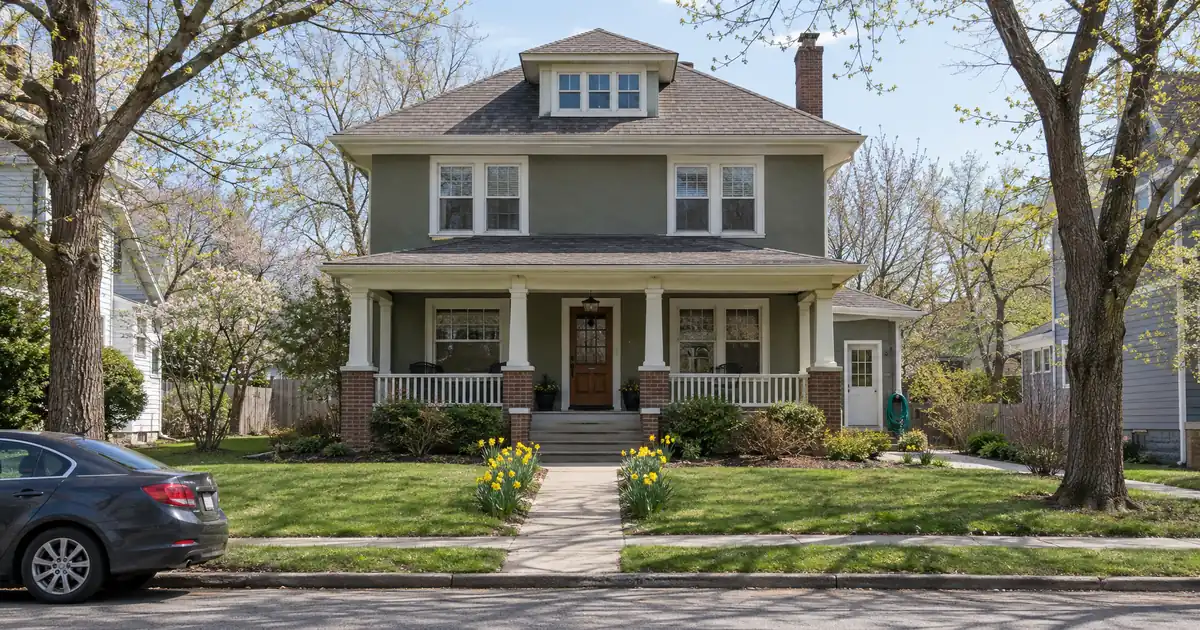
The Quick Read: A DSCR loan is reviewed for a property on the rent it can earn today, so the home generally has to be rent-ready and livable at closing. Light cosmetic work is usually fine. Heavy repairs normally mean financing the work first with a short-term bridge or cash, then moving into a DSCR loan once the property is finished and rentable. Lendmire, a mortgage broker, places these files through a wholesale network of DSCR lenders and sees this pattern constantly.
- Condition is reviewed before coverage. A property that isn’t livable generally doesn’t move forward.
- Most programs in the network want a condition rating of about C4 or better on the appraiser’s six-point scale.
- Repair holdbacks are rare, and they are approved only file by file through select lenders.
- Rehab money is not DSCR money. Plan the repair budget and carry costs separately.
- The usual path for a heavy fixer is bridge purchase, rehab, lease-up, then a DSCR payoff of the bridge.
Many investors find a rental with a bad roof or a gutted kitchen and ask whether one loan can do everything. Usually it can’t. The reasons are mechanical, and once you see them, the decision gets easier. For the full program picture, Lendmire’s complete DSCR loans guide covers the basics this piece assumes.
DSCR Calculator
Run the numbers in your market
Rate source: Freddie Mac 30-yr average via FRED® — Federal Reserve Bank of St. Louis · effective Oct 29, 2026
Prefilled with starting assumptions — enter your own rent or nightly figures, taxes, insurance, and HOA for a more accurate picture.
Program parameters update from Lendmire’s centralized guideline source. Taxes and insurance are editable estimates.
As of Oct 29, 2026 · General Freddie Mac market benchmark, not a Lendmire loan offer. Rent, nightly rate, occupancy, taxes, and insurance are editable estimates. Short-term rental figures are estimates only and vary significantly by season, property type, management approach, and local short-term-rental rules — confirm local regulations before relying on them. Qualifying income for short-term rentals varies by program — some use appraisal market rent, others use documented STR history or projections — and is confirmed in underwriting. Not a Loan Estimate, approval, or commitment to lend. Program availability and eligibility are subject to lender guidelines, credit approval, property review, and underwriting.
Key Terms Defined
DSCR (debt service coverage ratio): the property’s monthly rent divided by its full monthly housing payment: principal, interest, taxes, insurance, and any HOA dues.
PITIA: the full housing payment the rent is measured against.
Rent-ready: livable and rentable today, with working systems, a usable kitchen and bath, and no safety defects.
Condition rating (C1–C6): the appraiser’s scale for a home’s physical state, with C1 the best and C6 the worst.
As-is value: what the property is worth in its current condition.
Subject-to appraisal: a value that assumes named repairs get finished, which means someone must confirm completion.
Seasoning: the time you must hold a property before a lender will refinance on its appraised value.
Why Does Condition Matter So Much to a DSCR Lender?
Condition matters because the whole loan rests on the property earning rent now. Qualification runs primarily on property-level rental income covering the payment, subject to lender guidelines. A home that can’t be rented today has no real income to measure.
That is why the lender orders its own appraisal. The appraisal does two jobs. It sets value, which drives loan-to-value, and it gives a market-rent opinion, which drives the coverage ratio. On a single-family home the rent opinion comes on Form 1007. On a two-to-four unit property it comes on Form 1025. Those are appraisal forms only. DSCR guidelines come from individual lenders, not from an agency.
Here is the part many investors miss. Clearing 1.00 is not the same as positive cash flow. DSCR compares rent to PITIA only. Repairs, vacancy, management, utilities, and capex all sit outside the ratio. A fixer can show a decent coverage number on paper and still bleed cash while the work drags on.
How Does Underwriting Treat a Property Needing Repairs, Step by Step?
Underwriting treats repairs as a gate before the math. Condition gets reviewed first, then the appraisal, then completion proof, then coverage, credit, reserves, and leverage. Here is the sequence on a typical file.
1. Condition check. A rent-ready or lightly cosmetic property proceeds. Fire or water damage, condemned status, or missing utilities are generally not eligible at acquisition.
2. Appraisal with a rent schedule. The appraiser records condition, deficiencies, and any repairs needed, and gives a market-rent figure.
3. Condition rating. The appraiser uses the UAD scale. Restb.ai’s guide to the C1–C6 ratings explains the scale. C4 means some minor deferred maintenance and normal wear. C5 means obvious deferred maintenance and the need for significant repairs. C6 means damage or deferred maintenance severe enough to affect safety, soundness, or structural integrity.
4. The whole-dwelling rule. McKissock, an appraiser-education firm, notes that under UAD any part of a dwelling that warrants C6 makes the whole dwelling C6. One failing system can sink the rating of the entire house.
5. As-is or subject-to. An as-is appraisal values the home as it stands. A subject-to appraisal values it assuming named repairs get finished, so completion has to be verified.
6. Completion proof. Completion is commonly confirmed with a Form 1004D, the appraisal update and completion report. That is one more appraiser visit, which adds cost and has to be planned around.
7. Coverage and the rest of the file. Rent divided by PITIA is the number. Across the network, 1.00 is where select programs start, and stronger ratios open better pricing and leverage. Credit, reserves, and leverage still apply.
Across Lendmire’s network, the practical cutoff on condition usually sits at about C4 or better. It is not a published national rule. Each lender sets its own floor, and the smart move is to ask for the minimum before you write an offer.
A real example shows how this plays out. An SEC-filed due-diligence exhibit shows an investment cash-out refinance flagged because it was appraised subject to significant repairs needed to reach a minimum C4. The flag cleared once a 1004D completion certificate arrived. That is one pool, not a universal rule, but it shows the C4 floor and the completion step working together.
Where Is the Line Between Minor and Disqualifying Repairs?
The line sits between cosmetic and anything touching safety, systems, or structure. Cosmetic items usually pass. Safety, systems, and structural problems generally have to be cured before funding.
| Condition level | Examples | Typical treatment | Usual path |
|---|---|---|---|
| Cosmetic | Paint, flooring, fixtures, landscaping | Usually passes | Straight to DSCR |
| Deferred maintenance | Worn finishes, minor repairs | Often passes near C4 | DSCR, cash for fixes |
| Systems or safety | Failing HVAC, electrical hazards, roof leaks | Must be cured first | Bridge, then DSCR |
| Structural | Foundation, major water or fire damage | Not eligible at acquisition | Bridge or cash rehab |
| Missing essentials | No kitchen, bath, or utilities | Not rent-ready | Bridge, then DSCR |
Think of it this way. If a tenant could move in this week without a safety issue, the property is probably in DSCR range. If a contractor has to finish work before anyone can sleep there, it isn’t.
What Are Your Four Routes?
You have four realistic routes, and the right one depends on how much work the property needs and how much cash you hold. Here is how they compare.
| Route | What it funds | Best for | Main risk |
|---|---|---|---|
| Buy rent-ready | Purchase only | Hands-off investors | Higher price |
| Cash for minor repairs | Purchase, then fixes from savings | Light cosmetic work | Cash drain |
| Bridge, then DSCR | Purchase and rehab, then takeout | Heavy fixers | Two sets of costs |
| Sell after repairs | Exit at higher value | No hold plan | No rental income |
The investor with a deep cash cushion and a cosmetic fixer can buy with a DSCR loan and pay for the work out of pocket. The investor buying a distressed property with no cash for the rehab needs the bridge route. And if the numbers only work at a price the seller won’t accept, selling after repairs may beat holding.
How Does the Bridge-Then-DSCR Path Work?
The two-loan path works in a fixed order: buy with short-term money, finish the work, rent the property, then pay off the bridge with a DSCR loan. Each step has to fit inside the bridge term.
1. Buy with a bridge or hard-money loan. Rehab funds typically release in draws against the scope of work.
2. Complete the rehab. Keep invoices, permits, photos, and a final inspection record.
3. Lease the property. A lease is helpful, though a vacant, rent-ready property is underwritten on the appraiser’s market rent.
4. Wait out seasoning. Seasoning varies by lender. On cash-out, about 6 months is the common expectation in the network. A frequent mistake is starting the clock at rehab completion instead of the deed recording date.
5. Order the appraisal. The lender orders it, and the appraiser’s value and rent govern. Your after-repair estimate is only a planning number.
6. Pay off the bridge. The DSCR loan takes out the short-term debt.
Sizing the exit is where plans break. Say you buy a fixer, spend heavily on the rehab, and expect a strong after-repair value. If the appraiser comes in lower, the loan is sized on what the appraiser says, not on your projection. On a cash-out refinance, leverage tops out around 75% of value on a standard rental. A shortfall means bringing cash to the payoff, extending the bridge, or selling.
Compare that with the agency world for a moment. Freddie Mac’s multifamily guidance asks for both an as-is value and an as-if-stabilized value on moderate-rehab loans. That’s a different product from a DSCR loan, but it illustrates why appraisers separate current condition from finished condition.
Does the timing leave room for slippage? Build in a buffer. The bridge term has to outlast rehab, lease-up, seasoning, and the appraisal. If it doesn’t, extension fees or a forced sale can erase the profit.
DSCR vs. conventional financing
There are two common ways to finance an investment property, and they qualify you differently — here’s how investors weigh them.
Why investors choose it
- Qualifies on the property’s rental income — no personal tax returns, W-2s, or pay stubs needed to document income.
- No personal debt-to-income ceiling to clear, so existing mortgages and obligations don’t cap your borrowing the same way.
- Can be closed in an LLC, keeping the property inside a business entity.
- Built for scaling — not held to the limit on number of financed properties that conventional financing applies.
- Underwriting centers on the deal: generally qualifies when the rent covers the payment, a 1.00x coverage ratio being a common baseline (confirmed in underwriting).
- Designed specifically for investment property, including long-term and, where the program allows, short-term rentals.
Where it’s strong
- Often the lowest ongoing financing cost for a buyer who fully qualifies on personal income — a fit for a first property or a cost-first purchase.
Trade-offs for investors
- Requires full personal income documentation and must fit within a debt-to-income limit — salary, existing debts, and other mortgages all count.
- Typically held in your personal name rather than a business entity.
- Caps how many financed properties you can carry, which can become a ceiling as a portfolio grows.
- Evaluates you as a borrower as much as the property, which usually means more paperwork.
How investors usually choose: a first or single property often optimizes for the lowest financing cost; portfolio builders often optimize for leverage, vesting in an LLC, and scaling past conventional caps. The right answer depends on your goals, the property, and current guidelines — both paths run through select lenders in Lendmire’s wholesale network, with eligibility and terms confirmed in underwriting.
What About Repair Holdbacks and Escrows?
Most programs don’t offer a repair holdback. Some select lenders may fund with one, approved file by file, and it is never a standard feature. Expect a scope of work, a completion deadline, and a completion inspection if one is offered.
Treat a holdback as an exception worth asking about, not a plan to build a deal around. If you’re pursuing a coastal property damaged by weather, Lendmire’s piece How to Use a DSCR Cash-Out for Storm Repairs on a Coastal Rental covers a related situation where the property is already owned.
Edge Cases Where the Rule Bends
The general rule breaks in a few named situations.
- Vacant property. Vacant is not the problem. With no lease, the appraiser’s market rent is the only rent figure. It must still be rent-ready.
- Multi-unit with one down unit. A vacant or under-market unit inside an otherwise strong fourplex is a gray area. The rent schedule and the appraiser’s per-unit view matter most.
- One bad system. A single C6 element can drag the entire rating down, per the whole-dwelling rule above.
- Ineligible property types. Manufactured homes (single- and double-wide), log homes, and barndominiums are not offered in the network’s DSCR programs, whatever their condition.
- Renovation loans. FHA 203(k) style products are owner-occupant tools, not investor DSCR substitutes.
- Coverage below 1.00. Sub-1.00 coverage is available through select lenders in the network, with leverage and terms adjusted. A repair-heavy property usually isn’t helped by it, because condition is a separate gate from coverage.
Why Do Some Pages Say “Renovation DSCR Loans” Exist?
Some lenders market products that bundle purchase and rehab, and they sometimes borrow DSCR language. Those are short-term or construction-style products with draws, not standard DSCR loans. The standard DSCR loan is a stabilized-property product. The confusion comes from the label. If a product funds repairs, it’s functioning as a bridge, and it’ll still need a takeout.
Does the Deal Still Work After Repairs?
Run the numbers on cash needs, not just coverage. A DSCR loan can clear its benchmark while the all-in project still strains your reserves.
Check these before you commit:
- Purchase price, rehab budget, and carry costs during the work.
- Reserves. They vary by lender, leverage, loan size, and transaction type, commonly about 6 months of PITIA, stepping up to about 9 months above $1,500,000.
- Credit. A 620 floor exists in parts of the network, most programs want about 660, and 700+ unlocks the strongest leverage tiers.
- Leverage. Purchases typically land at 75%–80% LTV, and cash-out tops out around 75% on standard rentals.
- Loan size. Standard programs run up to $3,000,000.
Be honest about one thing. A larger down payment can lift coverage, but it never erases condition rules, credit floors, or reserve requirements. The strongest files clear both tests: enough equity and enough rental coverage. Leverage, reserves, and pricing vary by lender and program; the final terms follow the full file review.
Readiness Checklist Before You Apply
- Photos of every room and system, including roof and mechanicals.
- A written scope of work and invoices for completed repairs.
- Permits and final sign-offs where required.
- Proof the home is insurable in its finished state.
- A lease, if the property is already rented.
- Bridge payoff records, if you’re taking one out.
Common Mistakes
- Expecting the DSCR loan to fund the rehab.
- Using projected after-repair rent instead of the appraiser’s current market rent.
- Starting the seasoning clock at rehab completion rather than deed recording.
- Treating a 1.00 coverage number as proof of positive cash flow.
- Skipping the question of a lender’s minimum condition rating.
- Assuming a nationwide standard exists. It doesn’t.
Frequently Asked Questions
Can a DSCR loan fund the rehab itself?
Generally no. The loan is built for finished, rent-ready property. Rehab money normally comes from cash, or a bridge or hard-money loan that releases funds in draws. A few select lenders may approve a repair holdback file by file, but it isn’t standard.
Can I refinance before the repairs are finished?
Usually not. The appraiser rates condition, and a property needing significant work may be appraised subject to completion. The lender then needs a completion report before it moves forward. Finish the work first, then refinance.
What if the property is vacant?
Vacant is workable if it’s rent-ready. With no lease, the appraiser’s market rent serves as the rent figure for coverage. A vacant home that still needs major work faces the same condition gate as any other.
Can I pay for minor repairs with cash after buying?
Yes, when the work is cosmetic and the property clears the condition standard at closing. The risk is cash drain, so keep the repair budget separate from required reserves. Safety or system problems generally must be fixed before funding.
How long before I can refinance a bridge loan into DSCR?
It depends on the lender’s seasoning rule. About 6 months is the common expectation on cash-out refinances in the network, counted from the deed recording date. Confirm the specifics for your file with a broker before you buy.
If you are buying or refinancing a rental property and want to see how the numbers work, Lendmire can help you compare DSCR loan options based on the property income, credit profile, leverage, and investor goals. Qualification is subject to lender guidelines and credit approval. This is not a commitment to lend. Tax treatment varies; consult a qualified professional.
About Lendmire
A DSCR-focused mortgage broker, Lendmire (NMLS# 2371349) places investor financing across 41 markets — 40 states plus Washington, D.C. — with DSCR eligibility generally reviewed by the lender on property cash flow instead of tax returns, subject to lender guidelines. Scotsman Guide named Lendmire a Top Mortgage Workplace in 2025 and 2026.
Get Started
Ready to find the right loan for you?
See your offer in seconds. No credit pull, no obligation.
Informational only. Not a Loan Estimate, approval, or commitment to lend. Program availability and eligibility are subject to lender guidelines, credit approval, property review, and underwriting.
References
1. Restb.ai – UAD Condition Ratings: What C1–C6 Actually Mean
2. McKissock – Understanding Appraisal Condition Ratings C1 to C6
3. SEC EDGAR exhibit – due-diligence findings
4. Freddie Mac – Moderate Rehab Appraisal Best Practice
This article is part of Lendmire’s DSCR loan program — full qualification details, guidelines, and scenarios live on the program page.
Related reading: Can a Trust Hold Title on a DSCR Rental Loan? · Can You Get a DSCR Loan on a Vacant Rental With No Lease? · Is a 40-Year DSCR Loan Worth It on a Rental?
Brandon Miller
Founder & CEO, Mortgage Loan Originator, Lendmire LLC
- Mortgage Loan Originator · NMLS# 1129696 · Verify on NMLS Consumer Access
- North Carolina Real Estate Broker · License# 343312 · Verify on NCREC
- North Carolina Insurance Producer · License# 19053198 · Property, Casualty, Life, Health · Verify on NAIC SBS
- Lendmire LLC · Firm NMLS# 2371349 · Verify firm licensure
Disclosure information. Lendmire is a state-licensed mortgage brokerage under NMLS# 2371349. Lendmire is not a depository institution, direct lender, or financial advisor — all loans referenced are placed through wholesale lender partners and are subject to each lender's underwriting standards. This article is provided for general informational purposes and is not a commitment to lend, nor does it constitute financial, legal, or tax advice. Loan programs, terms, rates, and qualification standards change without notice and depend on borrower profile, property type, and the state in which the subject property is located. Equal Housing Opportunity provider. NMLS Consumer Access: nmlsconsumeraccess.org.