
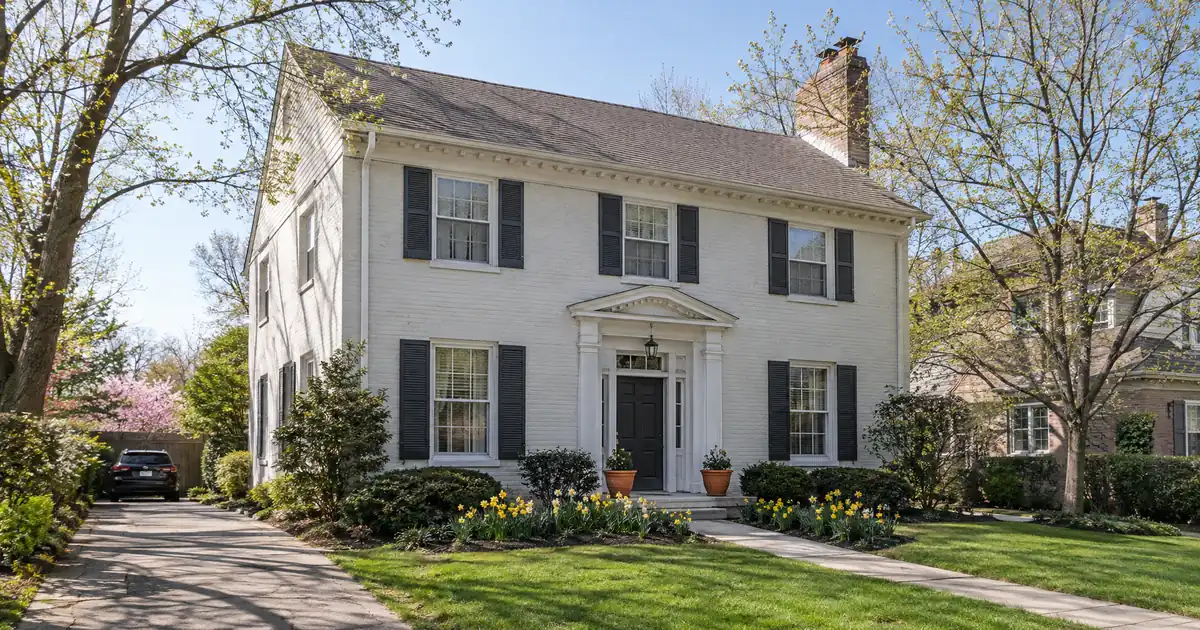
The Quick Read: Usually, yes, when the property is a conventionally rented 1–4 unit investment home and the rent covers the full monthly housing payment. Being near East Tennessee State University is not a problem by itself. What decides the file is how you rent it: one lease for the whole house is ordinary collateral, while by-the-room student leases and nightly rentals are where programs split.
- Qualification runs primarily on property-level rental income covering the payment, subject to lender guidelines.
- Purchase leverage typically lands at 75%–80% LTV on an investment property.
- A 620 credit score is the floor in parts of the network. Stronger tiers sit at 660, 680 and 700.
- Reserves are commonly about 6 months of PITIA.
- The property must be non-owner-occupied. Living in it yourself changes the loan.
Johnson City is the example here, and the logic applies to any college town. Our complete DSCR loans guide covers the fundamentals. This piece covers what changes when your tenants carry backpacks.
DSCR Calculator
Run the numbers in your market
Rate source: Freddie Mac 30-yr average via FRED® — Federal Reserve Bank of St. Louis · effective Oct 29, 2026
Prefilled with starting assumptions — enter your own rent or nightly figures, taxes, insurance, and HOA for a more accurate picture.
Program parameters update from Lendmire’s centralized guideline source. Taxes and insurance are editable estimates.
As of Oct 29, 2026 · General Freddie Mac market benchmark, not a Lendmire loan offer. Rent, nightly rate, occupancy, taxes, and insurance are editable estimates. Short-term rental figures are estimates only and vary significantly by season, property type, management approach, and local short-term-rental rules — confirm local regulations before relying on them. Qualifying income for short-term rentals varies by program — some use appraisal market rent, others use documented STR history or projections — and is confirmed in underwriting. Not a Loan Estimate, approval, or commitment to lend. Program availability and eligibility are subject to lender guidelines, credit approval, property review, and underwriting.
Does Being Near ETSU Disqualify a Rental?
No. Distance to campus is not an eligibility test. The lender looks at the property type, the occupancy, the lease structure, and the rent evidence.
East Tennessee State University sits in Johnson City, and its enrollment feeds student renter demand around the campus corridor. Demand helps your story, but the lender still underwrites the house, not the neighborhood.
A three-bedroom house leased to a family, a group of roommates on one joint lease, or a grad student household all look like standard rentals. The trouble starts when the plan is four separate leases at a set price per bedroom.
How Does a DSCR Loan Work in a College Town?
The lender divides the property’s qualifying monthly rent by its full monthly housing cost. That cost is PITIA: principal, interest, taxes, insurance and any association dues. PITIA is the “all-in” payment, not just the loan payment.
Here is how the pieces fit:
1. Use screen. The property must be a non-owner-occupied investment. DSCR loans are designed for investment properties and reviewed as business-purpose loans, differently from a standard owner-occupied mortgage.
2. Rent evidence. An appraiser documents market rent. Fannie Mae’s Form 1007 is the common rent schedule for one-unit homes, and Form 1025 covers 2–4 units. These are borrowed appraisal forms only. DSCR loans are not agency products, so agency rules do not govern them.
3. Counted rent. On many files the lender counts the lower of the signed lease and the appraiser’s market rent. A lease above market adds nothing. A vacant but rent-ready home typically counts at market rent.
4. The ratio. Divide rent by PITIA. At 1.00, rent exactly covers the payment. Below 1.00, it falls short.
5. Value and leverage. The same appraisal sets value, which drives loan-to-value (LTV), the loan amount compared to the property’s worth.
Taxes and insurance sit in the denominator. Two similarly priced houses near campus can need different rents to clear the same number.
What Coverage Ratio Do You Need?
Coverage of 1.00 is where many select programs start. It is a floor for specific programs, not a universal rule. A stronger ratio opens better pricing and more leverage.
A separate select-lender path takes coverage below 1.00, with leverage and terms adjusted. Expect lower LTV and different pricing there. Which path fits depends on the property, your credit, and your reserves.
Here is how three near-campus deals might read, using ratios only:
| Scenario | Coverage read | What it means |
|---|---|---|
| Whole-house lease, rent above payment | Around 1.2x | Strong file, more options |
| Rent roughly equals payment | About 1.00x | Clears select programs, little cushion |
| Room-by-room pro forma, appraiser credits less | Below 1.00x | Needs a sub-1.00 path or a different structure |
That last row is the common college-town surprise. A per-room pro forma can look great on paper while the lender credits the appraiser’s whole-house figure.
What Qualifies a Johnson City Rental?
A property qualifies when it checks these boxes, subject to lender guidelines:
| Factor | Typical expectation |
|---|---|
| Occupancy | Non-owner-occupied investment |
| Property type | 1–4 unit residential |
| Condition | Rent-ready |
| Credit | 620 floor in parts of the network; 660+ on most programs |
| Purchase LTV | 75%–80%, typically |
| Reserves | About 6 months PITIA |
| Loan size | Up to $3,000,000 on standard programs |
Some property types are simply not offered. Manufactured homes (single- and double-wide), log homes and barndominiums fall outside these DSCR programs.
Ownership can be in an LLC, subject to lender program eligibility. Expect personal credit to matter anyway, and expect the borrower to stay personally liable on many files. DSCR does not ignore you. It shifts the main test to the property.
Size matters too. Larger purpose-built student complexes, like the 176-unit, 576-bed Monarch 815 community near ETSU, need commercial or multifamily financing. Five or more units leaves residential DSCR.
How Is Student Rent Counted?
This is the part that decides college-town deals. In practice, most programs we place files with want a rental that would work as an ordinary single-family or small multifamily rental. When they accept a by-the-room setup, they generally count the appraiser’s whole-house market rent, not the sum of the room leases.
Separate per-bedroom student leases are the commonly restricted structure. Roommates on one joint lease usually read as a standard rental. Programs differ, and some exclude per-bedroom leasing outright, so say how you plan to rent the property up front. Surprises at appraisal cost you time and fees.
A smart screening test: if the property would still make sense as a normal family rental, the financing path is usually wider. If the numbers only work at a per-room price, you have a strategy problem, not a paperwork problem.
Seasonal vacancy works the same way. Student demand clusters around the academic calendar, but the lender generally looks at annualized rent rather than a month-by-month view. A rent-ready vacant unit counts at market rent. A unit that is not rent-ready may have no supportable rent at all. Some programs also apply a vacancy haircut.
Does a Passing Ratio Mean the Rental Cash Flows?
No. DSCR compares rent to PITIA only. Repairs, vacancy, management, utilities and capital expenses sit outside the calculation.
A 1.05x file near campus can still lose money in a slow summer. Student turnover often means cleaning, small repairs and gaps between leases. Treat the lender’s ratio as the entry ticket, then run your own budget with real reserves for those costs.
DSCR vs. conventional financing
There are two common ways to finance an investment property, and they qualify you differently — here’s how investors weigh them.
Why investors choose it
- Qualifies on the property’s rental income — no personal tax returns, W-2s, or pay stubs needed to document income.
- No personal debt-to-income ceiling to clear, so existing mortgages and obligations don’t cap your borrowing the same way.
- Can be closed in an LLC, keeping the property inside a business entity.
- Built for scaling — not held to the limit on number of financed properties that conventional financing applies.
- Underwriting centers on the deal: generally qualifies when the rent covers the payment, a 1.00x coverage ratio being a common baseline (confirmed in underwriting).
- Designed specifically for investment property, including long-term and, where the program allows, short-term rentals.
Where it’s strong
- Often the lowest ongoing financing cost for a buyer who fully qualifies on personal income — a fit for a first property or a cost-first purchase.
Trade-offs for investors
- Requires full personal income documentation and must fit within a debt-to-income limit — salary, existing debts, and other mortgages all count.
- Typically held in your personal name rather than a business entity.
- Caps how many financed properties you can carry, which can become a ceiling as a portfolio grows.
- Evaluates you as a borrower as much as the property, which usually means more paperwork.
How investors usually choose: a first or single property often optimizes for the lowest financing cost; portfolio builders often optimize for leverage, vesting in an LLC, and scaling past conventional caps. The right answer depends on your goals, the property, and current guidelines — both paths run through select lenders in Lendmire’s wholesale network, with eligibility and terms confirmed in underwriting.
What About Short-Term Rentals Near Campus?
Short-term rentals can work, but they use a different income method. Fannie Mae’s own Appraiser Update says Form 1007 was not designed for short-term rentals, and that multiplying a nightly rate by 30 is incorrect. So STR files typically rely on booking history or a market-data projection instead.
On our network, short-term-rental purchase leverage tops out at 75% LTV, with refinance around 70% and cash-out at 70%. Expect a 640+ credit score and about 12 months of hosting history. Coverage floors are 1.00 on purchases and refinances. Final terms depend on lender guidelines, property type, leverage, and the borrower’s complete credit picture.
Local tax obligations apply too. The City of Johnson City Finance Department says stays under 30 days inside the city are subject to the city’s 7% hotel/motel occupancy tax. Short-term rental rules can vary by city, county, HOA, and property type, so investors should confirm local rules before relying on projected rental income. Our piece Can a Short-Term Rental Near a Hospital Qualify for a DSCR Loan? walks through how anchor-driven demand gets underwritten.
Purchase, Refinance or Cash-Out?
Each transaction type has its own leverage:
| Transaction | Typical ceiling |
|---|---|
| Purchase, investment property | 75%–80% LTV |
| Rate-and-term refinance | Up to 85% LTV |
| Cash-out refinance | Up to 75% LTV on a standard rental |
Cash-out files commonly want about 6 months of seasoning, meaning time you have owned the property. If you already own a Johnson City rental with equity, a refinance can pull cash out for the next purchase. A bigger down payment lowers the payment and can lift the ratio, but it never erases credit floors, reserve rules or property eligibility. The strongest files clear both tests: enough equity and enough rental coverage.
Who Is a DSCR Loan Right For Near ETSU?
Self-employed investors, LLC-held portfolios, and early-career buyers whose personal debt-to-income would sink a conventional loan are the natural fit. Student loan balances matter far less when the property carries the file. Credit and reserves still matter.
It is the wrong tool when you plan to live in the property, when your child will occupy it (underwriters may treat family occupants as a cash-flow risk), or when the numbers only work at hoped-for per-room rent. House hacking, where you live in one room and rent the others, is an owner-occupied situation and not a DSCR deal.
Term structures are flexible. The spine is the 30-year fixed, with extended terms and interest-only periods available through select lenders in the network. Interest-only lowers the payment and can lift the ratio, but you build no principal early.
Key Terms Defined
DSCR: The debt service coverage ratio, which is rent used for lender review divided by the full monthly housing payment.
PITIA: Principal, interest, taxes, insurance and association dues, the full monthly payment.
LTV: Loan-to-value, the loan amount as a share of the property’s appraised value.
Seasoning: The time you have owned a property before a cash-out refinance.
Form 1007: An appraisal form documenting market rent on a one-unit investment home.
Frequently Asked Questions
Can I get a DSCR loan if I rent to ETSU students?
Yes, if the rental is a standard lease structure on a 1–4 unit property. Whole-house and joint-lease rentals to students look like ordinary rentals. Separate per-room leases are the structure many programs restrict, so confirm program fit before you order an appraisal.
Does my student loan debt block a DSCR loan?
It matters far less than on a conventional loan, because qualification runs primarily on property-level rental income covering the payment, subject to lender guidelines. Your credit score and reserves still count. A 620 floor exists in parts of the network, and most programs want around 660.
Can I use my own room-by-room rent projection?
Generally no. The lender usually counts the appraiser’s whole-house market rent, or the lower of that and your signed lease. A room-by-room pro forma may look strong but credit much less.
Can I buy a vacant house near campus?
Yes, when it is rent-ready. A vacant, rent-ready property typically counts at market rent. If it needs work before it can be rented, the rent may be hard to support.
Can a five-unit student building use this?
No. Five or more units leaves residential DSCR guidelines and moves to commercial or multifamily financing.
If you are buying or refinancing a rental property and want to see how the numbers work, Lendmire can help you compare DSCR loan options based on the property income, credit profile, leverage, and investor goals. Programs change and every file is underwritten individually. Tax treatment varies; consult a qualified professional.
About Lendmire
As a non-QM mortgage broker (NMLS# 2371349), Lendmire facilitates DSCR investor loans across 41 markets, including Washington, D.C. DSCR eligibility is generally reviewed around property-level rental income instead of personal income documentation, subject to lender guidelines, serving LLC-structured portfolios and self-employed borrowers who don’t fit conventional boxes. A two-time Scotsman Guide Top Mortgage Workplace (2025, 2026).
Get Started
Ready to find the right loan for you?
See your offer in seconds. No credit pull, no obligation.
Informational only. Not a Loan Estimate, approval, or commitment to lend. Program availability and eligibility are subject to lender guidelines, credit approval, property review, and underwriting.
References
2. Fannie Mae Appraiser Update
3. City of Johnson City Finance, Occupancy Taxes
This article is part of Lendmire’s DSCR loan program — full qualification details, guidelines, and scenarios live on the program page.
Related reading: DSCR Loan vs Hard Money Loan for a Rental Under 75K · DSCR vs Conventional Loan for a Former Home Turned Rental · Buying a First Rental on a DSCR Loan vs Buying a Home First
Guides: DSCR Loans in Johnson City, TN · DSCR Loans in Tennessee
Brandon Miller
Founder & CEO, Mortgage Loan Originator, Lendmire LLC
- Mortgage Loan Originator · NMLS# 1129696 · Verify on NMLS Consumer Access
- North Carolina Real Estate Broker · License# 343312 · Verify on NCREC
- North Carolina Insurance Producer · License# 19053198 · Property, Casualty, Life, Health · Verify on NAIC SBS
- Lendmire LLC · Firm NMLS# 2371349 · Verify firm licensure
Legal disclosures. Lendmire (NMLS# 2371349) is a state-licensed mortgage brokerage that arranges financing through wholesale lender relationships. Lendmire is not a direct lender, depository institution, or registered financial advisor. The discussion above is general informational content about real estate financing — it is not financial, legal, or tax advice, and readers should consult licensed professionals for guidance on their individual circumstances. Loan inquiries are subject to lender underwriting; this article does not represent a commitment to lend. Loan terms, rates, and qualification standards vary by borrower, property, and state, and are subject to change at any time. Equal Housing Opportunity. NMLS Consumer Access: nmlsconsumeraccess.org.