
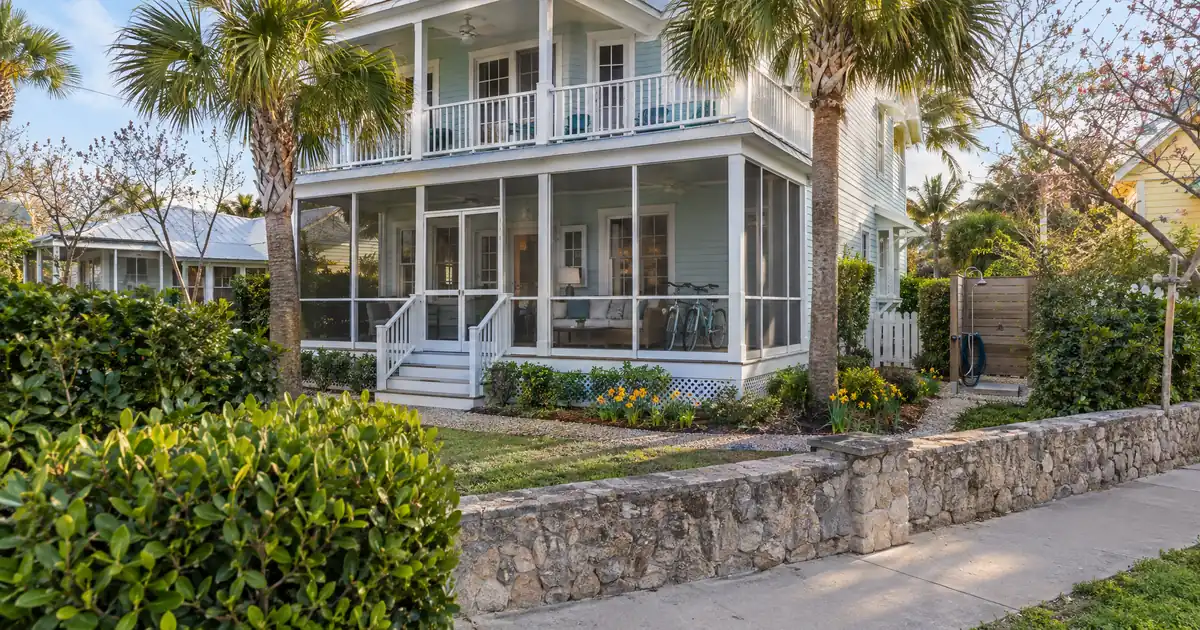
The Quick Read: A DSCR loan lets you qualify primarily on property-level rental income covering the payment, subject to lender guidelines, and on a short-term-rental purchase the network typically reaches 75% LTV with a 640 credit score and a 1.00 coverage floor, so the hard part on this car-free, ferry-only island is proving the rent, not finding the loan. Most of the work is in the income evidence, the insurance, and the stress test. Every file is underwritten individually. This is not a commitment to lend.
- Leverage: short-term-rental purchases typically top out at 75% LTV on the strongest files.
- Credit and history: expect a 640 minimum score and about 12 months of landlord or host experience.
- Coverage: 1.00 is where select short-term-rental purchase programs start. It is a floor, not a promise of approval.
- Island reality: the home is expensive, so the accepted rent figure swings the ratio more than anything else.
- Cash flow: clearing 1.00 does not mean the rental makes money after repairs, vacancy, and management.
Is a Bald Head Island Rental a Good Fit for a DSCR Loan?
It can be, if the rent supports a large payment. The island is expensive, seasonal, and logistically unusual, so the math is tighter than in a typical mainland rental market. Zillow puts the average home value near $1,418,076, up 2.7% year over year.
Short-Term Rental Calculator
Run the STR numbers in your market
Rate source: Freddie Mac 30-yr average via FRED® — Federal Reserve Bank of St. Louis · effective Oct 29, 2026
Prefilled with starting assumptions — enter your nightly rate, occupancy, taxes, and insurance for a more accurate picture.
Short-term rental income is documented with a 12-month history or a market data report. Program parameters update from Lendmire’s centralized guideline source.
As of Oct 29, 2026 · General Freddie Mac market benchmark, not a Lendmire loan offer. Nightly rate, occupancy, taxes, and insurance are editable estimates. Qualifying income for short-term rentals varies by program — some use appraisal market rent, others use documented STR history or projections — and is confirmed in underwriting. Not a Loan Estimate, approval, or commitment to lend. Program availability and eligibility are subject to lender guidelines, credit approval, property review, and underwriting.
That price drives everything. A big loan means a big payment, and the rent has to cover it.
Visitors arrive by ferry or private boat. Cars are not allowed, so guests get around by golf cart. That limits the guest pool and shapes how a rental is run. Ferry schedules can be disrupted by weather, which affects guest turnover. Many rentals include golf carts, and golf access can depend on club membership or a rental’s designated privileges. Those details affect how much rent a property can realistically earn.
A DSCR loan suits this asset in one specific way. It looks at the property’s income, not your W-2s. That helps self-employed buyers, buyers with heavy write-offs, and buyers purchasing through an LLC, subject to lender program eligibility. It does not make the math easier. It only changes whose income gets measured.
What Is a DSCR Loan, and How Is the Ratio Built?
DSCR stands for debt service coverage ratio. You divide the monthly rent the lender accepts by the full monthly housing payment: principal, interest, taxes, insurance, and any association dues. A result of 1.00 means the rent just covers the payment. Higher means a cushion.
Across the wholesale network Lendmire places files with, a short-term-rental purchase generally needs a 1.00 coverage floor. Refinances on short-term-rental collateral also start at 1.00. Stronger ratios tend to open better pricing and leverage. Separately, a select-lender path takes coverage below 1.00, with leverage and terms adjusted. That is a different path, not a looser version of the same program.
Four things set your number:
1. The rent figure the lender accepts.
2. The total housing payment, including insurance and dues.
3. The loan amount.
4. The minimum coverage for your program and scenario.
On a home priced around $1.4 million, the payment is large. The rent figure carries most of the weight. For the full mechanics, see Lendmire’s complete DSCR loans guide.
How Do Lenders Read Short-Term Rental Income on a Purchase?
They want evidence, and that evidence is not the standard rent schedule. DSCR appraisals often include a Form 1007, which is a market-rent survey built for long-term leases. Appraisal firm Class Valuation argues the 1007 cannot support short-term income and says appraisers use a labeled short-term-rental projected income analysis as a narrative addendum instead. The 1025 form covers 2-4 unit properties and works the same way: it describes the property, not your Airbnb potential.
Here is how the pieces fit together on most files:
- The appraisal sets value. Value drives how much leverage you get.
- Rental income evidence is a separate package. It can include host history, platform statements, deposit records, or a projection from an appraiser or data vendor.
- Your own track record matters. Programs usually expect about 12 months of landlord or host experience. A first-time buyer should raise this with a broker before writing an offer.
Projections are only as good as their inputs. A rent figure that looks great on a data page can shrink once a lender reviews it.
Why Do Island Data Sources Disagree So Much?
Because occupancy and revenue on a small, seasonal island are hard to measure. Treat any single vendor number as one data point, not the answer.
AirROI reports roughly $53,017 in average annual revenue, 29% occupancy, and a $741 nightly rate across 219 active listings over a trailing twelve-month window. Other vendors show much higher occupancy and a lower nightly rate. A local brokerage guide notes the same problem: public data sources do not agree on occupancy.
Notice the scale. Average gross revenue in that dataset is a small slice of a $1.4 million price, and costs come out of it. So underwrite on the conservative end. If the deal only works at the optimistic occupancy figure, it does not work.
What Island Rules Affect Underwritable Income?
Short-term rental rules can vary by city, county, HOA, and property type, so investors should confirm local rules before relying on projected rental income. On this island, confirm those rules with the Village, the association, and the seller’s documents before you count a dollar of projected rent.
Two practical points matter for the ratio and your cash flow. First, the Village of Bald Head Island collects an occupancy tax of 6% of the gross rental fee on qualifying short-term stays. Owners also have state sales tax obligations and monthly filings. Second, the Village counts stays under 90 days as short-term, which is wider than the 30-day line common elsewhere. A lender’s definition may differ, so check both.
A local brokerage guide advises buyers to confirm registration status and tax compliance from the seller’s documents. It also suggests reviewing HOA and club covenants, rental history, permits, certificates of occupancy, and elevation documentation. Ask for all of it before you rely on a rent projection.
One note on the data: AirROI observes that none of the 219 listings it tracks display a permit or registration number. That does not mean no rules apply. It means you verify instead of assuming.
What Costs Go Into the Ratio, and What Stays Outside?
The ratio only counts the housing payment. Many real costs of running a rental sit outside it, which is why a ratio above 1.00 is not the same as positive cash flow.
| Cost | In the DSCR ratio? | Island note |
|---|---|---|
| Principal and interest | Yes | Large on a $1M+ loan |
| Property taxes | Yes | County, Village, and district levies |
| Homeowners insurance | Yes | Wind may be separate |
| Association or club dues | Yes | Confirm what they include |
| Occupancy and sales tax | No | Owed on gross rental fees |
| Management and cleaning | No | Absentee owners usually need both |
| Repairs, capex, utilities | No | Salt air and weather wear |
| Vacancy | No | Seasonal swings are real |
Insurance deserves its own caution. Many coastal homeowners policies exclude wind and hail, so buyers may need a separate wind policy or the coastal pool. Wind coverage through that route does not cover flood, so flood is its own policy. Budget for the full stack, and get real quotes before you submit an offer. Premiums vary widely by property, so use quotes, not rules of thumb.
A broker’s observation from comparable coastal files: insurance moves the coverage number more than almost any other line. A ratio that pencils on an early estimate can slip once the real wind and flood quotes arrive. Getting them in before the file goes to a lender prevents a nasty surprise late in the process.
Run the Numbers: A Modeled Example and Stress Test
These inputs are modeled assumptions, not market facts. Say a buyer targets a home near the island’s roughly $1.4 million average value, using 75% LTV on a short-term-rental purchase. Assume the lender accepts a rent figure that produces about 1.10x coverage. That clears a 1.00 floor with a thin cushion. Terms depend on the lender’s guidelines, the property type, the leverage, and a full review of the credit profile.
Now stress it. Suppose a soft season or a more cautious projection cuts the accepted rent by 15%. Coverage drops from 1.10x to roughly 0.94x. The same house, the same loan, and the file now sits below the 1.00 floor that select purchase programs start at.
Here is what you could do from there:
- Put more down. A lower balance means a lower payment, which lifts the ratio. It never overrides the leverage caps, credit floors, or reserve rules.
- Explore a sub-1.00 path. Coverage below 1.00 is available through select lenders in the network, with leverage and terms adjusted.
- Ask about structure. Extended terms such as 40-year, and interest-only periods, are available through select lenders. They change the payment and the ratio.
- Pick a different property. A smaller home or condo can have a better rent-to-payment balance than a large house.
The strongest files clear both tests: enough equity and enough rental coverage. On this island, the equity test is usually the easier one.
Which Property Type Fits Best?
It depends on the rent-to-price balance, and each type trades something away. A large home can command high weekly rates for groups, but it carries a big payment and a big loan. A cottage or condo has a lower entry price, which can make the ratio easier, though the revenue ceiling is lower. Layout, location on the island, and association rules all matter. Not every home suits rentals.
Manufactured homes, log homes, and barndominiums are not offered in the network’s DSCR programs, so those property types are off the table.
What Does the Buying Path Look Like Step by Step?
1. Pre-qualify early. Share your credit profile, host history, and target price with a broker so you know which leverage tier fits.
2. Pull the rental evidence. If the home is an active rental, ask for platform statements, deposit records, and the owner’s tax filings with the Village.
3. Get real insurance quotes. Ask for wind and flood coverage, not just a base homeowners policy.
4. Schedule tours around the ferry. Showings on a car-free island depend on ferry timing and on the guest calendar if the home is booked.
5. Review association and club documents. Look for rental restrictions, design-review rules, and golf privileges.
6. Order the appraisal. It sets the value and drives your maximum loan. A short-term-rental income analysis may be requested separately.
7. Confirm reserves. They vary by lender, leverage, loan size, and transaction type, and are commonly around 6 months of the full monthly payment. Larger balances typically step up, so ask early.
8. Finalize the structure. Choose among a 30-year fixed, an extended term, interest-only, or an adjustable option, subject to lender guidelines.
Loan sizes run up to $3,000,000 on standard programs. For larger or more leveraged files, Lendmire’s piece on leverage and reserves on super jumbo loans on the island explains what changes.
DSCR vs. conventional financing
There are two common ways to finance an investment property, and they qualify you differently — here’s how investors weigh them.
Why investors choose it
- Qualifies on the property’s rental income — no personal tax returns, W-2s, or pay stubs needed to document income.
- No personal debt-to-income ceiling to clear, so existing mortgages and obligations don’t cap your borrowing the same way.
- Can be closed in an LLC, keeping the property inside a business entity.
- Built for scaling — not held to the limit on number of financed properties that conventional financing applies.
- Underwriting centers on the deal: generally qualifies when the rent covers the payment, a 1.00x coverage ratio being a common baseline (confirmed in underwriting).
- Designed specifically for investment property, including long-term and, where the program allows, short-term rentals.
Where it’s strong
- Often the lowest ongoing financing cost for a buyer who fully qualifies on personal income — a fit for a first property or a cost-first purchase.
Trade-offs for investors
- Requires full personal income documentation and must fit within a debt-to-income limit — salary, existing debts, and other mortgages all count.
- Typically held in your personal name rather than a business entity.
- Caps how many financed properties you can carry, which can become a ceiling as a portfolio grows.
- Evaluates you as a borrower as much as the property, which usually means more paperwork.
How investors usually choose: a first or single property often optimizes for the lowest financing cost; portfolio builders often optimize for leverage, vesting in an LLC, and scaling past conventional caps. The right answer depends on your goals, the property, and current guidelines — both paths run through select lenders in Lendmire’s wholesale network, with eligibility and terms confirmed in underwriting.
Management Choices and Documentation
Most absentee owners hire a rental program or property manager. That choice affects your documentation. A manager that issues clean monthly statements gives a lender an income record. A self-managed listing on a platform gives you less formal evidence. Either way, keep deposits, statements, and expense records tidy, because they feed future refinances and the 12-month history expectation.
What Happens After You Own It?
You have refinance options later. On short-term-rental collateral, refinance leverage tends to run around 70%, and cash-out tops out near 70% as well, while a standard long-term rental can go to about 75% on a cash-out. Programs usually expect about six months of seasoning before a cash-out. By then you will have actual income history, which is better evidence than any projection.
Tax treatment can depend on how the funds are used and how the property is held; investors should keep clear records and speak with a qualified tax professional before relying on any deduction.
When Does This Not Work?
When the deal only works on optimistic numbers. Three patterns come up:
- The price is high and the rent is moderate. Coverage lands under 1.00 on paper, and a sub-1.00 path means adjusted leverage and terms.
- Insurance eats the margin. Wind and flood together can change the whole picture.
- There is no host history. A first-time buyer may face program expectations that take time to meet.
A genuine toss-up on this island is large house versus small. The big house earns more revenue per week, but the small one often pencils better against the payment. Run both before choosing.
Key Terms Defined
DSCR (debt service coverage ratio): the monthly rent a lender accepts divided by the full monthly housing payment.
LTV (loan-to-value): the loan balance as a percentage of the property’s appraised value.
PITIA: principal, interest, taxes, insurance, and association dues, which together make the monthly housing payment.
Seasoning: the waiting period between buying a property and refinancing it.
Reserves: liquid savings a lender wants you to hold after closing, usually counted in months of payments.
Form 1007 and Form 1025: appraisal forms for market rent on single-family units and for operating income on 2-4 unit properties.
Frequently Asked Questions
What credit score do I need to buy a Bald Head Island short-term rental with a DSCR loan?
Short-term-rental programs generally expect a 640 minimum score. Higher scores can open stronger leverage tiers. Exact eligibility depends on the lender, the property, and your full profile.
How much down payment is typical?
Short-term-rental purchases typically reach 75% LTV on the strongest files, which means about 25% down. Select high-leverage programs exist for standard rentals, but they do not extend to short-term-rental collateral. Reserves and credit floors still apply either way.
Does clearing 1.00 mean the rental is profitable?
No. The ratio compares rent to the housing payment only. Management, cleaning, repairs, vacancy, utilities, and occupancy taxes sit outside it. A property can clear 1.00 and still lose money after those costs.
Can I buy through an LLC?
Many investors do, subject to lender program eligibility. Ask early, because the entity structure affects documentation and sometimes the lender choice.
What if my coverage lands below 1.00?
A separate path through select lenders in the network takes coverage below 1.00, with leverage and terms adjusted. A larger down payment or a different structure may also help. Eligibility review depends on credit approval and property review.
Next Step
If you are buying or refinancing a rental property and want to see how the numbers work, Lendmire, a mortgage broker arranging DSCR financing across 41 markets including Washington, D.C., can help you compare DSCR loan options based on the property income, credit profile, leverage, and investor goals.
About Lendmire
A DSCR-focused mortgage broker, Lendmire (NMLS# 2371349) places investor financing across 41 markets — 40 states plus Washington, D.C. — with DSCR eligibility generally reviewed by the lender on property cash flow instead of tax returns, subject to lender guidelines. Scotsman Guide named Lendmire a Top Mortgage Workplace in 2025 and 2026.
Get Started
Ready to find the right loan for you?
See your offer in seconds. No credit pull, no obligation.
Informational only. Not a Loan Estimate, approval, or commitment to lend. Program availability and eligibility are subject to lender guidelines, credit approval, property review, and underwriting.
References
1. Zillow – Bald Head Island home values
2. Class Valuation – Appraisal Form 1007 and short-term rentals
3. AirROI – Bald Head Island Airbnb data
4. Local brokerage – rental potential
5. Village of Bald Head Island – Occupancy Taxes on Short-Term Rentals
6. David Wray Real Estate – Buying a home on Bald Head Island
This article is part of Lendmire’s short-term rental loan program — full qualification details, guidelines, and scenarios live on the program page.
Related reading: How to Close a DSCR Loan on a Carolina Beach Rental · How Much a DSCR Loan Lends to Buy Out a Spouse on a Rental · How to Apply for a DSCR Loan on a Rental Property
Brandon Miller
Founder & CEO, Mortgage Loan Originator, Lendmire LLC
- Mortgage Loan Originator · NMLS# 1129696 · Verify on NMLS Consumer Access
- North Carolina Real Estate Broker · License# 343312 · Verify on NCREC
- North Carolina Insurance Producer · License# 19053198 · Property, Casualty, Life, Health · Verify on NAIC SBS
- Lendmire LLC · Firm NMLS# 2371349 · Verify firm licensure
Required disclosures. Lendmire (NMLS# 2371349) operates as a licensed mortgage broker, not a direct lender or depository. The discussion in this article is general in nature and should not be relied upon as financial, legal, or tax advice — every investment scenario is unique and should be reviewed by a qualified professional. Any loan inquiry is subject to lender underwriting, and this article is not a commitment to lend or a guarantee of approval. Mortgage rates, loan terms, and program guidelines vary by borrower, property, and state, and may change without notice. Equal Housing Opportunity. Verify licensure at NMLS Consumer Access.