
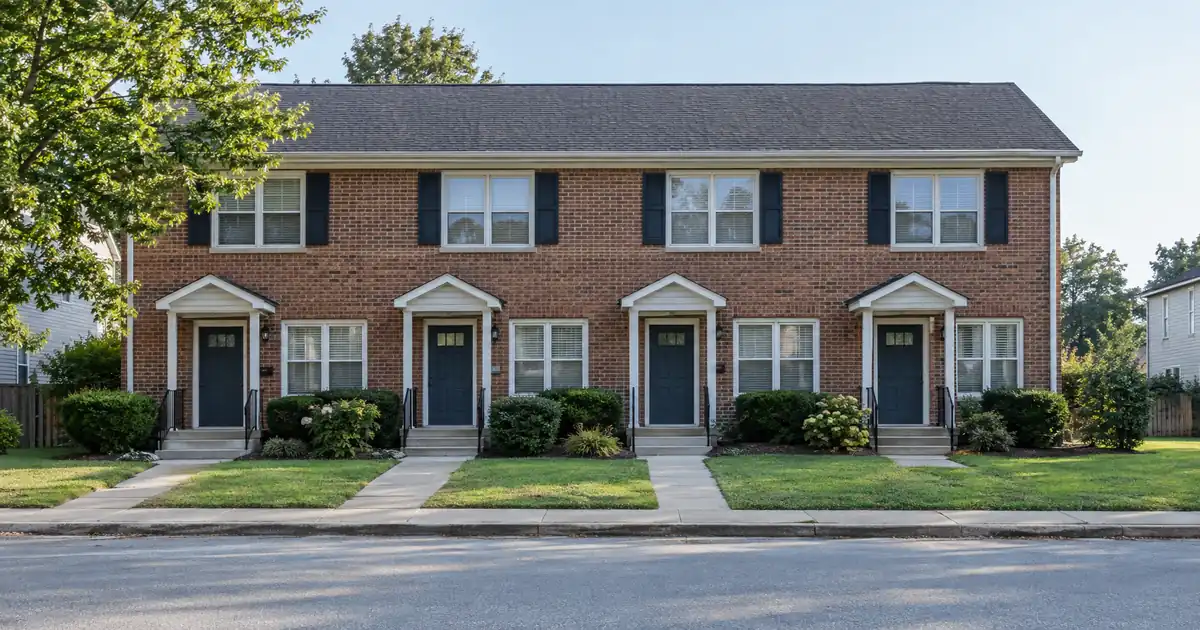
The Quick Read: A small-balance DSCR loan tests the building’s rent against its full monthly payment, while a commercial loan tests the building’s net operating income against debt service and leans harder on the borrower’s balance sheet. A fourplex sits in the residential class, so both paths are open to you. The right pick depends on whose strength carries the file: the rent roll or the borrower.
- A fourplex is the top of the 1–4 unit class, not a commercial property by default.
- DSCR files qualify primarily on property-level rental income covering the payment, subject to lender guidelines.
- Commercial files usually weigh operating history, borrower financials, and the lender relationship more heavily.
- Commercial loans often carry shorter terms with a balloon payment. Many DSCR loans run on a 30-year fixed spine.
- Clearing 1.00x coverage is not the same as positive cash flow.
The Honest Answer: Who Each Loan Is Really For
A small-balance DSCR loan is for the investor whose strength is the building. The rent is solid, the credit is reasonable, and you want a long, fully amortizing loan without handing over a stack of personal financials. A commercial loan is for the investor whose strength is the balance sheet or a bank relationship, and who is comfortable with a shorter term and a refinance event down the road.
DSCR Calculator
Run the numbers in your market
Rate source: Freddie Mac 30-yr average via FRED® — Federal Reserve Bank of St. Louis · effective Oct 29, 2026
Prefilled with starting assumptions — enter your own rent or nightly figures, taxes, insurance, and HOA for a more accurate picture.
Program parameters update from Lendmire’s centralized guideline source. Taxes and insurance are editable estimates.
As of Oct 29, 2026 · General Freddie Mac market benchmark, not a Lendmire loan offer. Rent, nightly rate, occupancy, taxes, and insurance are editable estimates. Short-term rental figures are estimates only and vary significantly by season, property type, management approach, and local short-term-rental rules — confirm local regulations before relying on them. Qualifying income for short-term rentals varies by program — some use appraisal market rent, others use documented STR history or projections — and is confirmed in underwriting. Not a Loan Estimate, approval, or commitment to lend. Program availability and eligibility are subject to lender guidelines, credit approval, property review, and underwriting.
Neither is the “real” loan and the other the shortcut. They answer different questions. One asks, “Does this building pay for itself on paper?” The other asks, “Does this borrower and this operating history justify the loan?”
Fourplex buyers often land on the DSCR side. That is not a rule. Some borrowers have a bank that knows them, a strong operating history, and a reason to prefer a relationship loan. Those files can go the other way.
Is a Fourplex Residential or Commercial?
A fourplex is residential. Fannie Mae’s appraisal forms list pairs Form 1025, the small residential income property report, with two- to four-unit properties. That means the appraiser uses a residential income form with a unit-by-unit rent schedule, not a commercial report.
The agency multifamily world starts one door higher. Freddie Mac’s small-balance research describes small multifamily as five to 50 units. So “small-balance commercial” in the agency sense does not describe a fourplex.
Here is the catch. Some banks offer their own commercial product on four units. That is that lender’s structure, not a regulatory category. A storefront or office space in the building can also push a four-unit property toward commercial treatment, and programs set their own limits on mixed use.
One more edge: an owner-occupied fourplex is a consumer loan, not a business-purpose one. DSCR loans are designed for non-owner-occupied investment properties.
Side-by-Side
The commercial column shows published industry norms. Individual lenders vary.
| Factor | Small-Balance DSCR Loan | Commercial Loan |
|---|---|---|
| Review basis | Rent vs. full PITIA | NOI vs. debt service |
| Borrower financials | Limited, but not no-doc | Heavier personal and business review |
| Documentation | Lease or rent evidence, entity papers | Rent roll, operating statement, financials |
| Appraisal | Residential income form (Form 1025) | Often income-approach narrative |
| Loan structure | 30-year fixed spine; other terms via select lenders | Often shorter term with balloon |
| Recourse | Personal guarantor commonly expected | Recourse or non-recourse, varies |
| Entity vesting | LLC on title, subject to program terms | LLC common, guarantor typical |
| Reserves | Often around 6 months of PITIA | Set by lender, often liquidity-based |
| Timeline | Set by file and lender | Often longer, more review steps |
How Each Loan Reads the Same Building
The two tests measure different things, so they can disagree on one building.
The DSCR test divides rent by the full housing payment: principal, interest, taxes, insurance, and any HOA dues. For a fourplex, rent from all four units is combined. The program decides whether it uses lease rent, market rent, or the lower of the two.
The commercial test divides net operating income by annual debt service. NOI is revenue minus operating expenses, before debt service. Operating costs like management, repairs, and vacancy reserves reduce NOI. Debt service also depends on terms such as amortization.
Run the numbers on a hypothetical fourplex that clears roughly 1.2x on the rent-to-payment test. A commercial lender subtracts operating expenses first, and the same building can look thinner on the NOI test. Flip it around: a building with low expenses and a long amortization can look stronger on the commercial side. Commercial lenders also often add tests like debt yield, which is NOI divided by the loan amount.
That is why a passing DSCR number does not mean the property cash flows. DSCR compares rent to PITIA only. Repairs, vacancy, management, utilities, and capital expenses sit outside the calculation. Budget for them separately.
When a Small-Balance DSCR Loan Is the Better Fit
Choose the DSCR path when the building carries the file.
- Rent is the strength. The fourplex rents well relative to its payment, and your personal financials are complicated or hard to document.
- You want a long, fully amortizing loan. A 30-year fixed removes the balloon and the refinance risk at maturity. Extended terms and interest-only periods are available through select lenders in the network, and ARM structures exist for investors who want them.
- You are scaling. Because the file is built around the property, each purchase is its own review. That suits an investor adding doors.
- You hold in an LLC. Title can sit in an entity, subject to lender program eligibility, though a personal guarantee is commonly expected. An LLC on title does not remove it.
Typical program ranges across the network: purchase leverage mostly lands at 75%–80% LTV, meaning 20%–25% down. Select high-leverage programs reach 85% LTV on a purchase with roughly a 700+ score. Most programs want a credit score around 660, a 620 floor exists in parts of the network, and 700+ unlocks the strongest leverage tiers. Coverage of 1.00 is where select programs start, and stronger ratios open better terms. A separate select-lender path takes coverage below 1.00, with leverage and terms adjusted.
Reserves vary by lender, leverage, loan size, and transaction type. About 6 months of PITIA is common. Loan sizes run up to $3,000,000 on standard programs, though smaller balances route through select lenders in the network. All of this is subject to lender guidelines and individual underwriting.
For the fuller picture of how these loans work, see Lendmire’s complete DSCR loans guide.
When a Commercial Loan Is the Better Fit
Choose the commercial path when the borrower or the operating history carries the file.
- You have a strong balance sheet and a banking relationship. A lender who knows you may weigh liquidity and net worth more than a rent test.
- The building has a real operating history. Stabilized, well-documented income can support an NOI-based review, and that history can matter more than a single rent figure.
- The property is mixed-use. A storefront or office suite may fit commercial underwriting better than a residential program.
- You are comfortable with a balloon. Commercial mortgages generally do not fully amortize over the stated term. They often end in a balloon payment, usually repaid by refinancing. That works if you plan to refinance or sell, and it is a risk if you plan to hold for decades.
- You want a relationship over a product. Commercial lending often involves ongoing reporting and a continuing relationship with the lender, which some borrowers value.
The cost is paperwork and uncertainty. Commercial underwriting generally asks for more: a rent roll, a trailing operating statement, and a fuller appraisal. Recourse varies, and prepayment terms vary too. Read both before you commit.
The Business-Purpose Wrinkle
Because DSCR loans are business-purpose investor loans, they are reviewed differently from a standard owner-occupied mortgage. Credit extended primarily for a business purpose is generally treated as exempt from the federal truth-in-lending rules that govern consumer mortgages.
Two practical points follow. First, skipping personal debt-to-income review is a product design choice, not a legal requirement. Second, occupancy certification still matters. Business-purpose status is not a license to treat an owner-occupied loan as an investment loan.
Edge Cases Worth Planning For
A fifth unit. Add one door and you cross into the five-plus world, where lender pools and file types change. If you plan to grow, decide which side of that line your next deal falls on. Lendmire’s piece DSCR vs. Small-Balance Commercial Loan on a 5-Unit Building covers that step up.
A thin-coverage deal. If rent does not clear 1.00x, one route is a select-lender path with leverage and terms adjusted. Another is a larger down payment, which lowers the payment and can lift the ratio. It never erases leverage caps, credit floors, reserve rules, or property eligibility. The strongest files clear both tests: enough equity and enough rental coverage.
A bank product that calls itself DSCR. Some banks apply the label to a commercial product. Compare by underwriting basis, rent versus payment or NOI versus debt service, not by name.
Ineligible property types. Manufactured homes, log homes, and barndominiums are not offered through the network’s DSCR programs.
Holding title in an LLC? Lendmire also covers DSCR vs. small-balance commercial loan for an LLC portfolio.
A Simple Decision Test
Ask four questions.
1. Whose strength carries the file? If it is the rent, lean DSCR. If it is you, lean commercial.
2. How long will you hold? Long hold favors full amortization. A short hold or planned refinance tolerates a balloon.
3. How much paperwork will you accept? Limited documentation favors DSCR. A deep relationship may favor commercial.
4. Is the building purely residential? Mixed use pushes toward commercial.
If the answers split, price both paths and compare the full terms side by side. Lendmire’s calculator offers an illustrative estimate of coverage and leverage, which helps frame that comparison.
Key Terms Defined
DSCR (debt service coverage ratio): monthly rent divided by the full monthly payment, including principal, interest, taxes, and insurance.
PITIA: principal, interest, taxes, insurance, and association dues, the full monthly housing obligation.
NOI (net operating income): rental revenue minus operating expenses, before any debt payments.
Balloon payment: a large lump sum due at the end of a loan term when the loan has not fully paid down.
Recourse: the lender’s ability to pursue a borrower personally if the property does not cover the debt.
Debt yield: NOI divided by the loan amount, a test some commercial lenders add.
Frequently Asked Questions
Is a DSCR loan a commercial loan?
No. A DSCR loan is a business-purpose investor loan, but a fourplex sits in the residential 1–4 unit class. The difference is the underwriting basis: rent versus payment rather than NOI versus debt service.
Does a commercial loan require a personal guarantee?
Often, but not always. Commercial loans may be recourse or non-recourse depending on the lender. DSCR loans commonly expect a personal guarantor even when title sits in an LLC, subject to program terms.
What is a balloon payment, and why does it matter on a fourplex?
It is a lump sum due when a shorter-term loan matures. On a long hold, it creates a refinance event, and you carry the risk that conditions at that moment are less favorable. A fully amortizing 30-year loan avoids it.
Can I use a DSCR loan on five units?
Programs vary. Five units usually moves a file toward commercial or multifamily treatment, though some select lenders in the network may review it. Eligibility depends on the lender, the property, and the borrower.
Does passing the coverage ratio mean the property cash flows?
No. The ratio compares rent to PITIA only. Repairs, vacancy, management, utilities, and capital expenses are outside it, so a building can clear 1.00x and still run tight.
Your Next Step
If you are buying or refinancing a rental property and want to see how the numbers work, Lendmire can help you compare DSCR loan options based on the property income, credit profile, leverage, and investor goals. Lendmire is a broker arranging financing through select lenders in its wholesale network, with DSCR programs in 41 markets, including Washington, D.C. Reach the team at 828-256-2183.
The verdict is simple. Pick DSCR when the rent roll is your best asset and you want a long, steady loan. Pick commercial when your balance sheet and operating history are your best assets and you can live with a balloon. Many fourplex buyers will find the building speaks louder than their paperwork. Tax treatment varies; consult a qualified professional.
About Lendmire
Lendmire is a non-QM mortgage brokerage (NMLS# 2371349) arranging DSCR investor loans in 41 markets, including Washington, D.C. DSCR eligibility is generally reviewed around property-level rental income rather than personal income, subject to lender and program guidelines, a fit for self-employed investors and LLC-owned portfolios. Lendmire was recognized as a Scotsman Guide Top Mortgage Workplace in 2025 and 2026.
Get Started
Ready to find the right loan for you?
See your offer in seconds. No credit pull, no obligation.
Informational only. Not a Loan Estimate, approval, or commitment to lend. Program availability and eligibility are subject to lender guidelines, credit approval, property review, and underwriting.
References
1. Fannie Mae Selling Guide B4-1.2-01: Appraisal Report Forms and Exhibits
2. Freddie Mac Multifamily, Small Balance Loans
This article is part of Lendmire’s DSCR loan program — full qualification details, guidelines, and scenarios live on the program page.
Related reading: Can You Get a DSCR Loan on a Wrightsville Beach Rental? · How to Finance an Oakland Fourplex With a DSCR Loan · DSCR Loan vs Hard Money for a Douglas Lake Cabin Buyer
Brandon Miller
Founder & CEO, Mortgage Loan Originator, Lendmire LLC
- Mortgage Loan Originator · NMLS# 1129696 · Verify on NMLS Consumer Access
- North Carolina Real Estate Broker · License# 343312 · Verify on NCREC
- North Carolina Insurance Producer · License# 19053198 · Property, Casualty, Life, Health · Verify on NAIC SBS
- Lendmire LLC · Firm NMLS# 2371349 · Verify firm licensure
Required disclosures. Lendmire (NMLS# 2371349) operates as a licensed mortgage broker, not a direct lender or depository. The discussion in this article is general in nature and should not be relied upon as financial, legal, or tax advice — every investment scenario is unique and should be reviewed by a qualified professional. Any loan inquiry is subject to lender underwriting, and this article is not a commitment to lend or a guarantee of approval. Mortgage rates, loan terms, and program guidelines vary by borrower, property, and state, and may change without notice. Equal Housing Opportunity. Verify licensure at NMLS Consumer Access.