
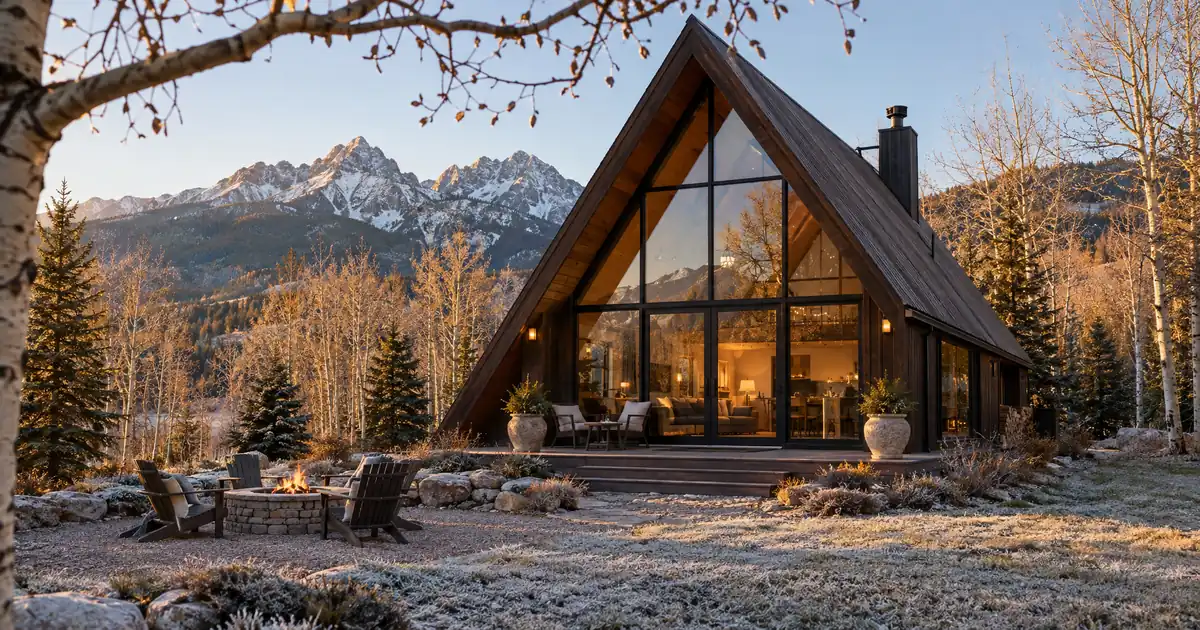
The Quick Read: A ski-town short-term rental can usually be cashed out on a DSCR loan, but the file has to clear several separate gates: legal operating status, a building that is eligible, income documented across a full seasonal cycle, and leverage within the cap. Across the wholesale network, short-term rental cash-out tops out at 70% LTV, with about 12 months of hosting history and a 640+ credit score typical. One strong winter does not carry the file, and a high appraisal does not raise the check on its own.
- Short-term rental cash-out typically runs up to 70% LTV on short-term-rental collateral, below the 75% ceiling on standard rentals.
- Coverage on a short-term rental refinance starts at 1.00 on select programs; purchases start at 1.10.
- Lenders average a full year of income, so a peak ski month never sets the number.
- The town permit and the HOA are separate gates. Either one can stop the file.
- Resort condos and condotels face the tightest building-level review.
Short-term rental rules can vary by city, county, HOA, and property type, so investors should confirm local rules before relying on projected rental income.
DSCR Cash-Out Calculator
Run the cash-out numbers in your market
Rate source: Freddie Mac 30-yr average via FRED® — Federal Reserve Bank of St. Louis · effective Oct 29, 2026
Prefilled with starting assumptions — enter your property’s value, balance, taxes, and insurance for a more accurate picture.
Program parameters update from Lendmire’s centralized guideline source. Taxes and insurance are editable estimates.
As of Oct 29, 2026 · General Freddie Mac market benchmark, not a Lendmire loan offer. Property value, balance, taxes, and insurance are editable estimates. Maximum loan-to-value varies by lender, program, property type, and seasoning. Not a Loan Estimate, approval, or commitment to lend. Program availability and eligibility are subject to lender guidelines, credit approval, property review, and underwriting.
How Does Underwriting Treat a Ski-Town Short-Term Rental?
Underwriting treats it as a four-gate file, reviewed in order: the right to rent nightly, building eligibility, documented income, and then timing and leverage. A failure at an early gate makes the later math irrelevant. Most files that stall in ski country stall on gate one or two, not on the ratio.
DSCR loans are designed for non-owner-occupied investment properties. Because they are business-purpose investor loans, they are reviewed differently from a standard owner-occupied mortgage. The file qualifies primarily on property-level rental income covering the payment, subject to lender guidelines. Credit, reserves, and collateral still get a full review.
The sections below walk the gates in the order a processor works them. For the broader mechanics, see Lendmire’s complete DSCR loans guide.
Key Terms Defined
Seasoning: the minimum time you must have owned the property before a lender will use appraised value instead of cost. About 6 months is the common expectation across the network.
Hosting history: the record of actual nightly bookings, shown by platform payout statements or manager statements. Short-term rental files usually expect about 12 months.
Coverage ratio (DSCR): monthly rental income divided by the full monthly PITIA, meaning principal, interest, taxes, insurance, and any HOA dues.
Condotel: a condo building run like a hotel, usually with a front desk, hotel services, and often a mandatory rental pool.
Cash-out refinance: a new loan that pays off the old one and returns the leftover equity as cash.
What Are the Core Program Numbers?
Short-term rental cash-out typically sits at up to 70% LTV on short-term-rental collateral, against about 75% on a standard long-term rental. Most programs want a 640+ credit score and about 12 months of hosting history. Coverage on a refinance starts at 1.00 on select programs. Purchases start at 1.10, and that purchase floor never applies to a refinance.
Loan size runs up to $3,000,000 on standard programs. Balances below the standard-program minimum route through select lenders in the network. Reserves vary by lender, leverage, loan size, and transaction type. About 6 months of PITIA is common, and larger loans typically step up from there.
Coverage below 1.00 is available through select lenders in the network, with leverage and terms adjusted. It is a separate path from the 1.00 programs, not a lower floor on the same one. Stronger coverage generally opens better pricing and leverage.
All of this is subject to lender guidelines and credit approval. It is not a commitment to lend. Every file is reviewed individually.
One more point on the ratio. Clearing 1.00 does not mean the property produces positive cash flow. DSCR compares rent to PITIA only. Repairs, vacancy, management, utilities, snow removal, and capex all sit outside it.
How Is Seasonal Income Counted?
Lenders count income over a full cycle, never over a peak month. Income comes from a trailing year of platform payout statements or manager statements, matched to bank deposits. A month that booked solid in February does not stand in for a slow May.
This matters more in ski country than almost anywhere. AirDNA reports that ski towns and winter destinations reach peak occupancy from December through March. It also notes in its market analysis guide that mountain markets may peak in both winter and summer. The shoulder seasons in between drag the yearly average.
Two ski markets show how far the numbers can spread. AirDNA’s Snowmass Village page shows about $87.4K in average annual revenue, 52% occupancy, and a $1,198 average daily rate. Big Sky, Montana, shows about $75K, 54% occupancy, and $995 per night, according to AirDNA’s Big Sky page. Both report occupancy down year over year. Treat these as market color, not as a prediction for any single property.
The income method is a program-by-program call. Some programs use actual trailing income with an expense factor applied before the ratio. Others use the lower of two measures. Scotsman Guide describes gross rent as the lower of the 12-month average of actual short-term-rental income and the comparable market rent from the appraisal rent form, Form 1007 for single-family or Form 1025 for 2-4 units. That piece is several years old, so use it for the mechanism only. Programs in the wholesale network differ on the details, and the haircut varies by program.
What Does the Appraisal Actually Do?
The appraisal sets value. It does not decide how short-term income gets counted. That distinction trips up many ski-town owners who expect the appraiser to validate their nightly rates.
Form 1007 is a monthly-rent form. Fannie Mae’s appraiser update states that it was not designed for single-family homes used as short-term rentals and cannot be used to estimate a nightly fee. Multiplying a nightly rate by 30 is not a valid method. That is the only role agency guidance plays here, as a statement about the form. It does not govern DSCR programs.
McKissock notes the form leaves out vacancy, services, and business expenses. Class Valuation says competent appraisers use a labeled short-term-rental projected income narrative instead.
The practical habit: ask which income basis the program uses before the appraisal is ordered. If the program leans on market rent from the appraisal, a thin appraiser figure can pull coverage down even when your payout statements look strong.
Where Does the Permit and HOA Gate Break Files?
Two independent gates decide whether the rental is legal, and a file needs both. The town or county licenses short-term rentals. The HOA can separately ban them. A town that allows nightly rentals does not override a building that prohibits them.
Colorado has no statewide short-term-rental law, so each municipality sets its own rules, per Justin Black Real Estate. A Colorado ski-town guide from Alpine Tierra describes the town and the HOA as two independent gates, and says an HOA can prohibit rentals even where the town allows them.
Here is the catch for refinances. Caps, waitlists, and non-transferable permits can exist in some mountain towns. In Vermont, Unofficial Networks reports that Stowe is implementing a rental cap, with rental status not carrying over on sale in most cases. If you bought recently and the permit sits in the prior owner’s name, that is a file problem. A lender wants the permit holder, the borrower, and title to line up.
Local license risk is financing risk. A lost or non-transferable permit can strand a refinance even when the math works. Rules shift often enough that a permit status confirmed months ago deserves a fresh check before the file goes in.
How Do Property Types Change the File?
Building type changes the review more than any other single variable. A single-family chalet is the simplest. A townhome adds an HOA. A resort condo adds a project review. A condotel adds the tightest layer.
| Property type | What changes | Typical friction |
|---|---|---|
| Single-family chalet | Fewest layers | Permit status, income evidence |
| Townhome | HOA rules | Rental restrictions in governing documents |
| Resort condo | Project review | HOA questionnaire completeness |
| Condotel or rental pool | Tightest eligibility | Mandatory pool, building-by-building review |
On condo files, HOA questionnaire completeness and condo certification are where files drift. Mandatory rental pools, active litigation, and thin building reserves can end a file. Special assessments sit outside the DSCR ratio, but they hit cash and reserves. Non-warrantable does not mean ineligible. It usually means a narrower pool of lenders and adjusted terms.
Not every structure is eligible. Manufactured homes (single- and double-wide), log homes, and barndominiums are not offered in the network’s DSCR programs.
Two Clocks: Seasoning and Hosting History
Two separate timelines run on a cash-out file, and investors routinely conflate them. Seasoning measures how long you have owned the property. Across most of the network, about 6 months is the common expectation before appraised value drives the loan, as opposed to cost. Hosting history measures how long the property has actually taken bookings, typically about 12 months on short-term-rental files.
| Clock | What it measures | Typical expectation |
|---|---|---|
| Seasoning | Time owned | About 6 months |
| Hosting history | Time taking bookings | About 12 months |
You can pass one and fail the other. An owner who bought eight months ago and started hosting the week of closing clears seasoning and misses the history. Programs differ on whether a documented booking pace, a projection, or long-term rent can stand in on a thin history. That is a program-by-program call, and a broker who sees many lenders’ guidelines can match the file to the one that fits.
How Is the Cash-Out Sized?
The loan is the lower of two limits. The value limit is the appraised value times the cash-out LTV cap. The rent limit is the largest loan the counted rent can carry at the required coverage ratio. Whichever is smaller controls.
Cash to you is the new loan minus the payoff, costs, and reserves. Run the numbers on a hypothetical ski-town chalet with strong equity. At up to 70% LTV on short-term-rental collateral, the value limit looks generous. But if the trailing year averages a lot of slow months, the counted rent may only support coverage in low-1.0 territory at the proposed loan size. The rent limit wins. The loan comes in smaller than the equity would allow. Each figure is subject to lender guidelines and a complete review of property type, leverage, and credit.
When coverage fails, the usual fix is a smaller loan. Other options a lender may review include interest-only structuring or a longer term. Extended terms (40-year) and interest-only periods are available through select lenders in the network. Coverage below 1.00 is also a select-lender path with leverage and terms adjusted. Eligibility stays subject to lender guidelines and credit approval.
A larger down payment on a purchase lowers the monthly payment and can lift the ratio. It never erases leverage caps, credit floors, reserve rules, or property eligibility. The strongest files clear both tests: enough equity and enough rental coverage.
Reserves, Insurance, and Entity Documents
The closing file has three recurring friction points. Each one is preventable.
1. Reserves documentation. About 6 months of PITIA is common on many files, and larger loans typically step up. Show seasoned funds in statements.
2. Insurance suited to nightly use. A standard landlord policy may not satisfy the lender. Get a quote that names short-term-rental use before the file goes in, and keep it current.
3. Entity documents. If the property is vested in an LLC, the operating agreement and good-standing documents travel with the file, subject to lender program eligibility. The permit holder, borrower, and title should match.
Timing the Application Around the Ski Season
Apply when your trailing year looks its best, not when the mountain looks its best. An application in late spring captures a full winter but also a slow shoulder. An application right after a record season can look strong on paper while the oldest months in the window were soft. Reading the trailing window before applying lets you see which months a lender will see.
Projection tools can also disagree with each other, depending on the data provider and method, which is a reason to lean on observed bookings rather than any single forecast.
Frequently Asked Questions
Can a ski-town short-term rental get a cash-out refinance on a DSCR loan?
Yes, when the permit is valid, the building allows nightly rentals, and the income is documented. Short-term-rental cash-out typically runs up to 70% LTV, with about 12 months of hosting history and a 640+ credit score. Final eligibility is subject to lender guidelines.
Does a great ski season raise my loan amount?
No. Lenders average income across a full cycle, and the loan is the lower of the value limit and the rent limit. A peak winter helps the average but cannot stand in for slow months.
Does the town permit satisfy the lender?
Not by itself. The HOA is a separate gate, and some mountain towns do not transfer permits on sale. The permit holder, borrower, and title should align.
Can I cash out a condotel unit?
It depends on the building and the program. Mandatory rental pools, litigation, and weak reserves can end a file, and eligibility is reviewed building by building. Lenders in the network treat it as the tightest property class.
What if I have under 12 months of hosting history?
Programs differ. Some consider a documented booking pace, a projection, or long-term rent. That is a program-by-program call, so match the file to the right lender early.
Self-Screen Before You Apply
Check the building, then legality, then income, then timing. If the building allows rentals, the permit is in the right name, the trailing year is documented, and coverage clears, the file is in decent shape. If you are buying or refinancing a rental property and want to see how the numbers work, Lendmire can help you compare DSCR loan options based on the property income, credit profile, leverage, and investor goals. Reach the team at 828-256-2183. Tax treatment varies; consult a qualified professional.
A deeper walk-through of investment-property equity extraction lives in Lendmire’s guide to cash-out refinance on an investment property.
About Lendmire
Lendmire — NMLS# 2371349 — is a mortgage brokerage specializing in DSCR investor loans, helping arrange financing across 41 markets, including Washington, D.C., through wholesale and investor-lending channels. The model centers on property-level rental income reviewed by the lender rather than W-2 documentation, subject to lender guidelines, suiting entity-owned and multi-property investors. Lendmire holds Scotsman Guide Top Mortgage Workplace recognition for 2025 and 2026.
Get Started
Ready to find the right loan for you?
See your offer in seconds. No credit pull, no obligation.
Informational only. Not a Loan Estimate, approval, or commitment to lend. Program availability and eligibility are subject to lender guidelines, credit approval, property review, and underwriting.
References
6. Fannie Mae Appraiser Update
7. McKissock
10. Colorado ski-town guide from Alpine Tierra
This article is part of Lendmire’s investment property cash-out refinance program — full qualification details, guidelines, and scenarios live on the program page.
Related reading: How to Qualify and Apply for a DSCR Cash-Out Refinance on One-Unit Rental at 75% LTV · DSCR Cash-Out Refinance vs Conventional Investor Loan Across Multiple Rental Properties · Is DSCR Cash-Out Worth It Over Agency on a 2–4 Unit Rental?
Brandon Miller
Founder & CEO, Mortgage Loan Originator, Lendmire LLC
- Mortgage Loan Originator · NMLS# 1129696 · Verify on NMLS Consumer Access
- North Carolina Real Estate Broker · License# 343312 · Verify on NCREC
- North Carolina Insurance Producer · License# 19053198 · Property, Casualty, Life, Health · Verify on NAIC SBS
- Lendmire LLC · Firm NMLS# 2371349 · Verify firm licensure
Disclosure information. Lendmire is a state-licensed mortgage brokerage under NMLS# 2371349. Lendmire is not a depository institution, direct lender, or financial advisor — all loans referenced are placed through wholesale lender partners and are subject to each lender's underwriting standards. This article is provided for general informational purposes and is not a commitment to lend, nor does it constitute financial, legal, or tax advice. Loan programs, terms, rates, and qualification standards change without notice and depend on borrower profile, property type, and the state in which the subject property is located. Equal Housing Opportunity provider. NMLS Consumer Access: nmlsconsumeraccess.org.