
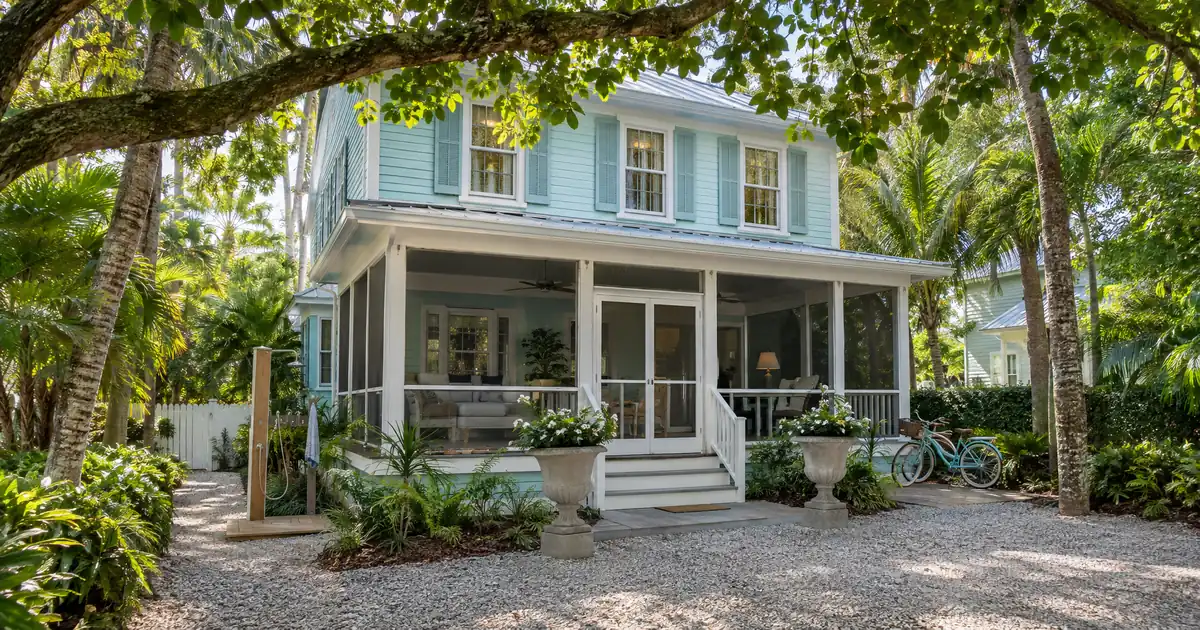
The Quick Read: A new build can reach a DSCR cash-out refinance only after it clears three tests: the ownership clock, the value basis the loan is sized on, and the income evidence behind the nightly rents. Most programs want about six months of ownership, size loans conservatively until then, and want hosting history that a brand-new property has not yet built.
- Cash-out on short-term-rental collateral tops out around 70% LTV, subject to lender guidelines.
- A 640+ credit score and a 1.00 coverage floor on refinances are typical starting points for short-term rentals.
- Inside the seasoning window, many programs size the loan on the lower of appraisal or cost basis.
- A new build has no booking record, so income usually rests on an appraiser’s analysis or a discounted third-party projection.
- Finished construction, not a construction draw, is the entry point for this loan.
Key Terms Defined
DSCR (debt service coverage ratio): the property’s monthly rent divided by its full monthly housing payment.
PITIA: principal, interest, taxes, insurance, and any association dues, which together make up that payment.
LTV (loan-to-value): the loan amount as a percentage of the value the lender uses.
Seasoning: the waiting period a lender wants between buying a property and cashing out equity.
Cost basis: the documented purchase or build price plus verified improvements.
Hosting history: a record of actual nightly bookings, shown through platform statements, a manager’s reports, or deposits.
Certificate of occupancy (CO): the local sign-off that a new building is finished and legal to occupy.
Payoff-only refinance: a refinance that retires the existing loan and returns no cash to you.
DSCR Cash-Out Calculator
Run the cash-out numbers in your market
Rate source: Freddie Mac 30-yr average via FRED® — Federal Reserve Bank of St. Louis · effective Oct 29, 2026
Prefilled with starting assumptions — enter your property’s value, balance, taxes, and insurance for a more accurate picture.
Program parameters update from Lendmire’s centralized guideline source. Taxes and insurance are editable estimates.
As of Oct 29, 2026 · General Freddie Mac market benchmark, not a Lendmire loan offer. Property value, balance, taxes, and insurance are editable estimates. Maximum loan-to-value varies by lender, program, property type, and seasoning. Not a Loan Estimate, approval, or commitment to lend. Program availability and eligibility are subject to lender guidelines, credit approval, property review, and underwriting.
What Cash-Out Means on a New Build
A cash-out refinance replaces your current loan with a larger one and hands you the difference. On a new build, the current loan is often a construction or bridge loan.
If you only retire that loan, lenders usually treat the file as lighter than a true cash-out. If you also pull equity, the full cash-out rules apply.
DSCR loans are designed for non-owner-occupied investment properties. They qualify primarily on property-level rental income covering the payment, subject to lender guidelines. The permanent loan takes out finished construction. It does not fund draws on a house still being framed.
Why a New Build Is Different for a Lender
A lender normally leans on three things: a market value, a rent figure, and a track record. A new build is thin on all three.
Comparable sales may be sparse. The house has no reviews and no bookings. The title may be only weeks old.
So the file faces two clocks and a valuation question at the same time. That combination is why a newly built short-term rental is a special case, and why strong projected bookings alone do not shorten the wait.
The Two Clocks: Ownership and Hosting History
The first clock is title seasoning. Across the wholesale network Lendmire places files with, about six months of ownership is the common expectation for cash-out. Some lenders vary it, so treat six months as a typical range, not a rule.
The second clock is hosting history. Short-term-rental programs typically expect about 12 months of host experience. A new build can fall short on this one even after the ownership clock has run.
Here is how the two interact:
| Situation | Ownership clock | Hosting clock |
|---|---|---|
| Just completed, no guests yet | Starting | Not started |
| Six months owned, hosting four months | Typically met | Still short |
| Twelve months of bookings | Met | Met |
When ownership is seasoned but hosting is not, the hosting clock is usually the one that binds. How a lender treats a file with no history varies by program. Some lean on an appraiser’s analysis or a discounted projection. Others want the bookings first. Ask before you order anything.
When Does the Ownership Clock Start?
Most programs measure from the recorded deed. Completion and the certificate of occupancy matter for eligibility, but they usually do not restart or advance the title clock.
Two common wrinkles follow:
- Land owned for years before the build. Some programs count from the land purchase and some from completion. This is program-specific, so get the answer in writing before you plan around it.
- Builder-purchased homes. The clock starts at your recorded deed, not at the builder’s finish date.
How the Loan Is Sized Inside the Window
Seasoning does two jobs. It decides whether you can refinance, and it decides which value the loan is sized on.
Inside the window, many programs use the lower of the appraisal or your cost basis. After it, they use appraised value. Either way, cash-out on short-term-rental collateral tops out around 70% LTV, while standard long-term rentals reach around 75% on a cash-out. These specifics are subject to lender guidelines and a full review of property, leverage, and credit.
Run the numbers on this modeled example. The inputs are assumptions, not market data.
- Cost basis: 100% (the reference point).
- Appraised value: 110% of cost basis.
- Construction loan payoff: 65% of cost basis.
- Loan inside the window at 70% of cost basis: 70% of cost, leaving about 5% of cost before closing costs and reserves.
- Loan after the window at 70% of appraised value: 77% of cost, leaving about 12% of cost before closing costs and reserves.
Waiting changes the proceeds, not just the paperwork. Coverage often limits the loan before equity does, because the larger payment must still be covered by the income the lender will count.
A larger down payment or lower leverage can lift the coverage number. It never erases leverage caps, credit floors, reserve rules, or property eligibility. The strongest files clear both tests: enough equity and enough rental coverage.
Proving Short-Term Income With No Track Record
Platform history is the strongest evidence, and a new build does not have it. That leaves two fallback methods, each with trade-offs.
| Method | What it relies on | Main weakness |
|---|---|---|
| Platform or deposit history | Actual bookings | Needs months of operation |
| Appraiser’s STR analysis | Comparable nightly rentals | Thin comps on new areas |
| Third-party projection | Modeled nearby performance | Often optimistic |
The standard rent-schedule appraisal forms, Form 1007 for single-family and Form 1025 for 2-4 units, were built around monthly leases. HousingWire reports that Form 1007 is not designed to support short-term rental income and can produce artificially low coverage ratios. Appraisers often add a narrative addendum with a labeled short-term-rental income analysis, as Class Valuation describes.
Third-party tools build estimates from nearby comparable rentals. AirDNA says its estimate is a weighted average of how comparable rentals within a 10-mile radius performed, adjusted for seasonality and demand. A home with no reviews gives that method little to anchor on. Vaultstr, an independent short-term-rental publisher, puts property-level Rentalizer estimates at 15-30% optimistic and flags a new-build listing with zero reviews as the weakest case.
Lenders usually discount projections for that reason. Do not plan around an unadjusted number.
Appraising a New Build
The appraisal gives two opinions: market value and rental income. On a new build, comps may be few, so the appraiser may lean on a cost approach or on sales from a nearby subdivision.
A low appraisal shrinks the loan. A planned cash-out can turn into cash-to-close. Build that possibility into your plan before you pay off a construction loan that is about to mature.
Short-term rental rules can vary by city, county, HOA, and property type, so investors should confirm local rules before relying on projected rental income. Permit timing on a new address can also delay when the first guest arrives, which pushes back the hosting clock.
Coverage, Credit, Reserves, and Loan Size
These are the typical ranges for short-term-rental collateral, subject to lender guidelines:
- Coverage: about 1.10 on a purchase and 1.00 on a refinance. Those are different programs’ starting points, not one blended number. Clearing 1.00 is also not the same as positive cash flow, because repairs, vacancy, management, and utilities sit outside the calculation.
- Credit: 640 is the usual minimum for short-term rentals. Scores of 700 and up open the strongest leverage tiers.
- Reserves: commonly around six months of PITIA. They vary by lender, leverage, loan size, and transaction type, and larger loans typically step up.
- Loan size: up to $3,000,000 on standard programs.
- Property type: manufactured homes, log homes, and barndominiums are not offered in these programs. A barndominium-style build cannot use this route.
If you hold title in an LLC, the entity is accepted subject to lender program eligibility.
Scenario Table: Can You Cash Out Now?
| How you got the property | Typical position | What to wait for |
|---|---|---|
| Owner-built, construction loan | Payoff-only is simpler | Seasoning for cash-out |
| Bought from a builder | Clock starts at your deed | About six months of title |
| Built or bought with cash | Cost-basis refinance may fit | Seasoning for appraised value |
| Bridge loan nearing maturity | Time-sensitive | Extension or payoff-only |
On a cash-funded purchase, Fannie Mae’s guide lists a delayed financing exception inside its cash-out topic. That is agency policy, and DSCR programs write their own seasoning rules. Where a similar path exists, it returns documented cost, not post-completion value.
Documents to Gather
Lenders reviewing a new build typically want:
- The certificate of occupancy and final inspection.
- The builder contract, draw records, and cost documentation.
- Your recorded deed and entity documents, if any.
- Insurance that has been converted from a builder’s-risk policy to a short-term-rental policy.
- Any bookings, a manager agreement, and the appraiser’s rent analysis.
- Proof of reserves.
Common Mistakes
- Assuming completion starts the seasoning clock.
- Expecting projected bookings to shorten the wait.
- Sizing a payoff on appraised value while the file is still inside the window.
- Forgetting that the hosting clock may bind after the ownership clock is met.
- Letting a construction or bridge loan mature before the permanent loan is lined up.
Wait, Proceed, or Restructure
Wait if you want appraised-value proceeds and the seasoning window is still open. Proceed on a payoff-only or cost-basis file if the construction loan is due and you need the permanent take-out. Restructure by extending the bridge when the numbers only work after the window closes.
For the fundamentals, see the complete DSCR loans guide.
Frequently Asked Questions
How long must I own a new build before a cash-out?
Across the network, about six months of title ownership is the common expectation. Some programs vary, and the clock typically runs from the recorded deed. Confirm the start date for your file before you plan around it.
Can I use projected Airbnb income on a home with no bookings?
Sometimes. Lenders may rely on an appraiser’s short-term-rental analysis or a third-party projection, usually discounted. Other programs want actual hosting history first, so the answer depends on the lender.
What leverage applies to a short-term-rental cash-out?
Cash-out on short-term-rental collateral tops out around 70% LTV, compared with around 75% for standard long-term rentals. Lower leverage can improve the coverage number. Terms depend on the lender’s guidelines, the property type, the leverage, and a full review of the credit profile.
Does a construction loan payoff count as a cash-out?
Not if no cash comes back to you. A payoff-only refinance is usually treated more lightly than a true cash-out. Taking proceeds triggers the full cash-out rules, including seasoning.
Does a strong appraisal solve the income question?
Only partly. The appraisal supports value and an income opinion, but the income opinion on a new build often needs a short-term-rental addendum. A low appraisal can also shrink the loan.
Next Step
If you are buying or refinancing a rental property and want to see how the numbers work, Lendmire can help you compare DSCR loan options based on the property income, credit profile, leverage, and investor goals. Lendmire is a broker arranging DSCR financing through select lenders in its wholesale network across 41 markets, including Washington, D.C. Loan terms are not a commitment to lend.
Investors weighing their equity options can start with Lendmire’s guide to cash-out refinance on an investment property.
About Lendmire
Lendmire (NMLS# 2371349), a non-QM mortgage broker serving investors in 41 markets including Washington, D.C., helps structure DSCR scenarios commonly evaluated around a property’s rental income rather than personal income paperwork, subject to lender guidelines. A Scotsman Guide Top Mortgage Workplace in 2025 and 2026, Lendmire places loans through wholesale investor lenders and is not a direct lender.
Get Started
Ready to find the right loan for you?
See your offer in seconds. No credit pull, no obligation.
Informational only. Not a Loan Estimate, approval, or commitment to lend. Program availability and eligibility are subject to lender guidelines, credit approval, property review, and underwriting.
References
1. HousingWire: short-term rentals and the appraisal playbook
2. Class Valuation: Form 1007 and short-term rentals
4. Vaultstr: AirDNA Rentalizer
5. Fannie Mae Selling Guide B2-1.3-03
This article is part of Lendmire’s investment property cash-out refinance program — full qualification details, guidelines, and scenarios live on the program page.
Related reading: Can a First-Time Investor Get Max LTV on a DSCR Cash-Out Refinance? · How to Walk Away With More Cash on a DSCR Cash-Out Refinance · Can a BRRRR Rental Qualify for DSCR Cash-Out After Rehab?
Brandon Miller
Founder & CEO, Mortgage Loan Originator, Lendmire LLC
- Mortgage Loan Originator · NMLS# 1129696 · Verify on NMLS Consumer Access
- North Carolina Real Estate Broker · License# 343312 · Verify on NCREC
- North Carolina Insurance Producer · License# 19053198 · Property, Casualty, Life, Health · Verify on NAIC SBS
- Lendmire LLC · Firm NMLS# 2371349 · Verify firm licensure
Compliance and disclosures. Lendmire (NMLS# 2371349) is a licensed mortgage broker and is not a direct lender, depository institution, financial advisor, or tax professional. Content in this article is general market analysis and educational information — not financial, legal, or tax advice for any specific situation. Lendmire does not guarantee loan approval; every transaction is subject to underwriting by the funding lender. Mortgage pricing and loan program guidelines are subject to change at any time without notice and vary by borrower characteristics, property type, and state regulations. Lendmire complies with Equal Housing Opportunity. Licensure verification: NMLS Consumer Access.