
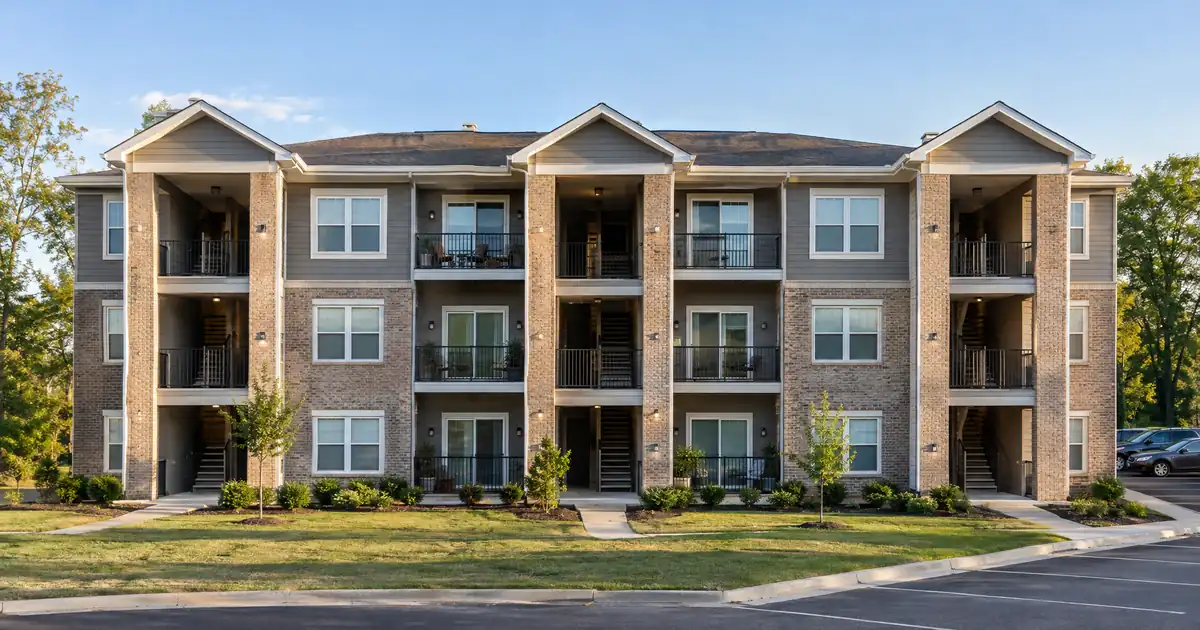
The Quick Read: Lenders size this loan on two tests, and the smaller result wins. The first is an equity test: the new loan has to fit under the cash-out leverage cap, which is about 70% LTV on short-term-rental collateral in most of the wholesale network. The second is an income test: documented rental income has to cover the full new monthly obligation of principal, interest, taxes, insurance, and any association dues. On a multifamily building, the unit count decides which coverage method applies. Terms depend on the lender’s guidelines, the property type, the leverage, and a full review of the credit profile.
- Duplexes through fourplexes usually run as residential-style files, with rent measured against the full payment.
- Buildings of five or more units tend to be valued and underwritten on net operating income.
- On a refinance, trailing platform history is the main evidence of short-term income, typically about 12 months of hosting.
- Select programs start at 1.00 coverage, and a larger draw pushes coverage down.
- Clearing the ratio does not mean the building cash flows.
Short-term rental rules can vary by city, county, HOA, and property type, so investors should confirm local rules before relying on projected rental income.
DSCR Cash-Out Calculator
Run the cash-out numbers in your market
Rate source: Freddie Mac 30-yr average via FRED® — Federal Reserve Bank of St. Louis · effective Oct 29, 2026
Prefilled with starting assumptions — enter your property’s value, balance, taxes, and insurance for a more accurate picture.
Program parameters update from Lendmire’s centralized guideline source. Taxes and insurance are editable estimates.
As of Oct 29, 2026 · General Freddie Mac market benchmark, not a Lendmire loan offer. Property value, balance, taxes, and insurance are editable estimates. Maximum loan-to-value varies by lender, program, property type, and seasoning. Not a Loan Estimate, approval, or commitment to lend. Program availability and eligibility are subject to lender guidelines, credit approval, property review, and underwriting.
What Is a Short-Term Rental Cash-Out Refinance on a Multifamily Building?
It is a new loan on a building you already own that pays off the old balance and puts the leftover equity in your hands, with some or all units rented by the night. The loan is reviewed primarily on property-level rental income covering the payment, subject to lender guidelines, rather than on your paycheck.
Three things make this file different from an ordinary rental refinance. Nightly income is lumpier than a lease. Several units mean several income streams, and they may not all be short-term. And cash-out leverage is lower than purchase leverage. Across the wholesale network, short-term-rental cash-out tops out around 70% LTV, against about 75% on a standard long-term rental, and short-term-rental purchases reach 75%. The exact numbers vary by lender and program and follow a full review of property, leverage, and credit.
Most programs also want a credit score of 640 or better on short-term-rental files. Expect about 12 months of host history. Loan sizes run up to $3,000,000 on standard programs. All of this is subject to lender guidelines, and every file is reviewed individually.
For the broader mechanics behind these loans, Lendmire’s complete DSCR loans guide covers the fundamentals.
Key Terms Defined
DSCR (debt service coverage ratio): Monthly rental income divided by the full monthly housing obligation on the new loan.
PITIA: Principal, interest, taxes, insurance, and association dues, the denominator in the coverage ratio.
NOI (net operating income): Income after operating expenses and before debt service, the basis for larger multifamily underwriting.
Seasoning: How long you have owned the property before a cash-out is allowed; about six months is the common expectation.
Hosting history: The record of nightly bookings on platforms such as Airbnb or VRBO, usually about 12 months for a refinance.
Haircut (expense factor): A reduction to gross short-term revenue that reflects higher operating costs than a long-term lease.
How Does Underwriting Treat Nightly Income, Step by Step?
Underwriting runs in a fixed order: classify the building, confirm ownership and seasoning, confirm the rentals are legal, document the income, apply a haircut, order the appraisal, then size the loan on equity and coverage. Each step can shrink the number that comes out the other end.
Step 1: Classify the building by unit count. A duplex to a fourplex is typically a residential-style file. A building of five or more units generally moves to a cash-flow lane where value and debt capacity follow NOI. Some programs stop at four units, and others reach higher, so unit count is the first filter on which lenders in the network fit.
Step 2: Check seasoning and ownership. The common expectation is about six months of ownership before a cash-out. A recent purchase or a recent change of title can trigger extra review. If the building is held in an entity, ownership structure is part of the file, subject to program terms.
Step 3: Confirm the rentals are allowed. A lender will not count income the property cannot legally earn. Permits, licenses, and HOA rules are part of the review, and on a multifamily building they have to cover every unit you are counting, not just most of them.
Step 4: Document the income. On a refinance, the evidence is trailing platform statements, usually about 12 months, often matched against bank deposits. This is where files stall most often. Statements and deposits that do not reconcile raise questions, and gaps in hosting history shorten the usable record. A peak-season snapshot does not carry weight, because lenders look at the full year. AirDNA’s financing guide notes that lenders are growing more comfortable with income-based underwriting, and it is the market-data vendor many underwriters reference for new purchases.
Step 5: Apply the haircut. Short-term operations cost more to run than a leased unit: turnover, cleaning, platform fees, furnishings. Lenders reflect that by reducing gross revenue before they run the ratio. Where both actual history and a market-based estimate exist, underwriting may lean toward the lower supported figure. The exact factor varies by lender and program, which is one reason two lenders can size the same building very differently.
Step 6: Order the appraisal. The appraisal sets collateral value, and value drives the equity test. It also supplies a rent opinion on long-term-style forms. Personal property and the hosting business are not part of real estate value, so furniture and goodwill do not raise the loan.
Step 7: Size on equity and coverage. The loan is the lesser of the two tests. Credit, reserves, entity documents, title, and insurance are reviewed alongside. Reserves vary by lender, leverage, loan size, and transaction type, commonly around six months of PITIA, and they step up on larger balances.
Why Doesn’t the Rent Schedule Capture Nightly Income?
The standard appraisal rent forms assume monthly leases, so they understate or misstate nightly income. Form 1007 covers single-family and Form 1025 covers two to four units, and both ask for a monthly market rent from comparables leased by the month.
Fannie Mae’s appraiser guidance says the 1007 was not designed for short-term rentals, that multiplying a nightly fee by 30 is incorrect, and that the form cannot be used to estimate the nightly fee. The same guidance notes that short-term income may be treated as business income rather than rental income. That is an agency-channel idea. DSCR lenders set their own method, but the form limits are real, and they explain the problem. McKissock, an appraiser-education provider, makes the same point and suggests the income approach, which weighs operating efficiency and vacancy, can suit these properties better.
The practical result: a rent opinion built on monthly comps can come in well below what the building earns nightly. That is why platform history carries the income case on a refinance, and why some appraisers attach a labeled short-term income analysis. The rent-schedule number then acts as a cross-check or a floor, not the whole story.
Two to Four Units or Five Plus: Where the Method Forks
The unit count changes the coverage formula, the valuation approach, and the pool of lenders. Here is the side-by-side.
| Factor | 2-4 units | 5+ units |
|---|---|---|
| Coverage test | Rent vs. PITIA | NOI vs. debt service |
| Appraisal rent form | 1025-type report | Income-based valuation |
| Income evidence | Platform history, rent opinion | Operating statements, rent roll |
| Typical lane | Residential-style DSCR | Cash-flow, commercial-style |
On the residential-style side, the ratio is monthly income divided by the full monthly obligation, with flood insurance and association dues added to the denominator where they apply. On the larger side, lenders care about operating expenses and vacancy. Nightly revenue has to be normalized into a stable operating picture. Programs differ on where the cutoff sits, so this is a lender-fit question before it is a pricing question.
What If Only Some Units Are Short-Term?
Mixed buildings are handled unit by unit, and the method varies by program and file. There is no single blending rule across the network. A common approach uses leases and a rent roll for long-term units and hosting history for the short-term units, with the lender deciding how much of each stream to count.
Three scenarios show how the evidence shifts:
| Scenario | Evidence typically used |
|---|---|
| All units short-term | Trailing platform history per unit |
| Mixed STR and leased units | Rent roll plus STR history |
| One unit recently converted | Projection or rent opinion for that unit |
A converted unit with under a year of history is the common trigger for extra review. The lender may count that unit at a long-term rent opinion or a market-based projection, or the program’s 12-month expectation may simply not be met for that unit. A strong long-term unit does not automatically offset a weak short-term unit. Lenders look at what each unit can document.
Insurance fit matters too. Coverage written for a long-term landlord may not contemplate nightly guests, and per-unit utilities and permits get checked. Lenders see these as property-level risks, not paperwork details.
Which Test Binds? A Worked Cash-Out Example
On a cash-out, the equity test usually binds at first, but coverage can bind instead when the building’s income is modest relative to its value. A new, larger payment is measured against the same income.
Run the numbers on a hypothetical fourplex appraised at $800,000, with three units short-term and one on a lease. These inputs are modeled assumptions, not market data. The cash-out cap on short-term-rental collateral is 70% LTV, and the existing balance is modest. Final terms depend on the lender’s guidelines, the property type, and the borrower’s complete credit picture.
- Equity test: 70% of $800,000 sets the ceiling on the new loan.
- Coverage test: Documented, haircut income is divided by the full monthly obligation on that loan amount.
- Result: If coverage at the ceiling lands around 1.25x, equity binds and the loan can go to the cap. If it lands near 0.90x, coverage binds, and the loan has to shrink until the ratio reaches the floor.
Why does coverage thin as cash comes out? Because a larger loan means a larger payment against the same income. A sensitivity read looks like this:
| Draw size | Coverage direction |
|---|---|
| Small draw | Comfortable, well above 1.00 |
| Mid draw | Tightening, low-1.2x territory |
| Full cap draw | Near the program floor |
That pattern is illustrative. Actual results depend on income, haircut, taxes, insurance, and loan structure. Extended terms (40-year) and interest-only periods are available through select lenders in the network, and they can lift coverage on the same loan because they lower the monthly obligation. They also change the loan’s long-term profile, so they deserve a deliberate look, not a reflex.
One practitioner observation from brokering these files: when a cash-out falls short of what the owner hoped for, the cause is more often coverage than equity. The income documented after the haircut simply does not support the larger payment. Owners who model both tests before applying avoid most surprises.
Where the Rules Break: Edge Cases
Several situations push a file off the standard path, and knowing them beforehand saves a restructure later.
Short history. A building with under 12 months of hosting may rely on a projection, an appraiser’s analysis, or a long-term rent opinion. Some programs will not do the file until the history exists.
Coverage below 1.00. Select programs start at 1.00. A separate select-lender path takes coverage below 1.00 with leverage and terms adjusted. Investors reaching for that path should ask why the number is short, because the answer may be the submarket or the draw size, not the loan type.
Local rules and HOA limits. Income the property cannot legally earn does not count. Rules can also change after the loan funds, which is a risk to size, not a technicality.
Peak-season income. Lenders average the full year. A summer-heavy building will look weaker than its best months suggest.
Low rent opinion. Where the appraisal’s monthly rent comes in low, some programs allow a documented variance and others use the appraisal figure only. Which lenders in the network allow it is part of matching the scenario to the program.
Ineligible collateral. Manufactured homes, log homes, and barndominiums are not offered in these DSCR programs.
What a Pass Does and Doesn’t Mean
Clearing the coverage ratio is not the same as positive cash flow. DSCR compares rent to PITIA only. Repairs, vacancy, management, utilities, cleaning, and capital expenses all sit outside the calculation. A building can clear 1.00x on paper and still leave the owner short each month.
That matters more with nightly income, where operating costs are heavier than with a lease. Before pulling cash, a sound owner builds a separate operating budget and asks whether the draw will be deployed into something that earns more than it costs.
If the Cash-Out Doesn’t Size
When coverage or equity caps the draw below your target, you have options short of walking away.
1. Take a smaller draw. Lower leverage lifts coverage and may reopen a better program tier.
2. Wait for history. Another few months of clean platform statements can turn a projection file into a documented one.
3. Restructure the term. Extended terms or interest-only periods through select lenders can change the coverage math.
4. Re-look at lender fit. Programs differ on unit-count caps, history requirements, and mixed-use treatment. A broker that shops several wholesale lenders can match the building to the program.
Lendmire’s piece Short-Term Rental Cash-Out Refinance Requirements on a Multifamily Building lays out the qualification checklist in more detail.
What to Prepare Before You Apply
A clean file moves through review with fewer questions. Gather these per unit and per income type:
- Trailing platform statements for each short-term unit, with no unexplained gaps
- Bank deposit records that reconcile to those statements
- Leases and a current rent roll for any long-term units
- Permits, licenses, and any HOA documentation covering every counted unit
- Insurance that fits nightly use
- Entity documents if the building is held in an LLC, subject to lender program eligibility
- Tax and insurance figures for the building, which feed the denominator
On leverage and credit, expect program ranges: about 70% LTV on short-term-rental cash-out, a score of 640 or better, and about 12 months of hosting. Those are typical ranges, and each file is reviewed on its own merits. Each figure is subject to lender guidelines and a complete review of property type, leverage, and credit.
If you are buying or refinancing a rental property and want to see how the numbers work, Lendmire can help you compare DSCR loan options based on the property income, credit profile, leverage, and investor goals.
Frequently Asked Questions
Does a short-term rental cash-out need tax returns or W-2s?
Short-term-rental DSCR files qualify primarily on property-level rental income covering the payment, subject to lender guidelines. Credit, reserves, entity documents, and title are still reviewed. Platform statements and bank deposits take the place of personal income as the key proof of earnings.
Is gross nightly revenue counted at full value?
Usually not. Lenders apply a haircut because short-term operating costs run higher than lease costs, and they may take the lower of the documented history and a market-based estimate. The factor varies by program, so different lenders can reach different loan sizes on the same building.
Can one weak unit sink the whole building?
Not automatically, but it affects the total. Each unit’s income is counted on what it can document, and a unit without enough history may be counted at a long-term rent opinion or excluded. A strong leased unit does not automatically make up for a weak short-term unit.
What changes at five or more units?
The qualifying test shifts from a rent-versus-payment comparison to a net-operating-income test. Valuation follows income, and the lender pool narrows because some programs stop at four units. Operating statements and a rent roll matter more than they do on a smaller building.
Why did my cash-out come in smaller than the equity suggested?
Coverage was probably the binding test. A larger draw raises the monthly obligation against fixed income, and the loan shrinks until the ratio reaches the program floor. A smaller draw, a longer term, or a different program can change the result.
A deeper walk-through of investment-property equity extraction lives in Lendmire’s guide to cash-out refinance on an investment property.
About Lendmire
Lendmire (NMLS# 2371349) is a mortgage brokerage focused on DSCR investor financing, helping arrange programs through wholesale and investor-lending channels in 41 markets, including Washington, D.C. DSCR loans are evaluated by the lender on property cash flow rather than personal income, subject to lender guidelines, supporting LLC closings and accommodating investors with four or more financed properties. Scotsman Guide Top Mortgage Workplace in both 2025 and 2026.
Get Started
Ready to find the right loan for you?
See your offer in seconds. No credit pull, no obligation.
Informational only. Not a Loan Estimate, approval, or commitment to lend. Program availability and eligibility are subject to lender guidelines, credit approval, property review, and underwriting.
References
1. AirDNA: How to finance a vacation rental
2. Fannie Mae Appraiser Update
3. McKissock Learning: Form 1007 and short-term rental appraisals
This article is part of Lendmire’s investment property cash-out refinance program — full qualification details, guidelines, and scenarios live on the program page.
Related reading: How to Qualify and Apply for a Short-Term Rental Cash-Out Refinance With 740 Credit · How Lenders Underwrite a DSCR Cash-Out Refinance on a Newly Built Rental · How Lenders Underwrite a Short-Term Rental Cash-Out Refinance Before Six Months on Title
Brandon Miller
Founder & CEO, Mortgage Loan Originator, Lendmire LLC
- Mortgage Loan Originator · NMLS# 1129696 · Verify on NMLS Consumer Access
- North Carolina Real Estate Broker · License# 343312 · Verify on NCREC
- North Carolina Insurance Producer · License# 19053198 · Property, Casualty, Life, Health · Verify on NAIC SBS
- Lendmire LLC · Firm NMLS# 2371349 · Verify firm licensure
Disclosures. The information presented in this article is general market commentary, not financial, legal, or tax advice. Lendmire is a mortgage brokerage (NMLS# 2371349) — not a direct lender or depository institution — and loan placement is subject to lender underwriting. Nothing in this content represents a commitment to lend. Loan terms, pricing, and program availability vary based on borrower qualifications, property characteristics, and state of subject property, and are subject to change at any time. Lendmire complies with Equal Housing Opportunity requirements. Consumer access: nmlsconsumeraccess.org.