
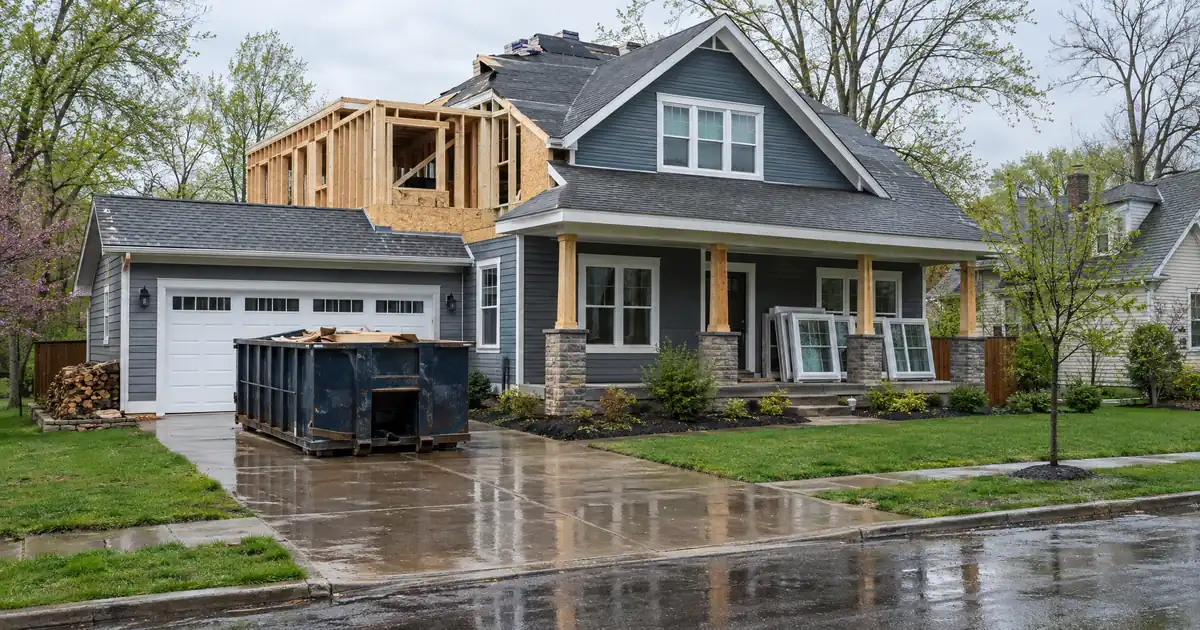
The Quick Read: An investment property HELOC and a hard money loan work as a pair when the line supplies the cash you owe at purchase, the hard money loan funds the rest of the project, and a long-term refinance later pays off both loans. The structure cuts the cash you need up front. It also stacks short-term debt, so the exit plan matters more than the entry.
- Hard money is the acquisition and rehab loan, and the HELOC is a source of equity. The refinance is what retires both.
- Hard money leverage is measured against project cost and after-repair value (ARV), not against a simple purchase LTV.
- There is no true 100% purchase program. The HELOC fills the gap between the hard money loan and the full cost.
- Combined debt has to fit under the refinance’s leverage limit, or the exit needs extra cash.
- Both loans carry payments while the property is vacant, so your reserves must cover them.
What Does Each Loan Actually Do?
A HELOC is a revolving line secured by equity. Hard money is a short, asset-based loan sized on the property, the plan and the exit. They do different jobs, which is why they can sit in the same deal.
What this loan actually costs to carry.
Hard money is sized against the project and priced by time. Enter the deal and see how much the program will lend, the cash required at closing, the carry while you hold it, and what is left at the exit.
Leverage tiers on the current program: 85% with fewer than 2, 90% with 2 or more, 93% with 5 or more completed projects — every tier capped at 75% of after-repair value. Loan amounts up to $5,000,000, larger by exception; terms of 6 to 18 months, interest-only, no prepayment penalty. The rehab portion funds in draws against completed work, not at closing.
Program parameters shown update from Lendmire’s centralized guideline source. Rate, points, and months are editable assumptions, not quoted terms.
Cost cap sets the loan · positive spread
Illustrative estimate only — not a quote, Loan Estimate, approval, or commitment to lend. Rate, points, and months are editable assumptions. Hard money is business-purpose financing for real estate investors, not a consumer mortgage. Leverage on the current program tops out at 93% of project cost for investors with a documented track record, capped at 75% of after-repair value, with rehab funding up to 100% of the documented budget released in draws; actual terms vary by lender, borrower experience, property, and exit. Lendmire is a mortgage broker, not a lender.
NerdWallet notes that a HELOC on an investment property is possible but not offered by every lender. The pool is smaller, the requirements are stricter, and lenders may order more than one appraisal. Expect fewer choices than a primary-home line would give you.
Hard money through Lendmire’s wholesale network is business-purpose financing for non-owner-occupied 1-4 unit residential property. Ground-up construction can go to 10 units. Terms run 6-18 months, interest-only, with no prepayment penalty. Loan amounts go up to $5,000,000, and larger by exception. All of this varies by lender, property, and experience, and nothing here is a commitment to lend.
Key Terms Defined
HELOC: A revolving credit line secured by equity that you can draw on, repay and draw again during a set period.
Hard money loan: A short-term, interest-only loan sized on the property, the project and the exit rather than on personal income.
ARV (after-repair value): The estimated value of the property once the work is finished.
Loan-to-cost: The share of total project cost, purchase plus rehab, that the lender funds.
DSCR refinance: A long-term investor loan that qualifies primarily on property-level rental income covering the payment, subject to lender guidelines.
Capital stack: The layers of money in a deal, from the lenders to your own cash.
How Hard Money Leverage Really Works
Hard money leverage is tiered by how many projects you have completed. Fix-and-flip loans fund 93% of project cost at five or more completed projects, 90% at two or more, and 85% with fewer than two. Every tier is capped at 75% of ARV. Bridge purchases without rehab go up to 80% of purchase price, and up to 100% of the rehab budget is released in draws as work is completed. The top tier is reserved for experienced investors.
So there is always a gap. Even at the 93% tier, 7% of project cost is yours. At the 85% tier, it is 15%. The ARV cap can widen that gap. If the purchase price plus rehab budget is high relative to the finished value, the 75% of ARV ceiling binds before the cost percentage does. The HELOC fills this space.
The rehab-budget figure is not a purchase LTV. A loan that funds the whole rehab in draws still expects you to cover the gap on the purchase side. Credit matters as well: the minimum score is 620, with additional conditions below 660, and first-time investors qualify at the lower leverage tiers. Investors weighing a first deal can read Lendmire’s piece Should You Use Hard Money to Buy Your First Investment Property?.
Four Ways to Combine Them
Most investors who pair these loans use one of four structures. The right one depends on where your equity sits and how much cash you need.
| Structure | HELOC role | Hard money role |
|---|---|---|
| Down payment gap | Covers your share at purchase | Funds purchase and rehab |
| Reserves backstop | Holds cash for overruns and carry | Funds purchase and rehab |
| Cross-collateral | Secured by one property | Secured by the new property |
| Refinance and pay down | Repaid after the exit | Repaid at the refinance |
The first structure is the most common. You draw on the line, put that cash toward your share of the cost, and the hard lender funds the rest. The second keeps the line mostly undrawn until costs run over. Interest accrues only on what you draw, so an unused line costs little while it waits.
The third structure matters for lien position. A HELOC secured by a different property than the one you are buying avoids a fight over who sits first. Hard money lenders generally require first position on the property they finance, so a line secured by the same property tends to conflict. Confirm the lien rules for both loans before you commit. Depending on program guidelines, an entity-owned property adds a wrinkle, because investment lines often prefer title in an individual’s name.
Step by Step: From Equity to Exit
The sequence matters more than any single term. Here is the order that tends to work.
1. Open the line before you go under contract. Equity lines take time to set up, and you want the cash in your account when the hard lender asks about liquidity.
2. Ask the hard lender about source of funds. Rules on borrowed down payment funds vary by lender. Ask before you draw, not after.
3. Underwrite the deal on its own merits. The hard lender looks at purchase price, rehab budget, ARV and your experience. Your plan has to stand without the HELOC.
4. Carry both loans through the rehab. The hard money loan is interest-only. The HELOC is typically variable and interest-only during its draw period.
5. Stabilize. Finish the work, place a tenant and document the lease.
6. Refinance out. The new loan has to pay off the hard money loan and usually the line balance too.
Why the Exit Decides Everything
The exit is a long-term loan, and many investors choose a DSCR refinance. Lendmire brokers that path through select lenders in its wholesale network. A DSCR loan is reviewed primarily on property-level rental income covering the payment, subject to lender guidelines. Personal income is not the main test.
Leverage is the first constraint. A cash-out refinance tops out around 75% LTV across most of the network on standard rentals, and about 6 months of seasoning is the common expectation on those files. Purchase files typically land at 75%-80% LTV. If the hard money balance plus the line balance exceeds the refinance limit, you bring cash to the table or you sell.
Coverage is the second constraint. DSCR compares monthly rent to the full monthly obligation: principal, interest, taxes, insurance and any HOA dues. A ratio of 1.00 is where select programs start, and stronger ratios open better terms and leverage. A separate select-lender path takes coverage below 1.00, with leverage and terms adjusted. Most programs want a credit score around 660, and 700 or higher unlocks the strongest tiers. Reserves vary by lender, leverage and loan size, and commonly run around 6 months of PITIA.
A strong ratio is not the same as positive cash flow. Repairs, vacancy, management, utilities and capex sit outside the calculation. Your bank account still pays the line’s interest while the unit is empty. Investors who want a longer runway than 18 months have a natural reason to plan the refinance early. Lendmire’s complete DSCR loans guide covers how those programs work in more depth.
Worked Example: The Stack on Paper
Run the numbers as a modeled illustration, not a market fact. Say an investor with two completed projects buys a distressed duplex. The hard lender funds 90% of project cost, still capped at 75% of ARV. The investor covers the other 10% by drawing on a HELOC secured by a different property.
At the refinance, the ARV is appraised. If the property appraises in line with the plan, a cash-out DSCR loan at up to 75% LTV has to retire the hard money balance and the line draw together. Two things must hold. Leverage, reserves, and pricing vary by lender and program; the final terms follow the full file review.
- The combined balance must fit under 75% of the appraised value.
- Rent must cover the new payment with a ratio the lender will accept.
If the appraisal comes in light, the first test fails first. The investor then covers the shortfall in cash, extends the hard money term inside its 18-month window, or sells. That is why many investors size their stack so the total debt lands well under the refinance ceiling.
Where the General Rule Breaks
The line sits on the property being financed. A hard lender wants first position, and many long-term lenders do too. If the line sits ahead, the plan can stall. Refinance into the long-term loan first and add any new line afterward.
An existing line meets the DSCR refinance. Paying off a line at the refinance can change how the loan is classified, depending on how much cash reaches you. That threshold varies by lender, so ask before you assume.
The draw period ends. According to the CFPB, a draw period can last 10 years, and HELOCs usually carry variable rates. Payments can change even if you borrow nothing new. The CFPB’s HELOC brochure explains rate caps and floors and the shift from drawing to repaying.
The lender freezes the line. Lenders can reduce or freeze an unused line if values fall. A backstop that disappears mid-rehab is not a backstop.
The property type is ineligible. DSCR financing is not offered on manufactured homes, log homes or barndominiums, so do not plan an exit that depends on one.
Tax treatment shifts with the use of funds. Tax treatment can depend on how the funds are used and how the property is held; investors should keep clear records and speak with a qualified tax professional before relying on any deduction.
Should You Stack, Use One, or Skip Both?
| Situation | Better move |
|---|---|
| Strong equity, thin cash, solid margin | Stack both |
| Ample cash on hand | Hard money alone |
| Thin reserves, thin margin | Skip the stack |
| First project, no rehab experience | Lower tier, smaller scope |
Stacking fits an investor with real equity elsewhere, a tested budget and a short path to a stabilized rental. It is the wrong tool when the margin is thin. Two payments running together can turn a modest overrun into a forced sale. It is also the wrong tool for a long hold with no refinance in sight, since the line and the hard loan are both built to be temporary.
The honest test is simple. Could you carry both payments for the full hard money term if the refinance slipped? If the answer is no, shrink the project or the stack.
Pre-Closing Checklist
- Confirm the hard lender accepts borrowed funds for your share.
- Check the lien position on every property that secures a loan.
- Model the refinance at a conservative ARV, not the optimistic one.
- Test whether combined debt fits under 75% LTV on a standard-rental DSCR cash-out refinance, a different product from hard money’s own 65% cash-out limit.
- Keep reserves that cover both payments through a vacancy.
- Keep short-term rental income out of the plan unless the rules support it, since short-term rental rules can vary by city, county, HOA, and property type, so investors should confirm local rules before relying on projected rental income. Terms vary by lender guidelines, property type, leverage, credit profile, and full file review.
Frequently Asked Questions
Can I use a HELOC for the down payment on a hard money loan?
Often yes, but it depends on the hard lender’s source-of-funds rules, which vary by lender. Some accept drawn funds once they sit in your account. Others ask for a larger share of your own cash. Ask before you draw.
Does the HELOC count against my DSCR?
Not directly. The ratio compares rent to the property’s own payment. The line still affects your reserves, your liquidity and how much leverage the refinance can support.
Can the HELOC be secured by the same property I am buying?
It rarely works. Hard money lenders generally want first position, and many long-term lenders do too. A line secured by a different property avoids the conflict.
What if the refinance cannot cover both balances?
You have three options: bring cash, extend inside the loan term, or sell. The DSCR refinance is capped at around 75% LTV on a standard-rental cash-out, so a light appraisal leaves a gap. Plan for that case up front. Exact terms depend on the lender’s guidelines, property type, leverage, and a full review of the borrower’s file.
Do I need experience to stack these loans?
Not to open them, but experience sets your hard money tier. First-time investors qualify at the lower leverage tiers, which means a bigger gap for the HELOC to fill.
Next Steps
If you are buying, rehabbing or refinancing an investment property on a short timeline and want to see how the numbers work, Lendmire can help you compare hard money options based on the project, the exit plan, leverage, and your goals. You can reach the team at 828-256-2183.
About Lendmire
A DSCR-focused mortgage broker, Lendmire (NMLS# 2371349) places investor financing across 41 markets — 40 states plus Washington, D.C. — with DSCR eligibility generally reviewed by the lender on property cash flow instead of tax returns, subject to lender guidelines. Scotsman Guide named Lendmire a Top Mortgage Workplace in 2025 and 2026.
Get Started
Ready to find the right loan for you?
See your offer in seconds. No credit pull, no obligation.
Informational only. Not a Loan Estimate, approval, or commitment to lend. Program availability and eligibility are subject to lender guidelines, credit approval, property review, and underwriting.
References
1. NerdWallet – Can You Get a HELOC on an Investment Property
2. CFPB – What Is a Home Equity Line of Credit (HELOC)
3. CFPB – What You Should Know About HELOCs
This article is part of Lendmire’s hard money loan program — full qualification details, guidelines, and scenarios live on the program page.
Related reading: Can You Get an Investment Property HELOC With One Unit Vacant? · Can You Get an Investment Property HELOC When Speed and Convenience Matter Most? · Can You Get a Bank Statement HELOC on a Property With a Hard Money First Mortgage?
Brandon Miller
Founder & CEO, Mortgage Loan Originator, Lendmire LLC
- Mortgage Loan Originator · NMLS# 1129696 · Verify on NMLS Consumer Access
- North Carolina Real Estate Broker · License# 343312 · Verify on NCREC
- North Carolina Insurance Producer · License# 19053198 · Property, Casualty, Life, Health · Verify on NAIC SBS
- Lendmire LLC · Firm NMLS# 2371349 · Verify firm licensure
Legal disclosures. Lendmire (NMLS# 2371349) is a state-licensed mortgage brokerage that arranges financing through wholesale lender relationships. Lendmire is not a direct lender, depository institution, or registered financial advisor. The discussion above is general informational content about real estate financing — it is not financial, legal, or tax advice, and readers should consult licensed professionals for guidance on their individual circumstances. Loan inquiries are subject to lender underwriting; this article does not represent a commitment to lend. Loan terms, rates, and qualification standards vary by borrower, property, and state, and are subject to change at any time. Equal Housing Opportunity. NMLS Consumer Access: nmlsconsumeraccess.org.