
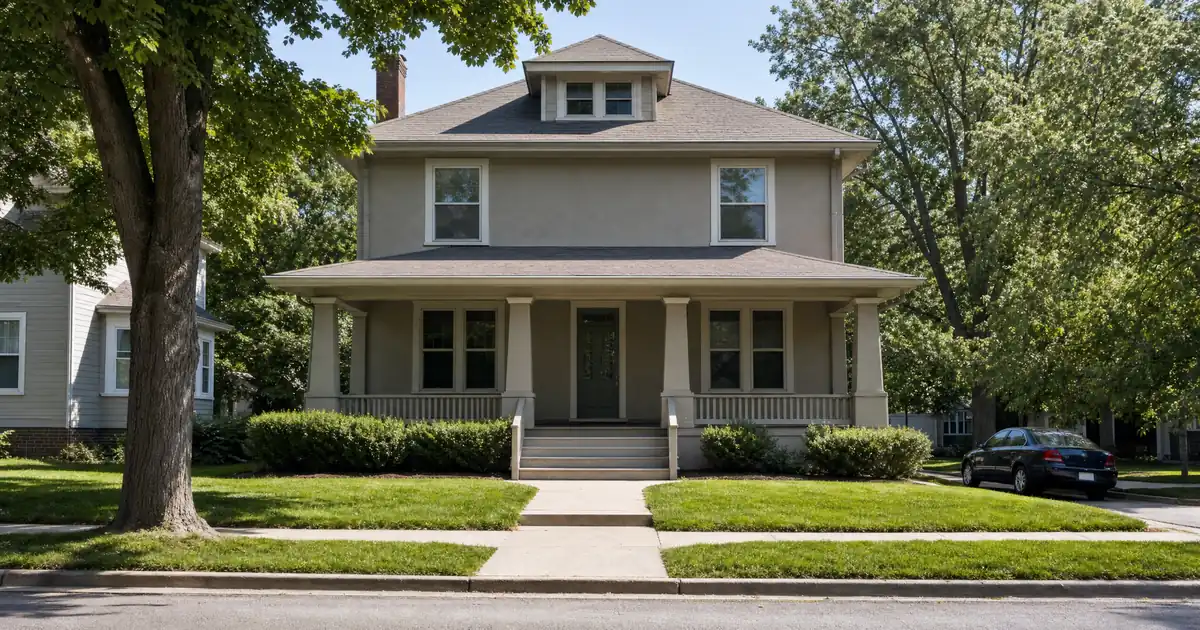
2-4 Unit DSCR HELOC Complete Guide — The Quick Read: A “DSCR HELOC” on a duplex, triplex, or fourplex isn’t one product. It’s two different products sharing one loose label. One is a standalone equity line. It’s reviewed on your own income and credit, not the property’s rent. The other is a rent-qualified cash-out refinance or second mortgage. It’s reviewed on the property’s cash flow instead. Which lane you land in changes your leverage ceiling. It also decides whether an LLC can hold title, and how the underwriter reads your file.
A few things worth knowing before you go further:
How large a line the equity supports in your market.
An equity line is sized by combined loan-to-value, occupancy, and credit — not by rental coverage. Switch the occupancy or the credit band and the ceiling moves with it.
Investment-property lines require a 700 minimum credit score. Second-home tiers reach 640; primary-residence tiers reach 600.
A debt-to-income ratio above 45% requires 680+ credit. Profiles under 640 are limited to single-family homes. At least 75% of the approved line is drawn at closing. Ceilings, floors, and caps update from Lendmire’s centralized guideline source.
Line estimate
Illustrative estimate only — not a quote, Loan Estimate, approval, or commitment to lend. The rate is an editable assumption; equity-line pricing is variable through both the draw and repayment periods and never converts to fixed. Occupancy and credit drive the ceiling together: investment property runs to 70% combined LTV with a 700 credit floor and a $500,000 cap; a second home runs to 90% at a 640 floor with a $500,000 cap; a primary residence reaches up to 90% at a 600 floor, and its $750,000 maximum line applies only at 75% combined LTV or below with 720+ credit and a full appraisal. Lines above $500,000 require a full appraisal. Credit, debt-to-income, property type, and full underwriting review all affect the final line.
- A standalone investment HELOC on a 2-4 unit rental is reviewed on personal debt-to-income — not the rent roll.
- The rent-qualified path (a DSCR cash-out refinance or a closed-end DSCR HELOAN second lien) reviews rent against the full monthly housing payment instead, using an appraisal built specifically for multi-unit collateral.
- Title vesting is the sharpest fork between the two: a standalone HELOC can’t sit inside an LLC; a DSCR refinance often can, subject to program eligibility.
- Owner-occupied house-hacks — living in one unit, renting the rest — open a different, higher-leverage program than a pure rental ever qualifies for.
- Non-QM origination volume, DSCR loans included, is projected to climb from $108 billion to $175 billion, according to HousingWire citing a major bank’s research arm — a big reason lenders keep building new hybrid equity products around this collateral.
Key Terms Defined
DSCR (debt-service coverage ratio): This ratio divides a property’s monthly rent by its full monthly housing payment — rent ÷ PITIA. It tells you whether the property covers its own debt.
HELOC (home equity line of credit): A revolving credit line secured by real estate. You draw against it and pay it back. You don’t get one lump sum upfront like you would with a regular loan.
PITIA: Principal, interest, taxes, insurance, and association dues. This is the full monthly housing bill a lender measures rent against.
CLTV (combined loan-to-value): Add up every loan secured by a property. Divide that by the property’s value. This number matters more than plain LTV once a second lien like a HELOC enters the picture.
DSCR HELOAN: A closed-end second lien. It’s a lump-sum second mortgage. It’s reviewed on the property’s rental income, not a revolving line you draw against over time.
Business-purpose loan: DSCR loans are built for non-owner-occupied investment properties. Because they serve a business purpose, they’re reviewed differently than a standard owner-occupied mortgage.
What Does “DSCR HELOC” Actually Mean on a 2-4 Unit Property?
There’s no single, standard “DSCR HELOC” product in the market. People use the phrase loosely for at least two structurally different things. Scotsman Guide frames non-QM broadly as the collateral pool the government-sponsored enterprises won’t buy. DSCR products are a subset of that pool, built for investors and secured by expected rental cash flow. Inside that world, a home equity line is a specific mechanism — an open-end second lien you draw against. A home equity loan is different. It’s a closed-end second lien that funds in one shot.
So when an investor asks about a “2-4 unit DSCR HELOC,” they usually get pointed toward one of two lanes. The first is a standalone equity line secured by the investment property. It’s underwritten on the borrower’s own income and credit, not the rent. The second is a rent-qualified structure: a DSCR cash-out refinance that replaces the first mortgage, or a DSCR HELOAN sitting behind it as a second lien. Both of those get reviewed on the property’s income. Mixing up these two options is the most common mistake investors make when shopping for this product. That’s why the fine print matters more here than almost any other equity-access decision on a rental.
How Does a Standalone Investment HELOC Underwrite a Duplex, Triplex, or Fourplex?
A standalone investment HELOC checks your personal debt-to-income and credit file. It doesn’t look at the property’s rent — that’s the key difference from every DSCR structure discussed below. On the investment side of this network, the credit floor sits at 700 with no exceptions. The leverage ceiling stays flat at 70% CLTV no matter your score. A 720 profile buys you eligibility on some tiers, but not extra leverage. The line itself caps at $500,000. Investment lines top out below that $500,000 mark, and full appraisals only kick in above it. So an investment HELOC on this network runs almost entirely through automated valuation — no traditional appraisal in most cases. A higher CLTV file can still trigger a second look, though.
The draw structure on an investment line is fixed. You get a five-year interest-only draw period, followed by 25 years of full repayment. You need to draw at least 75% of the approved line at closing. After that, later draws run a $1,000 minimum in most states. Texas jumps that minimum to $4,000. Debt-to-income caps at 50%. That tightens to 45% for credit profiles between 600 and 679. Lenders calculate the qualifying payment on the interest-only obligation at the full approved line — not just whatever balance you’ve actually drawn.
Title vesting is where most investors trip up. This standalone structure only allows title in an individual’s name or a revocable living trust. LLCs, corporations, partnerships, and irrevocable or land trusts can’t hold title here — full stop. If your property is already deeded to an LLC, you need to change the vesting before this line will work. Or you go the DSCR cash-out refinance route instead, which handles LLC titling on most files, subject to program eligibility.
Property eligibility covers single-family, 2-4 units, PUDs, townhomes, and condominiums — including non-warrantable condos. That’s a detail plenty of investors don’t expect from an equity product. Bank-statement income sources use a 680 minimum for deposit analysis. But that point doesn’t matter on an investment line, since the credit floor already sits at 700.
How Does the Rent-Qualified DSCR Path Review the Same Property?
The DSCR path asks a completely different question: does the rent cover the payment? Instead of pulling your personal income documents or pay stubs, the lender builds the file around rent versus PITIA. On most files in Lendmire’s wholesale network, purchase leverage lands at 75-80% LTV. Select programs push further for stronger credit profiles, generally 700 and above. Cash-out refinance leverage tops out closer to 75% LTV across most of the network. Lenders generally expect around six months of seasoning before they’ll consider a cash-out refinance. Because this loan serves a business purpose (it’s secured by a non-owner-occupied property), it falls outside the consumer disclosure timelines that apply to a line against your own home — that includes TRID’s closing-disclosure rule and standard Regulation Z open-end HELOC disclosures.
Coverage itself works like a spectrum, not one fixed line. On select programs, 1.00 is where the floor starts — the point where rent exactly covers PITIA. But that floor is program-specific, never a universal industry standard. Stronger coverage ratios open better leverage and pricing tiers. Coverage below 1.00 is a real path too. Select lenders in the network offer it, with leverage and terms adjusted to match. It’s never treated as an automatic decline, even though some investors assume that. No-ratio qualification also exists, but only through select lenders, generally for borrowers who already own a primary residence.
Credit floors on the DSCR path run lower than the standalone HELOC. Some parts of the network go as low as 620, most programs want something closer to 660, and 700-plus unlocks the strongest leverage tiers. Loan sizes generally run up to $3,000,000 on standard programs, with smaller balances available through select lenders. Once a file crosses roughly $2,500,000, the network generally sticks to 30-year fixed structures rather than anything shorter or adjustable. Reserve requirements vary by lender, leverage, and transaction type. But they commonly land around six months of PITIA. Conservative rate-term files at modest leverage under $1,500,000 sometimes see reserves waived entirely. Loans above that size typically step up to roughly nine months.
If you’re weighing this path against the standalone line, know that it usually means replacing your existing first mortgage rather than layering something behind it. Lendmire’s complete guide to DSCR loans on 2-4 unit properties walks through that mechanic in more depth. The interest-only DSCR variant covers how the payment structure changes when a borrower wants to keep the monthly obligation lower while coverage builds.
Where Does the DSCR HELOAN Second-Lien Option Fit?
A DSCR HELOAN solves a specific problem: pulling equity without disturbing the first mortgage already in place. Per Scotsman Guide’s second-lien framework, an open-end second lien — the HELOC structure — lets a borrower draw and repay over time. A closed-end second lien, the home equity loan structure, funds the full amount upfront with no redraw. A DSCR HELOAN is the closed-end version. It’s sized off rental income instead of the borrower’s personal file.
The practical draw here is simple. An investor who locked in good first-mortgage terms doesn’t want to refinance that away just to access equity. A second lien behind it, sized on the property’s own rent-to-PITIA math, pulls the cash out without touching the existing loan. In practice, this is the closest thing the market has to a true “DSCR HELOC” in second position — since the standalone equity line described above isn’t rent-qualified at all.
DSCR HELOC vs. DSCR Cash-Out Refinance vs. DSCR HELOAN
| Factor | Standalone Investment HELOC | DSCR Cash-Out Refinance | DSCR HELOAN (2nd lien) |
|---|---|---|---|
| Reviewed on | Borrower’s DTI and credit | Property rent vs. PITIA | Property rent vs. PITIA |
| Lien position | First or second | First (replaces existing) | Second (behind existing first) |
| Leverage ceiling | 70% CLTV, investment | Around 75% LTV | Varies by lender |
| Title vesting | Individual or revocable trust only | Often LLC-eligible* | Program-dependent |
| Structure | Revolving line, IO then amortizing | Fully amortizing or IO | Closed-end lump sum |
*Subject to program eligibility and lender guidelines.
Why Does a 2-4 Unit File Look Different on Paper?
Appraisal method is the mechanical fork that’s specific to unit count. It matters most when rental income drives the qualifying decision. For one-unit investment properties, the appraiser produces a standalone rent exhibit — the Single-Family Comparable Rent Schedule, known industry-wide as Form 1007. For 2-4 unit properties, the appraiser instead completes the Small Residential Income Property Appraisal Report, Form 1025. This form folds rent-comparable analysis directly into the value opinion, rather than issuing a separate exhibit.
Non-QM DSCR programs didn’t invent this naming convention. They borrowed it because appraisers already know these forms well. It’s simply the standard way to document a multi-unit rent roll.
For a standalone investment HELOC at or below $500,000, this rarely matters much in practice. Most of those files run through automated valuation with no appraisal at all. It matters far more on the DSCR refinance side. There, the 1025’s rent figures are exactly what the underwriter uses to calculate the coverage ratio.
Where Does the General Rule Break? Named Edge Cases
House-hacking changes the whole program. Say you occupy one unit of a 2-4 unit property and rent out the rest. That deal doesn’t fall under the investment-property rules above at all. It works to the primary-residence program instead. That program allows credit down to 640 specifically for 2-4 unit properties. Compare that to a 600 floor generally, which is restricted to single-family homes with a clean 12-month housing history. Leverage also opens up meaningfully here. This program can reach well above the 70% ceiling that governs a pure investment line, at a 720-or-better credit profile. But that higher ceiling applies only to lines at or below $500,000. Push past that threshold and the cap drops back to 75% CLTV, with a full appraisal required — even on an owner-occupied file.
Texas plays by different rules — but only for homestead property. Texas’s constitutional home-equity law, Article XVI, Section 50(a)(6), sets a mandatory waiting period before closing. It also enforces a one-lien-at-a-time rule and 12-month seasoning. But every one of those protections ties back to the homestead — meaning a Texan’s primary residence. An investment property or second home in Texas counts as non-homestead. It doesn’t trigger any of that machinery. Texas properties on this network are also capped at 10 acres, regardless of occupancy.
Some states won’t touch a property that’s actively for sale. A property listed for sale, or listed within the past 60 days, is ineligible for this HELOC structure in Indiana, North Carolina, Pennsylvania, Tennessee, Texas, and Washington.
New Mexico and Ohio scale CLTV to credit. Both states apply a CLTV ceiling that moves with the borrower’s credit profile, rather than sticking to a flat number. Confirm this before assuming the standard ceiling applies.
DSCR vs. conventional financing
Two common ways to finance an investment property in this market. They qualify you differently — here’s how investors weigh them.
Why investors choose it
- Qualifies on the property’s rental income — no personal tax returns, W-2s, or pay stubs needed to document income.
- No personal debt-to-income ceiling to clear, so existing mortgages and obligations don’t cap your borrowing the same way.
- Can be closed in an LLC, keeping the property inside a business entity.
- Built for scaling — not held to the limit on number of financed properties that conventional financing applies.
- Underwriting centers on the deal: generally qualifies when the rent covers the payment, a 1.00x coverage ratio being a common baseline (confirmed in underwriting).
- Designed specifically for investment property, including long-term and, where the program allows, short-term rentals.
Where it’s strong
- Often the lowest ongoing financing cost for a buyer who fully qualifies on personal income — a fit for a first property or a cost-first purchase.
Trade-offs for investors
- Requires full personal income documentation and must fit within a debt-to-income limit — salary, existing debts, and other mortgages all count.
- Typically held in your personal name rather than a business entity.
- Caps how many financed properties you can carry, which can become a ceiling as a portfolio grows.
- Evaluates you as a borrower as much as the property, which usually means more paperwork.
How investors usually choose: a first or single property often optimizes for the lowest financing cost; portfolio builders often optimize for leverage, vesting in an LLC, and scaling past conventional caps. The right answer depends on your goals, the property, and current guidelines — both paths run through select lenders in Lendmire’s wholesale network, with eligibility and terms confirmed in underwriting.
Foreclosure history splits by program. Bankruptcy seasons in four years from discharge or dismissal on both HELOC structures here. Foreclosure history is where the two diverge. One program declines any foreclosure history regardless of age. The other seasons a foreclosure at seven years, and a deed-in-lieu, pre-foreclosure, or short sale at four. Investment files follow that seven-and-four-year path.
There’s a portfolio ceiling. A borrower is limited to three of these lines at once. Combined exposure caps at $2,000,000 on the higher-leverage program and $750,000 on the longer-runway structure. Own more than 15 financed properties total, and this HELOC structure isn’t available — no matter how strong any single file looks.
Some property types simply aren’t eligible, on either program. Manufactured homes — single- or double-wide — log homes, barndominiums, co-ops, condotels, mixed-use, commercial, and agriculturally-zoned parcels don’t qualify through this network’s HELOC or DSCR programs. If a property carries one of those characteristics, unit count doesn’t matter. It’s outside eligibility either way.
Lendmire’s wholesale team places these standalone investment HELOCs specifically in its 16 full-service states — Alabama, California, Colorado, Florida, Georgia, Indiana, Michigan, Montana, New Mexico, North Carolina, Ohio, Pennsylvania, Tennessee, Texas, Virginia, and Washington. That footprint is narrower than Lendmire’s DSCR loan programs, which reach investors in 39 states plus Washington, D.C. If you’re outside those 16 HELOC states with a 2-4 unit rental, you usually still have a DSCR cash-out refinance available, even where the standalone equity line isn’t offered.
DSCR files on 2-4 unit properties in Lendmire’s network tend to fall into two clean piles. Some show strong combined rent across all units, with thin personal income documentation. Others show the reverse — solid traditional employment income, but a fourplex that barely clears coverage on paper. The 1099-only path for 2-4 unit properties tends to come up often in the first pile, since self-employed owners frequently carry exactly that kind of rent-heavy, income-light profile.
What Does the Investor Decision Actually Look Like?
Run the numbers on a triplex valued at $450,000, with an existing first mortgage at 65% LTV. A standalone investment HELOC on this network could add a second lien up to a combined 70% CLTV ceiling — a narrow window above that existing balance, as long as the file clears the 700 credit floor and stays inside the 50% DTI cap on the fully drawn interest-only payment. That review never looks at the triplex’s rent roll at all. Terms vary by lender guidelines, property type, leverage, credit profile, and full file review.
Now run the same property through the DSCR path instead. A cash-out refinance to roughly 75% LTV replaces the existing first mortgage entirely. It’s reviewed off combined rent across all three units against the new PITIA, landing somewhere in the low-to-mid 1.0x coverage range rather than the owner’s personal debt-to-income. Same collateral, but two entirely different qualifying stories, and two different ceilings. Exact terms depend on the lender’s guidelines, property type, leverage, and a full review of the borrower’s file.
That gap explains why the choice matters so much. An investor with strong personal income but thin combined rent might do better on the standalone line. An investor with the opposite profile — heavy rental income, complicated traditional personal-income documentation — almost always does better on the DSCR side. Lendmire’s investment property refinance playbook breaks down that comparison in more depth, for investors weighing a full refinance against a second lien.
Tax treatment can depend on how you use the funds and how you hold the property. Keep clear records, and talk to a qualified tax professional before relying on any deduction.
Frequently Asked Questions
Can an LLC hold title on a 2-4 unit DSCR HELOC?
Not on the standalone equity line — that structure only allows title in an individual’s name or a revocable living trust. A DSCR cash-out refinance or DSCR HELOAN, by contrast, often allows LLC titling, subject to program eligibility and lender guidelines. If your property is already deeded to an LLC, you generally need to change vesting or pursue the DSCR refinance path instead.
Does a fourplex qualify the same way as a duplex?
Property eligibility covers single-family through four-unit properties under the same basic framework. But the specific credit floor and leverage ceiling depend on occupancy — investment versus owner-occupied — not the exact unit count within that 2-4 range. A duplex and a fourplex in the same occupancy category get underwritten on the same rules.
What happens if the DSCR comes in under 1.00?
It’s not an automatic decline. Coverage below 1.00 is available through select lenders in the network, with leverage and pricing adjusted to compensate for the weaker ratio. Stronger coverage generally unlocks better terms. But a file below 1.00 still has a path through the right program.
Is a DSCR HELOC exempt from the disclosure timelines that apply to a HELOC on a personal home?
Generally yes, because it serves a business purpose against a non-owner-occupied investment property. That keeps it outside TRID’s closing-disclosure rule and the standard Regulation Z consumer HELOC disclosure requirements that apply to an equity line against a primary residence. Exact treatment still depends on the specific loan structure and lender.
Can this HELOC be used on a 2-4 unit property with a mixed-use ground floor?
No — mixed-use, commercial, and agriculturally-zoned properties don’t qualify through this network’s HELOC or DSCR programs, even when the residential portion of the building falls within the 2-4 unit range. The secondary use disqualifies the property regardless of unit count.
If you’re weighing a standalone equity line against a rent-qualified refinance on a 2-4 unit rental, Lendmire can help compare both paths against the property’s actual numbers, credit profile, and goals — reach the team at 828-256-2183 or request a quote directly. For the fundamentals of how DSCR lender review works before diving into either structure, Lendmire’s complete DSCR loans guide, DSCR loan explainer, and DSCR vs. conventional breakdown are good starting points.
Whichever lane you end up in, the 2-4 unit category keeps sitting in an odd middle ground. It’s big enough to carry real rent, small enough to dodge commercial underwriting entirely. That gap is exactly why it draws so much attention from equity-hungry investors. And it’s exactly why the fine print between these two products is worth reading twice.
About Lendmire
Lendmire (NMLS# 2371349) is a non-QM mortgage broker serving investors in 40 markets including Washington, D.C. The firm helps structure DSCR scenarios commonly evaluated around a property’s rental income rather than personal income paperwork, subject to lender guidelines. A Scotsman Guide Top Mortgage Workplace in 2025 and 2026, Lendmire places loans through wholesale investor lenders and is not a direct lender.
Lendmire’s Top Mortgage Workplace recognition is documented by Scotsman Guide 2025 Top Mortgage Workplace.
Get Started
Ready to find the right loan for you?
In about 30 seconds you can review financing options available for your home or investment property. No commitment required.
Informational only. Not a Loan Estimate, approval, or commitment to lend. Program availability and eligibility are subject to lender guidelines, credit approval, property review, and underwriting.
References
1. HousingWire — Non-QM originations projected to reach $175 billion
2. Scotsman Guide — Climb to the Top
3. Fannie Mae Selling Guide B3-3.8-01 — Rental Income
4. Texas Constitution, Article XVI — via Justia Law
Brandon Miller
Founder & CEO, Mortgage Loan Originator, Lendmire LLC
- Mortgage Loan Originator · NMLS# 1129696 · Verify on NMLS Consumer Access
- North Carolina Real Estate Broker · License# 343312 · Verify on NCREC
- North Carolina Insurance Producer · License# 19053198 · Property, Casualty, Life, Health · Verify on NAIC SBS
- Lendmire LLC · Firm NMLS# 2371349 · Verify firm licensure
Important disclosures. Lendmire (NMLS# 2371349) is a licensed mortgage brokerage. Lendmire is not a direct lender, depository institution, or financial advisor. All loan inquiries are subject to lender underwriting; this article does not constitute a commitment to lend. Rates, terms, and program guidelines are subject to change without notice and vary by borrower profile, property type, and state. Information in this article is general in nature and is not financial, legal, or tax advice. Equal Housing Opportunity. NMLS Consumer Access: nmlsconsumeraccess.org.


