
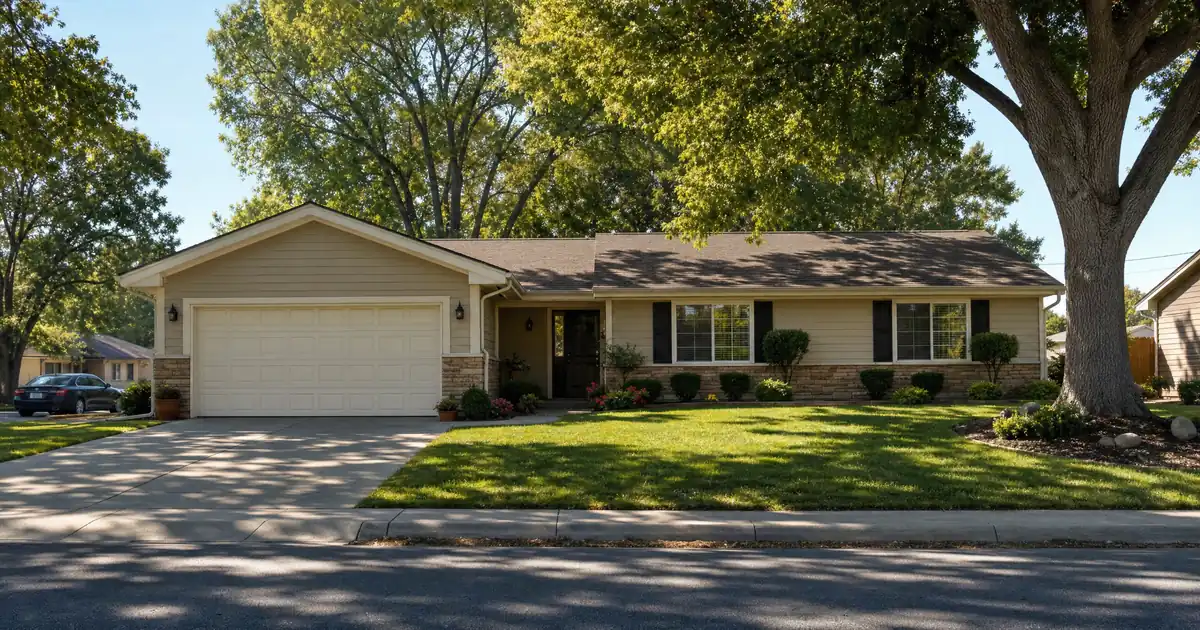
Condo DSCR HELOC Complete Guide — The Quick Read: A home-equity line against a rental condo can qualify two different ways: on the property’s rent versus its payment, or on the borrower’s own credit and debt-to-income. Most of the equity lines actually available today run the credit-and-DTI path, capped around 70% combined loan-to-value on investment property with a 700 minimum credit score. True rental-income-qualified second liens exist too, but they sit with a smaller group of lenders and get reviewed file by file. Either path can work on a warrantable or non-warrantable condo — condotels and co-ops are a different story entirely.
Key Takeaways
- Two different products get marketed as “Condo DSCR HELOC” — a credit/DTI-qualified equity line and a rental-income-qualified second lien. They are not the same tool.
- Investment-property equity lines through Lendmire’s wholesale network typically cap at 70% combined LTV and $500,000 total, with a 700 credit floor.
- Non-warrantable condos are generally eligible on this equity-line product; condotels, co-ops, manufactured homes, and log homes are not.
- LLCs cannot hold title on the equity line — a hard structural break from most DSCR term loans, which allow LLC vesting depending on program guidelines.
- A rental-income-qualified second lien on a condo exists only through select lenders, and coverage below 1.00x gets reviewed on adjusted leverage and terms — not a flat denial.
What Is a Condo DSCR HELOC, Exactly?
A Condo DSCR HELOC is a revolving line of credit secured by a condo held as a rental, sized off either the property’s rent-to-payment ratio or the borrower’s personal credit profile — depending on which lender is underwriting the file. That’s the honest answer, and it’s the one most explainers skip.
How large a line the equity supports in your market.
An equity line is sized by combined loan-to-value, occupancy, and credit — not by rental coverage. Switch the occupancy or the credit band and the ceiling moves with it.
Investment-property lines require a 700 minimum credit score. Second-home tiers reach 640; primary-residence tiers reach 600.
A debt-to-income ratio above 45% requires 680+ credit. Profiles under 640 are limited to single-family homes. At least 75% of the approved line is drawn at closing. Ceilings, floors, and caps update from Lendmire’s centralized guideline source.
Line estimate
Illustrative estimate only — not a quote, Loan Estimate, approval, or commitment to lend. The rate is an editable assumption; equity-line pricing is variable through both the draw and repayment periods and never converts to fixed. Occupancy and credit drive the ceiling together: investment property runs to 70% combined LTV with a 700 credit floor and a $500,000 cap; a second home runs to 90% at a 640 floor with a $500,000 cap; a primary residence reaches up to 90% at a 600 floor, and its $750,000 maximum line applies only at 75% combined LTV or below with 720+ credit and a full appraisal. Lines above $500,000 require a full appraisal. Credit, debt-to-income, property type, and full underwriting review all affect the final line.
In practice, most of what gets marketed as a “DSCR HELOC” is a standard investment-property equity line. It’s reviewed on the borrower’s credit score, existing debt load, and equity position — not the rent roll. A genuinely rental-income-qualified second lien, where an underwriter compares monthly rent to the payment the same way a DSCR purchase loan does, is a newer entrant. It shows up at a smaller group of lenders inside Lendmire’s wholesale network, and whether a given lender’s DSCR program can even sit in second position — behind an existing first mortgage — is program-dependent.
Both tools solve the same problem: pulling equity out of a condo without disturbing the first mortgage. They just get there differently. Lendmire’s guide to single-family DSCR HELOCs walks through the same distinction on non-condo properties, and most of the mechanics carry straight over — condos just add a layer of building-level review on top.
For the rest of this guide, “DSCR HELOC” means whichever version fits the file. Each section below flags which qualification path applies.
Key Terms Defined
DSCR (debt-service coverage ratio): a ratio comparing a property’s monthly rent to its monthly mortgage payment — above 1.00 means the rent covers the payment.
CLTV (combined loan-to-value): every lien against a property added together, divided by its value — a first mortgage plus a HELOC balance, measured as one number.
PITIA: principal, interest, taxes, insurance, and association dues — the full monthly obligation a lender measures rent against, including HOA fees on a condo.
Warrantable condo: a condo building that clears a lender’s project-level checks — owner-occupancy percentage, no unresolved litigation, adequate reserves. One that doesn’t clear those checks is non-warrantable.
Second lien / subordination: a loan recorded behind an existing first mortgage. If that first mortgage is ever refinanced, the second-lien holder signs a subordination agreement to keep its place in the stack.
Business-purpose loan: a loan taken for an investment or business reason rather than personal use. DSCR loans and investment-property HELOCs are both structured this way.
How Underwriting Actually Treats a Condo DSCR HELOC
Six things happen on every file, no matter which qualification path applies: the lender sets the basis, values the property, checks the condo building, checks title and lien position, locks the leverage tier, and structures the draw. Here’s each step, in order.
Step 1: The qualification basis gets decided first
This is the fork in the road. If the file runs on the standard investment-property equity line, credit and DTI drive everything downstream. If it runs on a rental-income-qualified second lien, the rent-to-payment comparison drives it instead. Because these are business-purpose loans rather than personal mortgages, they’re reviewed under a different disclosure framework than a standard owner-occupied mortgage — Regulation Z’s business-purpose factors look at things like the size of the transaction and how the borrower plans to use the property. That’s a compliance distinction, not an underwriting one. It doesn’t change what the lender checks on the file.
Step 3: The condo building gets its own review
This is where a condo file diverges hardest from a single-family file. The lender wants HOA documentation — the master policy declaration, bylaws, and CC&Rs — because master insurance coverage protects its collateral, and slow HOA responses are a known bottleneck on tight timelines, per the National Association of Realtors. Litigation status, owner-occupancy concentration, and how much of the building is commercial space all factor into whether the project passes muster — separate from whether the individual unit’s rent covers its payment.
Step 4: Title, vesting, and lien position get confirmed
Placing a new lien behind an existing mortgage generally doesn’t need the first lender’s active sign-off, but the second lender does confirm the first mortgage’s terms don’t block additional financing. Lien priority itself runs on a simple rule: whichever lien records first in the land records outranks whatever records later — the basic “first in time, first in right” principle underneath every subordination agreement. On the standard investment-property equity line, title has to sit with an individual borrower or an inter vivos revocable living trust. LLCs, corporations, partnerships, and irrevocable or land trusts can’t hold this specific loan — a real structural break from most DSCR term loans, which allow LLC vesting depending on program guidelines.
Step 5: The leverage tier locks in
On investment property, the ceiling is 70% CLTV, full stop. There’s no tier above it on this line, and both the 720-and-up and the 700 credit bands land at the same 70% cap — so going from 700 to 750 buys an easier file, not more leverage. That’s a genuine departure from a DSCR purchase loan, where crossing into the low-700s usually unlocks a materially higher leverage tier. On a primary residence or second home, the ceiling reaches as high as 90% CLTV, but only at a 720-plus profile — never assume that figure applies to a rental condo.
Step 6: The draw gets structured
Investment lines run a 5-year interest-only draw followed by 25 years of amortizing repayment — there’s no shorter structure on this occupancy type. At least 75% of the approved line typically draws at closing. Pricing floats through both the draw and repayment periods on both programs and never converts to fixed, which is normal for a HELOC and different from the fixed-rate structure behind most DSCR term loans. DTI runs up to 50% on this line, though profiles between 600 and 679 are capped closer to 45%, and clearing anything above 45% takes at least a 680 score. It’s calculated against the interest-only payment on the fully drawn line — not just what’s used at closing.
The DSCR Math on a Condo (Ratio, Not Dollars)
DSCR equals monthly rent divided by PITIA, and on a condo, PITIA includes the HOA due — which is the single biggest reason a condo’s coverage ratio runs lower than a comparable single-family rental charging the same rent.
Picture two versions of the same unit. Strip out the HOA due, and the rent might clear something like 1.25x coverage against principal, interest, taxes, and insurance alone. Fold the due back in, and that same rent might land closer to 1.05x — same tenant, same lease, thinner cushion. That gap is exactly why a condo file needs its own math, not a borrowed single-family estimate.
Clearing 1.00x is not the same thing as positive cash flow. DSCR only measures rent against the payment — it doesn’t touch repairs, vacancy, property management, utilities, or capital expenses. A property that clears 1.15x on paper can still run thin once those costs get added in, which is why stronger coverage almost always beats a file that just barely clears the line.
On the DSCR loan side — purchase, refinance, or cash-out — coverage below 1.00x is available through select lenders in the network, with leverage and terms adjusted accordingly. A no-ratio structure, where the underwriter skips the rent-to-payment comparison entirely, is available only through select lenders, generally for borrowers who already own a primary residence. Neither path carries a guarantee; every file still runs through credit, reserves, and property review.
Warrantable vs. Non-Warrantable: Where Condo Underwriting Diverges
Non-warrantable status doesn’t automatically disqualify a condo from this equity line — and that’s a meaningful break from how condo lending used to work. At one time, agency lenders wouldn’t touch a building where more than 30 percent of units were investor-owned, and those limits still exist on loans to investors even though owner-occupant loans carry no rental-ratio cap at all, according to one law firm’s summary of the agency framework. That specific concentration test isn’t the operative rule on a DSCR HELOC file — but the underlying risk it was built to catch (a building most lenders won’t touch) is still exactly what condo project review is screening for.
| Condo Status | Standard Investment HELOC | DSCR-Qualified Path |
|---|---|---|
| Warrantable condo | Eligible, standard tiers apply | Eligible, program-dependent |
| Non-warrantable condo | Eligible, same tiers | Program-dependent, varies by lender |
| Mixed-use / heavy commercial space | Not offered on this line | Reviewed as a red flag, case by case |
| Condotel | Not offered | Not offered |
| Co-op | Not offered | Not offered |
Manufactured homes, log homes, and barndominiums fall outside these programs entirely, regardless of condo status — that’s a categorical exclusion, not a warrantability question. Condos, including non-warrantable ones, sit on the eligible side of that line. Different products. Different math.
The Structures and Variations
An investor pulling equity from a condo generally has four tools available, and they don’t overlap as much as the marketing around them suggests.
DSCR vs. conventional financing
Two common ways to finance an investment property in this market. They qualify you differently — here’s how investors weigh them.
Why investors choose it
- Qualifies on the property’s rental income — no personal tax returns, W-2s, or pay stubs needed to document income.
- No personal debt-to-income ceiling to clear, so existing mortgages and obligations don’t cap your borrowing the same way.
- Can be closed in an LLC, keeping the property inside a business entity.
- Built for scaling — not held to the limit on number of financed properties that conventional financing applies.
- Underwriting centers on the deal: generally qualifies when the rent covers the payment, a 1.00x coverage ratio being a common baseline (confirmed in underwriting).
- Designed specifically for investment property, including long-term and, where the program allows, short-term rentals.
Where it’s strong
- Often the lowest ongoing financing cost for a buyer who fully qualifies on personal income — a fit for a first property or a cost-first purchase.
Trade-offs for investors
- Requires full personal income documentation and must fit within a debt-to-income limit — salary, existing debts, and other mortgages all count.
- Typically held in your personal name rather than a business entity.
- Caps how many financed properties you can carry, which can become a ceiling as a portfolio grows.
- Evaluates you as a borrower as much as the property, which usually means more paperwork.
How investors usually choose: a first or single property often optimizes for the lowest financing cost; portfolio builders often optimize for leverage, vesting in an LLC, and scaling past conventional caps. The right answer depends on your goals, the property, and current guidelines — both paths run through select lenders in Lendmire’s wholesale network, with eligibility and terms confirmed in underwriting.
| Structure | Reviewed on | Lien Position | Structure |
|---|---|---|---|
| Standard investment HELOC | Borrower credit + DTI | 1st or 2nd | 5-yr draw / 25-yr repay, floats |
| DSCR-qualified second lien | Rent vs. payment | 2nd, program-dependent | Varies by lender |
| DSCR HELOAN | Rent vs. payment | 2nd, lump sum | Fixed term, no draw period |
| DSCR cash-out refinance | Rent vs. payment | 1st, replaces existing loan | Term loan, fixed structures common |
A DSCR cash-out refinance replaces the entire first mortgage — it’s a single new loan, not an add-on. Lendmire’s network generally holds cash-out to around 75% LTV with roughly six months of seasoning expected on the property, and typical loan sizes run from about $100,000 up to $3,000,000, with larger balances above $2,500,000 usually structured as 30-year fixed. Extended 40-year terms and interest-only periods are available through select lenders for investors who want lower scheduled payments — Lendmire’s guide to condo 40-year DSCR loans covers that structure in more depth for condo purchases and refinances specifically.
Where the General Rule Breaks: Named Edge Cases
The $500,000 ceiling doesn’t move for investment property. There’s no higher tier available on the equity line for a non-owner-occupied condo, no matter how strong the credit or the equity position. Lines above $500,000 exist only on primary-residence structures, cap at 75% CLTV, need at least a 700-720 credit profile depending on the draw structure, and require a full appraisal. An investor who needs more than $500,000 against a condo generally moves to a DSCR cash-out refinance instead.
LLC vesting kills the equity line, not the DSCR loan. A condo already deeded to an LLC can’t get this HELOC — title has to move back to an individual or a revocable trust first. That’s not the case with most DSCR term loans, which allow LLC titling subject to program terms. If the exit plan involves an entity, that decision usually needs to happen before, not after, choosing between these two tools.
State availability is narrower than the broader DSCR footprint. Lendmire’s DSCR programs reach 39 states plus Washington, D.C. — but the investment-property equity line itself is currently available only in Lendmire’s 16 full-service states, including California, Florida, Texas, and Ohio. That gap surprises a lot of investors who assume every DSCR product travels everywhere the platform does.
Texas and a handful of other states carry their own overlays. Texas ties its 12-day waiting period, one-lien-at-a-time rule, and 12-month seasoning requirement to primary residences only — a Texas investment condo is treated as a non-homestead transaction and doesn’t carry those restrictions, though Texas properties are capped at 10 acres. New Mexico and Ohio scale the CLTV cap to the credit tier rather than using one flat number. Indiana, North Carolina, Pennsylvania, Tennessee, Texas, and Washington all exclude a condo listed for sale, or listed within the prior 60 days.
Short-term rental condos need a different lens entirely. A condo run as an Airbnb doesn’t fit neatly into either equity-line path — the income pattern looks nothing like a standard 12-month lease. Lendmire’s short-term rental bank-statement HELOC guide covers how that income actually gets documented and qualified, separate from the standard investment HELOC discussed here.
Which Tool Fits Your Condo?
If credit and equity are the strong points, the standard investment-property equity line usually makes the most sense — it’s the more standardized product, and most files clear it on automated valuation without an appraisal delay. If personal DTI is the obstacle but the condo’s rent genuinely covers the payment, the DSCR side of the market — cash-out refinance, or a rental-income-qualified second lien where one is available — is worth pricing out instead, since it skips the personal debt-load review entirely.
Whether the credit-and-DTI path or the rental-income path wins out really comes down to which number is stronger for that specific borrower and that specific condo. A borrower with clean credit and modest debt probably clears the standard line without friction. A borrower carrying heavier personal debt but sitting on a condo that cash-flows well tends to lean DSCR, where personal income takes a back seat to the property’s own performance.
For the end-to-end picture of how these loans work — qualification, structures, and the full process — see Lendmire’s complete DSCR loans guide.
FAQ
How do you qualify for a Condo DSCR HELOC?
Qualification runs one of two ways: through the standard investment-property equity line, which is underwritten on the borrower’s credit score and debt-to-income, or through a rental-income-qualified second lien, which compares the condo’s rent to its payment the way a DSCR purchase loan does. Which path applies depends on the lender and the specific product being originated.
What credit score and CLTV do I need for an investment condo HELOC?
The standard investment-property equity line typically requires a 700 minimum credit score and caps combined loan-to-value around 70%. Moving from a 700 to a 750 score doesn’t unlock more leverage on this product — the 70% ceiling applies across both credit bands.
Can an LLC hold title on a Condo DSCR HELOC?
No. The standard investment-property equity line requires title to sit with an individual borrower or an inter vivos revocable living trust — LLCs, corporations, partnerships, and irrevocable or land trusts aren’t eligible. This is a structural break from most DSCR term loans, which allow LLC vesting depending on program guidelines.
Is a non-warrantable condo eligible for a DSCR HELOC?
Generally yes on the standard investment equity line, which applies the same leverage tiers regardless of warrantability status. Eligibility on the rental-income-qualified path is program-dependent and varies by lender. Condotels and co-ops are excluded from both paths.
What happens if a condo’s rent doesn’t fully cover the payment?
Coverage below 1.00x isn’t an automatic decline on the DSCR side — select lenders in the network will review the file with adjusted leverage and terms. On the standard investment-property equity line, rent isn’t part of the qualification math at all, since that product runs on credit and DTI instead.
About Lendmire
Lendmire is a non-QM DSCR mortgage broker, NMLS# 2371349, working with a wholesale lender network across 40 markets nationwide. Lendmire does not fund loans directly; it matches borrowers with lenders whose DSCR, HELOC, and other non-QM programs fit a given property and borrower profile. Program terms, leverage tiers, and eligibility outlined in this guide reflect general guidelines across that network and can vary by lender, by state, and by the specifics of an individual file. Nothing here is a commitment to lend, and qualification is never guaranteed — every scenario is subject to full underwriting review. Scotsman Guide named Lendmire a Top Mortgage Workplace in both 2025 and 2026.
Get Started
Ready to find the right loan for you?
In about 30 seconds you can review financing options available for your home or investment property. No commitment required.
Informational only. Not a Loan Estimate, approval, or commitment to lend. Program availability and eligibility are subject to lender guidelines, credit approval, property review, and underwriting.
References
1. Regulation Z’s business-purpose factors
2. National Association of Realtors
3. first in time, first in right
4. law firm’s summary of the agency framework
Brandon Miller
Founder & CEO, Mortgage Loan Originator, Lendmire LLC
- Mortgage Loan Originator · NMLS# 1129696 · Verify on NMLS Consumer Access
- North Carolina Real Estate Broker · License# 343312 · Verify on NCREC
- North Carolina Insurance Producer · License# 19053198 · Property, Casualty, Life, Health · Verify on NAIC SBS
- Lendmire LLC · Firm NMLS# 2371349 · Verify firm licensure
Legal disclosures. Lendmire (NMLS# 2371349) is a state-licensed mortgage brokerage that arranges financing through wholesale lender relationships. Lendmire is not a direct lender, depository institution, or registered financial advisor. The discussion above is general informational content about real estate financing — it is not financial, legal, or tax advice, and readers should consult licensed professionals for guidance on their individual circumstances. Loan inquiries are subject to lender underwriting; this article does not represent a commitment to lend. Loan terms, rates, and qualification standards vary by borrower, property, and state, and are subject to change at any time. Equal Housing Opportunity. NMLS Consumer Access: nmlsconsumeraccess.org.


