
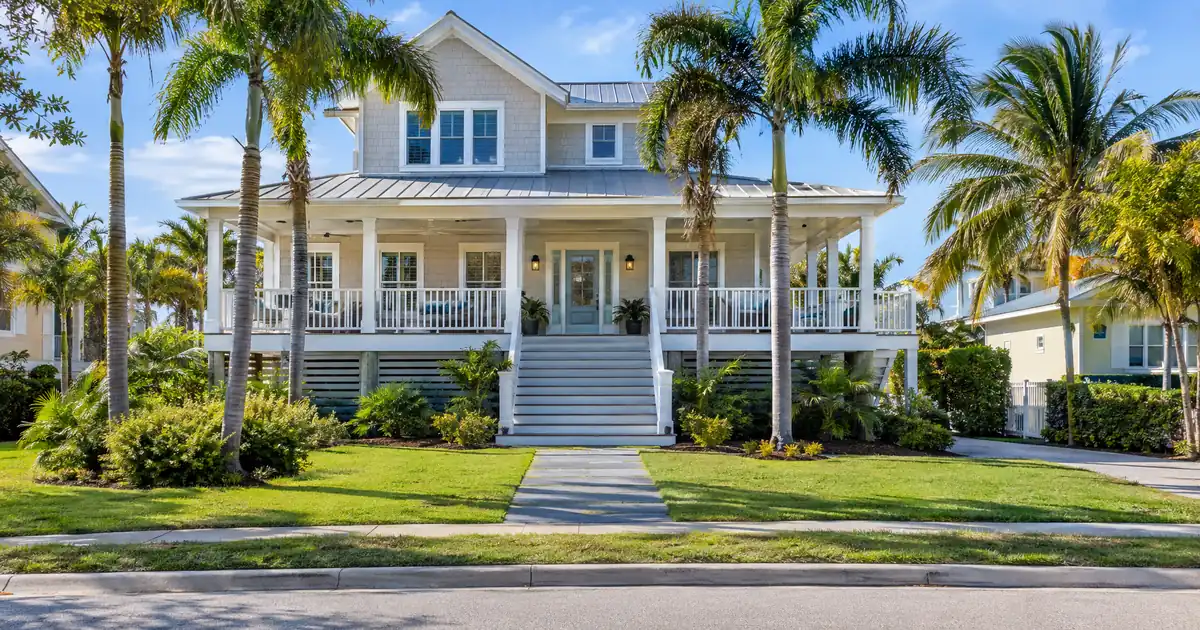
The Quick Read: A cash-out refinance on a West Palm Beach rental replaces the existing loan with a larger one, and the difference comes back as cash after payoff and costs, sized by the lower of two tests: how much equity the 75% loan-to-value cap allows on a standard rental, and whether the rent still covers the new, bigger payment. Qualification runs primarily on property-level rental income covering the payment, subject to lender guidelines. Insurance matters more here than in most markets, because it sits inside the payment the rent has to cover.
- Equity is not cash. The 75% figure is a cap on the new loan. Payoffs and costs come out of it first.
- Seasoning is typically about 6 months of ownership, measured from the recorded deed.
- Coverage drops after a cash-out. A bigger loan means a bigger payment, while taxes and insurance stay put.
- Credit tiers matter. A 620 floor exists in parts of the network, most programs want around 660, and 700+ opens the strongest leverage.
- Coastal insurance and flood status can decide whether the rent test passes at all.
What Is a DSCR Cash-Out Refinance on a Rental?
A DSCR cash-out refinance pays off the current loan on a rental and puts a larger loan in its place. Title pays the old lien, covers costs, and sends the remainder to the owner. The loan is reviewed primarily on the property’s rent measured against its payment, not on traditional personal-income documentation.
DSCR Cash-Out Calculator
Run the cash-out numbers in your market
Rate source: Freddie Mac 30-yr average via FRED® — Federal Reserve Bank of St. Louis · effective Oct 29, 2026
Prefilled with starting assumptions — enter your property’s value, balance, taxes, and insurance for a more accurate picture.
Program parameters update from Lendmire’s centralized guideline source. Taxes and insurance are editable estimates.
As of Oct 29, 2026 · General Freddie Mac market benchmark, not a Lendmire loan offer. Property value, balance, taxes, and insurance are editable estimates. Maximum loan-to-value varies by lender, program, property type, and seasoning. Not a Loan Estimate, approval, or commitment to lend. Program availability and eligibility are subject to lender guidelines, credit approval, property review, and underwriting.
The ratio itself is plain arithmetic. Monthly rent divided by PITIA. That is principal, interest, taxes, insurance, and any HOA dues. A ratio of 1.00 means rent equals the full obligation.
Across the wholesale network, 1.00 is where select programs start. It is a floor for those programs, not a universal standard. A separate path through select lenders takes coverage below 1.00, with leverage and terms adjusted. Stronger ratios generally open better pricing and higher leverage.
Many “good DSCR” numbers online, such as 1.25 and up, come from commercial lending. Those are not DSCR-loan program minimums. Don’t plan around them.
One more point on what the ratio does not measure. Clearing 1.00 is not the same as positive cash flow. Repairs, vacancy, management, utilities, and capital spending all sit outside the calculation.
The Seven Steps, Start to Finish
Here is the order a clean file follows. Each step shows what the investor does, what the lender checks, and where files stall.
1. Decide whether it is a cash-out or a rate-and-term. If cash comes back to you at closing, the lender treats it as a cash-out and applies the 75% ceiling on a standard rental. A refinance that only pays the old loan and costs is a rate-and-term, which allows higher leverage. Some lenders tolerate a small amount of cash back on a rate-and-term. That tolerance is lender-specific, so ask before you assume it.
2. Run the equity test. Take the expected appraised value and multiply by the cash-out cap, 75% on a standard rental or 70% on short-term-rental collateral. Subtract the payoff on every lien and the closing costs. What remains is your ceiling on cash, before the rent test.
3. Run the rent test. Divide market or lease rent by the new, larger PITIA. If the ratio lands under the program floor, the loan has to shrink or the deal has to move to a path that allows lower coverage with adjusted leverage. This is the core mechanic. Every dollar you pull out raises the payment and lowers coverage.
4. Check seasoning. Most programs want about 6 months of ownership, counted from title recording. Seasoning decides whether the lender sizes the loan on appraised value or on your cost basis. A program that advertises no seasoning may still size the loan on cost. Read which value it will use before you count on the cash.
5. Order the appraisal with a rent schedule. The appraiser estimates market rent on the standard rent-schedule form (Form 1007 for one unit, Form 1025 for two to four units). The lender uses that figure for the ratio. A signed lease is usually not required, though an unleased property can be priced differently. Proof of rent actually collected can also help the file.
6. Assemble the file. Typical items are the payoff statement, the leases, the insurance binder, asset statements for reserves, and entity documents if the property is vested in an LLC (subject to lender program eligibility). Lenders in the network generally let you vest individually or in an entity.
7. Clear title and fund. Title pays off and releases the old liens, then sends the net proceeds. Settlement reconciliation is where small payoff differences show up, so check the final figures against the payoff letters.
The tightest limit among value, rent, credit, reserves, and title sets the cash. It is rarely the one the investor expected.
How the Cash Amount Is Actually Calculated
Cash equals the loan cap minus payoffs minus costs. That is the whole formula.
Walk through it with percentages. Say a standard rental appraises at a value we call 100. The 75% cap means the new loan tops out at 75 of those units. If the existing loans total 50, the most that can come back before costs is 25, and costs shave that down. If the appraisal comes in light, the cap shrinks with it.
Now the rent side. Suppose the property covers its current payment at about 1.5x. A cash-out that lifts the loan by half again can push coverage into the low 1.1x range, because taxes and insurance do not shrink. Rent that clears 1.00 at that new payment keeps the file in range for select programs. Rent that doesn’t pushes the file toward a smaller loan or a lower-coverage path with adjusted terms.
The tests interact like this:
| Test | What it checks | What usually breaks it |
|---|---|---|
| Equity | Value × 75% cap, less payoffs | Low appraisal, stacked liens |
| Rent | Rent ÷ new PITIA | Insurance, HOA, bigger loan |
| Credit | Score tier vs. leverage | Below 660 or 700 tiers |
| Reserves | Liquid assets after closing | Counting cash-out proceeds |
| Property | Eligibility and condition | Ineligible type, flood gaps |
Credit shapes leverage as much as eligibility. Most programs want around 660. A 700+ score unlocks the strongest tiers.
A larger loan also changes reserve math. Reserves commonly run around 6 months of PITIA, and they vary by lender, leverage, loan size, and transaction type. Loans above $1,500,000 typically step up to about 9 months. Standard programs reach $3,000,000. Above $2,500,000 the network generally holds to 30-year fixed structures.
One reserve trap: cash left over after paying off liens, including second liens, does not count toward reserves. Document reserves from assets that existed before closing.
Where West Palm Beach Insurance Changes the Math
The denominator is where South Florida files get hurt. Taxes, insurance, and HOA dues all sit in PITIA, so a coastal market with high insurance costs compresses coverage before the investor touches the loan amount.
A local property manager’s analysis of Palm Beach County rental math makes the same point from the owner’s side. A pro forma built on out-of-state insurance benchmarks routinely leaves NOI lower than projected. The ratio works the same way. Use a current local quote, not last year’s number.
Operator habit that keeps these files clean: get a fresh insurance quote before the appraisal is ordered, not after. Coverage that pencils on an old quote can fail when the new one lands during review. That is the stealth killer on Florida files.
Flood is the second variable. Flood coverage is a separate policy from standard property insurance. FEMA explains that the Flood Disaster Protection Act requires flood coverage on buildings in special flood hazard areas when they secure certain federally backed financing. Lenders in the DSCR space are often not federally regulated or insured, so the statute may not apply directly. Many programs still require flood coverage as a condition of the loan. Check the program guidelines for the specific property.
A map revision or an elevation certificate can change the answer. One insurance education source notes that a letter of map amendment can end the federal mandate while the lender may still require coverage. If a property sits near a zone line, sort out its flood status before the file goes in, because the premium feeds the ratio.
Condos add their own friction in this market. Expect the lender to review the association questionnaire, reserves, and special assessments. Incomplete questionnaires stall files. Request them early.
Short-term-rental rules can vary by city, county, HOA, and property type, so investors should confirm local rules before relying on projected rental income. On the financing side, STR collateral carries different parameters: cash-out tops out around 70% LTV, with a 640+ score and about 12 months of hosting history typical. Purchase leverage on STR reaches 75%. Refinances sit around 70%, and the coverage floor differs by transaction type. Don’t blend them. Each figure is subject to lender guidelines and a complete review of property type, leverage, and credit.
The Seasoning Rule and Its Exceptions
Seasoning is a waiting period, and it is the quiet reason many cash-out files shrink. About 6 months of ownership is the common expectation across the network, counted from the recorded deed and documented by the settlement statement.
Three situations break the general rule.
Cost basis versus appraised value. Inside the waiting period, some programs size the loan on what you paid plus documented improvements. After it, they size on appraised value. The same property can produce very different proceeds on either side of that line.
Cash purchases. Delayed financing for a property bought with cash is a separate exception to the waiting period. The lender looks at the purchase documents to confirm no financing was used. Ask whether a given program offers it.
BRRRR. Investors who buy, rehab, and refinance run into seasoning, documented rehab cost, and lease-up all at once. Once the property is seasoned, most programs size off appraised value and rental coverage rather than loan-to-cost. Before then, the lender looks at what you actually put in. An improvement may support a higher appraised value, depending on comps and underwriter review. It is never a guaranteed lift.
Paying off a hard-money or bridge loan without taking cash back is typically a rate-and-term, which changes the leverage and the seasoning analysis. Get that classification confirmed up front.
Where the General Rule Breaks
Some situations catch investors who learned the basics.
Sub-1.00 coverage. It is available through select lenders in the network, with leverage and terms adjusted. Expect a smaller loan or a lower cash-out percentage than a file that clears 1.00. Run it only if the rest of the profile is strong.
Ineligible property types. Manufactured homes (single- and double-wide), log homes, and barndominiums are not offered in the network’s DSCR programs. Confirm the property type before paying for an appraisal.
Entity and purpose changes. DSCR loans are designed for non-owner-occupied investment properties. Because they are business-purpose investor loans, they are reviewed differently from a standard owner-occupied mortgage. The CFPB’s rule on business-purpose loans is the reference for the exemption, and the same text is mirrored at Cornell’s Legal Information Institute. The practical takeaway is simple. If you plan to move into the property, this is the wrong product. Business purpose turns on the facts of the loan, not only the property type.
Prepayment terms. DSCR loans can carry prepayment penalties. Ask for the structure, and model what a sale or early payoff would cost before taking the cash.
Term structures. The spine of the network is the 30-year fixed. Select lenders offer 40-year terms and interest-only periods, and ARM structures exist for investors who want them. Interest-only periods can lift the ratio, but they change how the loan behaves later. Compare the structure, not just the starting number.
A short operator note. The files that go smoothly tend to share three things: current insurance quotes, a clean payoff letter for every lien, and an appraisal packet that supports the rent figure. The files that stall usually miss one of those.
Key Terms Defined
PITIA: The full monthly obligation: principal, interest, taxes, insurance, and any HOA dues.
Seasoning: The ownership period measured from the recorded deed before a lender sizes a cash-out on appraised value.
Rate-and-term refinance: A refinance that pays off the old loan and costs without returning cash to the borrower.
LTV: The loan amount divided by the property’s appraised value, capped at 75% on a standard-rental cash-out.
DSCR: Monthly rent divided by PITIA, a property-level coverage ratio.
Settlement reconciliation: The final check that payoffs, costs, and net proceeds match the closing statement.
Should You Do It? A Decision Test
A cash-out can fund the down payment, closing costs, and reserves on the next rental. That is the scaling logic. It is also the cost.
Run these checks before applying:
- Does coverage still clear the program floor at the new payment, using a current insurance quote?
- Does the property have enough documented equity after all liens, including second liens?
- Are reserves documented from assets that exist before closing?
- Is the prepayment structure acceptable if you sell within a few years?
A property already cash-flowing well may not need a refinance at all. The stronger play might be waiting until seasoning or a rent increase improves the file. Then again, an investor with a strong acquisition lined up may reasonably take the cash now. It is a genuine trade-off.
Larger down payments on a later purchase help the coverage ratio, but they never erase leverage caps, credit floors, reserve rules, or property eligibility. The strongest files clear both tests: enough equity and enough rent.
For readers whose cases differ, Lendmire has a related walk-through. The complete DSCR loans guide covers the program basics.
Frequently Asked Questions
How much cash can I take out of a West Palm Beach rental?
It is the new loan, capped at 75% of appraised value on a standard rental, minus every payoff and cost. Short-term-rental collateral is capped near 70%. The rent test can reduce it further, because a larger loan raises the payment and lowers coverage. The result is rarely the headline cap, so run both tests before planning a purchase around the number.
Do I need a tenant in place?
Not always. The appraisal’s market-rent estimate can support the ratio on a vacant unit. An unleased property may be priced differently, and evidence of rent collected can help on a leased one. Short-term rentals add a hosting-history expectation, typically about 12 months.
Can an LLC hold the property?
Often yes. Lenders in the network generally let you vest individually or in an entity, subject to lender program eligibility. Entity documents get added to the file, so have the operating agreement and good-standing paperwork ready.
What credit score do I need?
A 620 floor exists in parts of the network. Most programs want around 660, and 700+ unlocks the strongest leverage tiers. Score affects how much leverage you get, not just whether the file is eligible. Final eligibility depends on the lender, the property, and the full file.
Does flood insurance affect my ratio?
Yes. The premium is part of PITIA, so it lowers coverage. Many programs require flood coverage for properties in special flood hazard areas. Confirm the property’s flood status early, before the appraisal is ordered.
Next Step
If you are buying or refinancing a rental property and want to see how the numbers work, Lendmire can help you compare DSCR loan options based on the property income, credit profile, leverage, and investor goals. Lendmire is a broker arranging financing through select lenders in its wholesale network, across 41 markets including Washington, D.C. Call 828-256-2183 or request a quote. Any estimate from the calculator is illustrative only. It is not a commitment to lend.
Coastal Florida investors who price in the insurance line first tend to get the cleanest read on what a rental can really carry.
A deeper walk-through of investment-property equity extraction lives in Lendmire’s guide to cash-out refinance on an investment property.
For current guidelines and terms, see Lendmire’s DSCR loan programs page.
About Lendmire
Lendmire, NMLS# 2371349, is a non-QM mortgage broker serving real estate investors in 41 markets, including Washington, D.C., through DSCR investor loan programs. Qualification is generally reviewed around the subject property’s rental income, not the borrower’s W-2 history — a practical fit for LLC-titled portfolios and self-employed investors. All scenarios remain subject to lender review and program guidelines. Two consecutive Scotsman Guide Top Mortgage Workplace recognitions (2025, 2026).
Get Started
Ready to find the right loan for you?
See your offer in seconds. No credit pull, no obligation.
Informational only. Not a Loan Estimate, approval, or commitment to lend. Program availability and eligibility are subject to lender guidelines, credit approval, property review, and underwriting.
References
1. Atlis PM – Palm Beach County rental math
3. Coverage Classroom – mandatory flood insurance
5. Cornell LII – 12 CFR 1024.5
This article is part of Lendmire’s investment property cash-out refinance program — full qualification details, guidelines, and scenarios live on the program page.
Related reading: How Lenders Underwrite a Short-Term Rental Cash-Out Refinance on a Two-to-Four Unit Rental · How to Plan and Use a Short-Term Rental Cash-Out Refinance for Repairs Without Contractor · DSCR vs. Conventional Cash-Out Refinance for a St. Charles MO Rental
Guides: Investment Property Cash-Out Refinance in West Palm Beach, FL · Investment Property Cash-Out Refinance in Florida
Brandon Miller
Founder & CEO, Mortgage Loan Originator, Lendmire LLC
- Mortgage Loan Originator · NMLS# 1129696 · Verify on NMLS Consumer Access
- North Carolina Real Estate Broker · License# 343312 · Verify on NCREC
- North Carolina Insurance Producer · License# 19053198 · Property, Casualty, Life, Health · Verify on NAIC SBS
- Lendmire LLC · Firm NMLS# 2371349 · Verify firm licensure
Compliance and disclosures. Lendmire (NMLS# 2371349) is a licensed mortgage broker and is not a direct lender, depository institution, financial advisor, or tax professional. Content in this article is general market analysis and educational information — not financial, legal, or tax advice for any specific situation. Lendmire does not guarantee loan approval; every transaction is subject to underwriting by the funding lender. Mortgage pricing and loan program guidelines are subject to change at any time without notice and vary by borrower characteristics, property type, and state regulations. Lendmire complies with Equal Housing Opportunity. Licensure verification: NMLS Consumer Access.