
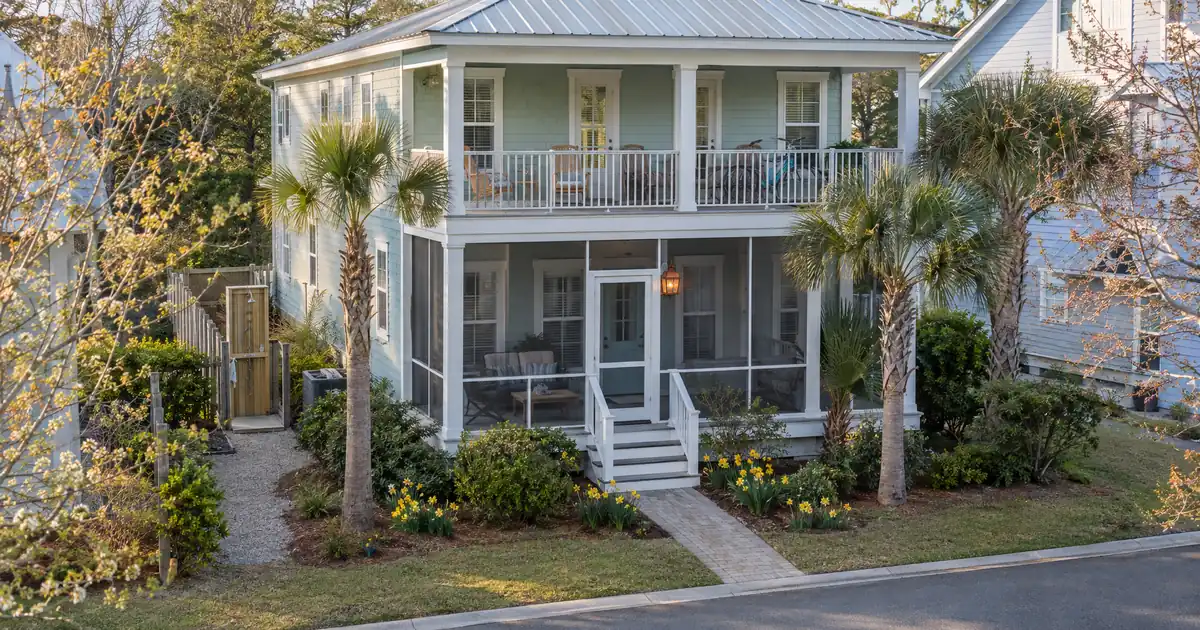
The Quick Read: The right program above $1 million is the one whose leverage, income method, and credit tiers still fit your file once the new loan crosses each size band, because on most DSCR programs the loan amount, not the property value, sets how much cash you can pull. Across the wholesale network Lendmire works with, short-term rental cash-out typically tops out around 70% LTV, and the short-term rental income path stops at a $2,000,000 loan. All of this is subject to lender guidelines and is not a commitment to lend.
- Loan size sets the ladder. On standard rentals, cash-out leverage typically steps down from 75% to 70% to 60% as the new loan grows past $1M and $1.5M.
- Short-term rental collateral has its own ceiling. Cash-out on short-term rentals typically stops at about 70% LTV, so the $1M line matters less for you than the $1.5M line.
- Income is documented, then discounted. Expect about 12 months of operating history, counted at roughly 80% of gross.
- Coverage must clear 1.00 on a refinance. That is a floor for select programs, not a measure of cash flow.
- Credit and reserves scale with size. The strongest tiers want higher scores, and cash-out proceeds never count toward reserves.
Key Terms Defined
Cash-out refinance: a new loan that pays off your current mortgage and puts the leftover equity in your hands. Paying off a non-purchase-money second lien also counts as cash-out, even if no cash comes back.
DSCR (debt service coverage ratio): monthly rental income divided by the monthly housing obligation. A 1.00 means the income exactly matches the obligation.
PITIA: principal, interest, taxes, insurance, and association dues. It is the payment side of the DSCR math.
LTV (loan-to-value): the new loan as a percentage of the appraised value.
Seasoning: the time you have owned the property or held the current loan before a lender will allow cash-out. About 6 months is the common expectation.
Operating history: the record of paid stays at your rental, usually shown through platform payouts that match your bank deposits.
Reserves: liquid savings, counted in months of PITIA, that you hold after the loan funds.
DSCR Cash-Out Calculator
Run the cash-out numbers in your market
Rate source: Freddie Mac 30-yr average via FRED® — Federal Reserve Bank of St. Louis · effective Oct 29, 2026
Prefilled with starting assumptions — enter your property’s value, balance, taxes, and insurance for a more accurate picture.
Program parameters update from Lendmire’s centralized guideline source. Taxes and insurance are editable estimates.
As of Oct 29, 2026 · General Freddie Mac market benchmark, not a Lendmire loan offer. Property value, balance, taxes, and insurance are editable estimates. Maximum loan-to-value varies by lender, program, property type, and seasoning. Not a Loan Estimate, approval, or commitment to lend. Program availability and eligibility are subject to lender guidelines, credit approval, property review, and underwriting.
What Does “Best Program” Mean on a High-Balance File?
There is no single best program. The best one for your file is the program whose rules fit your property, your credit, and your goal for the cash. Lendmire is a mortgage broker, so it does not originate these loans itself. It shops a network of wholesale DSCR lenders and matches the scenario to the program.
Six things separate programs on a large short-term rental file:
1. How much leverage the lender allows at your loan size.
2. How it counts short-term rental income.
3. Whether it accepts short-term rental income at your balance at all.
4. The credit tier you need for that size band.
5. How many months of reserves it wants.
6. How it treats cash-out proceeds and second liens.
Large balances are a real part of this market. HousingWire reports, citing a major bank’s research arm, that loans above $1M make up about 28% of new non-QM production, and loans above $1.5M about 15%. The same article names cash-out refinances and multiple loans to one borrower as drivers of rising delinquencies in older loan vintages. That is a plausible reason lenders cut leverage as the balance climbs. It is context, not a rule you can look up.
DSCR loans are designed for non-owner-occupied investment properties. Because they are business-purpose investor loans, they are reviewed differently from a standard owner-occupied mortgage. Investor and DSCR loans were also over 35% of non-QM production in a recent month, according to Stacker and KRDO’s analysis of Optimal Blue data.
How Underwriting Treats Your File, Step by Step
Here is the sequence a lender in the network follows. Each step can cap your cash, and the tightest one wins.
1. Pick the loan size. The new loan amount, not the property value, decides the leverage band. A loan that crosses $1M or $1.5M can release less cash than a slightly smaller one.
2. Prove the income. The refinance path uses about 12 months of operating history. You show platform payouts tied to bank deposits, plus proof that permits, insurance, and HOA rules allow paid guests.
3. Discount the income. The lender counts roughly 80% of gross short-term rental income before it runs the ratio.
4. Run coverage on the new payment. The refinance floor is typically 1.00. The new loan is bigger than the old one, so the payment side rises with the cash you take.
5. Appraise. The appraisal sets value for LTV. A one-unit property uses the rent form 1007, and a two-to-four-unit property uses the operating income form 1025.
6. Check credit, reserves, and vesting. Your score is tested against the band. Reserves are commonly around 6 months of PITIA. You can typically vest in your own name or in an LLC, subject to lender program eligibility.
Cash-out is sized by the lower of two tests: the leverage cap and coverage on the new, larger payment. A strong ratio can improve terms, but it does not lift a leverage ceiling. The strongest files clear both tests, enough equity and enough rental coverage.
The Loan-Size Ladder Above $1 Million
Cash-out leverage falls in steps as the new loan grows. These are typical ranges across select lenders in the network, not guarantees.
| New loan size | Standard rental cash-out | Short-term rental cash-out | Top-tier score (standard) |
|---|---|---|---|
| Up to $1M | 75% LTV | About 70% LTV | 660 |
| $1M to $1.5M | 70% LTV | About 70% LTV | 700 |
| $1.5M to $2M | 60% LTV | Likely 60% (lower of two) | 720 |
| $2M to $3M | 60% LTV | Not on short-term income path | 720 |
| Above $3M | Not offered | Not offered | None |
Three details change how you read that table.
First, the short-term rental ceiling and the size ladder are separate limits. A short-term rental loan between $1.5M and $2M sits under both the roughly 70% short-term rental cap and the 60% size band. The tighter figure should govern. A broker confirms the exact number for your scenario before you plan around it.
Second, the $1M line is less dramatic for a short-term rental than for a long-term one. A standard rental drops from 75% to 70% LTV at that line. Your cash-out was already capped near 70% LTV, so the real cliff sits at $1.5M. Leverage, reserves, and pricing vary by lender and program; the final terms follow the full file review.
Third, proceeds have their own cap. Cash-out proceeds are unlimited at or below 60% LTV and capped at $1.5M above 60%. Cash-out proceeds also never count toward your reserves. Lenders want the reserves to exist separately from the money the refinance releases. Terms vary by lender guidelines, property type, leverage, credit profile, and full file review.
Credit works the same way. The 640 short-term rental floor is the entry point. The strongest leverage in the larger bands is reserved for higher scores, roughly 700 above $1M and 720 above $1.5M on the top tier. A borrower at 680 or below should not expect cash-out above $1.5M.
How Short-Term Rental Income Gets Counted
Lenders in the network do not take your nightly rate times 30 as rent. They count history. On a refinance, that means about 12 months of operating history, counted at roughly 80% of gross. The discount covers the fact that gross bookings are not the same as dependable income.
The appraisal rent form does not price nightly stays. Fannie Mae’s appraiser update says Form 1007 needs monthly-lease comparables and cannot estimate a nightly short-term rental fee.
Programs differ here, and the difference matters. A conservative program that counts only long-term rent can fail a strong Airbnb. A program that accepts documented short-term income can pass the same property. Part of the broker’s job is steering you toward the second kind. If the short-term market is weak, the long-term rent may become the number that clears.
Short-term rental rules can vary by city, county, HOA, and property type, so investors should confirm local rules before relying on projected rental income. An HOA or county rule can wipe out the income a lender is willing to count.
Worked Example at Jumbo Size
Run the numbers on a modeled owner with an established short-term rental. The inputs below are assumptions for illustration, not market data.
- Income: 12 months of documented hosting history, counted at 80% of gross.
- Score: 700.
- Goal: the largest cash-out the file supports.
Test one, equity. The cash-out cap is about 70% LTV for short-term rental collateral. In a first draft, the owner asks for the full 70%, and the new loan lands in the $1M to $1.5M band. Exact terms depend on the lender’s guidelines, property type, leverage, and a full review of the borrower’s file.
Test two, coverage. At that loan size, coverage on 80% of gross comes out around 0.98x. That fails a 1.00 refinance floor. The bigger payment ate the cushion.
Test three, fix it. The owner trims the draw. The loan shrinks, the payment shrinks, and coverage rises to roughly 1.06x. The file now clears equity, coverage, and credit.
The lesson is that coverage, not equity, was the binding constraint. A bigger cash-out lowers the ratio, so the maximum cash the equity allows is not always the cash you can actually get. A select-lender path exists for coverage below 1.00, with leverage and terms adjusted.
Many DSCR files on larger short-term rentals have a pattern. The equity math looks fine on a napkin, then the discounted income pushes the ratio below the floor on the new, larger payment. Running the coverage test before choosing the draw saves the most rework.
Structures and Variations That Exist
The spine of these programs is the 30-year fixed. Extended terms such as a 40-year schedule and interest-only periods are available through select lenders in the network, and ARM structures exist for investors who want them. An interest-only period lowers the payment on paper and can lift the DSCR. It does not change the leverage cap or the credit floor.
Other variations are worth knowing.
- Rate-and-term refinance. If you only replace the existing loan and take no cash, short-term rental leverage runs around 70% LTV on a refinance, and the 1.00 floor still applies. This is the cleanest route when you do not need proceeds.
- Paid-off property. A property with no mortgage can still be cashed out. It follows the same ladder, and the size of the new loan decides the band.
- Two to four units. The appraisal uses Form 1025, and part of the income can come from long-term leases.
- Different credit tiers. Some programs in the network start at 620 for other property types, and most want around 660. For short-term rentals the network expects 640 or better. Every figure here varies by lender and program — guidelines, property type, leverage, and credit profile all apply.
Where the General Rule Breaks
The loan is above $2,000,000. The short-term rental income path ends at a $2,000,000 loan. A larger balance cannot use short-term income on that path. It needs a different income method, and the standard-rental ladder then applies.
You have no hosting history. A first-year host typically runs into the 12-month expectation. Lenders may want a full year of income, may rely on long-term market rent, or may cap the cash-out lower. Waiting until the history is on paper often produces the better file.
A second lien gets paid off. Paying off a non-purchase-money second makes the transaction a cash-out. That can push the new loan across a band line and drop your leverage.
Each property is tested alone. The lender tests each property’s own income against its own payment. A strong short-term rental cannot rescue a weak one in your portfolio.
The property type is not eligible. Manufactured homes, log homes, and barndominiums are not offered through the network’s DSCR programs, however good the nightly rate looks.
Prepayment terms on the loan you are replacing can change the math. Many DSCR loans carry a prepayment penalty. Check the payoff terms on the loan you are leaving before you count the proceeds.
What To Do When the File Does Not Fit
This table shows the common situations and where the file usually goes next.
| Situation | Usual best path | Trade-off |
|---|---|---|
| Ratio falls below 1.00 | Smaller draw or interest-only | Less cash |
| Loan lands just over a band line | Trim to stay under the line | Smaller proceeds |
| Loan above $2M | Long-term rent underwriting | Short-term income unused |
| Under 12 months of history | Wait, or rate-and-term only | Delay |
| Score under the band minimum | Smaller loan in a lower band | Lower leverage |
Staged draws across several properties can also work. Each property is tested alone, so a set of moderate cash-outs may be easier to place than one very large one. Lendmire’s piece Best Short-Term Rental Cash-Out Refinance Program Above the Usual Loan-to-Value Cap shows how leverage ceilings interact with size.
A full-documentation bank jumbo loan is the other main alternative. It is reviewed around personal income and tax returns instead of property income. That suits owners with strong, documentable personal income who want a bank relationship. A DSCR loan suits owners whose income is complicated or whose property is the stronger story. DSCR programs qualify primarily on property-level rental income covering the payment, subject to lender guidelines.
When Cash-Out Is the Wrong Tool
Clearing 1.00 is not the same as positive cash flow. DSCR compares rent to PITIA only, so repairs, vacancy, management, utilities, and capital expenses sit outside the calculation. A property that clears the floor by a hair can still lose money month to month.
Cash-out is also a poor fit when:
- Coverage already sits near the floor, because a bigger loan will push it under.
- Income swings heavily by season and the discounted number is a best-case year.
- You have no clear use for the proceeds that will earn more than the new debt costs.
The conservative move is to take the smaller draw that leaves real cushion in the ratio. Most owners who regret a cash-out regret the size, not the decision to refinance.
Frequently Asked Questions
Can a short-term rental get a cash-out above $1 million?
Yes, up to a $2,000,000 loan on the short-term rental income path. Cash-out leverage on short-term rental collateral typically tops out around 70% LTV, and loans between $1.5M and $2M likely fall to about 60%. You also need about 12 months of operating history and a score of 640 or better, subject to lender guidelines.
Do cash-out proceeds count as reserves?
No. Reserves are commonly around 6 months of PITIA and must come from other liquid assets. Larger loans typically step up to higher reserve counts. The lender wants proof you can carry the property without the money the refinance releases.
Does a first-year short-term rental qualify?
It is harder. The network typically expects about 12 months of hosting history on a refinance. With less history, lenders may want a full year of income, may use long-term market rent, or may cap the cash-out lower. Waiting for the history is often the cleaner route.
Is the discounted income the same as my take-home?
No. Lenders count about 80% of gross short-term income, but that is a qualification number, not a profit figure. Your real cash flow also depends on repairs, vacancy, management, and utilities, none of which are in the DSCR calculation.
Can I hold the property in an LLC?
Often yes, subject to lender program eligibility. Many programs in the network allow vesting in an individual name or an entity, but guarantor and credit rules still apply, and you should confirm the structure before you apply.
Next Step
If you are buying or refinancing a rental property and want to see how the numbers work, Lendmire can help you compare DSCR loan options based on the property income, credit profile, leverage, and investor goals. For the broader picture, start with the complete DSCR loans guide, or reach the team at 828-256-2183.
For how equity extraction works on an investment property, see Lendmire’s guide to cash-out refinance on an investment property.
About Lendmire
Lendmire (NMLS# 2371349) is a mortgage brokerage focused on DSCR investor financing, helping arrange programs through wholesale and investor-lending channels in 41 markets, including Washington, D.C. DSCR loans are evaluated by the lender on property cash flow rather than personal income, subject to lender guidelines, supporting LLC closings and accommodating investors with four or more financed properties. Scotsman Guide Top Mortgage Workplace in both 2025 and 2026.
Get Started
Ready to find the right loan for you?
See your offer in seconds. No credit pull, no obligation.
Informational only. Not a Loan Estimate, approval, or commitment to lend. Program availability and eligibility are subject to lender guidelines, credit approval, property review, and underwriting.
References
1. HousingWire
3. Fannie Mae Appraiser Update
This article is part of Lendmire’s investment property cash-out refinance program — full qualification details, guidelines, and scenarios live on the program page.
Related reading: How Lenders Underwrite a Short-Term Rental Cash-Out Refinance After Moving Out
Brandon Miller
Founder & CEO, Mortgage Loan Originator, Lendmire LLC
- Mortgage Loan Originator · NMLS# 1129696 · Verify on NMLS Consumer Access
- North Carolina Real Estate Broker · License# 343312 · Verify on NCREC
- North Carolina Insurance Producer · License# 19053198 · Property, Casualty, Life, Health · Verify on NAIC SBS
- Lendmire LLC · Firm NMLS# 2371349 · Verify firm licensure
Disclosures. The information presented in this article is general market commentary, not financial, legal, or tax advice. Lendmire is a mortgage brokerage (NMLS# 2371349) — not a direct lender or depository institution — and loan placement is subject to lender underwriting. Nothing in this content represents a commitment to lend. Loan terms, pricing, and program availability vary based on borrower qualifications, property characteristics, and state of subject property, and are subject to change at any time. Lendmire complies with Equal Housing Opportunity requirements. Consumer access: nmlsconsumeraccess.org.