
The Quick Read: It depends on which of two limits is smaller: the value limit, which is appraised value times about 70% on short-term rental collateral, or the coverage limit, which is the loan your lender-counted rent can carry at a 1.00 floor, with payoff, closing costs, and reserves then coming out of the check. In a ski town, the coverage limit often binds first.
- Value limit: Across the wholesale network Lendmire places files with, short-term rental cash-out typically tops out near 70% LTV. A standard long-term rental on a cash-out typically tops out near 75%.
- Coverage limit: The appraiser’s rent opinion reflects monthly leases, not nightly income, and ski income swings by season. That is why rent coverage so often caps the loan before value does.
- Gross versus net: Gross cash is the new loan minus your existing payoff. Net cash is lower after closing costs, any prepayment charge on the old loan, and reserves.
- Typical gates: Expect a 640+ credit score, about 12 months of hosting history, about 6 months of ownership, and a 1.00 coverage floor on the refinance, all subject to lender guidelines.
Nothing here is a commitment to lend, and every file is underwritten on its own facts.
DSCR Cash-Out Calculator
Run the cash-out numbers in your market
Rate source: Freddie Mac 30-yr average via FRED® — Federal Reserve Bank of St. Louis · effective Nov 5, 2026
Prefilled with starting assumptions — enter your property’s value, balance, taxes, and insurance for a more accurate picture.
Program parameters update from Lendmire’s centralized guideline source. Taxes and insurance are editable estimates.
As of Nov 5, 2026 · General Freddie Mac market benchmark, not a Lendmire loan offer. Property value, balance, taxes, and insurance are editable estimates. Maximum loan-to-value varies by lender, program, property type, and seasoning. Not a Loan Estimate, approval, or commitment to lend. Program availability and eligibility are subject to lender guidelines, credit approval, property review, and underwriting.
What Decides Your Number?
Two tests run side by side, and the smaller loan wins. The value test asks how much the property is worth and what share of that value a lender will lend against it. The coverage test asks whether the rent the lender counts can carry the new payment.
Leverage is the share of value borrowed. On a cash-out of a short-term rental, most programs in the network stop near 70% of appraised value. On a standard long-term rental, the cash-out cap is typically near 75%. That five-point gap sounds small. On resort property, where values run high, it removes a meaningful slice of the possible check.
Here is the walkthrough from value to net cash. It uses percentages and labels only, because the calculator on this site does the dollar conversion.
| Step | What happens | Effect on your check |
|---|---|---|
| 1. Value limit | Appraised value × about 70% (STR collateral) | Sets a loan ceiling |
| 2. Coverage limit | Loan the counted rent supports at the floor | May lower the ceiling |
| 3. New loan | The smaller of steps 1 and 2 | Starting point |
| 4. Payoff | Subtract the old loan and any junior liens | Gross cash |
| 5. Costs and reserves | Closing costs, prepayment charge, reserves | Net cash |
Reserves are the cash a lender wants you to hold after closing, commonly around 6 months of PITIA. PITIA means principal, interest, taxes, insurance, and association dues, which is the full monthly obligation on the property. Reserve requirements vary by lender, leverage, loan size, and transaction type, so treat 6 months as a common starting point rather than a rule.
Max LTV is not max proceeds. A rate-and-term refinance can run at higher leverage than a cash-out, but it returns no cash. The moment cash comes back to you, the lower cash-out cap applies.
Why Does Coverage Bind First in a Ski Town?
Coverage binds first because the document that sets value does not measure nightly income. The appraiser reports a value and, usually, an opinion of long-term rent. The lender then decides what income counts.
Form 1007 is the one-unit rent schedule, and Form 1025 is the equivalent for two-to-four-unit properties. McKissock, an appraiser-education publisher, explains that the 1007 documents monthly market rent from comparable monthly leases and cannot be used to determine or document short-term rental rates. Fannie Mae appraiser guidance, as hosted by the Nevada Real Estate Division, makes the same point: the form was not designed for short-term rentals, and treating that income as rental income or business income is the lender’s call. Those sources explain the form. They do not set the rules for DSCR loans.
Appraisal practice is also shifting. HousingWire reports that the new UAD 3.6 data standard will retire legacy forms, including the 1007. The core problem stays the same, since a long-term rent form still cannot see a nightly-rate business.
So the lender builds its own income number. For an existing rental, that means a trailing 12 months of platform or manager statements matched to bank deposits. Lenders commonly trim gross short-term income before computing coverage. The trim reduces income, but the full payment still goes in the denominator.
Then the ratio is tested at the new, larger payment. DSCR is monthly rent divided by monthly PITIA. A bigger cash-out means a bigger payment, which means a thinner ratio.
Clearing 1.00 is a program floor, not proof that the property makes money. Repairs, vacancy, management, utilities, and capital expenses all sit outside the calculation.
Two modeled resort scenarios
These are hypothetical, built to show the mechanics, not market data. Which limit binds depends on the file, and the two cases below show each outcome.
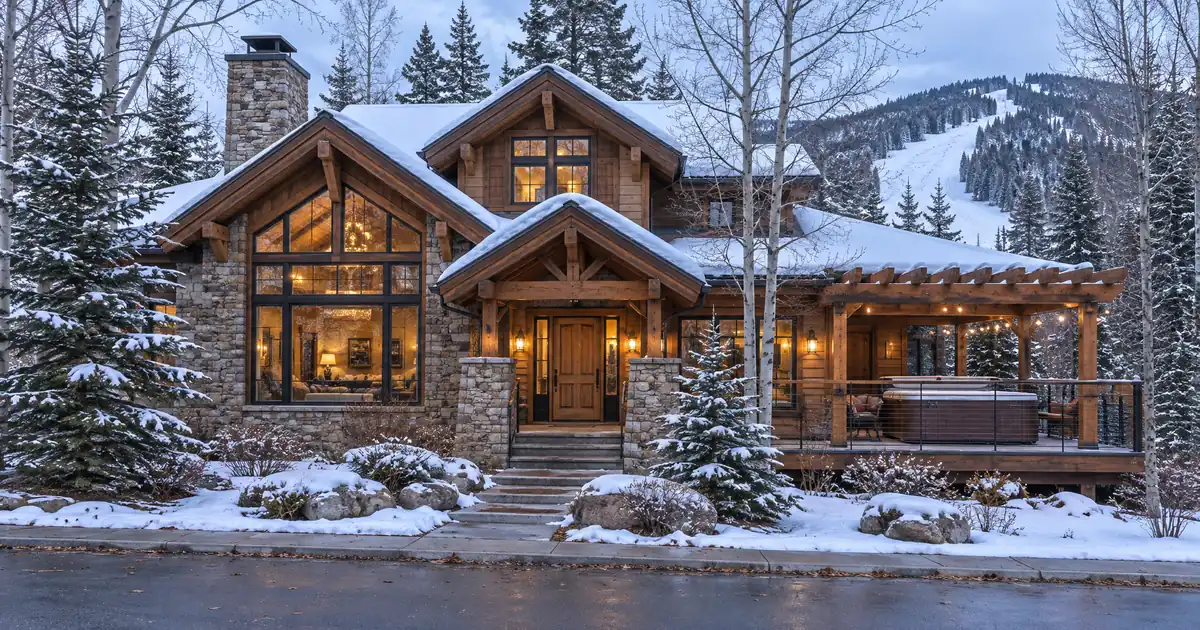
Picture a mountain cabin with a lot of equity and a strong trailing year. At the current loan, counted income clears roughly 1.3x. Pulling cash out to the full 70% value cap adds payment and slides coverage toward 1.05x. That still clears the floor, so the value limit binds and the check is as large as the program allows.
Now take a resort condo with the same equity but a lower counted income after the trim, plus association dues sitting inside PITIA. At the full 70%, coverage lands near 0.9x. Here the coverage limit binds, so the lender sizes a smaller loan. The check shrinks even though equity is ample.
Some borrowers in that second position look at a different path. A separate select-lender option takes coverage below 1.00, with leverage and terms adjusted. It is a different program from the 1.00-floor path above, and it usually means less cash out, not more.
What Does Ski Seasonality Do to the Check?
Seasonality does not change the cap, but it changes the income that gets counted. Lenders look at a full trailing year, so one strong winter alone does not qualify a cabin.
AirDNA notes that ski towns peak roughly from December through March. In its analysis of one recent year of data, ski-in/ski-out three-bedroom homes averaged $507 per night in winter, against $300 for comparable homes not on the slopes. That premium is real, and it shows up in your statements.
The risk runs the other way too. AirDNA’s seasonality trap warning describes a town that is booked solid in February and nearly empty in July. A full-year average absorbs both.
The practical lesson: a big February does not rescue a weak spring and summer on paper. If you want a bigger check, the strongest move is often clean, consistent statements across all twelve months.
Size the cash-out for the slow months, too. Your payment arrives every month, including the shoulder seasons. Lendmire’s guidance is to pull the cash you need, not the ceiling.
Which Resort Property Types Change the Math?
- Resort condos and condotels: They are common in resort cores and are often non-warrantable. The building must allow rentals, the lender must accept the project type, and association dues sit inside PITIA. Leverage on these can run below the standard short-term rental cap, so confirm the project type before you assume 70%.
- Two-to-four-unit properties: They use Form 1025, which also does not capture nightly income. A narrative income supplement may be needed.
- Log homes and barndominiums: Mountain markets have plenty of log-built cabins. Log homes, along with manufactured homes and barndominiums, are not offered in the network’s DSCR programs.
- Local rules: Short-term rental rules can vary by city, county, HOA, and property type, so confirm local rules before relying on projected rental income.
Two Clocks: Ownership and Hosting History
Ownership seasoning and hosting history are separate clocks. Seasoning is the waiting period a lender wants between buying a property and cashing out on it. Most of the network expects about 6 months of ownership, counted from title. Before that point, many lenders size the loan on the lower of appraised value or your cost basis.
Hosting history is the documented operating record of the rental itself. Short-term rental cash-out typically expects about 12 months of it. An investor who has owned for six months but hosted for three may find fewer options. Paths that skip full hosting history usually fall back to the appraiser’s market rent, and that long-term figure can leave coverage low even when bookings are strong.
What Documents Does the Lender Want?
Expect this stack on a short-term rental cash-out:
- Twelve months of Airbnb, VRBO, or property-manager statements, matched to bank deposits.
- A current appraisal, ordered through the lender.
- Credit that meets the program floor, typically 640 or better for short-term rental collateral.
- A current mortgage statement showing the payoff and any junior liens.
- Insurance and, for condos, the association’s budget and rental policy.
The loan is reviewed primarily on property-level rental income covering the payment, subject to lender guidelines. That is not the same as skipping paperwork. A market-data projection from a tool like AirDNA is used mainly when there is no hosting history, which is the purchase case more than the cash-out case.
What If the Number Comes Back Too Small?
You have options, and they are not all equal.
1. Take less cash. A smaller loan raises coverage and often clears a ratio that the full cap would miss.
2. Wait for history. More months of hosting statements improve the income the lender can count.
3. Pay down or restructure. Interest-only periods and extended terms are available through select lenders in the network, and they change the payment that coverage is tested against.
4. Revisit the select-lender path. If coverage still falls short, ask a loan officer whether that sub-1.00 option fits your file.
5. Rethink the use of funds. If the cash is for another purchase, a smaller check may still cover the down payment.
Key Terms Defined
Cash-out refinance: A new, larger loan that pays off the old one and returns the difference to you.
Coverage ratio (DSCR): Monthly rent the lender counts, divided by the full monthly payment on the property.
Seasoning: The waiting period a lender wants after you buy before you can cash out.
Net proceeds: The check you actually receive after payoff, closing costs, any prepayment charge, and reserves.
Frequently Asked Questions
Will the appraiser count my Airbnb income?
No. The appraiser reports value and usually a long-term rent opinion. The lender decides what income counts, based on your trailing statements. That is why a hosting record matters more than the appraisal for this part of the file.
Does a ski-in/ski-out location raise my cash-out?
It can raise value, which lifts the value limit. It only raises the coverage limit if the premium shows up in your documented income over the full year. A winter premium offset by a weak off-season may add little.
Can I cash out if I bought the property recently?
Usually only after about 6 months of ownership, and the program also expects about 12 months of hosting history. Before the seasoning point, many lenders size the loan on the lower of appraised value or cost basis. That often leaves little equity to pull.
Is the maximum LTV the amount I will receive?
No. Max LTV is a ceiling. Coverage, payoff, closing costs, and reserves all cut the check, and the cash received is not a guaranteed figure until the lender completes review.
Can a resort condo cash out at the same 70%?
Not always. Resort condos are often non-warrantable, and the lender must accept the project type. Association dues also raise PITIA, which lowers coverage. Confirm the building’s rental rules and project status before assuming the standard short-term rental cap.
Where to Go From Here
The best next step is to see how your counted income, leverage, and reserves interact before you choose a target. The complete DSCR loans guide walks through the full framework.
If you are buying or refinancing a rental property and want to see how the numbers work, Lendmire can help you compare DSCR loan options based on the property income, credit profile, leverage, and investor goals. Lendmire is a mortgage broker arranging financing through select lenders in its wholesale network across 41 markets, including Washington, D.C.
For the mechanics of pulling equity out of a rental property, see Lendmire’s guide to cash-out refinance on an investment property.
About Lendmire
Lendmire — NMLS# 2371349 — is a mortgage brokerage specializing in DSCR investor loans, helping arrange financing across 41 markets, including Washington, D.C., through wholesale and investor-lending channels. The model centers on property-level rental income reviewed by the lender rather than W-2 documentation, subject to lender guidelines, suiting entity-owned and multi-property investors. Lendmire holds Scotsman Guide Top Mortgage Workplace recognition for 2025 and 2026.
Get Started
Ready to find the right loan for you?
See your offer in seconds. No credit pull, no obligation.
Informational only. Not a Loan Estimate, approval, or commitment to lend. Program availability and eligibility are subject to lender guidelines, credit approval, property review, and underwriting.
References
1. McKissock
2. Nevada Real Estate Division
3. HousingWire: short-term rentals and the appraisal playbook
4. AirDNA: winter amenities and ski-in/ski-out bookings
5. AirDNA: measuring Airbnb demand and the seasonality trap
This article is part of Lendmire’s investment property cash-out refinance program — full qualification details, guidelines, and scenarios live on the program page.
Related reading: Short-Term Rental Cash-Out Refinance vs Long-Term Rental Loan With a 660 Credit Score · Top Short-Term Rental Cash-Out Refinance Providers to Go Fixed
Brandon Miller
Founder & CEO, Mortgage Loan Originator, Lendmire LLC
- Mortgage Loan Originator · NMLS# 1129696 · Verify on NMLS Consumer Access
- North Carolina Real Estate Broker · License# 343312 · Verify on NCREC
- North Carolina Insurance Producer · License# 19053198 · Property, Casualty, Life, Health · Verify on NAIC SBS
- Lendmire LLC · Firm NMLS# 2371349 · Verify firm licensure
Compliance and disclosures. Lendmire (NMLS# 2371349) is a licensed mortgage broker and is not a direct lender, depository institution, financial advisor, or tax professional. Content in this article is general market analysis and educational information — not financial, legal, or tax advice for any specific situation. Lendmire does not guarantee loan approval; every transaction is subject to underwriting by the funding lender. Mortgage pricing and loan program guidelines are subject to change at any time without notice and vary by borrower characteristics, property type, and state regulations. Lendmire complies with Equal Housing Opportunity. Licensure verification: NMLS Consumer Access.