
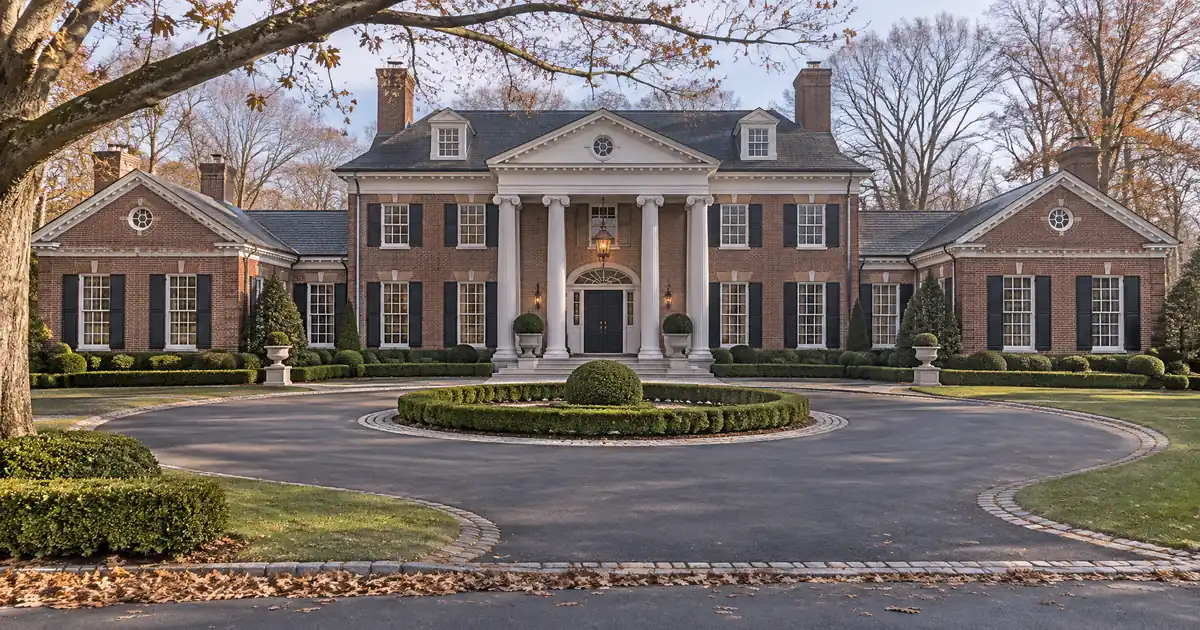
The Quick Read: The right program for a cash buyer depends on the loan size you need, because leverage steps down as the balance grows, cash-out stops entirely above $3,000,000, and the property’s rent must still cover the new monthly payment even though you bought without a mortgage. Lendmire, a mortgage broker, matches the file to a program across its wholesale network of investor lenders. Every figure below is a ceiling that is subject to underwriting.
- On a cash-out refinance of an investment property, leverage tops out at 75% on loans up to $1,000,000 and drops to 60% on loans from $1,500,000 to $3,000,000.
- Above $3,000,000 the network offers no cash-out. Larger loans are purchase or rate-and-term only, and anything above $4,000,000 is reviewed case by case.
- Rent coverage still decides the file. A coverage ratio of 1.00 earns full leverage, and interest-only terms can help at large balances.
- Loans above $2,000,000 need two appraisals. Reserves run six months on the subject property, and the cash you pull out never counts toward them.
- Whether a program sizes your loan on documented purchase cost or on the appraisal varies by lender, so confirm it before you apply.
Key Terms Defined
Super jumbo is an informal label for loans far above the standard conforming size. No law defines it. Each lender sets its own tier and overlays.
DSCR (debt service coverage ratio) is the property’s monthly rent divided by its monthly debt service. Debt service means principal, interest, taxes, insurance, and any HOA dues. The loan is reviewed primarily on property-level rental income covering the payment, subject to lender guidelines.
Cash-out refinance is a new loan on a property you already own, sized so that some of the proceeds come back to you as cash.
Seasoning is the waiting period a lender wants between buying a property and refinancing it. Programs count it differently.
Delayed financing is a refinance right after a cash purchase that sizes the loan on your documented cost instead of waiting out seasoning. The term comes from agency lending. DSCR programs write their own versions.
Reserves are liquid funds the lender wants you to hold after closing. They are counted in months of the property’s payment.
PITIA and ITIA are the full monthly payment (principal, interest, taxes, insurance, association dues) and the interest-only version of it (without principal).
Business-purpose loan is financing for a non-owner-occupied rental. DSCR loans are designed for investment properties, so they are reviewed differently from an owner-occupied mortgage.
How Does the Cash-Out Work After an All-Cash Purchase?
Think of the file as six steps. The all-cash purchase changes steps one and two. It does not remove steps three through six.
1. Buy with true cash. The purchase should be arm’s length, with no mortgage, seller financing, or hard-money lien at closing. A hard-money or bridge purchase may not count as cash, so confirm with the program. A lien placed on the property after you buy can also void a cost-based route.
2. Pick the sizing basis. Inside the seasoning window, a program that offers a delayed-financing-style option sizes the loan on documented cost. That means the settlement statement plus permitted costs. After seasoning, the appraisal sets the value.
3. Document the file. Expect the settlement statement showing no financing, proof of where the purchase funds came from, title and vesting evidence, and lease or rent evidence. The appraiser also prepares a rent schedule, on the 1007 form for single-family homes or the 1025 form for two-to-four units.
4. Run the normal coverage test. A cash purchase can waive a waiting period. It does not waive rent coverage, credit, reserves, or the appraisal.
5. Size by tier. Loan size sets the leverage ceiling, the appraisal count, and the credit needed for top leverage. The next section shows the ladder.
6. Structure and close. The loan is structured as a cash-out refinance, so the cash-out leverage limits apply.
The mechanics sit in Lendmire’s complete DSCR loans guide. This article covers what changes when the balance gets large and the purchase was cash.
What Does the Leverage Ladder Look Like by Loan Size?
Leverage falls as the balance rises, and cash-out falls faster than purchase. The table shows the best available ceiling in each band at a coverage ratio of 1.00 or higher, through select wholesale programs, subject to underwriting. The bands are loan amounts, not purchase prices. Multiply your price by the leverage first, then read the band for that loan.
| Loan band | Purchase | Rate-and-term | Cash-out |
|---|---|---|---|
| $150K–$1M | 80% | 80% | 75% |
| $1M–$1.5M | 75% | 75% | 70% |
| $1.5M–$2M | 75% | 75% | 60% |
| $2M–$3M | 75% | 75% | 60% |
| $3M–$4M | 65% | 65% | — |
| $4M–$6M (on review) | 60% | 60% | — |
| $6M–$10M (on review) | 60% | 60% | — |
Credit works differently from the table. The program floor is 660 on loans up to $3,000,000. Above $3,000,000 the super-jumbo overlay sets the floor at 700. The top cell in each band needs a score of its own. In the first band, the top cell needs 660 or better. In the $1,000,000 to $1,500,000 band, it needs 700 or better. From $1,500,000 to $3,000,000, the top cell needs 720 or better. Above $3,000,000, it needs 700 or better. A lower score takes a lower leverage cell inside the same band.
Cash-out carries its own rules. Proceeds are unlimited at or below 60% LTV. Above 60%, proceeds are capped at $1,500,000. There is no cash-out above $3,000,000, and none for borrowers with 680 or lower credit above $1,500,000. Above $4,000,000, every request is reviewed case by case before submission, so treat those percentages as targets for that conversation, not promises. Terms vary by lender guidelines, property type, leverage, credit profile, and full file review.
Why Does Super Jumbo Change the Math?
Large balances stress rent coverage more than they stress credit. A luxury property’s rent usually does not rise as fast as its price, so a bigger loan produces a thinner coverage ratio. Lenders measure that ratio on the full monthly payment, so a 1.00 or better ratio at 60% leverage can disappear at 75%.
Three levers matter here. Lower leverage improves coverage. Interest-only terms help too, because the payment excludes principal. Through select programs, the network offers a 120-month interest-only period on 30- and 40-year terms, up to 75% leverage, qualified on the interest-only payment. Higher rent documentation, such as a signed lease at market, is the third lever. Exact terms depend on the lender’s guidelines, property type, leverage, and a full review of the borrower’s file.
The super jumbo line itself is a lender convention. The federal conforming limit is the only official line nearby. HousingWire reports that the one-unit baseline rose 3.25% to $832,750, with high-cost areas reaching $1,249,125. That limit governs agency loans. DSCR loans are non-QM investor loans, so they are not capped by it. Lenders set their own jumbo and super jumbo tiers above it, which is why the ladder above begins its steepest steps at $1,500,000 and again at $3,000,000.
Cost Basis or Appraisal: How Is Your Loan Sized?
Delayed financing is the idea that a cash buyer should be able to recover the purchase cost without waiting. It began in agency lending, where the Fannie Mae Selling Guide’s cash-out refinance section is the origin of the term. That rule governs agency loans only. DSCR programs set their own versions, and some offer none.
Here is the part most cash buyers miss at this size. At super jumbo balances, the leverage ceiling usually binds before the cost basis does. If a program lets you borrow up to your documented cost, but the cash-out ceiling is 60% of value, the 60% limit controls. You recover a share of your cash, not all of it. Waiting out seasoning helps only when the appraisal comes in above what you paid.
Run the numbers on a modeled $4,000,000 all-cash purchase. These are assumptions, not market data. At the 60% ceiling, the resulting loan sits in the $2,000,000 to $3,000,000 band, so two appraisals apply. Here is how the appraisal changes the loan size, as a share of what you paid:
- Appraisal 10% above cost: the loan can reach about 66% of cost on an appraisal-based sizing.
- Appraisal at cost: the loan is 60% of cost.
- Appraisal 10% below cost: the loan falls to about 54% of cost.
- After seasoning with value up: the appraisal captures the gain that a cost-based loan would have left uncaptured.
Because the loan is a fixed percentage of value, every point the appraisal misses comes straight out of your proceeds. That is why two appraisals above $2,000,000 matter. If they disagree, plan on the lower figure.
Seasoning rules vary widely across programs, from none to a year or more. Ask each program whether a documented cash purchase is treated as a cost-basis transaction, what costs it allows, and whether it applies at your loan size. If a program does not offer cash-out above a given balance, delayed financing is not available there either.
DSCR vs. conventional financing
There are two common ways to finance an investment property, and they qualify you differently — here’s how investors weigh them.
Why investors choose it
- Qualifies on the property’s rental income — no personal tax returns, W-2s, or pay stubs needed to document income.
- No personal debt-to-income ceiling to clear, so existing mortgages and obligations don’t cap your borrowing the same way.
- Can be closed in an LLC, keeping the property inside a business entity.
- Built for scaling — not held to the limit on number of financed properties that conventional financing applies.
- Underwriting centers on the deal: generally qualifies when the rent covers the payment, a 1.00x coverage ratio being a common baseline (confirmed in underwriting).
- Designed specifically for investment property, including long-term and, where the program allows, short-term rentals.
Where it’s strong
- Often the lowest ongoing financing cost for a buyer who fully qualifies on personal income — a fit for a first property or a cost-first purchase.
Trade-offs for investors
- Requires full personal income documentation and must fit within a debt-to-income limit — salary, existing debts, and other mortgages all count.
- Typically held in your personal name rather than a business entity.
- Caps how many financed properties you can carry, which can become a ceiling as a portfolio grows.
- Evaluates you as a borrower as much as the property, which usually means more paperwork.
How investors usually choose: a first or single property often optimizes for the lowest financing cost; portfolio builders often optimize for leverage, vesting in an LLC, and scaling past conventional caps. The right answer depends on your goals, the property, and current guidelines — both paths run through select lenders in Lendmire’s wholesale network, with eligibility and terms confirmed in underwriting.
Where Does the General Rule Break?
Each of these cases changes the file in a specific way.
- Rehab after the cash purchase. A cost-basis route generally returns documented cost, not after-repair value. Some programs may add documented rehab spending, and many do not.
- Hard-money or bridge purchase. A payoff-only refinance may work, but extra cash usually waits for seasoning.
- Entity mismatch. If the purchase funds sat in a partnership or LLC account while the refinance is in your personal name, the paper trail breaks. Buy in the name you plan to borrow in. LLC vesting is welcome, subject to program terms, but layered entities are not.
- A property that was listed for sale. If the house sat on the market before you rented it, the lender will want that history explained. Lendmire’s article Best Super Jumbo DSCR Cash-Out Refinance Program After Taking the Property Off the Market walks through it.
- Short-term rentals. Income is based on twelve months of operating history at 80% of gross on a refinance, with coverage of 1.00 or higher and loans to $2,000,000. A house you just bought has no history. Investors need twelve months of owning income property in the last thirty-six. Municipal permission is documented per property.
- Condos. Non-warrantable condos are limited to 75% leverage and $1,500,000.
- Rural and acreage. Above $3,000,000: no rural property, and no more than ten acres on a non-rural one.
- Owner-occupied homes. DSCR is for non-owner-occupied investment property only.
The Lendmire network also permits up to 20 financed properties, so a large portfolio does not by itself disqualify a file.
Which Program Fits Which Investor?
The best program for your situation depends on loan size, leverage need, and how the rent compares to the price. A broker that shops several wholesale lenders can match the file to the program whose overlays fit. The lenders that write this business differ mainly in seasoning, cost-basis rules, and appraisal handling.
| Investor profile | Likely path | Watch for |
|---|---|---|
| Cash buyer, loan needed under $1.5M | Cash-out at 70%–75% | Credit tier for top leverage |
| Cash buyer, loan $1.5M–$3M | Cash-out at 60% | Two appraisals above $2M |
| LLC holder | Entity-vested loan | Title matches borrower |
| Needs a loan above $3M | Purchase or rate-and-term only | No cash-out; review above $4M |
| Short-term rental owner | Operating history route | $2M cap; local permission |
When Is Cash-Out the Wrong Tool?
Cash-out is the wrong tool when the loan you need exceeds $3,000,000, because there is no cash-out above that line. It is also wrong when coverage lands below 1.00, since leverage and terms adjust downward, subject to underwriting. And it can be wrong when the appraisal is likely to come in below cost, because the loan shrinks with the value.
Alternatives exist. You can take a smaller cash-out loan inside the ceiling. You can wait for seasoning so the appraisal captures appreciation. Or you can ask whether a program treats a cost-basis refinance as a rate-and-term transaction, which some do on a handful of DSCR products. Each choice trades cash today against terms and flexibility later.
What Should You Gather Before You Apply?
- Settlement statement showing the cash purchase and no financing.
- Proof of the source of the purchase funds, in the borrowing name.
- Title and vesting documents, plus entity papers for an LLC.
- Lease and deposit evidence, or twelve months of operating history for a short-term rental.
- Six months of reserves on the subject property, twelve if you are a first-time investor, held outside the cash-out proceeds.
- Credit documentation, with 0x30x24 housing history for the highest tiers.
- A list of scope-of-work receipts if you rehabbed after buying.
Frequently Asked Questions
Can I refinance right after buying a house with cash?
It depends on the program. Some treat a documented cash purchase as eligible for a cost-based loan without a waiting period. Others require seasoning and size the loan on the appraisal. Either way, rent coverage, credit, reserves, and the appraisal still apply, subject to underwriting.
How much of my cash can I get back at super jumbo size?
A share of it, not all. On a cash-out refinance of an investment property, the ceiling is 75% on loans to $1,000,000 and 70% on loans from $1,000,000 to $1,500,000. It is 60% from $1,500,000 to $3,000,000. Above $3,000,000 the network offers no cash-out.
Does the cash I take out count toward my reserves?
No. Reserves run six months of the property’s payment on the subject property, or twelve for first-time investors. Cash-out proceeds never satisfy them, so you need liquid funds outside the loan.
Can my LLC be the borrower?
Yes, subject to program terms. Entity vesting is welcome, but layered entities are not. The name on the purchase, the title, and the loan should line up so the source of funds is easy to trace.
What if I need a loan above $3,000,000?
Cash-out is not offered at that size. Purchase and rate-and-term loans are available through select programs at 65% from $3,000,000 to $4,000,000 and 60% above that on review, subject to underwriting. Credit needs to be 700 or better, with no rural property above $3,000,000.
Next Step
If you are buying or refinancing a high-balance rental property and want to see how the numbers work, Lendmire can help you compare super jumbo DSCR loan options based on the property income, the loan balance, credit profile, leverage, and investor goals. Business-purpose investment financing is arranged in 41 markets, including Washington, D.C., and nothing here is a commitment to lend.
For the mechanics of pulling equity out of a rental property, see Lendmire’s guide to cash-out refinance on an investment property.
Lendmire’s self-employed mortgages page presents both super jumbo programs, bank statement and DSCR, side by side.
About Lendmire
A non-QM mortgage broker (NMLS# 2371349), Lendmire arranges DSCR financing for real estate investors in 41 markets — 40 states plus Washington, D.C. Because deals are underwritten primarily on property cash flow rather than personal income documentation, the structure suits self-employed buyers and entity-owned portfolios. Lendmire places loans through wholesale investor lenders; it is not a direct lender. Scotsman Guide named Lendmire a Top Mortgage Workplace in both 2025 and 2026.
Get Started
Ready to find the right loan for you?
See your offer in seconds. No credit pull, no obligation.
Informational only. Not a Loan Estimate, approval, or commitment to lend. Program availability and eligibility are subject to lender guidelines, credit approval, property review, and underwriting.
References
1. HousingWire — conforming loan limit announcement
2. Fannie Mae Selling Guide B2-1.3-03, Cash-Out Refinance Transactions
This article is part of Lendmire’s super jumbo DSCR loan program — full qualification details, guidelines, and scenarios live on the program page.
Related reading: How Lenders Underwrite a Super Jumbo DSCR Cash-Out Refinance on Ten or More Rentals · Best Super Jumbo DSCR Cash-Out Refinance Program With Rent Covering Only 90% of the New Payment · Super Jumbo DSCR Cash-Out Refinance vs Portfolio DSCR Loan Before Selling
Brandon Miller
Founder & CEO, Mortgage Loan Originator, Lendmire LLC
- Mortgage Loan Originator · NMLS# 1129696 · Verify on NMLS Consumer Access
- North Carolina Real Estate Broker · License# 343312 · Verify on NCREC
- North Carolina Insurance Producer · License# 19053198 · Property, Casualty, Life, Health · Verify on NAIC SBS
- Lendmire LLC · Firm NMLS# 2371349 · Verify firm licensure
Compliance and disclosures. Lendmire (NMLS# 2371349) is a licensed mortgage broker and is not a direct lender, depository institution, financial advisor, or tax professional. Content in this article is general market analysis and educational information — not financial, legal, or tax advice for any specific situation. Lendmire does not guarantee loan approval; every transaction is subject to underwriting by the funding lender. Mortgage pricing and loan program guidelines are subject to change at any time without notice and vary by borrower characteristics, property type, and state regulations. Lendmire complies with Equal Housing Opportunity. Licensure verification: NMLS Consumer Access.