
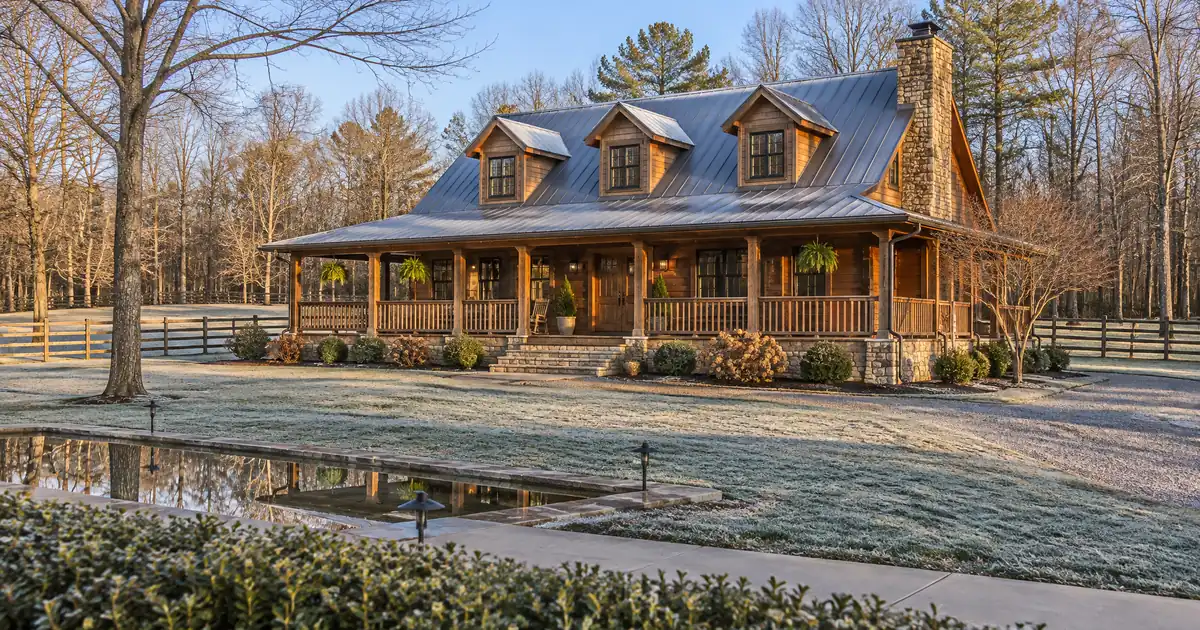
The Quick Read: A short-term rental cash-out refinance makes sense when the property is a conventional structure, hosting is legal, the documented income clears the coverage test after the new loan, and the cash has a defined job that earns more than it costs. A rural location adds appraisal and eligibility hurdles that a town property does not face.
- Leverage, credit, and hosting history all carry limits on a DSCR file: cash-out on short-term rental collateral tops out around 70% LTV, subject to lender guidelines.
- Coverage on these refinances starts at 1.00 on select programs. Clearing it does not mean the property cash flows.
- The appraisal reflects monthly lease comparables, not nightly income, so rural comps can bind before income does.
- Manufactured homes, log homes, and barndominiums are not offered in the network’s DSCR programs.
- Cash with no defined use, or a payment that leaves a thin margin in the slow season, is the clearest reason to wait.
What a DSCR Cash-Out Refinance Does on a Rural Short-Term Rental
A DSCR cash-out refinance replaces the existing loan with a larger one and returns the difference as cash. It qualifies primarily on property-level rental income covering the payment, subject to lender guidelines, rather than on the borrower’s personal income. Across the wholesale network, the ratio compares rent to PITIA: principal, interest, taxes, insurance, and any HOA dues.
DSCR Cash-Out Calculator
Run the cash-out numbers in your market
Rate source: Freddie Mac 30-yr average via FRED® — Federal Reserve Bank of St. Louis · effective Nov 5, 2026
Prefilled with starting assumptions — enter your property’s value, balance, taxes, and insurance for a more accurate picture.
Program parameters update from Lendmire’s centralized guideline source. Taxes and insurance are editable estimates.
As of Nov 5, 2026 · General Freddie Mac market benchmark, not a Lendmire loan offer. Property value, balance, taxes, and insurance are editable estimates. Maximum loan-to-value varies by lender, program, property type, and seasoning. Not a Loan Estimate, approval, or commitment to lend. Program availability and eligibility are subject to lender guidelines, credit approval, property review, and underwriting.
Short-term rentals get their own treatment because income swings by season. Rural lake, ski, and park properties can earn more nightly than they would on a monthly lease, though that depends on the property. That is the appeal. It is also why lenders ask for proof instead of projections. The complete DSCR loans guide covers the basics for readers new to the product.
Key Terms Defined
Cash-out refinance: a new, larger loan that pays off the old one and hands the investor the difference.
DSCR: the property’s rent divided by its PITIA, used as the main qualifying test.
PITIA: principal, interest, taxes, insurance, and association dues, the full monthly housing obligation.
Seasoning: the minimum time an investor has owned the property before a cash-out is available, commonly around 6 months across the network.
Hosting history: documented evidence that the property has operated as a short-term rental, usually platform statements matched to bank deposits.
How Underwriting Treats the File, Step by Step
Underwriting runs in a set order, and a file can stall at any step.
1. Eligibility screen. Property type, acreage, construction type, and legal short-term rental use come first. Income is tested after these. Short-term rental rules can vary by city, county, HOA, and property type, so investors should confirm local rules before relying on projected rental income.
2. Seasoning. Most programs want around 6 months of ownership before cash-out, documented by the settlement statement.
3. Income basis. For a short-term rental refinance, about 12 months of hosting history is the usual expectation. Platform statements from Airbnb or Vrbo are matched to deposits in the bank account. Select lenders in the network offer other routes when history is short, with leverage and terms adjusted.
4. Appraisal. It sets value, and where the program uses it, a long-term market rent. This is the mechanical point most owners miss. Fannie Mae’s appraiser update says the rent schedule form asks for monthly market rent from lease comparables. It also says multiplying a nightly rate by 30 is incorrect. McKissock adds that the form documents monthly rent rather than business income, and that the lender makes the final income call. Those agency pages matter here only for the form names. DSCR loans are not agency loans.
5. Loan sizing. The loan is the lower of two numbers: the LTV cap on appraised value, or the amount the income supports at the coverage floor. On a rural property the value side can bind first.
6. Proceeds. Cash to the investor is the new loan minus the payoff, closing costs, and prepaids. Reserves vary by lender, leverage, and loan size, commonly around 6 months of PITIA.
Why the Appraisal Is the Rural Pinch Point
The appraisal does not capture nightly income. When appraisers want to address it, Class Valuation notes they use a separate narrative, a short-term rental projected income analysis, rather than the standard rent form.
Rural adds three layers. Comparable sales are thin and often far apart. Distant comps shrink value. And the long-term rent opinion can come in low against a high purchase basis, which weakens the rent-to-value picture.
A larger parcel forces the appraiser to value land and improvements separately, which adds room for disagreement. When value comes in light, an appraisal reconsideration request with recent nearby sales and condition adjustments is the normal next step.
Structures and Variations
The spine of the network is the 30-year fixed. Select lenders offer 40-year terms and interest-only periods, and ARM structures exist for investors who want them. Loans above $2,500,000 generally stay on 30-year fixed terms. Standard programs run up to $3,000,000.
Leverage differs by use. A short-term rental refinance typically sits around 70% LTV, and cash-out on short-term-rental collateral tops out at 70%. A standard long-term rental cash-out reaches about 75% LTV. That 5-point gap matters on a rural property that could be rented either way. A separate select-lender path exists for files that need a different coverage treatment, with leverage and terms adjusted.
Credit expectations are also higher for short-term rentals. A 640 score is the working minimum, with stronger tiers at higher scores.
Prepayment penalties are common on DSCR loans and run for multiple years. They are a real cost to weigh against whatever the new loan improves.
Where the General Rule Breaks
Short hosting history. Some programs will underwrite on long-term market rent instead of nightly income. That usually means lower leverage or adjusted terms, and the borrower should expect the cash-out to shrink.
Unpermitted hosting. Income from a short-term rental that lacks required permits can break occupancy representations. If hosting is not legal, the file is not a short-term rental file.
Ineligible construction. Manufactured homes, log homes, and barndominiums are not offered in these DSCR programs. A rural cabin built as a log home does not become eligible because it earns well.
Mostly personal use. A cabin the owner uses most of the year is closer to a second home than a rental. The income record has to show a business.
Working land. Farms and raw land are not the product. The collateral is a residential rental structure.
Form changes. Appraisal form names may change over time. The gap between nightly income and monthly lease comps is the part that stays.
What the Decision Looks Like in Practice
Start with the use of proceeds. Cash that renovates the property, adds a bedroom that supports higher occupancy, or funds a down payment on another rental can earn more than the borrowing costs. Cash with no job is the weakest case.
Then separate two tests. DSCR compares rent to PITIA only. Clearing 1.00 is not positive cash flow. Repairs, vacancy, management, utilities, and capex sit outside the calculation, and each can take a real bite out of the margin. A file can pass coverage while the owner’s actual margin is thin.
Consider a lake cabin with a full year of clean platform history. Cash-out at 70% LTV raises the payment, so coverage should be rerun on the new loan rather than assumed. Stress it with the slow season. If coverage in the weakest months drops under 1.0x on a trailing basis, the owner needs reserves to carry it. If the margin only works in summer, that is a sign to wait. Final terms depend on lender guidelines, property type, leverage, and the borrower’s complete credit picture.
Compare the options side by side:
| Option | Fits when | Main drawback |
|---|---|---|
| Cash-out refinance | Equity is high, cash has a clear use | Larger payment, prepayment penalty |
| Rate-and-term refinance | Goal is terms, not cash | No cash returned |
| Sell | Margin is thin, equity is large | Gives up the asset |
| Wait | History or seasoning is short | Delays the use of equity |
Before proceeding, run this checklist: legal hosting confirmed, 12 months of statements matched to deposits, ownership seasoned, property type eligible, nearby comps available, coverage clearing after the new loan, and a written plan for the cash.
Lendmire’s piece Best Short-Term Rental Cash-Out Refinance Program on a Rural or Non-Warrantable Property covers those variations in more depth.
Frequently Asked Questions
Can the nightly income from my cabin count toward the coverage ratio?
Yes, when the program accepts documented hosting history. Platform statements matched to bank deposits are the usual proof. The appraisal itself reflects monthly lease comps, so the nightly figure comes from your records, subject to lender guidelines.
How much equity can I pull out of a rural short-term rental?
Cash-out on short-term-rental collateral typically tops out around 70% LTV. A standard long-term rental can reach about 75%. The loan is also limited by what the income supports at the coverage floor, and in rural areas the appraisal often binds first.
What if I have less than a year of hosting history?
Select lenders in the network may underwrite on long-term market rent or adjust leverage and terms. Expect a smaller cash-out. Waiting to build a full year of statements often produces a stronger file.
Does a 1.00 coverage ratio mean the property makes money?
No. The ratio compares rent to PITIA only. Repairs, vacancy, management, utilities, and capex are outside it, and rural properties often carry more of each.
Which rural property types are ruled out?
Manufactured homes, log homes, and barndominiums are not offered in the network’s DSCR programs. Working farms and raw land do not fit the product either.
Closing Thought
If you are buying or refinancing a rental property and want to see how the numbers work, Lendmire can help you compare DSCR loan options based on the property income, credit profile, leverage, and investor goals. Call 828-256-2183 or request a quote. Loan terms are subject to lender guidelines and credit approval. This is not a commitment to lend.
A deeper walk-through of investment-property equity extraction lives in Lendmire’s guide to cash-out refinance on an investment property.
About Lendmire
Lendmire, NMLS# 2371349, is a mortgage brokerage focused on investor financing, arranging DSCR loans in 40 states plus Washington, D.C. — 41 markets total. Qualification is based on the property’s income rather than personal income documentation, subject to lender guidelines, making it a fit for LLC-held rentals and scaling portfolios. Scotsman Guide named Lendmire a Top Mortgage Workplace in both 2025 and 2026.
Get Started
Ready to find the right loan for you?
See your offer in seconds. No credit pull, no obligation.
Informational only. Not a Loan Estimate, approval, or commitment to lend. Program availability and eligibility are subject to lender guidelines, credit approval, property review, and underwriting.
References
1. Fannie Mae – Appraiser Update
2. McKissock
3. Class Valuation – Why the Rent Form Can’t Be Used for Short-Term Rentals
This article is part of Lendmire’s investment property cash-out refinance program — full qualification details, guidelines, and scenarios live on the program page.
Related reading: Banks That Offer a Short-Term Rental Cash-Out Refinance With No Income Verification · Top Short-Term Rental Cash-Out Refinance Providers on a Property With Unpermitted Work
Brandon Miller
Founder & CEO, Mortgage Loan Originator, Lendmire LLC
- Mortgage Loan Originator · NMLS# 1129696 · Verify on NMLS Consumer Access
- North Carolina Real Estate Broker · License# 343312 · Verify on NCREC
- North Carolina Insurance Producer · License# 19053198 · Property, Casualty, Life, Health · Verify on NAIC SBS
- Lendmire LLC · Firm NMLS# 2371349 · Verify firm licensure
Legal disclosures. Lendmire (NMLS# 2371349) is a state-licensed mortgage brokerage that arranges financing through wholesale lender relationships. Lendmire is not a direct lender, depository institution, or registered financial advisor. The discussion above is general informational content about real estate financing — it is not financial, legal, or tax advice, and readers should consult licensed professionals for guidance on their individual circumstances. Loan inquiries are subject to lender underwriting; this article does not represent a commitment to lend. Loan terms, rates, and qualification standards vary by borrower, property, and state, and are subject to change at any time. Equal Housing Opportunity. NMLS Consumer Access: nmlsconsumeraccess.org.