
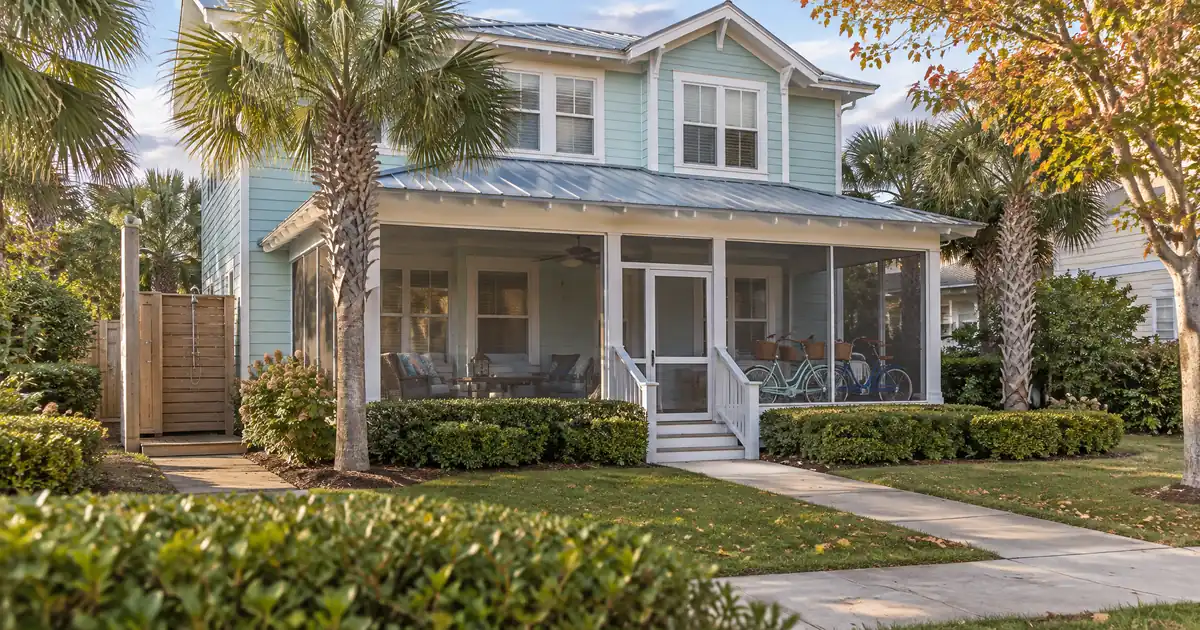
The Quick Read: A short-term rental cash-out releases the smaller of two amounts: what the equity limit allows or what the rent can carry, minus payoff and costs. On short-term-rental collateral, the cash-out ceiling is about 70% LTV, below the 75% ceiling on a standard long-term rental. The check you receive is the net figure, not the headline equity. Leverage, reserves, and pricing vary by lender and program; the final terms follow the full file review.
- The equity limit is the maximum LTV on appraised value, less the existing payoff.
- The coverage limit is the loan size at which rent still covers the full payment, typically at or above 1.00x on select programs.
- Closing costs, any prepayment penalty on the old loan, and reserve holdbacks come out of the proceeds.
- Plan the next down payment from the net cash, then check that the next lender’s own rules are met.
Picture a host who owns a lake-area cabin free and clear and wants to put 20% down on a second rental. The question is never “how much equity do I have?” It is “how much of that equity can the loan release after every limit and cost?” This article walks through that math step by step, then covers the edge cases that shrink the check. Terms vary by lender guidelines, property type, leverage, credit profile, and full file review.
DSCR Cash-Out Calculator
Run the cash-out numbers in your market
Rate source: Freddie Mac 30-yr average via FRED® — Federal Reserve Bank of St. Louis · effective Nov 5, 2026
Prefilled with starting assumptions — enter your property’s value, balance, taxes, and insurance for a more accurate picture.
Program parameters update from Lendmire’s centralized guideline source. Taxes and insurance are editable estimates.
As of Nov 5, 2026 · General Freddie Mac market benchmark, not a Lendmire loan offer. Property value, balance, taxes, and insurance are editable estimates. Maximum loan-to-value varies by lender, program, property type, and seasoning. Not a Loan Estimate, approval, or commitment to lend. Program availability and eligibility are subject to lender guidelines, credit approval, property review, and underwriting.
Short-term rental rules can vary by city, county, HOA, and property type, so investors should confirm local rules before relying on projected rental income.
What Is a Short-Term Rental Cash-Out, Exactly?
A short-term rental cash-out is a refinance on a property that earns nightly or weekly rent. The new loan pays off the old one and sends the difference to the borrower. DSCR loans are designed for non-owner-occupied investment properties. Because they are business-purpose investor loans, they are reviewed differently from a standard owner-occupied mortgage.
A paid-off property still counts. The payoff is simply zero, so more of the new loan becomes cash. The same limits apply either way.
Across the wholesale network, short-term-rental cash-out generally tops out around 70% LTV, expects a 640+ credit score, and wants about 12 months of hosting history. Reserves commonly run around 6 months, and about 6 months of seasoning is the usual expectation. All of this is subject to lender guidelines, and every file is underwritten individually.
The complete DSCR loans guide covers the broader program structure if you need the basics first.
Key Terms Defined
Equity limit: The most a lender will lend against appraised value, set by the maximum LTV for the property type.
Coverage limit: The largest loan the property’s rent can support at the required DSCR.
DSCR: Monthly rent divided by the monthly housing payment, which is the sum of principal, interest, taxes, insurance, and any HOA dues.
PITIA: That full housing payment, the denominator in the DSCR calculation.
Seasoning: The time you must own the property before a lender sizes the loan on appraised value instead of cost.
Reserves: Liquid funds a lender wants left over after closing, often counted in months of PITIA.
The Three Limits and Which One Binds
The check is the lower of two numbers, and the first one is the easier to calculate.
| Limit | What sets it | What shrinks it |
|---|---|---|
| Equity | Max LTV × appraised value, minus payoff | Low appraisal, lower STR cap |
| Coverage | Rent ÷ new payment must clear the DSCR floor | Larger loan, higher taxes or insurance |
| Net check | Lower of the two, minus costs | Prepayment penalty, reserves, fees |
On short-term-rental collateral, the cash-out cap is about 70% LTV, while a standard long-term rental goes to about 75%. Same house, same equity, smaller check when it is underwritten as an STR. Exact terms depend on the lender’s guidelines, property type, leverage, and a full review of the borrower’s file.
The coverage limit surprises people. A bigger loan means a bigger payment, and rent has to cover it. A seasonal property with strong summers and weak winters can hit the coverage ceiling before it hits the equity ceiling. In that case the equity is real, but the loan cannot be sized to reach it.
The minimum DSCR on a short-term-rental refinance is 1.00, meaning rent covers the full payment. A separate select-lender path may consider coverage below 1.00, with leverage and terms adjusted. Stronger ratios generally open better pricing and leverage.
How Underwriting Treats the Income, Step by Step
1. Value. An appraisal sets value, which drives LTV. The appraiser’s rent schedule sets one version of rent used for lender review.
2. Income path. For an STR, the file may rely on an appraiser’s STR analysis, a 12-month property-management statement, or 12 months of bank statements showing deposits. Purchases can sometimes use a market projection, but refinances lean on actual history.
3. Income adjustment. Some programs apply a factor to gross STR revenue before testing coverage. The size of that factor varies by lender, which is one reason the same property can produce different loan amounts across programs.
4. Coverage test at the new payment. Cash-out raises the balance, so PITIA rises. The test uses the new, larger payment.
5. Seasoning. Seasoning is lender policy, not law. Inside the window, the loan may be sized on cost rather than appraised value. About 6 months is the common expectation for cash-out.
6. Net proceeds. Take the new loan, subtract the payoff, any prepayment penalty on the old loan, closing costs, and any reserve holdback.
7. Reuse as the next down payment. Proceeds must be traceable and in the account before the next purchase closes. The next lender applies its own down-payment and reserve rules.
Why the Appraisal Rent Schedule Does Not Settle the Income Question
The appraisal forms are an agency contrast, not DSCR rules. Fannie Mae’s Selling Guide names Form 1007 for one-unit investment properties and Form 1025 for two- to four-unit properties. Fannie Mae also states in an appraiser update that the 1007 was not designed for short-term-rental single-family homes, because it requires monthly-lease comparables and cannot estimate a nightly fee.
McKissock, an appraiser-education provider, makes the same point: the 1007 documents monthly rent, not nightly rent or business income.
The practical effect is that the appraisal may show long-term market rent for your STR. Support for the nightly income then comes from separate documents. A host who expects the appraisal to capture peak-season revenue may find its rent figure well below the platform statements, since the form measures monthly rent.
A Worked Example in Percentages and Ratios
Run the numbers on a modeled property. Assume it appraises at $600,000, carries an existing loan with a modest payoff, and qualifies for the 70% STR cash-out cap. These are modeled assumptions, not market data.
| Step | What happens |
|---|---|
| 1. Appraised value | $600,000 |
| 2. Equity limit | 70% of value is the maximum new loan |
| 3. Coverage check | Rent vs. new PITIA must clear 1.00x on the select program |
| 4. Subtract payoff | Existing balance comes off the top |
| 5. Subtract costs | Closing costs, any prepayment charge, reserve holdback |
| 6. Net cash | The lower of the equity and coverage results, after steps 4-5 |
| 7. Next down payment | Net cash ÷ purchase price shows the % down it can support |
If the same property were underwritten as a long-term rental, the cap would move to about 75%. On this value that is a five-point difference, and it is the main reason an STR check comes in smaller.
Now say the net cash supports 20% down on a purchase near $400,000. The next lender’s closing costs, furnishing and setup, and reserves still come out of pocket. Reserves are commonly around 6 months of PITIA, and they may apply to both properties. A cash-out that exactly equals the down payment leaves nothing for those costs.
Worth stating plainly: clearing 1.00 is not positive cash flow. DSCR compares rent to PITIA only. Repairs, vacancy, management, utilities, and capex sit outside the calculation.
Sensitivity: What Moves the Check
Three inputs move the number most.
| Change | Effect on cash released |
|---|---|
| Appraisal comes in 5% low | Equity limit falls by 70% of the gap |
| Lender discounts STR income | Coverage limit falls, may bind first |
| Old loan has a prepayment penalty | Net cash drops dollar for dollar |
Build a buffer. If you need a specific amount for the next down payment, assume a lower appraisal and a lower income figure, then see whether the plan still works.
A seasonal property needs extra care. Income averaged over 12 months can look fine while the busiest months carry the average. Lenders that use trailing history will see the weak months too.
Where the General Rule Breaks
Converted STRs. A former Airbnb moved to a long-term lease may be sized under long-term rules, with a 75% cap instead of 70%. This depends on the lender and program.
Short hosting history. The 12-month hosting expectation is typical for STR programs. Without it, a property may be underwritten on market rent as a long-term rental instead.
Rehab or bridge loans. Seasoning after a rehab or bridge loan depends on documented completion and the lender. Treat it as a case-by-case question.
Prepayment penalties. If the existing loan is a DSCR loan, check the prepayment terms. That charge comes out of your proceeds.
Local rules. A permit or zoning problem can sink a file regardless of how well the income is documented.
Small cash at closing. A refinance that releases only a small amount of cash may be treated differently from a larger cash-out. Thresholds vary by lender.
Ineligible property types. Manufactured homes (single- and double-wide), log homes, and barndominiums are not offered in the network’s DSCR programs.
Cash-Out, a Sale, or Another Route?
| Option | Cash released | Main trade-off |
|---|---|---|
| STR cash-out | Up to about 70% LTV, net of costs | Larger payment, coverage test |
| Long-term cash-out | Up to about 75% LTV | Requires LTR income or conversion |
| Sale | Full equity, less selling costs | Gives up the asset and its income |
A cash-out keeps the property. A sale does not. If the property’s income is what funds the portfolio, selling to fund a down payment trades a cash-flowing asset for a one-time check.
Skip the cash-out if the new payment pushes coverage near the floor, if a prepayment penalty eats a large share of the proceeds, or if the next purchase would leave you short on reserves across both properties.
Sequencing: Refinance, Document, Then Buy
Refinance first when the next purchase has a firm contract date, because proceeds need to be in your account and traceable. Buying first and refinancing after is possible, but it depends on having short-term funds and meeting seasoning on the property you plan to cash out.
Keep a clean paper trail from the refinance settlement statement to the account that funds the purchase. The next lender will ask where the down payment came from.
For purchases, STR loans top out at 75% LTV on the strongest files, while most long-term rental purchases land at 75% to 80%. Select high-leverage programs reach 85% LTV with roughly a 700+ score, on standard rentals. A larger down payment lowers the monthly payment and can lift the DSCR, but it does not erase leverage caps, credit floors, or reserve rules.
Lendmire’s piece Does a Short-Term Rental Cash-Out Refinance Make Sense to Fund Your Next Down Payment? takes up the decision itself. This article covers the math behind it.
Frequently Asked Questions
How much cash can I take out of a short-term rental?
The release is the lower of the equity limit and the coverage limit, minus payoff and costs. On STR collateral the equity cap is about 70% LTV across the network, subject to lender guidelines. Rent has to cover the larger new payment, so the coverage limit can bind first.
Does a paid-off Airbnb still count as a cash-out?
Yes. The payoff is zero, so more of the new loan reaches you. The same LTV cap, coverage test, seasoning expectation, and hosting-history expectation apply.
Why would my cash-out be smaller than a long-term rental with the same equity?
The cap is lower. Short-term-rental cash-out tops out around 70% LTV, while a standard long-term rental goes to about 75%. Lenders also count STR income differently, which can reduce the coverage limit. Every figure here varies by lender and program — guidelines, property type, leverage, and credit profile all apply.
Do I need hosting history?
STR programs typically want about 12 months of hosting history, along with a 640+ credit score. Without that history, a property may be underwritten on market rent instead, which changes the sizing.
Can I use the cash-out as the down payment on my next rental?
Yes, if the proceeds are traceable and in your account before closing. Plan for closing costs, setup, and reserves on top of the down payment.
Does passing the DSCR test mean the property cash flows?
No. DSCR compares rent to PITIA only. Repairs, vacancy, management, utilities, and capex are outside the calculation.
If you are buying or refinancing a rental property and want to see how the numbers work, Lendmire can help you compare DSCR loan options based on the property income, credit profile, leverage, and investor goals. Lendmire is a broker arranging financing through select lenders in its wholesale network across 41 markets, including Washington, D.C. Programs change. This is not a commitment to lend.
For the mechanics of pulling equity out of a rental property, see Lendmire’s guide to cash-out refinance on an investment property.
About Lendmire
Lendmire — NMLS# 2371349 — is a mortgage brokerage specializing in DSCR investor loans, helping arrange financing across 41 markets, including Washington, D.C., through wholesale and investor-lending channels. The model centers on property-level rental income reviewed by the lender rather than W-2 documentation, subject to lender guidelines, suiting entity-owned and multi-property investors. Lendmire holds Scotsman Guide Top Mortgage Workplace recognition for 2025 and 2026.
Get Started
Ready to find the right loan for you?
See your offer in seconds. No credit pull, no obligation.
Informational only. Not a Loan Estimate, approval, or commitment to lend. Program availability and eligibility are subject to lender guidelines, credit approval, property review, and underwriting.
References
2. Fannie Mae Appraiser Update
3. McKissock
This article is part of Lendmire’s investment property cash-out refinance program — full qualification details, guidelines, and scenarios live on the program page.
Related reading: Where to Get a Short-Term Rental Cash-Out Refinance When Rent Only Just Covers the Payment · Where to Get a Short-Term Rental Cash-Out Refinance as a Foreign National Investor · When a Short-Term Rental Cash-Out Refinance Makes Sense With a 30-Year Term
Brandon Miller
Founder & CEO, Mortgage Loan Originator, Lendmire LLC
- Mortgage Loan Originator · NMLS# 1129696 · Verify on NMLS Consumer Access
- North Carolina Real Estate Broker · License# 343312 · Verify on NCREC
- North Carolina Insurance Producer · License# 19053198 · Property, Casualty, Life, Health · Verify on NAIC SBS
- Lendmire LLC · Firm NMLS# 2371349 · Verify firm licensure
Required disclosures. Lendmire (NMLS# 2371349) operates as a licensed mortgage broker, not a direct lender or depository. The discussion in this article is general in nature and should not be relied upon as financial, legal, or tax advice — every investment scenario is unique and should be reviewed by a qualified professional. Any loan inquiry is subject to lender underwriting, and this article is not a commitment to lend or a guarantee of approval. Mortgage rates, loan terms, and program guidelines vary by borrower, property, and state, and may change without notice. Equal Housing Opportunity. Verify licensure at NMLS Consumer Access.