
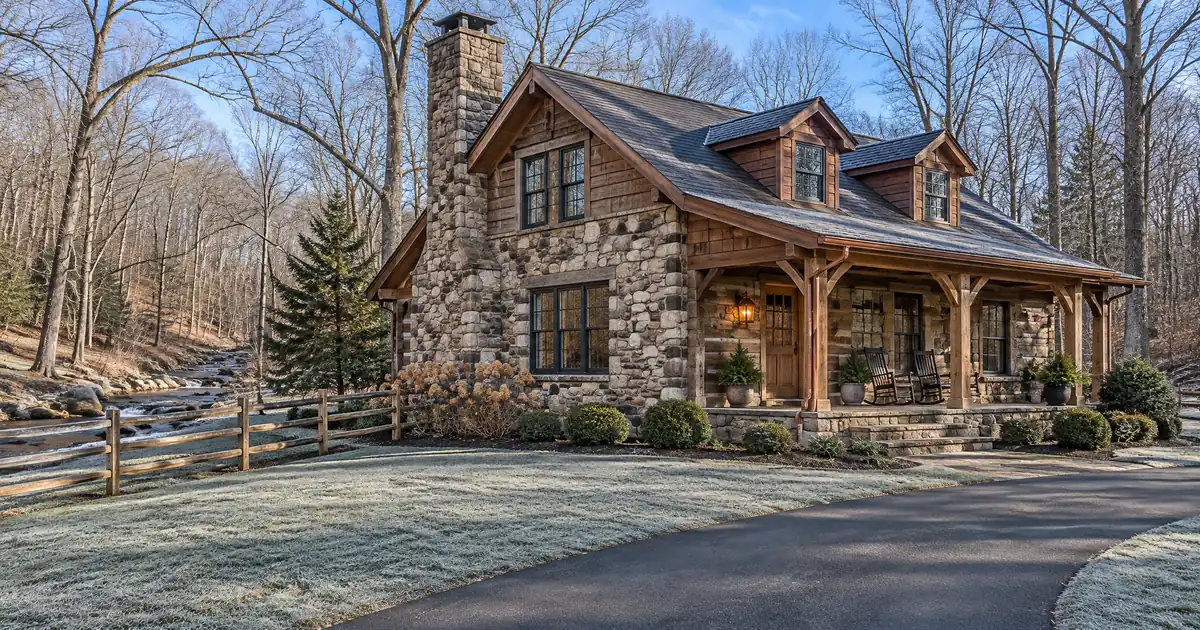
The Quick Read: The best provider for your cabin depends on your hosting history, your coverage ratio, and how much equity you want to pull out. A mortgage broker that shops several wholesale DSCR lenders can match your file to the program that fits. Lenders in this space qualify the loan primarily on property-level rental income covering the payment, subject to lender guidelines.
- Cash-out on short-term rental collateral typically tops out around 70% LTV (loan-to-value, the loan as a share of the property’s value).
- Most programs want a 640+ credit score and about 12 months of hosting history.
- Refinance coverage typically starts at 1.00 on these programs, and a purchase starts at 1.10.
- A standard rental appraisal form does not capture VRBO income, so the lender needs a short-term rental income analysis.
- Short-term rental rules vary by city, county, HOA, and property type, so confirm local rules before relying on projected rental income.
You asked for “top providers.” Here is the honest broker answer: no single lender is best for every cabin. Lendmire is a mortgage broker, not a lender. It arranges DSCR investor loans through select lenders in its wholesale network, across 40 states plus Washington, D.C. (41 markets total). This guide shows what those lenders look for so you can judge any offer, from any source.
DSCR Cash-Out Calculator
Run the cash-out numbers in your market
Rate source: Freddie Mac 30-yr average via FRED® — Federal Reserve Bank of St. Louis · effective Nov 5, 2026
Prefilled with starting assumptions — enter your property’s value, balance, taxes, and insurance for a more accurate picture.
Program parameters update from Lendmire’s centralized guideline source. Taxes and insurance are editable estimates.
As of Nov 5, 2026 · General Freddie Mac market benchmark, not a Lendmire loan offer. Property value, balance, taxes, and insurance are editable estimates. Maximum loan-to-value varies by lender, program, property type, and seasoning. Not a Loan Estimate, approval, or commitment to lend. Program availability and eligibility are subject to lender guidelines, credit approval, property review, and underwriting.
Key Terms Defined
DSCR (debt service coverage ratio): Monthly rental income divided by the monthly housing payment. The closer to 1.00, the closer the rent comes to covering the loan.
PITIA: Principal, interest, taxes, insurance, and HOA dues. This is the payment DSCR compares rent against.
Cash-out refinance: A new, larger loan that pays off the old one and hands you the difference in cash. That difference, after payoff and closing costs, is your proceeds.
Seasoning: The waiting period a lender wants between buying (or last refinancing) a property and the new loan. About 6 months is the common expectation across the network.
Non-QM: Short for non-qualified mortgage. These loans sit outside the standard agency box, and DSCR loans are one type.
What Is a Cash-Out Refinance on a VRBO Cabin?
It is a new loan on a cabin you already own, sized above your current balance, with the extra paid to you. The lender looks at the cabin’s rental income, not your paycheck.
DSCR loans are designed for non-owner-occupied investment properties. Because they are business-purpose investor loans, they are reviewed differently from a standard owner-occupied mortgage. That is why your W-2 and debt-to-income ratio are not the center of the file.
Your credit still matters. Select programs start at a 640 score on short-term rental collateral, and stronger scores open better terms. Loan sizes run up to $3,000,000 on standard programs, subject to lender guidelines.
Provider Types: What Actually Exists
You will meet four kinds of providers. Each fits a different stage of the cabin’s life. This is a comparison of categories, not companies.
| Provider type | Best for | Income documentation | Tradeoffs |
|---|---|---|---|
| DSCR lender | Seasoned cabin with hosting history | Platform income, appraiser analysis, or market data | Lower leverage on STR collateral |
| Hard money or bridge | Cabin still being renovated or stabilized | Light, asset-focused | Short terms, then you need an exit |
| Conventional second-home loan | Owner who uses the cabin personally | Personal income and DTI | Rental use may be limited |
| Broker or marketplace | Comparing several programs at once | Varies by program matched | Terms depend on the lender chosen |
Hard money and bridge loans are short-term fixes. The usual exit is a DSCR cash-out refinance once the cabin has a track record. A conventional second-home loan can work if you mostly use the cabin yourself, but heavy rental use can blur the line.
A broker earns its place here. One lender may cap leverage lower, another may want more history. A broker sees many programs side by side and matches the scenario to the program.
How Underwriting Treats Your VRBO Income, Step by Step
Step 1: The lender picks an income method. For a cabin already hosting guests, the file commonly leans on actual platform history. Think VRBO payout reports, often matched to bank deposits. Download the full set of payout reports and line them up with deposits before you apply.
Step 2: Backup methods fill the gaps. If history is short, programs may use an appraiser’s short-term rental income analysis, third-party market data such as AirDNA, or long-term market rent.
Step 3: Some programs haircut the number. A program may count only a share of platform revenue or projections. Market surveys show examples, such as one lender counting 75% of gross platform income, per PrivateMoni’s short-term rental DSCR explainer. That is one lender’s market practice, not a network figure. It shows how a haircut can cut apparent coverage by a meaningful chunk.
Step 4: The appraisal sets value and income support. This is where cabin owners get tripped up. The standard one-unit rent schedule, Form 1007, is a long-term rent estimate. McKissock explains it cannot document nightly rates, and business income sits outside its scope.
HousingWire reports the same limitation and recommends a narrative addendum, seasonality stress tests, and appraisers with short-term rental experience. So your VRBO history is not captured by the standard form. Expect an addendum built on comparable short-term rental data.
Step 5: The lender checks legality. Lenders want evidence that short-term use is allowed locally and by any HOA. For a mountain or rural cabin, confirm the local rules before you apply.
Step 6: Proceeds get calculated. Proceeds equal the new loan minus the payoff, closing costs, and prepaid items. On short-term rental collateral, the new loan typically tops out around 70% LTV.
What Coverage Do You Need?
For a short-term rental refinance, 1.00 is where select programs start. A purchase starts higher, at 1.10. Stronger ratios open better pricing and leverage.
Some select lenders in the network also write below 1.00, with leverage and terms adjusted. That is a separate path from the 1.00 programs, not the same program with a looser floor.
Here is the part that fools owners. Clearing 1.00 does not mean your cabin cash flows. DSCR compares rent to PITIA only. Cleaning, management, utilities, repairs, vacancy, and capital costs sit outside the formula.
A Worked Example
Run the numbers this way. These are modeled assumptions, not market data.
Say a cabin’s long-term market rent covers its full monthly obligation at about 0.90x. Its VRBO history, after a lender’s haircut, covers it at about 1.25x.
- Long-term rent method: about 0.90x, below the 1.00 refinance floor.
- Documented VRBO income method: about 1.25x, above it.
Same cabin, two answers. The income method decides which one the lender uses. If the file only supports the first number, the options include a select-lender sub-1.00 path with adjusted leverage and terms, or waiting until hosting history supports the second. Qualification stays subject to lender guidelines, credit approval, and property review.
Where the General Rule Breaks
Short hosting history. Programs typically expect about 12 months of host experience. Some programs bend, but usually by trimming leverage. If you list a cabin for three months and want cash-out, expect a lower loan size or a different income method.
Partial-year seasons. A partial year of short-term rental income is hard to use as is, so a lender may lean on a backup income method instead of annualizing it. If a renovation closed the calendar for a stretch, write a short note explaining it.
Lower of two numbers. Some programs use the lower of actual and projected income when both exist. Plan on the conservative figure.
Owner use. If you stay at the cabin part of the year, the loan may not be purely business-purpose. Compliance Alliance explains that the purpose of the loan, not just the property, controls how it is treated. Heavy personal use may push you toward a second-home program.
Property type. Manufactured homes, log homes, and barndominiums are not offered in the network’s DSCR programs. A log cabin by style is a real concern here, so confirm construction type early. Buildings of 2 to 4 units are generally within residential DSCR, while larger buildings typically move to commercial financing.
Prepayment penalties. Many DSCR loans carry a prepayment penalty, a fee for paying off the loan early. Ask about the schedule before you commit, especially if you may sell or refinance again.
Cabin-Specific Checklist
Cabins carry quirks that a suburban rental does not. Walk through these before you apply:
- Access and location: Rural roads and remote parcels can thin out appraisal comps.
- Well and septic: Appraisers and lenders look at these systems.
- HOA and permits: Get written confirmation that short-term rental is allowed.
- Seasonality: Peak months can hide slow ones. Annual totals matter more than your best quarter.
- Insurance: Confirm your policy covers short-term rental use.
- Platform records: Pull VRBO payouts and match them to deposits.
Documents to Gather
- VRBO or other platform earnings reports for the full hosting period.
- Bank statements showing the matching deposits.
- Current mortgage statement and homeowners insurance.
- Proof of any HOA rules or local permit on short-term rental.
- A short note explaining unusual months, such as a closure for repairs.
- Entity documents if you hold title in an LLC, subject to lender program eligibility.
How to Choose a Path
Work through these in order:
1. Do you have about 12 months of hosting history? If yes, a DSCR refinance on actual income is your cleanest route. If no, expect an alternate income method or lower leverage.
2. Does coverage clear 1.00 on documented income? If yes, standard short-term rental programs apply. If not, ask about select-lender paths with adjusted terms.
3. Is the cabin still being renovated or stabilized? A bridge or hard money loan may fit first, with a DSCR cash-out as the exit.
4. Do you use the cabin heavily yourself? Compare a second-home loan before assuming DSCR fits.
5. Is a larger loan the goal? Remember that more equity does not erase leverage caps, credit floors, reserve rules, or property eligibility. The strongest files clear both tests: enough equity and enough rental coverage.
Reserves, the cash a lender wants you to hold after closing, vary by lender, leverage, and loan size. Around 6 months of PITIA is common, and larger loans typically step up. Programs change, and every file is underwritten individually.
For the full picture of how these loans work, see the complete DSCR loans guide.
Frequently Asked Questions
Can VRBO income qualify me for a cash-out refinance?
Yes, on programs that accept platform history. The lender typically reviews your VRBO payout reports, often matched to bank deposits. Where history is short, an appraiser’s short-term rental analysis or market data may fill in, subject to lender guidelines.
Do I need personal income to qualify?
Not as the center of the file. The loan is reviewed primarily on property-level rental income covering the payment, subject to lender guidelines. Your credit score and reserves still count.
How much can I cash out on a short-term rental cabin?
Typically up to about 70% LTV on short-term rental collateral, compared with around 75% on standard long-term rentals. Your credit, coverage ratio, and loan size shape where you land.
Does the appraisal capture my VRBO earnings?
Not through the standard rent schedule. That form estimates long-term rent. Lenders usually want a short-term rental income addendum built on comparable data.
Can I borrow through an LLC?
Often yes, depending on program guidelines. Entity documents are part of the file, and eligibility varies by lender.
Which provider is best for my cabin?
The best program for your situation depends on hosting history, coverage, credit, and leverage. A broker that shops multiple wholesale lenders can compare programs side by side.
Next Step
If you are buying or refinancing a rental property and want to see how the numbers work, Lendmire can help you compare DSCR loan options based on the property income, credit profile, leverage, and investor goals. You can call 828-256-2183 or request a quote.
A deeper walk-through of investment-property equity extraction lives in Lendmire’s guide to cash-out refinance on an investment property.
About Lendmire
Lendmire — NMLS# 2371349 — is a DSCR and non-QM mortgage brokerage with investor loan programs in 41 markets, including Washington, D.C. DSCR eligibility is commonly reviewed by the lender around property-level rent rather than personal income documentation, subject to lender guidelines, and the brokerage helps arrange financing for LLC-owned portfolios beyond conventional financed-property limits. Recognized by Scotsman Guide as a Top Mortgage Workplace in 2025 and 2026.
Get Started
Ready to find the right loan for you?
See your offer in seconds. No credit pull, no obligation.
Informational only. Not a Loan Estimate, approval, or commitment to lend. Program availability and eligibility are subject to lender guidelines, credit approval, property review, and underwriting.
References
1. PrivateMoni: Short-term rental DSCR
2. McKissock
3. HousingWire: Short-term rentals and the appraisal playbook
4. Compliance Alliance: Reg Z and investment properties
This article is part of Lendmire’s investment property cash-out refinance program — full qualification details, guidelines, and scenarios live on the program page.
Related reading: Where to Get a Short-Term Rental Cash-Out Refinance Before Applying to Check Rent Coverage · Where to Get a Short-Term Rental Cash-Out Refinance as a Foreign National Investor · When a Short-Term Rental Cash-Out Refinance Makes Sense With a 30-Year Term
Brandon Miller
Founder & CEO, Mortgage Loan Originator, Lendmire LLC
- Mortgage Loan Originator · NMLS# 1129696 · Verify on NMLS Consumer Access
- North Carolina Real Estate Broker · License# 343312 · Verify on NCREC
- North Carolina Insurance Producer · License# 19053198 · Property, Casualty, Life, Health · Verify on NAIC SBS
- Lendmire LLC · Firm NMLS# 2371349 · Verify firm licensure
Important disclosures. Lendmire (NMLS# 2371349) is a licensed mortgage brokerage. Lendmire is not a direct lender, depository institution, or financial advisor. All loan inquiries are subject to lender underwriting; this article does not constitute a commitment to lend. Rates, terms, and program guidelines are subject to change without notice and vary by borrower profile, property type, and state. Information in this article is general in nature and is not financial, legal, or tax advice. Equal Housing Opportunity. NMLS Consumer Access: nmlsconsumeraccess.org.