
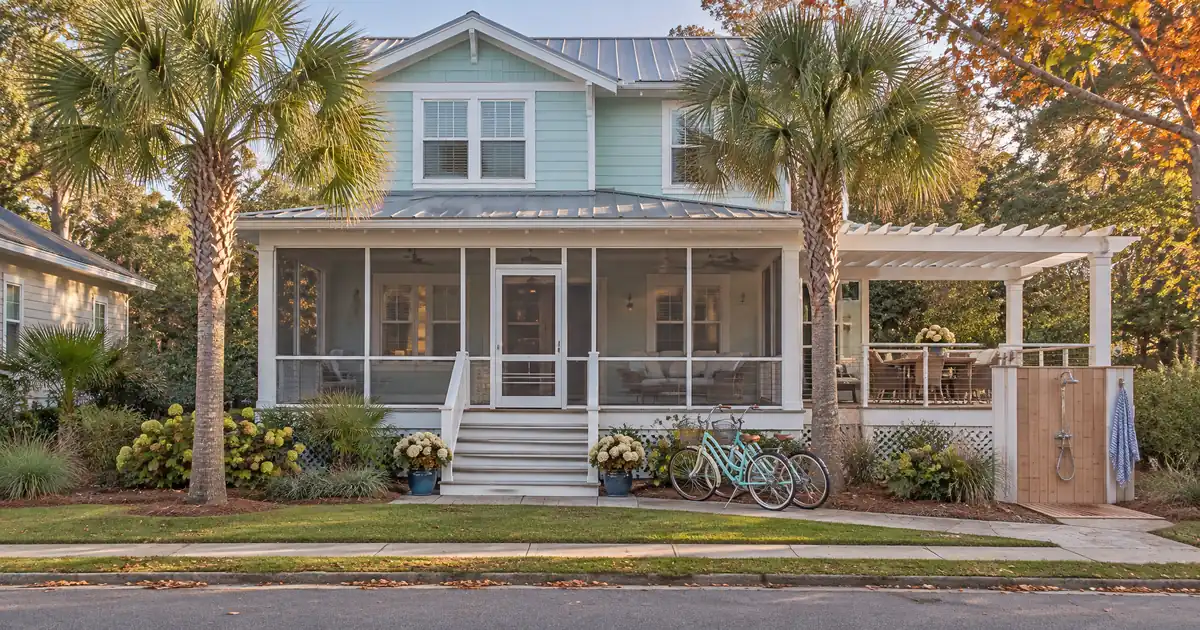
The Quick Read: A newly built rental has no operating history, and that single fact decides which loan fits. The long-term rental loan proves income through the appraiser’s market-rent opinion, while the short-term rental cash-out proves it through hosting records or a projection, and it usually carries a lower leverage cap. Both are DSCR loans, meaning the property’s rent is measured against the full monthly housing obligation.
- Short-term rental cash-out tops out around 70% LTV on cash-out; a standard long-term rental cash-out tops out around 75%.
- Short-term rental files typically expect about 12 months of host experience and a 640+ score.
- Short-term rental refinances need a minimum coverage ratio of 1.00, and stronger ratios can open better leverage.
- A brand-new build has no hosting history, so the long-term route is often the cleaner first step.
- Clearing 1.00 does not mean positive cash flow. Repairs, vacancy, management, and utilities sit outside the calculation.
The Honest Answer First
Choose the short-term rental cash-out if the house already has a real hosting record and the booking income clearly beats what a long-term lease would bring. Choose the long-term rental loan if the house is brand new, has no bookings yet, or sits where short-term rental use is uncertain.
DSCR Cash-Out Calculator
Run the cash-out numbers in your market
Rate source: Freddie Mac 30-yr average via FRED® — Federal Reserve Bank of St. Louis · effective Nov 5, 2026
Prefilled with starting assumptions — enter your property’s value, balance, taxes, and insurance for a more accurate picture.
Program parameters update from Lendmire’s centralized guideline source. Taxes and insurance are editable estimates.
As of Nov 5, 2026 · General Freddie Mac market benchmark, not a Lendmire loan offer. Property value, balance, taxes, and insurance are editable estimates. Maximum loan-to-value varies by lender, program, property type, and seasoning. Not a Loan Estimate, approval, or commitment to lend. Program availability and eligibility are subject to lender guidelines, credit approval, property review, and underwriting.
Most newly built rentals land in the second group on day one. That is not a defeat. It is a sequencing question, and the hybrid route in the last third of this piece covers it.
If you are new to the basics, Lendmire’s complete DSCR loans guide walks through how the ratio works before you pick a path.
Side-by-Side
The long-term column reflects Lendmire’s network parameters. Both columns describe typical ranges, subject to lender guidelines and not a commitment to lend.
| Factor | Short-Term Rental Cash-Out | Long-Term Rental Loan |
|---|---|---|
| Review basis | Booking income or projection vs. PITIA | Market rent or lease vs. PITIA |
| Cash-out leverage | Up to about 70% LTV | Up to about 75% LTV |
| Credit score | 640+ | Around 660 typical; 620 floor in parts of network |
| Coverage floor | 1.00 on refinances | 1.00 where select programs start |
| Host history | About 12 months expected | Not needed |
Two lines in that table need a footnote. First, 1.00 is where select programs start, not a universal rule. A separate select-lender path takes coverage below 1.00, with leverage and terms adjusted. Second, this article is about the refinance, so the 1.00 coverage floor in the table is the number that applies here.
How Each Loan Counts Rent on a House Nobody Has Lived In
A DSCR loan divides monthly rent by the full monthly payment: principal, interest, taxes, insurance, and any association dues. On a never-leased build, someone has to supply the rent number.
For a long-term rental, the appraiser usually supplies it. On a one-unit home, that is the 1007 rent schedule. On a two-to-four-unit property, it is the 1025. Fannie Mae’s appraiser guidance confirms the 1007 asks for indicated monthly market rent, built from comparables leased on a monthly basis. DSCR files are not governed by agency rules. The form name is just what the appraisal industry uses.
The short-term rental path is messier. That same guidance says the 1007 was not designed for short-term rentals. It also calls it incorrect to take nightly comparables and multiply by 30. If a lender runs your booking-driven property through a long-term rent form anyway, HousingWire’s analysis argues the result can be an artificially low coverage ratio, including in non-QM channels.
So short-term files lean on other evidence. Depending on the program, that means:
- Trailing platform history, such as payout statements and bank deposits.
- A third-party data projection.
- An appraiser’s short-term rental analysis.
Not every lender accepts short-term income at all, and the ones that do treat gross booking income with a haircut for cleaning, turnover, and furnishing costs. Across Lendmire’s network, programs differ on which evidence they take, which is why the lender match matters as much as the property.
When the Short-Term Rental Cash-Out Is the Better Fit
This route fits an owner whose new build has already been operating as a rental for a while, with documented bookings and a track record. Four conditions point toward it.
You have hosting history. The network typically expects about 12 months of landlord or host experience. A house that has only been open for a few months often falls short of that, and so does a first-time host with no other record.
Booking income clearly beats long-term rent. If the house books well enough that coverage on short-term income is comfortable, while the long-term rent opinion would leave it thin, the short-term route can be the one that works. Run both. A property that clears 1.00 on bookings but sits well under it on market rent is telling you something about how fragile the file is.
The property is legally usable as a short-term rental. A permit denial after you refinance turns a strong ratio into a paper number.
You can live with less cash out. Cash-out on short-term collateral stops around 70% LTV, versus around 75% on a standard rental. On the same appraised value, that gap shrinks the check. If you need maximum proceeds for the next build, that matters. Terms depend on the lender’s guidelines, the property type, the leverage, and a full review of the credit profile.
Credit counts too. Expect a 640 minimum score on short-term files, and loan amounts up to $3,000,000 on standard programs. Reserves vary by lender, leverage, and loan size, commonly around 6 months of PITIA, stepping up on larger balances.
When the Long-Term Rental Loan Is the Better Fit
This route fits the owner whose build just received its certificate of occupancy, with no bookings, no lease history, and a lender asking for a rent number.
You have no hosting record. The long-term loan does not ask for one. The appraiser’s market-rent schedule carries the coverage calculation, which is the simplest evidence to document on a vacant house.
You want the higher leverage cap. Cash-out on a standard rental runs up to about 75% LTV across most of the network, compared with around 70% on short-term collateral. A modest 5-point difference in LTV can move the proceeds meaningfully. The exact numbers vary by lender and program and follow a full review of property, leverage, and credit.
You are unsure about local short-term rental rules. A long-term lease does not depend on a permit that could change. If HOA language or local rules are murky, long-term rent is the safer foundation.
You want flexibility on structure. The 30-year fixed is the spine of the network. Extended terms and interest-only periods are available through select lenders, and ARM structures exist for investors who want them. Above $2,500,000, the network generally holds to 30-year fixed structures.
Credit is slightly easier here. Most programs want around 660, a 620 floor exists in parts of the network, and 700+ unlocks the strongest leverage tiers. Subject to lender guidelines, a stronger score can lift both leverage and terms.
Some property types are off the table either way. Manufactured homes, log homes, and barndominiums are not offered in these DSCR programs.
The Build Timeline, and Where the Clocks Start
A DSCR loan is a permanent take-out. It pays off construction financing or cash after the build is complete, and it needs the certificate of occupancy first. New builds are a frontier for DSCR lenders, so policy varies.
Plan around 6 months of seasoning as the common expectation for a cash-out. Inside that window, expect the loan to be sized on your cost basis instead of the appraised value. Delayed financing exists for documented all-cash buyers through some lenders, but it waives only the wait. Coverage, reserves, appraisal, and leverage still apply.
The order of events looks like this:
1. Finish construction and receive the certificate of occupancy.
2. Record the deed and start the title-ownership clock.
3. Order the appraisal, which produces both a value and a rent opinion.
4. Choose the income evidence that matches the loan you want.
5. Wait out the seasoning requirement, then refinance.
One appraisal supplies two numbers. Value drives leverage, and rent drives coverage. The loan size ends up at the lower of what the leverage cap allows and what the rent supports at the required ratio.
The Hybrid Route: Long-Term First, Short-Term Later
Here is the honest tradeoff. Waiting for 12 months of host history before refinancing leaves your construction money tied up longer. Refinancing on long-term rent right away frees the capital sooner but locks in the lower income evidence.
The hybrid sequence is to refinance on long-term rent, then run the property as a short-term rental, build the booking record, and refinance again once the history exists. A short-term refinance can then run up to about 70% LTV on documented income. Final terms depend on the lender’s guidelines, the property type, and the borrower’s complete credit picture.
The catch is cost and friction. A second refinance means a second appraisal, new reserves documentation, and possible prepayment terms on the first loan. Those can erase the benefit if the property would have cleared a short-term loan within a year anyway. It is a genuine toss-up, and it depends on how badly you need the capital now.
One edge case matters. An investor with about six months of ownership and only three months of operation should expect one of three outcomes. Some lenders will want the full 12 months of short-term income, some will use market rents, and some will cap cash-out lower. A lender that skips the history requirement is usually underwriting on long-term rent underneath.
Common Misreads
Nightly rate times 30 equals monthly rent. The appraisal guidance cited above calls that incorrect.
The appraisal will capture my booking income. The 1007 documents monthly lease rent, not business income.
Every DSCR lender takes short-term income. They do not. Some use only the long-term rent figure.
A DSCR over 1.00 means the property pays for itself. DSCR compares rent to PITIA only. Repairs, vacancy, management, utilities, and capital expenses sit outside it.
A bigger down payment fixes everything. More equity lowers the monthly obligation and can lift the ratio, but it never erases leverage caps, credit floors, reserve rules, or property eligibility. The strongest files clear both tests: enough equity and enough rental coverage.
A Balanced Verdict
If your build has no bookings, start with the long-term rental loan. It carries the higher cash-out cap, needs no hosting record, and rests on the simplest evidence for a vacant house. Treat it as the default for a brand-new property.
If your build already has a documented year of hosting and bookings clearly outrun long-term rent, the short-term cash-out is built for you. Accept the lower leverage cap, and confirm local rules first.
If you want both, the hybrid route can work, but price the second refinance honestly. Tax treatment varies; consult a qualified professional.
If you are buying or refinancing a rental property and want to see how the numbers work, Lendmire can help you compare DSCR loan options based on the property income, credit profile, leverage, and investor goals. For a related read on rehab-driven properties, see Lendmire’s piece Short-Term vs. Long-Term Rental Cash-Out Refinance on a BRRRR Rental After Rehab.
Frequently Asked Questions
Can I use projected short-term income when the house has no bookings yet?
Sometimes, on a purchase, where a third-party projection can stand in for history. A refinance generally wants actual operating history, so a brand-new build usually has to start on long-term rent.
Does a short-term rental cash-out always pay out less than a long-term one?
Not always in practice, but the leverage cap is lower. Short-term cash-out runs up to about 70% LTV, while a standard rental runs up to about 75%. Appraised value, coverage, and reserves can still change the final number. Each figure is subject to lender guidelines and a complete review of property type, leverage, and credit.
Do I need a certificate of occupancy before refinancing a new build?
Yes, expect to need one at refinance, because a DSCR loan is a permanent take-out.
Can an LLC hold the property on either loan?
Commonly yes, subject to program terms. Entity treatment is program-specific, so confirm the vesting rules and documents before you close on the structure.
Does clearing 1.00 coverage mean the rental makes money?
No. The ratio measures rent against PITIA only. Vacancy, repairs, management, utilities, and capital costs are outside it, so budget for them separately.
For the mechanics of pulling equity out of a rental property, see Lendmire’s guide to cash-out refinance on an investment property.
About Lendmire
Lendmire (NMLS# 2371349) is a mortgage brokerage built around DSCR investor lending, with programs available in 41 markets, including Washington, D.C. DSCR lenders commonly evaluate rental-income coverage instead of personal income paperwork — a practical fit for LLC-owned and multi-property investors. Terms vary by lender, property, leverage, and program. Scotsman Guide named Lendmire a Top Mortgage Workplace in both 2025 and 2026.
Get Started
Ready to find the right loan for you?
See your offer in seconds. No credit pull, no obligation.
Informational only. Not a Loan Estimate, approval, or commitment to lend. Program availability and eligibility are subject to lender guidelines, credit approval, property review, and underwriting.
References
1. Fannie Mae Appraiser Update, June 2024
2. HousingWire: Short-term rentals are breaking the appraisal playbook
This article is part of Lendmire’s investment property cash-out refinance program — full qualification details, guidelines, and scenarios live on the program page.
Related reading: When a Short-Term Rental Cash-Out Refinance Makes Sense With a 30-Year Term · Short-Term Rental Cash-Out Refinance When the Lender Requires an LLC: The 2026 Guide · Where to Get a Short-Term Rental Cash-Out Refinance as a Foreign National Investor
Brandon Miller
Founder & CEO, Mortgage Loan Originator, Lendmire LLC
- Mortgage Loan Originator · NMLS# 1129696 · Verify on NMLS Consumer Access
- North Carolina Real Estate Broker · License# 343312 · Verify on NCREC
- North Carolina Insurance Producer · License# 19053198 · Property, Casualty, Life, Health · Verify on NAIC SBS
- Lendmire LLC · Firm NMLS# 2371349 · Verify firm licensure
Important disclosures. Lendmire (NMLS# 2371349) is a licensed mortgage brokerage. Lendmire is not a direct lender, depository institution, or financial advisor. All loan inquiries are subject to lender underwriting; this article does not constitute a commitment to lend. Rates, terms, and program guidelines are subject to change without notice and vary by borrower profile, property type, and state. Information in this article is general in nature and is not financial, legal, or tax advice. Equal Housing Opportunity. NMLS Consumer Access: nmlsconsumeraccess.org.