
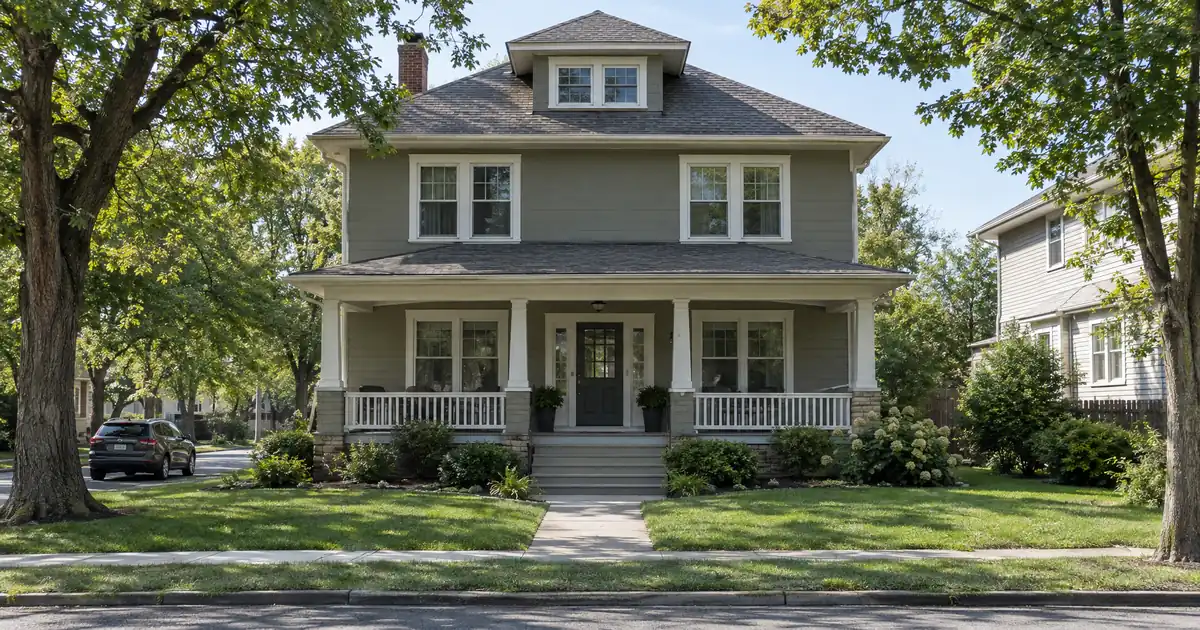
Bucks County Pa Investment Property Cash Out Refinance — The Quick Read: The mechanics of pulling cash out of a rental property don’t change by zip code. What changes is how the loan gets underwritten in the first place. A cash-out refinance on an investment property is a business-purpose loan, not a personal mortgage. It gets reviewed on a different set of rules. This explainer walks through how that underwriting actually works, step by step. It shows where the standard playbook breaks into exceptions. And it shows what the decision looks like once you’re staring at your own numbers.
Whether the property sits in Bucks County or three states away, the same core test applies. Does the rent cover the payment? And how much equity can come out without breaking the lender’s leverage ceiling? Everything below is general mechanics — not a promise about any one file.
DSCR Cash-Out Calculator
Run the cash-out numbers in your market
Rate source: Freddie Mac 30-yr average via FRED® — Federal Reserve Bank of St. Louis · effective Sep 10, 2026
Prefilled with local estimates — enter your property’s value, balance, taxes, and insurance for a more accurate picture.
Program parameters update from Lendmire’s centralized guideline source. Taxes and insurance are editable estimates.
As of Sep 10, 2026 · General Freddie Mac market benchmark, not a Lendmire loan offer. Property value, balance, taxes, and insurance are editable estimates. Maximum loan-to-value varies by lender, program, property type, and seasoning. Not a Loan Estimate, approval, or commitment to lend. Program availability and eligibility are subject to lender guidelines, credit approval, property review, and underwriting.
Key Terms Defined
DSCR (debt service coverage ratio) is the property’s monthly rental income divided by its full monthly housing obligation. That obligation includes principal, interest, taxes, insurance, and any HOA dues — often shortened to PITIA. A DSCR of 1.00 means rent exactly matches that obligation.
LTV (loan-to-value) is the loan amount shown as a percentage of the property’s appraised value. A lower LTV means more equity stays in the deal. A higher LTV means less cash is needed upfront, but it leaves a thinner equity cushion.
Seasoning is how long you need to have owned the property — or held title on it — before a lender will let you refinance and pull cash out. It’s a waiting period, not a credit requirement.
Cash-out refinance replaces your existing loan with a new, larger one. It sends you the difference in cash, once the payoff and closing costs are covered.
Business-purpose loan is financing given for investment or rental activity, not for a borrower’s own home. DSCR loans are built for non-owner-occupied investment properties. Because they’re business-purpose investor loans, lenders review them differently than a standard owner-occupied mortgage.
How Underwriting Actually Treats a Cash-Out Refinance
Before anything else happens, the file gets sorted. Underwriting first decides whether the deal is a rate-and-term refinance or a true cash-out. That one decision sets the leverage ceiling. It also decides whether a seasoning clock even applies. On a DSCR file, that seasoning clock is a lender-set policy, not a fixed rule. Across the wholesale network Lendmire places files with, roughly six months of ownership from the date title recorded is the common expectation before a cash-out request gets underwritten.
Once the file clears that gate, two things happen at the same time. First, an appraisal gets ordered. Because rental income drives qualification, that appraisal typically includes a rent schedule. This document lists the market rent for the property. It works much like the Fannie Mae Form 1007 rent schedule, used industry-wide to standardize how appraisers estimate monthly market rent on single-family investment property.
Second, the ratio gets calculated. It’s the rent used for lender review, divided by the new PITIA at the requested loan amount. That single number — the coverage ratio — carries the file. It replaces a personal-income review of pay stubs or traditional personal-income documentation. Qualification runs mainly on whether the property’s rental income covers the payment, subject to lender guidelines. This doesn’t remove underwriting altogether. It changes what the underwriting looks at.
That’s also the mechanical reason DSCR loans exist as a separate lane in the first place. It’s the whole reason the file gets built around rent-to-payment math instead of W-2s.
The Leverage, Coverage, and Credit Numbers That Actually Move the File
Across most programs in Lendmire’s network, cash-out refinances on investment property top out around 75% LTV. That’s a hard ceiling, not a starting point. It applies whether the collateral is a single-family rental or a small multifamily. That’s meaningfully tighter than purchase leverage, which on many files runs 75%-80% LTV. Some high-leverage purchase programs go up to 85% for borrowers with a 700+ score.
Coverage matters just as much as leverage. A 1.00 DSCR is where select programs start — a floor for specific programs, not a universal standard. Stronger coverage ratios generally open better pricing and higher leverage tiers on the same file. Coverage below 1.00 is a real path too. It’s available through select lenders in the network, with leverage and terms adjusted to make up for the thinner ratio. No-ratio structures also exist — these skip measuring the property’s rent against the payment entirely. But they’re only offered through select lenders in the network, and generally for borrowers who already own a primary residence.
Credit sets the floor on the other side. A 620 score exists in parts of the network, but most programs want something closer to 660. A score of 700-plus is where the strongest leverage tiers open up. Reserves are liquid funds set aside after closing. They commonly run around six months of PITIA on most files, stepping up toward nine months on loan amounts above $1,500,000. Loan sizes on standard cash-out programs generally run up to about $3,000,000. Above $2,500,000, the network generally sticks to 30-year fixed structures rather than adjustable terms. Extended 40-year and interest-only structures are still available through select lenders for investors who want them.
A bigger down payment — or, on a refinance, a smaller cash-out request — lowers the monthly obligation. This can lift the coverage ratio. But it never overrides the 75% ceiling, the credit floor, or reserve requirements. The strongest files clear both tests at once: enough equity left in the deal, and rent that clears the coverage threshold on its own. These specifics are subject to lender guidelines and a full review of property, leverage, and credit.
For the mechanics of running that math yourself before you approach a lender, Lendmire’s guide on using a cash-out refinance to buy an investment property breaks down the equity-to-LTV calculation in more depth.
Where the General Rule Breaks
Here’s what shows up file after file: the 75% ceiling and six-month seasoning aren’t universal. They’re the base case. Several categories of investors run into a different rulebook entirely. Federal rules classify credit extended to buy, improve, or maintain a non-owner-occupied rental property as business-purpose credit under Regulation Z. That’s why the personal ability-to-repay framework that governs a standard home mortgage doesn’t attach to a genuinely business-purpose rental loan the same way.
Short-term rental collateral is its own lane. A property with hosting history through platforms like Airbnb or Vrbo gets underwritten differently than a standard long-term rental. Purchase leverage on STR collateral tops out around 75% LTV. Cash-out refinances on that same collateral generally cap closer to 70% — a 70% cash-out ceiling on short-term-rental collateral against a 75% ceiling on standard rentals in the same file type. STR files also typically want a 640-plus score, roughly 12 months of hosting history, and a 1.00 coverage floor. This floor is measured separately on purchases and on refinances, since STR income documentation differs between the two.
Ineligible property types don’t bend. Manufactured homes — single- or double-wide — along with log homes and barndominiums simply fall outside these DSCR programs. That’s not a “harder to finance” situation. It’s not offered, full stop, no matter the leverage or credit profile.
Delayed financing and inherited property change the seasoning math. On the agency side, Fannie Mae’s own Selling Guide waives its standard title-seasoning requirement entirely when a borrower acquired a property through inheritance, a legal award, or an all-cash delayed-financing transaction. DSCR programs often mirror that same logic. But the exact documentation standard is set lender by lender, not by any regulator. So it needs confirming on the specific file, not assumed from a general rule.
HELOCs cap differently than a refinance. Investment-property home equity lines through the network cap at $500,000 total. There’s no higher-balance tier above that for investment collateral. That matters for anyone weighing a HELOC against a full cash-out refinance on a larger property.
DSCR Cash-Out vs. a Conventional Refinance
| Factor | DSCR Cash-Out Refinance | Conventional Cash-Out Refinance |
|---|---|---|
| Review basis | Property rental income vs. payment | Personal income, traditional personal-income documentation, DTI |
| Entity/LLC ownership | Generally supported, per lender guidelines | Typically requires individual borrower |
| Cash-out LTV ceiling | Around 75% on most files | Set by agency guidelines, separately |
| Seasoning before cash-out | Roughly 6 months, per lender policy | Set by agency title/note-age rules |
| Documentation | Rent, lease, or market-rent analysis | Pay stubs, W-2s, traditional personal-income documentation |
For a side-by-side breakdown of how these two paths compare beyond leverage and documentation, Lendmire’s complete DSCR loans guide walks through qualification differences in more depth.
What the Decision Actually Looks Like
Run the numbers on a small multifamily an investor already owns free and clear of any recent purchase-money restrictions.
Property value: $450,000. Current loan balance: $210,000. Target refinance LTV: 75%. Estimated coverage ratio at that LTV: roughly 1.18x.
That coverage ratio matters more than it looks. Clearing 1.00 is not the same as positive cash flow. Repairs, vacancy periods, property management, utilities, and capital expenditures all sit outside the DSCR calculation. A 1.18x ratio means rent comfortably clears the mortgage obligation itself. It says nothing about what’s left after a new roof or a stretch of vacancy.
This pattern shows up constantly: heavy equity, but borderline coverage. The investor has plenty of room on the LTV side, but the rent, as currently leased, sits close to the coverage floor. In that situation, a lender in the network will often ask two things. Can the rent be re-verified at a slightly higher market level? Or is the investor willing to accept a smaller cash-out request to keep the ratio comfortable? Both paths are common. Neither is guaranteed on any specific file.
For a deeper look at how investors use pulled equity to fund the next acquisition rather than sitting on it, Lendmire’s page on tapping investment property equity with a cash-out refinance covers common reinvestment strategies. And for the mechanics specific to structuring the refinance itself, see Lendmire’s DSCR cash-out refinance page.
Tax treatment can depend on how the funds are used and how the property is held. Investors should keep clear records and speak with a qualified tax professional before relying on any deduction.
Frequently Asked Questions
How much cash can I actually pull out of an investment property?
It depends on the property’s appraised value, the current loan balance, and the 75% LTV ceiling most cash-out programs hold to. The available amount is also limited by whether the rental income supports the new payment at a coverage ratio the lender is comfortable with. Equity alone doesn’t guarantee a specific payout. Terms vary by lender guidelines, property type, leverage, credit profile, and full file review.
How long do I need to own the property before I can cash-out refinance it?
Roughly six months of ownership, measured from title recording, is the common expectation across most of the network. Exceptions exist for inherited property, legal awards, and certain delayed-financing scenarios. But those are handled lender by lender, not under a fixed rule.
Can I close a cash-out refinance in an LLC?
Many DSCR programs support LLC or entity-titled ownership, subject to lender program eligibility and documentation requirements. Terms and requirements vary by lender. This should be confirmed on the specific file before you assume eligibility.
What if my rental income doesn’t quite cover the new payment?
Sub-1.00 coverage is available through select lenders in the network, with leverage and terms adjusted to make up for it. It’s a real path, not an automatic decline. But it typically comes with a lower LTV or a stronger credit profile to offset the thinner ratio.
Can I cash-out refinance a short-term rental?
Yes, through select lenders. Cash-out on short-term-rental collateral generally caps around 70% LTV, compared to roughly 75% on a standard long-term rental refinance. It typically requires around 12 months of hosting history plus a stronger credit profile.
If you’re weighing a cash-out refinance against a purchase or a rate-and-term refinance on a rental property, Lendmire can help you compare DSCR loan options. That comparison is based on the property’s income, your credit profile, target leverage, and what you’re trying to do with the equity.
For the mechanics of pulling equity out of a rental property, see cash-out refinance on an investment property.
About Lendmire
Lendmire — NMLS# 2371349 — is a mortgage brokerage that specializes in DSCR investor loans. It helps arrange financing across 40 markets, including Washington, D.C., through wholesale and investor-lending channels. The model centers on property-level rental income reviewed by the lender rather than W-2 documentation, subject to lender guidelines. This suits entity-owned and multi-property investors. Lendmire holds Scotsman Guide Top Mortgage Workplace recognition for 2025 and 2026.
Lendmire’s Top Mortgage Workplace recognition is documented by Scotsman Guide 2025 Top Mortgage Workplace and Scotsman Guide 2026 Top Mortgage Workplace.
Get Started
Ready to find the right loan for you?
In about 30 seconds you can review financing options available for your home or investment property. No commitment required.
Informational only. Not a Loan Estimate, approval, or commitment to lend. Program availability and eligibility are subject to lender guidelines, credit approval, property review, and underwriting.
References
1. Fannie Mae — Form 1007 Single-Family Comparable Rent Schedule
2. Consumer Financial Protection Bureau — Regulation Z, business-purpose credit
Brandon Miller
Founder & CEO, Mortgage Loan Originator, Lendmire LLC
- Mortgage Loan Originator · NMLS# 1129696 · Verify on NMLS Consumer Access
- North Carolina Real Estate Broker · License# 343312 · Verify on NCREC
- North Carolina Insurance Producer · License# 19053198 · Property, Casualty, Life, Health · Verify on NAIC SBS
- Lendmire LLC · Firm NMLS# 2371349 · Verify firm licensure
Compliance and disclosures. Lendmire (NMLS# 2371349) is a licensed mortgage broker and is not a direct lender, depository institution, financial advisor, or tax professional. Content in this article is general market analysis and educational information — not financial, legal, or tax advice for any specific situation. Lendmire does not guarantee loan approval; every transaction is subject to underwriting by the funding lender. Mortgage pricing and loan program guidelines are subject to change at any time without notice and vary by borrower characteristics, property type, and state regulations. Lendmire complies with Equal Housing Opportunity. Licensure verification: NMLS Consumer Access.


