
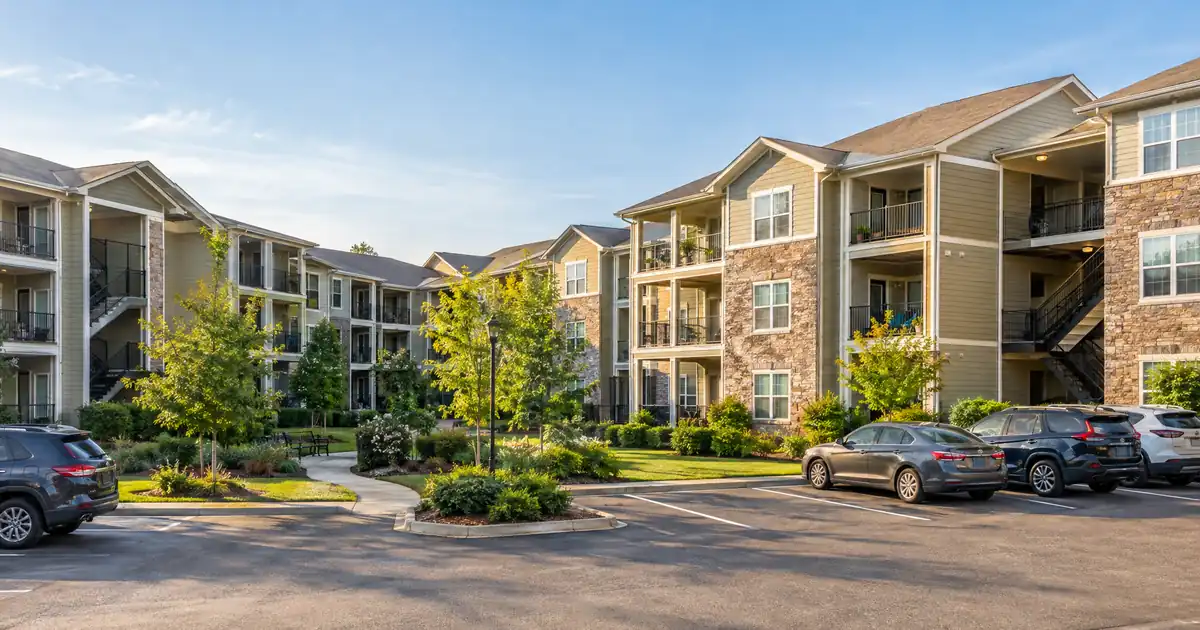
The Quick Read: Documenting airbnb beach condos in one complex means proving three things in order: the complex allows your rental stays, the building is acceptable to the lender, and your unit’s income is supportable on its own. Each unit is its own file, and the building’s answers affect every file inside it.
- Check the association’s rental rules and any city permit before you spend money on an appraisal.
- Expect a project questionnaire, the HOA budget, and proof of dues, because dues sit inside the payment the rent must cover.
- Show income in tiers: hosting history first, then a market projection, then the appraiser’s long-term rent as a fallback.
- STR purchases typically run up to 75% LTV on the strongest files, with a 1.00 coverage floor, subject to lender guidelines.
- Clearing the ratio is not the same as the unit making money.
Beach condos look simple. One building, similar floor plans, similar views. Underwriters see something different: a shared roof, a shared budget, and a shared set of rules that can change your income overnight.
Key Terms Defined
DSCR (debt service coverage ratio) is the property’s qualifying monthly income divided by its full monthly obligation. A DSCR loan is reviewed primarily on property-level rental income covering the payment, subject to lender guidelines.
PITIA is principal, interest, taxes, insurance, and association dues. For a condo, the dues are part of the number the rent must cover.
Warrantable condo is a building that meets agency-style project standards. A non-warrantable condo misses one or more of them, often for reasons like investor concentration, litigation, or commercial space.
Condo questionnaire is a form the HOA or its manager completes about the building’s finances, ownership mix, insurance, and legal status.
Condotel is a building run like a hotel, often with a front desk and a rental program. Rental pool is an arrangement where owners’ units are rented together and income is shared.
Form 1007 is the appraiser’s long-term market rent schedule for a one-unit property.
What Three Gates Does the File Have to Clear?
Every file in a shared beach complex passes through the same three gates: the association and city, the building, and the unit. Lenders review them in that order, and a failure at the first gate ends the file before any income math matters.
| Gate | Who decides | Where the answer lives |
|---|---|---|
| Rental permission | HOA and local government | Declaration, rules, permit or registration |
| Building acceptability | Lender’s project review | Questionnaire, budget, insurance, litigation status |
| Unit income | Lender and appraiser | Platform records, bank deposits, rent schedule |
Short-term rental rules can vary by city, county, HOA, and property type, so investors should confirm local rules before relying on projected rental income.
Gate One: Can You Rent Nightly in This Complex?
Start here, before the appraisal and before the inspection. A ban at your planned stay length is a hard stop, and no loan structure overrides a rule written into the complex’s governing documents.
Associations can ban short-term rentals, require board approval, cap the number of rented units, or change the rules after you buy. Gather these items first:
- The declaration, CC&Rs, and current rules.
- The annual budget and the dues amount.
- Written confirmation of the rental policy as it applies to your unit.
- Your local rental permit or registration, or proof you are exempt.
- Your position on any cap or waitlist, if the complex has one.
Associations and their managers are often slow to answer. Request these documents first and expect the rest of the file to wait on them.
Gate Two: Will the Lender Accept the Building?
The building review is where a one-complex file differs from a single house. Lenders ask yes-or-no questions about the project, and the answers apply to every unit in it.
The core questions cover owner concentration, litigation, insurance, reserves, commercial space, and the type of rental program. Dues collection matters too. A building with many delinquent owners strains its own budget.
Agency rules offer a useful map of what any risk reviewer looks for, even though they do not govern DSCR loans. Fannie Mae’s Selling Guide flags projects operating as a hotel or motel, split-ownership arrangements, non-incidental business arrangements, and heavy commercial space. A beach complex with a front desk, mandatory rental pooling, or profit sharing with a management company trips those same flags.
On repairs and special assessments, Fannie Mae’s condo project FAQ notes that lenders learn about them from HOA minutes, financial statements, and engineer reports. A DSCR underwriter asks similar questions. Ask for the minutes and the latest reserve study before you contract. Coastal buildings carry real maintenance exposure, and a pending assessment can change your numbers.
Here is what we see across our wholesale network: non-warrantable is an agency label, not a verdict. Many select lenders review such projects under their own guidelines, often with adjusted leverage or loan size. Condotels and rental pools are the narrowest lane, decided case by case.
Gate Three: How Do You Prove One Unit’s Income?
Think of income evidence as three tiers. Lenders generally prefer the top tier and fall back only when it is missing.
Tier one: proven history. This is about 12 months of hosting history, which short-term rental programs typically expect. Bring platform payout reports tied to bank deposits. Add the property manager’s trailing statement if you use one, showing gross bookings, fees, and cleaning separately. A full year matters at the beach because it shows the off-season, not just summer.
Tier two: a market projection. For a purchase with no history, some lenders accept a data-service projection. Lenders scrutinize short-term rental DSCR more closely because income varies. Acceptance is uneven. A DSCR industry guide notes that only a small share of lenders recognize these projections, so confirm acceptance before you rely on one.
Tier three: the appraiser’s rent. Every DSCR appraisal includes a Form 1007 market rent survey, which estimates rent as if the unit were leased on a traditional 12-month basis. That figure often sits well below a beach unit’s nightly potential. It is the conservative fallback, and it can make the ratio hard to reach.
On a one-complex file, the strongest unit-level package adds listing history for your unit and, where available, sister units in the building. That supports your nightly rate and occupancy claims. Keep each unit’s records separate, even when one manager handles several.
How Does the Ratio Actually Get Run?
Divide the qualifying monthly income by the full monthly obligation: principal, interest, taxes, insurance, and dues. A lender may trim projected income before dividing. Then the trimmed figure goes against the whole payment.
Dues sit in the bottom of that fraction. A resort-style building with a pool, elevators, and beachfront upkeep carries higher dues, so the same unit revenue produces thinner coverage there than in a bare-bones building.
For STR files, 1.00 is where our programs start on both purchases and refinances. Stronger coverage opens better pricing and leverage. Select lenders in the network also offer paths below 1.00, with leverage and terms adjusted. On STR collateral, purchases run up to 75% LTV, while refinance and cash-out run up to 70%. A 640 credit score is the typical minimum for short-term rentals, and loan sizes run up to $3,000,000 on standard programs. Reserves vary by lender, leverage, and loan size, commonly around six months of PITIA.
Picture a unit that rents well in summer and sits mostly empty in winter. Run the annual income through the ratio, not the best month. A unit that clears 1.00 on a full year is a stronger file than one that clears it on a peak-season projection.
Clearing the ratio is not positive cash flow. DSCR compares rent to PITIA only. Repairs, vacancy, cleaning, utilities, management, and capital costs sit outside it. A unit can pass underwriting and still lose money in a slow year.
What Changes If You Own Two Units in the Same Complex?
Each unit is its own loan file. The lender still asks the building-level questions, and your own units can count toward the investor share of the project. That share is one of the questions on the questionnaire.
So a second purchase is not a copy of the first. Ownership concentration, your combined share, and the association’s rules on multiple units all come back into play. Agency rules cap how many units one entity can own in a project, but those limits are agency-only and do not apply to DSCR files. Non-QM concentration limits differ by program, so ask early.
If your units share a manager, keep separate statements and separate deposit trails. Underwriters want to see where each unit’s income landed.
Same Complex, Different Rules: How Each Affects the File
| HOA rule | Effect on the file |
|---|---|
| Nightly stays allowed | Gate clears; get it in writing |
| Registration required | Include proof in the package |
| Minimum stay (such as 30 days) | Nightly projection may not hold; revisit income |
| Cap on rented units | Confirm your unit’s position |
| Mandatory rental pool | Narrowest lender pool; decided case by case |
Rules can also change after closing. A building that allows nightly stays today may adopt longer minimums later. That risk is yours, not the lender’s. Read the most recent board minutes for any hint of a proposal.
What Do You Do When Documents Are Missing?
- Under 12 months of history: The file falls back to a projection or to the 1007 rent. Lender acceptance varies.
- Changed managers mid-year: Provide both managers’ statements and the matching bank deposits.
- Gap in platform history: Explain it in writing and show the unit was available or being renovated.
- HOA won’t return the questionnaire: Escalate to the management company early. Without it, the file stalls.
- Developer-controlled building: The unit generally needs to be rent-ready, with the association out of developer control.
Manufactured homes, log homes, and barndominiums are not offered in the network’s DSCR programs, so those property types are off the table regardless of the building.
Common Reasons Files Stall
1. The HOA bans or limits the planned stay length.
2. The questionnaire comes back late or incomplete.
3. The building has hotel-style features or a rental pool.
4. Unresolved litigation or a large pending assessment.
5. A first-year unit with no history and a projection the lender won’t accept.
6. Dues that push coverage below the lender’s floor.
A late project failure is the costliest one, because it lands after appraisal and inspection money is spent. Document first, contract second.
Frequently Asked Questions
Can a DSCR loan finance an Airbnb condo in a beach complex?
Yes, when the complex allows your rental term, the building passes the lender’s review, and your unit’s income supports the coverage floor. Short-term rental purchases typically run up to 75% LTV with about 12 months of hosting history, subject to lender guidelines.
Does the appraisal prove my Airbnb income?
No. The appraisal sets value and a long-term market rent through Form 1007. Nightly income has to come from platform records, a manager’s statement, or a data projection that the lender accepts.
What if the HOA allows rentals but my city requires a permit?
You need both. The association’s permission and the local registration are separate gates, and the file should carry proof of each.
What if I have less than a year of hosting history?
Some lenders will use a market projection, and others fall back to the Form 1007 long-term rent. Acceptance varies by program, so ask before you apply. Select lenders in the network may also offer paths with coverage below 1.00, with leverage and terms adjusted.
Does owning several units in one building hurt my file?
It can, because your units may count toward the investor share the lender asks about, and concentration limits differ by program. Treat each unit as its own file and raise the multiple-unit question early.
If you are buying or refinancing a rental property and want to see how the numbers work, Lendmire can help you compare DSCR loan options based on the property income, credit profile, leverage, and investor goals. Our complete DSCR loans guide covers the basics, and Lendmire arranges financing through select lenders in its wholesale network across 41 markets, including Washington, D.C.
For current guidelines and terms, see Lendmire’s DSCR loan programs page.
About Lendmire
A non-QM mortgage broker (NMLS# 2371349), Lendmire arranges DSCR financing for real estate investors in 41 markets — 40 states plus Washington, D.C. Because deals are underwritten primarily on property cash flow rather than personal income documentation, the structure suits self-employed buyers and entity-owned portfolios. Lendmire places loans through wholesale investor lenders; it is not a direct lender. Scotsman Guide named Lendmire a Top Mortgage Workplace in both 2025 and 2026.
Get Started
Ready to find the right loan for you?
In about 30 seconds you can review financing options available for your investment property. No commitment required.
Informational only. Not a Loan Estimate, approval, or commitment to lend. Program availability and eligibility are subject to lender guidelines, credit approval, property review, and underwriting.
References
1. Fannie Mae Selling Guide B4-2.1-03
2. Fannie Mae condo project FAQ
This article is part of Lendmire’s short-term rental loan program — full qualification details, guidelines, and scenarios live on the program page.
Related reading: One DSCR Loan vs Ten Individual Loans for Ten Houses · Can a Six-Unit Building and Two Houses Get a Portfolio DSCR Loan? · How to Document Furnished Rentals in a Portfolio DSCR Loan
Brandon Miller
Founder & CEO, Mortgage Loan Originator, Lendmire LLC
- Mortgage Loan Originator · NMLS# 1129696 · Verify on NMLS Consumer Access
- North Carolina Real Estate Broker · License# 343312 · Verify on NCREC
- North Carolina Insurance Producer · License# 19053198 · Property, Casualty, Life, Health · Verify on NAIC SBS
- Lendmire LLC · Firm NMLS# 2371349 · Verify firm licensure
Legal disclosures. Lendmire (NMLS# 2371349) is a state-licensed mortgage brokerage that arranges financing through wholesale lender relationships. Lendmire is not a direct lender, depository institution, or registered financial advisor. The discussion above is general informational content about real estate financing — it is not financial, legal, or tax advice, and readers should consult licensed professionals for guidance on their individual circumstances. Loan inquiries are subject to lender underwriting; this article does not represent a commitment to lend. Loan terms, rates, and qualification standards vary by borrower, property, and state, and are subject to change at any time. Equal Housing Opportunity. NMLS Consumer Access: nmlsconsumeraccess.org.