
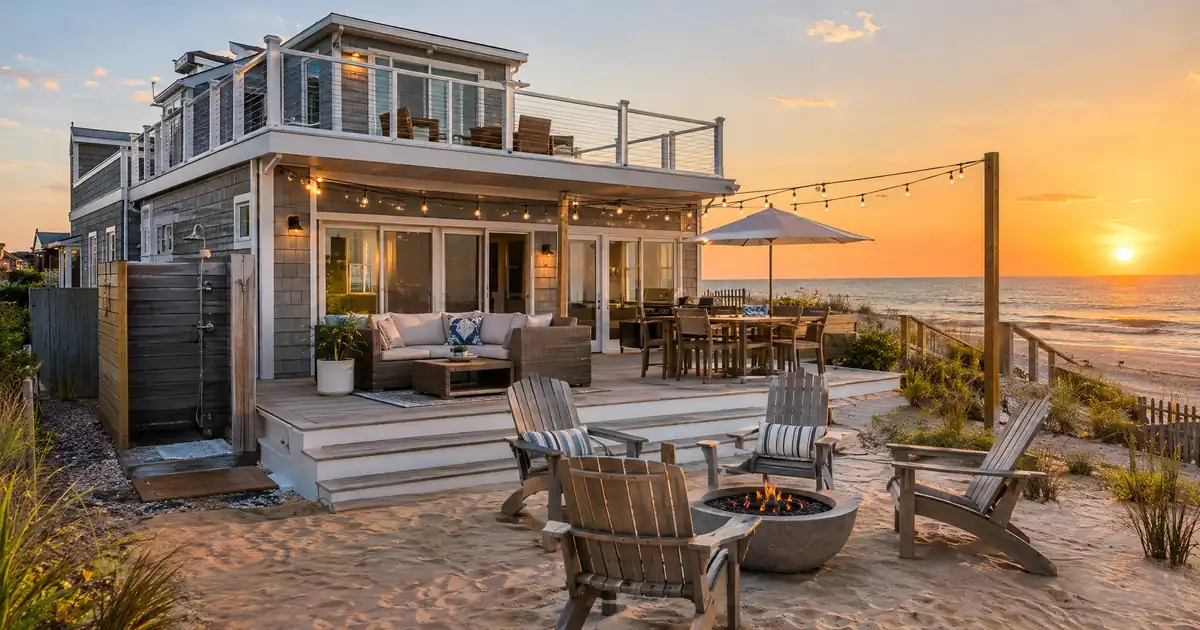
The Quick Read: A third Airbnb cash-out is underwritten like any other: as its own file, tested on equity, rental coverage, seasoning, credit, and reserves, while the purchase in the other market is a separate loan with its own appraisal and income test. The count of prior cash-outs is not the test. What matters is whether this property, on this larger loan, still clears every requirement.
- Short-term-rental cash-out refinances typically top out around 70% LTV, against about 75% on a standard long-term rental.
- Expect a credit score of 640 or higher and about 12 months of hosting history, subject to lender guidelines.
- The common seasoning expectation is about 6 months of ownership on the property you refinance.
- Coverage on select programs starts at 1.00, and the lender discounts your gross revenue before it counts.
- The new purchase needs its own approval, so plan reserves for both properties.
What a Third Cash-Out Really Means
A third cash-out means you are refinancing the third short-term rental in your portfolio, or the third refinance in a chain, and using the cash to buy elsewhere. Nothing in the underwriting depends on how many came before. Across the wholesale network where Lendmire places files, each refinance stands on its own seasoning, coverage, leverage, and reserves.
DSCR Cash-Out Calculator
Run the cash-out numbers in your market
Rate source: Freddie Mac 30-yr average via FRED® — Federal Reserve Bank of St. Louis · effective Oct 8, 2026
Prefilled with starting assumptions — enter your property’s value, balance, taxes, and insurance for a more accurate picture.
Program parameters update from Lendmire’s centralized guideline source. Taxes and insurance are editable estimates.
As of Oct 8, 2026 · General Freddie Mac market benchmark, not a Lendmire loan offer. Property value, balance, taxes, and insurance are editable estimates. Maximum loan-to-value varies by lender, program, property type, and seasoning. Not a Loan Estimate, approval, or commitment to lend. Program availability and eligibility are subject to lender guidelines, credit approval, property review, and underwriting.
The “third” and “another market” parts do matter in practice. A third loan means more total debt and thinner reserves across the portfolio. Another market means a second property, a second appraisal, and local short-term rental rules you may not know yet.
So you are really facing two loan files. The first is the refinance on the Airbnb you already own. The second is the purchase in the new market. The cash from file one becomes the down payment on file two, but the lender on file two underwrites that property on its own income and value.
Lendmire’s complete DSCR loans guide covers the basics of how these loans work. This article stays on the third-cash-out, new-market scenario.
Key Terms Defined
DSCR (debt service coverage ratio): The property’s qualifying income divided by its full monthly obligation. AirDNA describes the lender’s version as income divided by PITIA.
PITIA: Principal, interest, taxes, insurance, and any HOA dues on the loan.
Seasoning: The ownership time a lender wants before it sizes a loan off appraised value instead of cost.
Hosting history: The record of actual short-term bookings and payouts at the property.
Haircut: The discount a lender applies to gross rental revenue before counting it as income.
Reserves: Liquid cash left after closing, usually counted in months of PITIA.
LTV (loan-to-value): The loan balance as a percentage of appraised value.
Requirements at a Glance
Here is how the requirements sort out across the two files. These are typical ranges from select lenders in the network, not promises, and every file is underwritten individually.
| Requirement | Typical guidance | Applies to |
|---|---|---|
| Cash-out LTV | Up to 70% on STR collateral | Refinance |
| Purchase LTV | Up to 75% on the strongest STR files | Purchase |
| Credit score | 640 or higher for STR | Both |
| Hosting history | About 12 months | Refinance |
| Seasoning | About 6 months of ownership | Refinance |
| Coverage | Select programs start at 1.00 | Both |
| Reserves | Commonly about 6 months of PITIA | Both |
Coverage deserves one clarification. On a short-term-rental purchase, select programs start at 1.00. On a refinance, they also start at 1.00. A separate select-lender path goes below 1.00, with leverage and terms adjusted.
Credit works in tiers. Many programs want around 660, and a 620 floor exists in parts of the network. For short-term rentals, 640 is the working minimum. Scores of 700 and up open the strongest leverage tiers. Standard programs fund loans up to $3,000,000. Manufactured homes, log homes, and barndominiums are not offered in these programs.
Reserves vary by lender, leverage, loan size, and transaction type. Around 6 months of PITIA is common, and larger loans typically step up. Some conservative files at modest leverage can see reserves waived, but a cash-out is rarely one of them.
How Short-Term Income Gets Counted
The lender counts discounted income against the full payment. It does not discount the payment. That asymmetry is the surprise for most Airbnb owners.
Lenders generally accept one of three income paths:
1. Trailing history. Platform payouts, management reports, and bank deposits, usually a full year.
2. A market projection. A data-service estimate, such as AirDNA or similar, which only some lenders count.
3. Long-term market rent. Used as a fallback when short-term numbers are thin.
Seasonal properties get a full trailing year, not the best months. If your property earns most of its revenue in a few peak months, the lender averages them with the slow ones. A conversion from long-term to short-term rental starts its hosting history on the conversion date, not the purchase date.
Many DSCR lenders do not touch short-term rentals at all. A broker who sees many lenders’ guidelines can route the file to the ones that do, and that choice comes before anything else in the process.
How the Cash-Out Amount Is Sized
Two caps run side by side, and the smaller loan wins. The first is the equity cap: appraised value times the LTV cap, minus the current payoff. The second is the coverage cap: the largest loan at which discounted income still clears the lender’s floor.
Run the numbers on a modeled property. These are assumptions for illustration, not market data. Say the appraisal is 100% of value and the existing payoff is 45% of value. At a 70% cash-out cap on short-term-rental collateral, the equity test allows a new loan up to 70% of value. That leaves about 25% of value before closing costs and holdbacks. Terms vary by lender guidelines, property type, leverage, credit profile, and full file review.
Now apply the coverage test, holding terms constant. If your current coverage is around 1.75x, a loan at 70% of value lands near 1.12x and clears 1.00. If your current coverage is around 1.40x, the same loan drops to roughly 0.90x. In that case coverage binds first. The largest loan that still clears 1.00 sits near 63% of value, which leaves about 18% of value before costs.
Same property, same equity, and a different cash-out depending on income. Coverage tends to bind where prices are high relative to rents, or where taxes and HOA dues are heavy. Those are exactly the properties many investors want to cash out of.
Proceeds equal the new loan, minus the payoff, minus closing costs and holdbacks. Sending the proceeds straight to the title or escrow company handling your next purchase keeps the paper trail clean. Tax treatment can depend on how the funds are used and how the property is held (the IRS publishes the general rules on business interest); investors should keep clear records and speak with a qualified tax professional before relying on any deduction.
One more point on a single DSCR number. Clearing 1.00 is not the same as positive cash flow. The ratio compares rent to PITIA only. Repairs, vacancy, management, utilities, and capex sit outside it. Three thin-coverage rentals can all pass and still leave you exposed in a slow season.
Buying in Another Market: What Changes
The purchase is a separate loan. Lendmire’s piece How Much a DSCR Cash-Out Funds an Airbnb in Another Market covers the sizing in more depth. Here is what changes for a third-cash-out investor.
Leverage. Most DSCR purchases land at 75% to 80% LTV on standard rentals, and short-term-rental purchases top out at 75%. Select high-leverage programs reach 85% on standard rentals with roughly a 700 or better score. Your cash-out proceeds fund the gap, so you size the first loan to the second one’s down payment. Exact terms depend on the lender’s guidelines, property type, leverage, and a full review of the borrower’s file.
Income on the new property. If you are buying an unseasoned Airbnb, there is no hosting history. The lender may use a projection or long-term market rent, and each path carries its own discount and leverage.
Reserves. Reserves apply on both files. The refinance lender wants reserves after the cash-out, and the purchase lender wants them after the down payment. Whether proceeds count toward reserves depends on the lender, so ask before you commit to a purchase contract.
Local rules. Short-term rental rules can vary by city, county, HOA, and property type, so investors should confirm local rules before relying on projected rental income. This matters most when the new market is unfamiliar. A property that cannot legally host guests cannot support a loan sized on guest income.
Entity ownership. If an LLC holds either property, expect to provide entity documents and a personal guarantee, subject to lender program eligibility.
Where the General Rule Breaks
The rules above hold for a typical seasoned property with a clean trailing year. These cases bend them.
Recent purchase or hard-money exit. Before seasoning is met, many programs size to cost basis (purchase price plus documented rehab) instead of appraisal. If your property was bought with short-term financing and renovated, the cash-out may be smaller than the new value suggests.
Projection-only cash-out. A narrow path exists for recent purchases and long-term-to-short-term conversions. It depends heavily on the lender, so ask before you pay for an appraisal.
Thin or mixed portfolios. Each property is underwritten on its own income path. A short-term rental with a projection, thin comps, or a recent purchase date can land at or below 1.00 or be unseasoned. A strong property elsewhere in your portfolio does not rescue a weak one.
Coverage below 1.00. A path exists through select lenders in the network, with leverage and terms adjusted. Expect lower LTV and different terms than a file that clears 1.00 on its own.
Two DSCR formulas. Some education sites compute net operating income divided by debt service. Lenders use qualifying income divided by PITIA. A ratio computed one way cannot be compared with a ratio computed the other, so do not benchmark your lender’s number against a blog’s.
Ineligible property types. Manufactured homes, log homes, and barndominiums are not offered in these programs, regardless of income.
A larger down payment on the new purchase lowers that loan’s payment and can lift its coverage. It never erases leverage caps, credit floors, reserve rules, or property eligibility. The strongest files clear both tests: enough equity and enough rental coverage.
What If the Numbers Don’t Clear?
Start with a smaller pull. Dropping the cash-out amount raises coverage and widens your cushion. The second lever is a stronger trailing year: if the next twelve months look better than the last, waiting can change the file. The third is a different structure.
| Option | How it qualifies | Trade-off |
|---|---|---|
| Smaller DSCR cash-out | Property income | Less cash for the purchase |
| Bank-statement cash-out | Documented deposits | Different documentation and terms |
| Investment-property HELOC | Equity in the property | Lines cap at $500,000 total |
| Second lien | Equity, existing first stays | Keeps a favorable first loan intact |
Extended 40-year terms and interest-only periods are available through select lenders in the network, and ARM structures exist for investors who want them. These can lift coverage by lowering the payment the ratio is tested against. They also change the long-term loan, so weigh them against the cost of carrying the balance. Lendmire’s article DSCR Cash-Out Income Requirements to Buy Another Airbnb goes deeper on that side of the file.
Why Files Stall
A few failure points show up repeatedly in third-cash-out files:
- Hosting history under 12 months with no accepted projection path.
- Payouts that do not match bank deposits.
- A short-term rental permit or HOA rule that does not permit the income used.
- Coverage that clears on gross revenue but not on discounted income.
- Reserves that cover one property but not both.
- An appraisal that comes in below the number the cash-out was planned around.
Most of these are visible before you apply. A pre-file review of your trailing year, your reserve balance, and your permit status catches the majority.
The Decision in Practice
Work backward from the purchase. Decide the down-payment percentage on the new property, then size the refinance to fund it. Run the equity test and the coverage test on the property you plan to refinance. Check that reserves hold up on both files.
If one property clears and the cushion is thin, that is a signal, not a green light. A bigger balance on a seasonal rental in a softening market leaves little room. A modest pull on a property with steady bookings is the safer chain.
Think about order, too. Refinance first, then buy, then let the new property season before you repeat the loop. Each pass should still clear coverage, reserves, and leverage on the larger balance.
If you are buying or refinancing a rental property and want to see how the numbers work, Lendmire can help you compare DSCR loan options based on the property income, credit profile, leverage, and investor goals. As a broker, Lendmire arranges financing through select lenders in its wholesale network, across 41 markets, including Washington, D.C.
Frequently Asked Questions
Is there a limit on how many cash-out refinances I can do?
Across the programs Lendmire places files with, the count of prior cash-outs is not a test on its own. Each refinance is judged on that property’s seasoning, coverage, leverage, and your reserves. In practice, a longer chain gets harder because balances and obligations grow, not because a rule counts the loans.
Can I buy the new property right after the refinance?
Yes, if the refinance has closed and the cash is available, you can use it as the down payment. The purchase loan is underwritten separately, so that lender will still review the new property’s income, appraisal, and your reserves. Ask both lenders how they treat proceeds before you commit.
Do I need 12 months of hosting history to cash out?
About 12 months is the typical expectation for short-term-rental files. Some lenders accept a market projection in narrow cases, such as a recent purchase or a long-term-to-short-term conversion. Those paths usually carry a discount, and results depend on the lender.
Does my Airbnb income count at full value?
No. Lenders discount gross revenue before using it as qualifying income, and they test it against the full payment. A full trailing year is generally used, so peak months alone will not carry the file.
Does the cash have to go into another Airbnb?
No. The loan is a business-purpose loan, and the proceeds can fund any purchase you plan. The new property is underwritten on its own merits, so a long-term rental or a short-term rental each follows its own program rules.
For the mechanics of pulling equity out of a rental property, see Lendmire’s guide to cash-out refinance on an investment property.
About Lendmire
Lendmire is a non-QM mortgage brokerage (NMLS# 2371349) arranging DSCR investor loans in 41 markets, including Washington, D.C., through wholesale and investor-lending channels. DSCR loans are evaluated by the lender on rental income rather than personal income, subject to lender guidelines — a fit for LLC-owned portfolios, self-employed investors, and operators scaling beyond conventional loan caps. Recognized as a Scotsman Guide Top Mortgage Workplace in 2025 and 2026.
Get Started
Ready to find the right loan for you?
In about 30 seconds you can review financing options available for your investment property. No commitment required.
Informational only. Not a Loan Estimate, approval, or commitment to lend. Program availability and eligibility are subject to lender guidelines, credit approval, property review, and underwriting.
References
1. AirDNA – How to Finance Your Vacation Rental
This article is part of Lendmire’s investment property cash-out refinance program — full qualification details, guidelines, and scenarios live on the program page.
Related reading: Cash Out Refinance Investment Property Laws · Should I Pay Off My HELOC or Invest? · Cash Out Refinance Balloon LLC Property
Brandon Miller
Founder & CEO, Mortgage Loan Originator, Lendmire LLC
- Mortgage Loan Originator · NMLS# 1129696 · Verify on NMLS Consumer Access
- North Carolina Real Estate Broker · License# 343312 · Verify on NCREC
- North Carolina Insurance Producer · License# 19053198 · Property, Casualty, Life, Health · Verify on NAIC SBS
- Lendmire LLC · Firm NMLS# 2371349 · Verify firm licensure
Legal disclosures. Lendmire (NMLS# 2371349) is a state-licensed mortgage brokerage that arranges financing through wholesale lender relationships. Lendmire is not a direct lender, depository institution, or registered financial advisor. The discussion above is general informational content about real estate financing — it is not financial, legal, or tax advice, and readers should consult licensed professionals for guidance on their individual circumstances. Loan inquiries are subject to lender underwriting; this article does not represent a commitment to lend. Loan terms, rates, and qualification standards vary by borrower, property, and state, and are subject to change at any time. Equal Housing Opportunity. NMLS Consumer Access: nmlsconsumeraccess.org.