
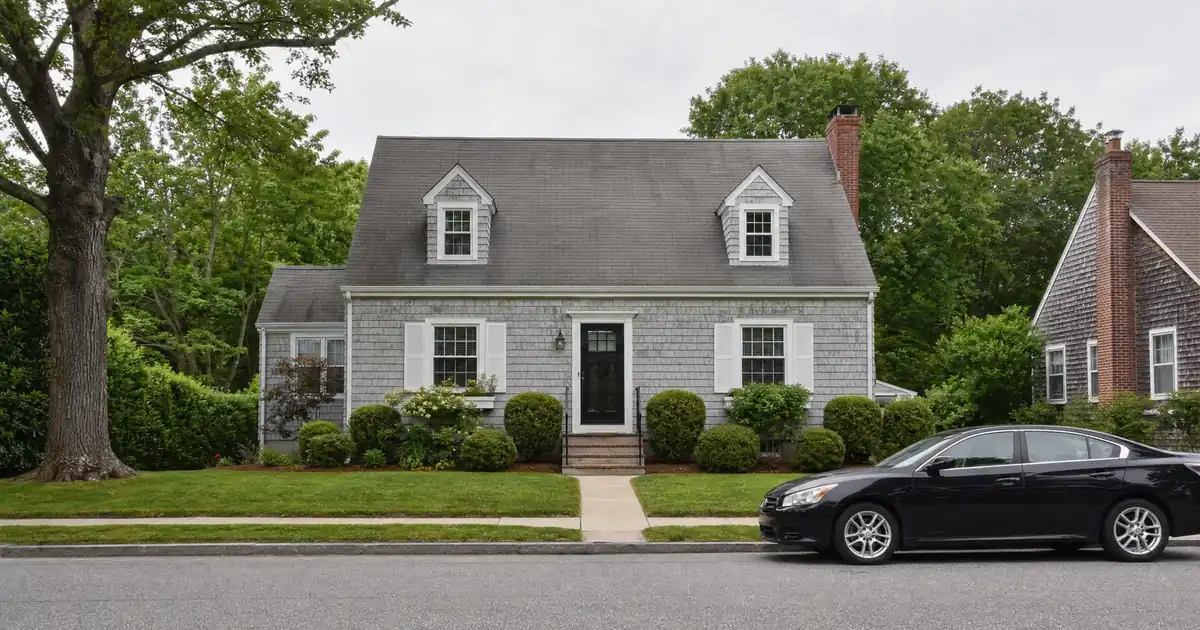
The Quick Read: Buying a rental property with cash and refinancing later is a common strategy. It works. But lenders always treat this loan as a cash-out refinance. They never treat it as a purchase loan — even though no mortgage ever existed on the property. Most DSCR (debt-service-coverage-ratio) lenders want you to hold the property for about six months first. Only then will they size your new loan off the current appraised value. The cash-out ceiling on most programs sits around 75% loan-to-value. Refinance earlier than six months, and the loan amount usually gets capped at what you actually paid for the property — not what it’s worth today.
DSCR Cash-Out Calculator
Run the cash-out numbers in your market
Rate source: Freddie Mac 30-yr average via FRED® — Federal Reserve Bank of St. Louis · effective Jul 30, 2026
Prefilled with starting assumptions — enter your property’s value, balance, taxes, and insurance for a more accurate picture.
Program parameters update from Lendmire’s centralized guideline source. Taxes and insurance are editable estimates.
As of Jul 30, 2026 · General Freddie Mac market benchmark, not a Lendmire loan offer. Property value, balance, taxes, and insurance are editable estimates. Maximum loan-to-value varies by lender, program, property type, and seasoning. Not a Loan Estimate, approval, or commitment to lend. Program availability and eligibility are subject to lender guidelines, credit approval, property review, and underwriting.
Key Takeaways
- A cash purchase followed by a refinance counts as a cash-out refinance for underwriting purposes. There’s no “purchase loan” path just because no mortgage existed before.
- Most DSCR lenders in Lendmire’s wholesale network want about six months of title seasoning. After that, they’ll lend against current appraised value instead of the original purchase cost.
- Cash-out leverage tops out around 75% LTV across most of the network. Lenders review credit, coverage, and reserves together — not one at a time.
- Refinancing too early doesn’t kill the deal. It usually just caps the loan amount at documented cost instead of value. That can leave real equity on the table.
- DSCR lenders look at the property’s rental income against its full monthly obligation (PITIA). They don’t look at the borrower’s personal income documents — subject to lender guidelines.
What “Bought Cash, Refinance Later” Actually Means
An investor pays cash for a rental property. No mortgage sits on title at closing. Months later, that investor applies for a new loan to pull equity back out. That second loan is a cash-out refinance, plain and simple — even though nothing is technically being “refinanced” in the traditional sense of replacing an old mortgage. Underwriters don’t care whether a mortgage existed before. They care whether you’re pulling equity out of a property you already own free and clear. That one classification decision sets the leverage ceiling, the seasoning clock, and the reserve requirement that follow.
This matters because a lot of investors think skipping financing on the purchase buys them a shortcut later. It doesn’t work that way in the non-QM world. If anything, lenders look at the file more closely. They want to confirm the cash actually came from your own funds. They also want to confirm the purchase was a genuine arm’s-length deal — not a sale between relatives or business partners set up to manufacture instant equity.
Key Terms Defined
DSCR (debt-service-coverage ratio) — this compares the property’s monthly rental income against its full monthly housing payment. A ratio above 1.00 means the rent covers the payment.
LTV (loan-to-value) — this is the loan amount as a percentage of the property’s value. A 75% LTV cash-out caps the new loan at three-quarters of what the property is worth (or, before seasoning, what it cost). These specifics are subject to lender guidelines and a full review of property, leverage, and credit.
Seasoning — this is how long a lender wants you to hold title before it will size a refinance off current value instead of original purchase price.
PITIA — this stands for principal, interest, taxes, insurance, and association dues, if any. This is the full monthly obligation the DSCR ratio measures rent against.
Cash-out refinance — this is a new loan larger than any prior debt on the property (or, in this case, larger than zero). It returns the difference to you as cash at closing.
Non-QM / business-purpose loan — this is a loan made to an investor for a rental property, not a primary residence. Lenders underwrite it based on the deal and the property, not the strict consumer-lending rules for owner-occupied mortgages.
Arm’s-length transaction — this is a sale between two unrelated parties with no financial relationship. Buying from a relative or business partner and refinancing right away can void the shortcuts described below.
How Underwriting Actually Treats This, Step by Step
Step 1 — Classification. The lender codes the file as a cash-out refinance the moment it confirms you bought the property outright. This one decision drives everything that follows.
Step 2 — The clock gets checked. Title seasoning measures how long you — or an LLC you majority-own — have held recorded title. Most DSCR lenders in Lendmire’s network want about six months of ownership before they’ll lend against current value. A few programs will consider shorter windows. But they usually ask for lower LTV, stronger credit, or bigger reserves in return.
Step 3 — Documentation of the cash purchase. The lender wants the original settlement statement. This proves no mortgage funded the purchase. The lender also wants proof of where the cash came from, plus a clean title report. If a bridge loan or hard-money loan funded part of the original purchase, you’ll need to prove the new loan pays that debt off too.
Step 4 — Appraisal and rent get calculated separately. The appraiser sets a value using comparable sales. A separate rent schedule sets market rent. The industry uses standard forms for this: Form 1007 for single-family properties and Form 1025 for two-to-four-unit properties. Non-QM underwriting borrows this naming convention from the agency world, even though these loans never get sold to Fannie Mae or Freddie Mac. The value opinion and the rent opinion are two separate, independent numbers. A strong rent figure doesn’t push the appraised value higher. It doesn’t work the other way either. As appraisal-education outlet McKissock points out, the appraiser reports what the market will pay in rent — the lender makes the final call on what counts toward qualification.
Step 5 — The loan gets sized. If seasoning has run its course, the new loan gets capped at current appraised value, times the program’s cash-out LTV ceiling. If the file runs before that window closes, the loan usually gets capped at documented cost instead — the original purchase price plus any documented rehab.
Step 6 — Credit, coverage, and reserves get reviewed together. No single number carries the file. A strong coverage ratio doesn’t make up for a thin credit file. A high credit score doesn’t make up for weak rent-to-payment math either.
Step 7 — Closing. The loan funds. Any existing debt (bridge loan, hard-money note) gets paid off. The balance goes to you as cash-out proceeds.
Where the Agency Rulebook and DSCR Underwriting Split
It helps to understand the conventional-side rule, because so many investors run into it first. Fannie Mae’s own guide requires you to be on title at least six months before a cash-out refinance, unless a specific exception applies. Fannie Mae carves out a named exception for exactly this scenario: buyers who paid cash can refinance earlier under the delayed financing exception. But that exception only works if the loan amount stays capped at the documented purchase price, not current value. That agency rule doesn’t govern DSCR loans at all. DSCR programs are business-purpose, non-QM products. Lenders never deliver them to Fannie Mae or Freddie Mac. Each lender in the non-QM space sets its own seasoning window instead of following the agency’s delayed-financing formula. Here’s the practical upshot: if you’ve read about “delayed financing” online and expect that exact mechanism to apply to your DSCR file, you’ll be disappointed. The DSCR world runs on its own six-month norm, set lender by lender — not on the agency’s named exception.
One small detail from that same agency guide is useful context for LLC-titled investors. Time held by an LLC that you majority-own or control generally counts toward seasoning instead of resetting the clock. DSCR lenders in Lendmire’s network tend to view LLC-held ownership the same way. The entity doesn’t erase the history — subject to program eligibility and how the lender documents ownership continuity.
DSCR loans are business-purpose investor loans made on non-owner-occupied rental property. Because of that classification, lenders review them differently — and usually outside of the disclosure timelines and waiting-period rules that apply to a standard owner-occupied mortgage refinance.
The Leverage, Credit, and Reserve Structure You’ll Actually See
Cash-out leverage on a seasoned DSCR refinance tops out around 75% LTV across most of Lendmire’s wholesale network. That’s a hard ceiling, not a starting point. Coverage matters just as much as leverage. A good number of programs treat 1.00 DSCR as a baseline floor — meaning rent covers the property’s full monthly obligation exactly. But that’s a floor for specific programs, not a universal industry standard. Stronger coverage ratios usually unlock better leverage and pricing.
Credit requirements run in tiers. A 620 floor exists in parts of the network, but most programs want something closer to 660. Cross into the 700+ range, and you tend to open up the strongest leverage available. Reserve requirements vary by lender, leverage, loan size, and transaction type. But a common benchmark on Lendmire’s cash-out files is roughly six months of PITIA held in reserve. Loans above roughly $1,500,000 often step that up to around nine months. Some conservative rate-term files at modest leverage under that threshold can see reserves waived entirely — but that’s the exception, not the rule.
Loan sizes on standard programs generally run up to $3,000,000. Smaller balances get routed through select lenders built for that range. Above roughly $2,500,000, most of the network settles on 30-year fixed structures rather than adjustable terms. The 30-year fixed is the backbone of the market. But extended 40-year terms and interest-only periods are available through select lenders. Adjustable-rate structures also exist for investors who specifically want that trade-off.
The same limits apply in every state, including Connecticut, Florida, Illinois, and New Jersey, with no state-specific overlays. Purchase leverage runs up to 80% LTV (85% by exception), and loan amounts follow the base program regardless of location.
Here’s something a lot of investors miss: a bigger down payment on the original purchase doesn’t erase these caps. Putting more cash in lowers your monthly obligation and can lift the coverage ratio. But it never overrides the LTV ceiling, the credit floor, the reserve requirement, or property eligibility. The strongest files clear both tests at once — enough equity in the deal and enough rental coverage to satisfy the ratio. Terms vary by lender guidelines, property type, leverage, credit profile, and full file review.
Run the numbers on a modeled scenario. Say an investor buys a small single-family rental for cash, around $310,000. Six months later, once seasoning is satisfied, the property appraises at a similar figure. The file refinances at a 75% cash-out cap. Market rent produces a coverage ratio around 1.15x. That’s a workable file on paper — subject to credit, reserves, and full underwriting review. Now compare that to financing the purchase with a DSCR loan from day one, at up to 85% LTV for a well-qualified borrower with a 700+ score. Less cash gets tied up at closing. But the eventual cash-out refinance still runs against that same 75% ceiling later. Neither path is automatically better. It’s a liquidity-versus-leverage trade-off worth mapping out before the purchase closes, not after. Exact terms depend on the lender’s guidelines, property type, leverage, and a full review of the borrower’s file.
Clearing 1.00 coverage isn’t the same as positive cash flow. DSCR only measures rent against PITIA. It says nothing about repairs, vacancy, property management, utilities, or capital expenditures. A file that clears 1.15x on paper can still run tight once you factor in real operating costs.
Where the General Rule Breaks: Edge Cases Worth Knowing
Forced appreciation creates a real trade-off. Say an investor buys distressed and rehabs a property. That investor has genuinely increased its value. But if that investor tries to refinance before seasoning is met, most lenders will still cap the loan at documented cost (purchase price plus verified rehab) — not the new, higher appraised value. Waiting out the full seasoning window and getting underwritten on current value can actually recover more equity than moving early, especially when rehab created substantial forced appreciation. This is the single biggest planning decision for BRRRR-style investors cycling capital across multiple properties — a strategy covered in more depth in Lendmire’s guide to refinancing a rental property with cash out.
Non-arm’s-length purchases can void the shortcut entirely. Buying from a relative, a business partner, or anyone with a financial tie to you removes the early-refinance option most lenders would otherwise consider. Lenders want a genuine market-rate sale between unrelated parties.
Some property types aren’t offered at all. Manufactured homes — single- or double-wide — along with log homes and barndominiums, fall outside DSCR programs across Lendmire’s network. That’s not a “harder to finance” situation. It’s simply not an available product category right now.
Portfolio scale plays out differently outside the agency world. Conventional financing often caps how many financed properties a single borrower can carry, and it steps reserve requirements up as that count rises. No equivalent ceiling exists in the DSCR/non-QM space, because lenders never deliver these loans into agency pools. That’s part of why investors running a repeat buy-rehab-refinance cycle across several properties often gravitate toward DSCR financing once they outgrow conventional limits. If you’re weighing that repeat-cycle math against a straightforward cash-out on a single asset, it may help to compare it with how a cash-out refinance on a rental property works.
Sub-1.00 coverage isn’t automatically a dead end. Select lenders in Lendmire’s network will review files where rent doesn’t fully cover the payment on paper. But expect the leverage and terms to adjust — lower LTV, different pricing, more reserves, or additional compensating factors — subject to lender guidelines and underwriting review. A no-ratio option is available for DSCR below 1.00 with stronger credit or higher down payment; qualification on that path rests on credit and equity rather than a rent-coverage calculation.
The Decision Investors Actually Face
Buying with cash wins bidding wars and skips financing contingencies. But it ties up your capital until seasoning clears or the file otherwise qualifies for review. That means you need to map out the exit refinance before the cash purchase closes — not improvise it six months later. If you bridged the original purchase with a private or hard-money loan and now have capital tied up, look closely at how that debt gets paid off at refinance closing — Lendmire’s guide to hard-money cash-out refinancing for non-owner-occupied property covers this scenario in more depth.
DSCR lenders look primarily at the property’s own rental income rather than your traditional personal-income documentation and pay stubs. Because of that, an all-cash purchaser with complex income — heavy depreciation, multiple entities, seasonal earnings — can often refinance out of a cash position more predictably than through a program demanding full personal income documentation. If you’re weighing that route against a conventional income-documented refinance, Lendmire’s guide to cash-out refinancing a rental property without showing income covers it in more depth. Lendmire’s complete DSCR loans guide also walks through the broader qualification mechanics for readers new to the product entirely.
Frequently Asked Questions
How long do I need to hold a rental property before a DSCR cash-out refinance sizes off appraised value instead of purchase price?
Around six months is the common expectation across most of Lendmire’s wholesale network. A handful of programs will consider shorter windows in exchange for lower leverage, stronger credit, or larger reserves. Before that window closes, most lenders size the new loan off documented purchase cost rather than current value.
Does buying through an LLC reset the seasoning clock to zero?
Generally not — as long as the LLC is majority-owned or controlled by you and that ownership can be documented. Time held by that entity typically counts toward the seasoning requirement instead of starting over, subject to lender program eligibility and how ownership continuity is verified.
Can I refinance out of a cash purchase from a family member?
Lenders generally want the original purchase to be an arm’s-length transaction between unrelated parties. Buying from a relative or business partner and refinancing shortly after can remove the early-refinance shortcut entirely. Structure the purchase as a genuine market sale from the start.
Does a higher rent number on the appraisal increase my loan amount?
No. The value opinion and the market-rent opinion are two separate, independently produced figures. A strong rent survey supports the DSCR calculation and qualification, but it doesn’t change the appraised value used to size the loan.
What if the rental income doesn’t fully cover the payment?
Select lenders in Lendmire’s network will still review sub-1.00 coverage files. Expect adjusted leverage, pricing, or additional compensating factors, subject to lender guidelines and full underwriting.
For how equity extraction works on an investment property, see cash-out refinance on an investment property.
About Lendmire
Lendmire (NMLS# 2371349) is a mortgage broker. It arranges DSCR investor financing through select lenders across a 41-market footprint spanning 40 states plus Washington, D.C. Lendmire doesn’t fund or underwrite loans directly. Instead, it works to match a given rental deal’s equity position, coverage ratio, and credit profile against the wholesale programs likely to fit. If you’re weighing whether to buy cash now and refinance later, or finance the purchase from the start, call 828-256-2183 or request a quote through Lendmire’s mortgage quote form to see how your property’s numbers line up. Scotsman Guide named Lendmire a Top Mortgage Workplace in both 2025 and 2026.
Tax treatment on cash-out proceeds can depend on how you use the funds and how you hold the property. Keep clear records and speak with a qualified tax professional before relying on any deduction.
All-cash purchases aren’t a fringe strategy. The National Association of Realtors’ 2025 Profile of Home Buyers and Sellers found all-cash purchases reached an all-time high of 26% over the last year. That’s up from fewer than one in ten buyers between 2003 and 2010. This figure covers primary-residence buyers only, which means investor-heavy cash volume runs even higher across the broader market. This mechanic isn’t a niche corner case. It’s a mainstream financing sequence a large share of rental buyers are already living through.
Nothing here is a commitment to lend, and loan approval is never guaranteed. Every scenario described is subject to lender approval, underwriting review, and the borrower’s, property’s, and program’s specific guidelines at the time of application. This content is general information only, not financial, legal, or tax advice, and program parameters can change without notice — investors should confirm current terms directly with Lendmire or a licensed lender before making a purchase or refinance decision, and review details remain subject to lender overlays.
Get Started
Ready to find the right loan for you?
In about 30 seconds you can review financing options available for your investment property. No commitment required.
Informational only. Not a Loan Estimate, approval, or commitment to lend. Program availability and eligibility are subject to lender guidelines, credit approval, property review, and underwriting.
References
1. McKissock Learning — Form 1007 & Its Impact on Short-Term Rental Appraisals
2. Fannie Mae Selling Guide — Cash-Out Refinance Transactions (B2-1.3-03)
This article is part of Lendmire’s investment property cash-out refinance program — full qualification details, guidelines, and scenarios live on the program page.
Related reading: Cash Out Refinance For Rental Property · Cash Out Refinance Income Property · Can I Refinance An Investment Rental Property With Harp?
Brandon Miller
Founder & CEO, Mortgage Loan Originator, Lendmire LLC
- Mortgage Loan Originator · NMLS# 1129696 · Verify on NMLS Consumer Access
- North Carolina Real Estate Broker · License# 343312 · Verify on NCREC
- North Carolina Insurance Producer · License# 19053198 · Property, Casualty, Life, Health · Verify on NAIC SBS
- Lendmire LLC · Firm NMLS# 2371349 · Verify firm licensure
Legal disclosures. Lendmire (NMLS# 2371349) is a state-licensed mortgage brokerage that arranges financing through wholesale lender relationships. Lendmire is not a direct lender, depository institution, or registered financial advisor. The discussion above is general informational content about real estate financing — it is not financial, legal, or tax advice, and readers should consult licensed professionals for guidance on their individual circumstances. Loan inquiries are subject to lender underwriting; this article does not represent a commitment to lend. Loan terms, rates, and qualification standards vary by borrower, property, and state, and are subject to change at any time. Equal Housing Opportunity. NMLS Consumer Access: nmlsconsumeraccess.org.