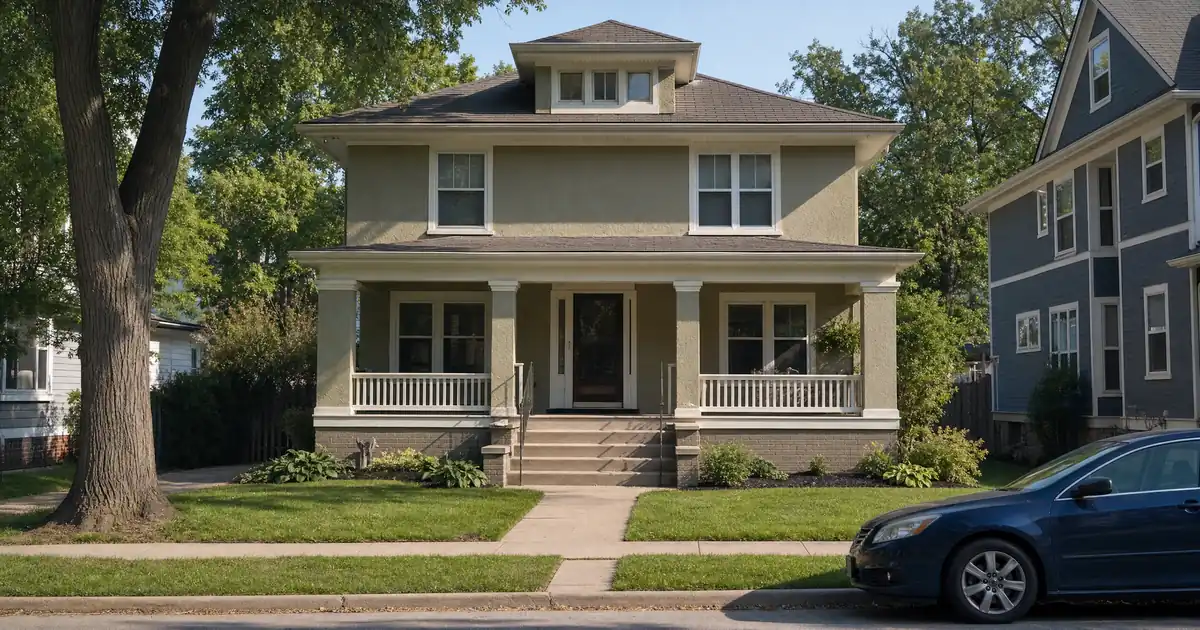
Appraisal Requirements For Short Term Rental Properties — The Quick Read: There is no single national rulebook for valuing a nightly rental. Even Fannie Mae admits its own Selling Guide stays quiet on the question. Every STR appraisal still gives you two opinions: what the property is worth, and what it earns. That second number is where the standard playbook breaks down. The comparable-rent form appraisers normally use was built for month-to-month tenants, not nightly guests. On the financing side, most DSCR lenders in Lendmire’s wholesale network want about a year of hosting history. They also want a credit score in the 700s and rental income that clears a coverage floor before STR income counts toward qualification at all.
Key Takeaways
- Every STR appraisal delivers two separate opinions — market value and rental income — and the rental-income side is where standard appraisal tools genuinely struggle.
- Form 1007, the standard comparable-rent schedule, was built for long-term leases; it can’t be used to multiply a nightly rate by 30 to fake a monthly figure.
- Third-party platforms like AirDNA’s Rentalizer fill the data gap, but lenders typically apply a discount to those projections rather than taking the headline number at face value.
- On STR files, most programs in Lendmire’s network look for purchase leverage up to 75% LTV, cash-out or refinance leverage up to 70%, credit scores generally in the 700s, and about 12 months of hosting history.
- Local zoning, HOA rules, and appraiser competency limits can each override an otherwise strong income picture — a clean appraisal is necessary, but it isn’t the whole story.
What Actually Makes an STR Appraisal Different
A short-term rental appraisal answers the same two questions as any other rental appraisal. What’s the property worth? What does it earn? The difference shows up in how hard that second question is to answer.
Fannie Mae’s appraisal staff tackled this head-on in a 2024 update. They wrote that “the Selling Guide is silent on whether an STR should be considered rental income.” They also explained why STRs resist the usual tools. Guests book nightly, like a hotel, instead of leasing monthly. The deal usually includes furniture and fixtures. It runs on a terms-and-conditions agreement instead of a lease. Some STRs even bundle in services like cleaning or food (Fannie Mae Appraiser Update). None of that fits cleanly on a form built for a renter who signs a twelve-month lease and moves in with their own couch.
That mismatch is why STR appraisals lean on a mix of tools instead of one standard form. Appraisers use sale comps for value, plus some combination of a rent schedule, a narrative income analysis, and third-party occupancy data for the earnings side.
Key Terms Defined
DSCR (debt-service coverage ratio): a ratio comparing a property’s monthly rental income to its full monthly payment — including principal, interest, taxes, insurance, and any HOA dues. A ratio at or above 1.00 means the rent covers the payment on paper.
LTV (loan-to-value): the percentage of the property’s value a lender is willing to finance. Lower LTV means more cash down and generally less risk to the lender.
Form 1007: Fannie Mae’s Single-Family Comparable Rent Schedule, used to estimate monthly market rent on a one-unit property based on comparable long-term leases.
Going-concern value: the value of a property as an operating business — including its brand, bookings, and reputation — separate from the value of the real estate or the furniture inside it.
USPAP: the Uniform Standards of Professional Appraisal Practice, the rulebook every state-licensed appraiser must follow, maintained by The Appraisal Foundation under authority Congress granted in 1989.
Host history: the track record of time an owner has actually operated a property as a short-term rental — the closer thing STR lending has to a seasoning requirement.
Form 1007, Form 1025, or a Narrative Income Analysis?
None of the standard forms were built with STRs in mind. That matters because it limits what an appraiser can actually do on paper.
| Exhibit | Built For | What It Can Do | Where It Falls Short on STR |
|---|---|---|---|
| Form 1007 | One-unit long-term rental | Monthly rent from leased comps | Can’t use nightly rates or strip out furniture, vacancy |
| Form 1025 | 2-4 unit income property | Monthly rents plus operating statement | Same monthly-lease assumption problem |
| Narrative STR income analysis | Nightly or short-stay rental | ADR, occupancy, and revenue comps | Not standardized; quality varies by appraiser |
Fannie Mae has been clear about one thing appraisers cannot do on Form 1007. They cannot take a nightly STR comparable and multiply it by 30 to invent a monthly rent. That shortcut, per Fannie’s own guidance, “would fail to account for FFE, other services, vacancy rates, and business expenses”. A lender can still request a 1007 on an STR file. But the appraiser has to pull real monthly-lease comps to fill it out. That usually means the form understates what the property actually earns as a nightly rental, because it’s measuring the wrong market.
How the Appraisal Actually Gets Built, Step by Step
Market value comes first. No matter the rental strategy, the appraiser starts with sale comps to figure out what the property is worth for loan-to-value purposes. That part looks like any other appraisal.
Then comes the income opinion — and this is where STR gets complicated. If the lender wants rental income considered, the appraiser has to decide how to measure it. A straight 1007 pulls monthly-lease comps. A narrative addendum instead pulls short-term comps and looks at average daily rate, occupancy, and seasonality.
Third-party data often fills the gap. AirDNA’s Rentalizer tool is the source used most often in the non-QM world. It scans comparable active listings within roughly a 10-mile radius. It matches them by bedroom count, bathroom count, and guest capacity. Then it produces a weighted average adjusted for seasonality and demand (AirDNA). It’s a useful data point — not a guaranteed number. Projections built for a brand-new listing tend to run optimistic. The tool models what an established, well-reviewed property earns, not what a first-year host with zero reviews will pull in.
Operating history matters for refinances. If the property has already been hosting, bank deposits, platform payout statements, or property-manager remittance records give the appraiser and lender real trailing numbers to check the projection against.
Furniture and business value get separated out. A technically correct STR valuation splits real property value from personal property (furniture, fixtures, equipment). It also splits out any going-concern value tied to bookings and reviews. Most residential appraisers aren’t trained or credentialed to value that last piece. USPAP requires them to say so if they aren’t qualified (The Appraisal Foundation).
Rental Income or Business Income? The Fork That Decides Everything
Every STR file eventually hits a classification question. Does the income count as rental income, or as business income from an operating hospitality use? The answer changes which appraisal exhibit applies and how a lender documents the file.
Treated as rental income, the property behaves more like a standard investment property. A rent schedule or narrative income analysis feeds the coverage figure. Treated as business income, the analysis shifts toward a going-concern view. A straight comparable-rent exhibit stops being the right tool entirely. Most DSCR files fall into the first bucket, since the loan is qualifying on the property’s rental performance rather than a broader hospitality operation. But a property with heavy add-on services (cleaning packages, concierge-style amenities, food service) can push toward the second bucket. That’s a conversation worth having with a lender before ordering the appraisal.
Where DSCR Underwriting Picks Up After the Appraisal
The appraisal produces a number. What a DSCR lender does with that number is a separate question — and it’s the part most STR appraisal explainers skip entirely.
Debt-service coverage ratio loans qualify a property on its rental income instead of the borrower’s traditional personal-income paperwork or pay stubs. That’s what makes them the natural fit for STR files, where the appraisal itself is already the central risk question. Lendmire (NMLS# 2371349) is a mortgage broker that arranges these loans through select lenders across a wholesale network covering 39 states plus Washington, D.C. The way those lenders treat STR appraisals varies more than almost any other file type in the DSCR world.
On most STR purchase files, leverage tops out around 75% LTV. Cash-out and rate-term refinances run more conservative, generally capping near 70% LTV. Lenders commonly want about six months of seasoning — ownership time — before a refinance moves forward. Credit expectations run higher on STR than on a standard long-term rental file too. Most programs look for scores generally in the 700s before they’ll lean on nightly income. Hosting history matters almost as much as credit. Lenders in the network typically want to see roughly 12 months of operating track record before treating STR income as established, rather than projected.
Coverage floors follow a similar pattern, but they deserve separate treatment for each transaction type, since purchase and refinance files don’t always move in lockstep. On purchase files, coverage around 1.00x — rent covering the full monthly payment — is where several programs draw their starting line. But it’s a floor on select programs, not a universal benchmark. On refinance files, that same coverage expectation generally holds. Leverage and pricing often shift differently, though, because the LTV cap drops on cash-out. Stronger coverage on either side tends to open better leverage.
Not every file clears that line on paper, and coverage below 1.00 isn’t automatically a dead end. A handful of lenders in the network will still review a file below that threshold. Leverage and terms adjust when they do. Separately, some lenders offer no-ratio qualification — skipping the rent-to-payment test altogether. That path is generally reserved for borrowers who already own a primary residence, and it runs through select lenders only, not a standard program feature.
Loan sizes on standard STR programs generally run up to $3 million. Smaller balances are still workable through select lenders in the network. Reserve requirements vary by lender, leverage, and transaction size. They commonly land around six months of the monthly carrying cost. Sometimes reserves get waived on conservative, lower-leverage rate-term files. Sometimes they step up on larger loan amounts.
DSCR loans are business-purpose products for non-owner-occupied investment properties. That’s part of why they get reviewed under a different rulebook than a standard owner-occupied mortgage. It’s also part of why Fannie Mae’s consumer-lending guidance on Form 1007 never actually governs a DSCR file, even though the industry still borrows the form’s name as shorthand. Investors comparing this structure against a standard mortgage can see the fuller DSCR versus conventional breakdown for how the two paths diverge beyond appraisal treatment.
Files built specifically around STR income have their own eligibility checklist worth reviewing before an appraisal is even ordered. Lendmire’s short-term rental loan requirements page walks through the pieces that tend to trip investors up.
Across STR files that come through Lendmire’s network, one pattern shows up most often: a gap between the two coverage calculations. Long-term rent produces one DSCR number. Trailing nightly income produces a noticeably higher one. Lenders that accept nightly income want to see documented history behind it — bank statements, platform payouts, or a booking export — rather than relying on a projection alone.
Where the Standard Approach Breaks Down
Appraiser competency is a real gap, not a technicality. Most residential appraisers aren’t credentialed to value personal property or a going-concern business. Technically, that’s what a full STR valuation requires. USPAP requires an appraiser to say so when they lack that competency (The Appraisal Foundation). A file where the appraiser simply treated a nightly rental like a long-term lease, without disclosing the limitation, is a problem waiting to surface later.
Local zoning can override the whole income picture. An appraisal can be flawless, and the deal can still stall because the jurisdiction doesn’t permit the use. A 2022 Illinois appellate case shows this well. The court upheld a zoning ordinance banning short-term rentals in a residential district. Its reasoning: accepting payment for overnight stays made the use commercial rather than residential (UC Law Review). Short-term rental rules can vary by city, county, HOA, and property type. Investors should confirm local rules before relying on projected rental income.
HOAs are a separate landmine from zoning. A condo or planned community can prohibit or cap nightly rentals through its bylaws, even where the city itself allows STR use. No appraisal number changes that restriction.
Thin markets distort data-driven projections. Third-party revenue tools work best where there’s a deep pool of comparable listings. In a rural or low-inventory market, a single unusual listing can pull a comp-based projection way off track. That’s exactly where a documented operating history matters more than a modeled estimate.
Some structures never make it into the room at all. Manufactured housing (single- or double-wide), log homes, and barndominiums fall outside DSCR eligibility in this network. That’s true no matter how strong the appraised income comes back. Worth knowing before spending money on an appraisal for one of those property types.
If the Appraisal Comes in Low
A low number doesn’t always end the deal. It usually just means one of the inputs needs a second look. The most common fixes: request additional or better-matched comparables, provide documented booking history the appraiser didn’t have on the first pass, or restructure the file around a lower leverage tier that still clears coverage at the appraised figure. Sometimes the fix is procedural rather than financial. Make sure the appraiser actually had access to platform statements or a booking export before rendering the opinion — a first-pass appraisal without that data is often working from third-party estimates alone.
What to Have Ready Before the Appraiser Shows Up
A little preparation changes how an STR appraisal turns out more than almost anything else in the file:
- A booking history export from Airbnb, Vrbo, or the property management platform, covering as much operating history as exists
- Monthly or annual gross revenue summaries, ideally reconciled against bank deposits
- A furnishings and FF&E inventory, since personal property value sometimes needs separating from real estate value
- Copies of any local STR permit, license, or registration
- Occupancy data — how many nights the unit was both available and booked, not just booked
Multi-Unit Short-Term Rentals
A duplex, triplex, or fourplex run as short-term rentals uses Form 1025 instead of Form 1007 — the multi-unit equivalent, pairing monthly rent estimates with an operating income statement. The same core mismatch applies. Form 1025 was built around monthly leases, so an appraiser working a multi-unit STR still typically supplements it with nightly comp data or a narrative addendum for each unit. Cash flow analysis on small multifamily STRs gets more complicated too, since occupancy and rate can vary unit by unit. The long-term versus short-term rental cash flow comparison breaks down how lenders weigh that variability.
Investors weighing whether to pursue STR financing at all, versus keeping a property on a standard lease, might find it useful to start with Lendmire’s short-term rental loan overview before ordering an appraisal. It lays out the fuller qualification picture beyond the appraisal question alone. And for anyone still building out the broader DSCR picture, the complete DSCR loans guide covers how the loan type works end to end.
Investors can also reach Lendmire directly at 828-256-2183, or request a quote online, to talk through how a specific property’s appraisal and coverage numbers might line up with current program guidelines.
Nothing here is a commitment to lend, and loan approval is never guaranteed. Every scenario described is general information, not financial, legal, or tax advice, and actual outcomes depend on lender approval along with borrower, property, and program guidelines that can change. Investors should confirm current requirements directly with a lender before relying on any figure here.
Frequently Asked Questions
Can an appraiser use my actual Airbnb income to qualify me for a loan?
Sometimes, but not automatically. If the property has trailing operating history, that documentation can support the income opinion. But the appraiser and lender still check it against comparable data rather than accepting it at face value. A brand-new listing with no history has nothing to check against yet. That’s part of why most lenders in Lendmire’s network want roughly 12 months of hosting history before leaning heavily on STR income.
Does every short-term rental need a special appraisal form?
No — there isn’t one dedicated STR form. Lenders can order a standard Form 1007 (or 1025 for multi-unit), a narrative income analysis built around nightly comparables, or some combination of both. The choice depends on the lender, the property, and whether operating history already exists.
What happens if my city or HOA doesn’t allow short-term rentals?
The appraisal and income analysis stop mattering if the use isn’t legally permitted at that address. Zoning and HOA restrictions are independent of the appraisal, and a strong income opinion doesn’t override a local prohibition. Confirming local and HOA rules before ordering an appraisal saves both time and appraisal cost.
How much hosting history do I actually need before STR income counts?
Most programs in Lendmire’s network want around 12 months of operating track record before treating nightly income as established rather than projected. Files without that history can sometimes still move forward. But they generally lean more heavily on projected data and third-party revenue tools, which carries more uncertainty for the lender.
Can I use short-term rental income on a duplex or fourplex?
Yes, though the appraisal exhibit shifts to Form 1025 instead of Form 1007. The income analysis typically has to account for each unit separately, since occupancy and rate can vary unit to unit. The underlying DSCR lender review approach stays the same — rent measured against the full monthly obligation, subject to lender guidelines.
Investors focused on short-term rentals can review DSCR loans for Airbnb and short-term rentals.
About Lendmire
Lendmire is a non-QM mortgage brokerage (NMLS# 2371349) arranging DSCR investor loans in 40 markets, including Washington, D.C., through wholesale and investor-lending channels. DSCR loans are evaluated by the lender on rental income rather than personal income, subject to lender guidelines — a fit for LLC-owned portfolios, self-employed investors, and operators scaling beyond conventional loan caps. Recognized as a Scotsman Guide Top Mortgage Workplace in 2025 and 2026.
Lendmire’s Top Mortgage Workplace recognition is documented by Scotsman Guide 2025 Top Mortgage Workplace and Scotsman Guide 2026 Top Mortgage Workplace.
References
1. Fannie Mae Appraiser Update, June 2024
2. The Appraisal Foundation — USPAP
3. AirDNA Help Center — Rentalizer Methodology
4. UC Law Review Blog — Residential or Commercial: Legal Ambiguity in Short-Term Rental Regulation
Get Started
Ready to find the right loan for you?
In about 30 seconds you can review financing options available for your home or investment property. No commitment required.
Informational only. Not a Loan Estimate, approval, or commitment to lend. Program availability and eligibility are subject to lender guidelines, credit approval, property review, and underwriting.
Brandon Miller
Founder & CEO, Mortgage Loan Originator, Lendmire LLC
- Mortgage Loan Originator · NMLS# 1129696 · Verify on NMLS Consumer Access
- North Carolina Real Estate Broker · License# 343312 · Verify on NCREC
- North Carolina Insurance Producer · License# 19053198 · Property, Casualty, Life, Health · Verify on NAIC SBS
- Lendmire LLC · Firm NMLS# 2371349 · Verify firm licensure
Legal disclosures. Lendmire (NMLS# 2371349) is a state-licensed mortgage brokerage that arranges financing through wholesale lender relationships. Lendmire is not a direct lender, depository institution, or registered financial advisor. The discussion above is general informational content about real estate financing — it is not financial, legal, or tax advice, and readers should consult licensed professionals for guidance on their individual circumstances. Loan inquiries are subject to lender underwriting; this article does not represent a commitment to lend. Loan terms, rates, and qualification standards vary by borrower, property, and state, and are subject to change at any time. Equal Housing Opportunity. NMLS Consumer Access: nmlsconsumeraccess.org.