
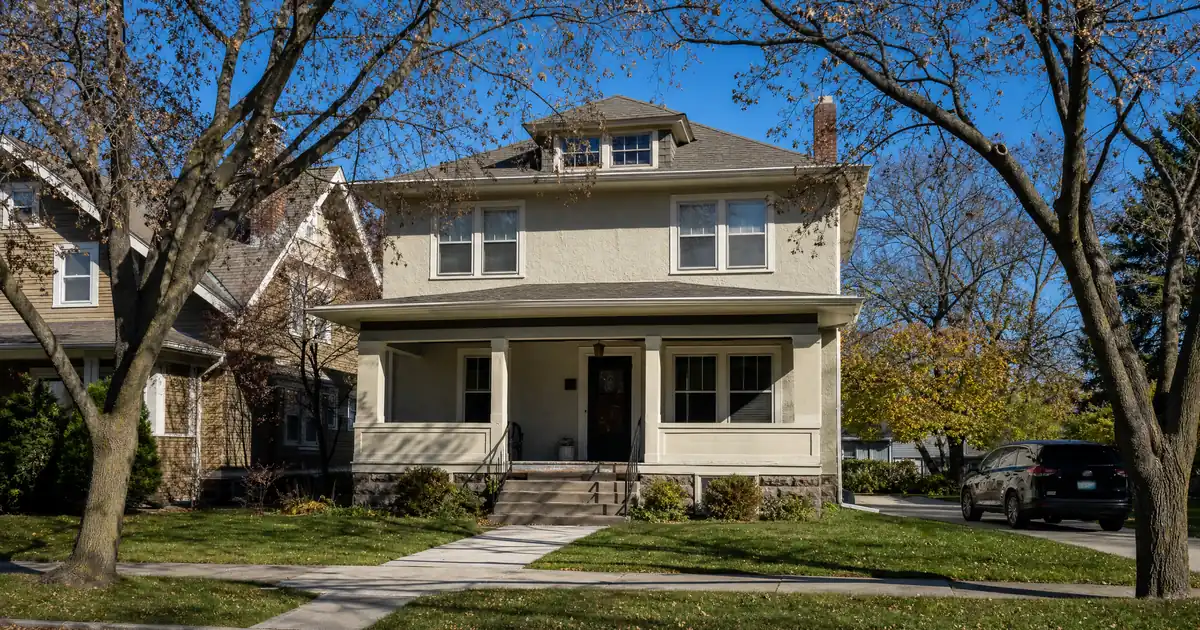
The Quick Read: ARV hard money lenders size a fix-and-flip or bridge loan against the property’s after-repair value — what the house will be worth once the renovation is finished — instead of what it’s worth today. That single difference is why hard money can fund a deal a bank won’t touch. What exists is a loan sized against total project cost — up to 93% of purchase plus rehab for investors with five or more completed projects, capped at 75% of after-repair value — with up to 100% of the rehab budget funded in draws against completed work, not at closing. Once the property is renovated and rented, most investors refinance that bridge loan into a long-term DSCR loan sized off the post-rehab appraisal.
Key Terms Defined
- After-Repair Value (ARV): the projected market value of a property once planned renovations are complete, based on comparable sales of similar properties that have already been fixed up nearby.
- As-is value: what the property is worth right now, in its current, unrenovated condition.
- Loan-to-Cost (LTC): the loan amount measured against total project cost — purchase price plus the rehab budget.
- Loan-to-ARV: the loan amount measured against the projected after-repair value rather than today’s value.
- Draw schedule: the process of releasing rehab funds in stages as work gets completed and inspected, instead of handing over the full rehab budget at closing.
- Broker price opinion (BPO): a lighter-touch valuation, sometimes used alongside or instead of a full appraisal, where an agent or appraiser estimates value from nearby listings and closed sales.
Why Do Hard Money Lenders Look at ARV When Banks Won’t?
Banks lend against what a property is worth today. Hard money lenders are willing to lend against what it will be worth after the work gets done — that’s the entire mechanism that makes fix-and-flip financing possible.
What this loan actually costs to carry in your market.
Hard money is sized against the project and priced by time. Enter the deal and see how much the program will lend, the cash required at closing, the carry while you hold it, and what is left at the exit.
Leverage tiers on the current program: up to 85% of project cost with fewer than two completed projects, 90% with two or more, 93% with five or more — every tier capped at 75% of after-repair value. Loan amounts up to $5,000,000, larger by exception; terms of 6 to 18 months, interest-only, no prepayment penalty. The rehab portion funds in draws against completed work, not at closing.
Program parameters shown update from Lendmire’s centralized guideline source. Rate, points, and months are editable assumptions, not quoted terms.
Cost cap sets the loan · positive spread
Illustrative estimate only — not a quote, Loan Estimate, approval, or commitment to lend. Rate, points, and months are editable assumptions. Hard money is business-purpose financing for real estate investors, not a consumer mortgage. Leverage on the current program tops out at 93% of project cost for investors with a documented track record, capped at 75% of after-repair value, with rehab funding up to 100% of the documented budget released in draws; actual terms vary by lender, borrower experience, property, and exit. Lendmire is a mortgage broker, not a lender.
A conventional lender selling loans into the secondary market has to underwrite to current appraised value because that’s what agency guidelines require. A hard money lender, holding or placing the loan through its own network, can look past a distressed kitchen and a leaking roof to the comps three streets over that sold renovated. That’s not a loophole. It’s the entire business model.
Value gets established procedurally, not by guesswork. As Scotsman Guide explains it, the lender typically works with a third-party appraisal management company to establish both the as-is value and the ARV — two separate numbers, sometimes two separate appraisal assignments, feeding into one underwriting decision.
How Do Lenders Actually Land on an ARV Number?
The appraiser pulls comps of renovated properties nearby — not the subject in its current shape — and builds the ARV from what those finished homes actually sold for. The single biggest variable an investor controls is whether the appraiser has the renovation scope in hand before the site visit.
Scotsman Guide’s own tutorial makes this concrete with an example worth remembering. Order an appraisal without a scope of work attached, and the appraiser might land on an as-is value around $200,000 and an ARV around $210,000 — a spread that kills the deal’s margin. Hand that same appraiser a detailed scope of work before the inspection, showing exactly what’s getting replaced, upgraded, or added, and the ARV on the identical property can come in near $300,000 (Scotsman Guide). Same house. Same appraiser. Wildly different number, purely because of documentation timing.
That’s the lever. Investors who show up with a vague “gut rehab” plan get a conservative ARV. Investors who show up with a line-item scope — flooring, kitchen, bath count, square footage added — get an appraisal that actually reflects the finished product.
LTC, LTV, and the ARV Ceiling: How the Ratios Interact
A strong ARV doesn’t automatically mean a bigger loan. Lenders run two tests in parallel — loan-to-cost and loan-to-ARV — and use whichever number is lower.
Loan-to-Cost compares the requested loan amount to the total project cost: purchase price plus renovation budget. The ARV, meanwhile, acts as a hard ceiling — lenders generally won’t advance past a set percentage of that projected future value, regardless of how the cost math looks. Whichever calculation produces the smaller number wins, which protects the lender from over-leveraging a deal where costs run high relative to the eventual payoff.
Run a modeled example. Say an investor is under contract at $150,000, with a $50,000 rehab budget — a $200,000 total project cost. The structure is cost-based: up to 93% of purchase plus rehab for experienced investors, capped at 75% of after-repair value, with the rehab budget funded in draws as work is completed. Separately, the appraiser lands on a $250,000 ARV. Using an illustrative 70% ARV cap — a figure well within the industry’s typical range — the ARV ceiling comes out to $175,000. That’s lower than the $185,000 cost-side number, so the ARV ceiling governs. The loan caps at $175,000, not $185,000, even though the cost math would have supported more.
That’s the entire concept in one number: ARV sets the roof, cost sets the floor, and the lender always builds to the lower one.
What Does “100% Financing” Actually Mean?
It doesn’t mean zero money into the deal, and it definitely doesn’t mean 100% loan-to-value against today’s property value. There’s no true 100%-purchase-LTV hard money program — not in Lendmire’s network, and realistically not anywhere in this asset class.
Across the wholesale network Lendmire places files through, fix-and-flip leverage on the current program runs up to 93% of project cost for investors with five or more completed projects and up to 90% with two or more, with every tier capped at 75% of after-repair value; bridge purchases without rehab run up to 80% of purchase price, and cash-out or refinance files top out at 65% of value. What can hit 100% is the rehab side — some lenders will finance the full rehab budget on top of the acquisition advance, subject to lender guidelines. So “100% financing” almost always means 100% of the renovation cost, layered on top of a partial purchase advance — never a free ride on the whole deal.
This is exactly the trade press consensus, too: 100% financing in hard money “is not 100% LTV” against current value — it’s a rehab-cost figure wearing a marketing headline. Exact terms depend on the lender’s guidelines, property type, leverage, and a full review of the borrower’s file.
How Lenders Evaluate the Deal Beyond the Ratio
A great ARV alone doesn’t get a deal funded. Lenders build the file around four or five compensating factors that sit next to the ratio, not underneath it.
- The comps. Are the renovated sales the appraiser used truly comparable — same neighborhood, similar age and condition after rehab, sold within a reasonable window?
- The scope of work. Is the renovation plan documented in enough detail that the appraiser can actually price the finished product, not guess at it?
- Borrower experience. A first flip and a fortieth flip get looked at differently, even against identical numbers.
- Liquidity and reserves. Lenders want to see the investor can carry the project — and the property — if the timeline slips.
- The exit. Sale, refinance, or hold — the lender wants a credible path to getting repaid.
One trade source frames the failure mode directly: leaning on a strong ARV alone is “an unworkable way to dance around a lack of down payment, post-close liquidity, or experience” — every hard money lender wants those boxes checked (FCTD). A great number with a thin borrower file still gets a harder look, or a lower advance, than the ratio alone would suggest.
Property Types and Structures ARV Financing Covers
ARV underwriting isn’t limited to single-family flips. Loan sizes on the current program run up to $5,000,000, with larger amounts considered by exception, and eligible collateral is non-owner-occupied residential property of one to four units, with ground-up construction up to ten units. Terms are short by design — 6 to 18 months on the current program, interest-only, with no prepayment penalty — and investors who need longer runway refinance into a DSCR loan once the property qualifies.
Structure matters as much as property type. Mortgage funds — lenders that originate and hold loans in their own portfolio — have more room to get creative than conduit lenders, who originate and sell loans into the secondary market. A portfolio lender can sometimes bring in a second property as additional collateral, a cross-collateral blanket structure, to unlock more leverage than a single property would support on its own (FCTD). Underwriting stays asset-based across all of it — centered on property value, equity, and exit strategy, not a W-2 or a debt-to-income ratio.
Investors weighing a multifamily rehab versus a straight single-family flip do well to read Lendmire’s residential hard money lenders overview alongside the multifamily hard money lenders breakdown — the underwriting logic is the same, but the comp sets and draw schedules differ. For a market-specific look at how this plays out in a high-turnover flip market, see Lendmire’s Tampa ARV hard money guide.
Where the Math Gets Messy
The ARV framework is clean on paper. Real files break it in a handful of predictable spots.
Scope-of-work timing, again. Worth repeating because it’s the single largest lever investors control — the same property can appraise for a $90,000 spread depending solely on whether the appraiser saw the renovation plan before the site visit (Scotsman Guide).
Rent estimates trip up the exit, not the acquisition. For rental exit planning, appraisers document market rent separately using a standardized form — Fannie Mae’s Single-Family Comparable Rent Schedule (Form 1007) for one-unit properties, or the Small Residential Income Property Appraisal Report (Form 1025) for two-to-four unit buildings (Fannie Mae). That naming convention has been widely adopted across non-agency DSCR underwriting as a documentation standard — it carries no agency-eligibility implication for a DSCR loan, but the appraiser’s number on that form is what the refinance lender uses, even if it’s lower than the signed lease sitting in the investor’s file.
Business-purpose classification is a real distinction, not paperwork. Hard money and DSCR loans are both business-purpose products made to investors, not owner-occupants. Because they’re structured around investment property rather than a primary residence, they’re reviewed under different rules than a standard consumer mortgage — and they sit outside Truth in Lending disclosures like the Loan Estimate and three-day rescission period that apply to owner-occupied lending.
The Exit: Refinancing Out of Hard Money Into a DSCR Loan
The bridge loan isn’t the destination — it’s the on-ramp. Once the rehab is done, tenanted, and stabilized, most investors running the BRRRR strategy refinance out of the hard money loan into a long-term DSCR loan, sized off the post-rehab appraised value rather than the original purchase price. That refinance appraisal, not the ARV projected at acquisition, is the number that actually determines how much equity comes back out.
A DSCR loan is reviewed primarily on property-level rental income covering the payment, subject to lender guidelines — no personal income documentation required, because qualification runs on what the property itself brings in rather than a W-2 or tax return. Lendmire’s complete DSCR loans guide walks through how that math works end to end.
Timing matters here, and it’s tighter than a lot of investors expect. Most DSCR lenders in Lendmire’s network want around six months of ownership before a cash-out refinance, and cash-out leverage on those refinances generally caps near 75% LTV. Compare that to agency rules on the conventional side, where Fannie Mae’s guidelines now require twelve months of seasoning before a cash-out refinance on an investment property — up from six months previously (Calculatorian). That’s an agency contrast only; DSCR loans aren’t agency products, and their seasoning norms run shorter.
Coverage on that exit refinance typically wants to clear somewhere around 1.00x rent-to-payment as a select-program floor — never a universal standard, and stronger coverage ratios open better leverage and pricing. Programs below that floor exist through select lenders in the network, but leverage and terms adjust when coverage runs thin; review details are subject to lender overlays either way. A bigger down payment can lift that ratio and lower the loan’s monthly carry, but it never overrides a leverage cap, a credit floor, a reserve requirement, or property eligibility rules on its own — the strongest files clear both the equity test and the coverage test.
Lendmire arranges these DSCR exit refinances through select lenders across 39 states plus Washington, D.C. — under NMLS# 2371349, and files titled to an LLC are common on the investor side, subject to lender program eligibility. Investors comparing the bridge-to-DSCR path against straight conventional financing may also find Lendmire’s hard money lenders overview, and its companion piece on structuring a deal with a hard money lender, useful before shopping the exit loan.
Here’s a place where a lot of first-timers get tripped up, and honestly it’s an easy mistake: DSCR clearing 1.00 does not mean the property is cash-flow positive. The ratio compares rent to PITIA only — principal, interest, taxes, insurance, and any HOA dues. Repairs, vacancy, property management, utilities, and capital reserves all sit outside that calculation entirely. A file can clear 1.15x on paper and still lose money in year one if the roof needs replacing.
Risks Worth Weighing Before You Borrow Against ARV
Margins in this business have gotten thinner, and ARV accuracy has stopped being an academic exercise. ATTOM’s year-end data shows 297,045 single-family homes and condos were flipped nationwide last year — the fewest since 2020, down 3.9% from the year before (ATTOM). The typical flip netted $65,981 in gross profit, a 25.5% return — the lowest ROI recorded since 2008, down from 32.1% the year prior. Compare that to the post-2008 boom decade, when typical flips got picked up under $150,000 and margins routinely cleared 50%, hitting 61.1% in 2012 (ATTOM). In an environment this tight, a lender’s ARV coming in even modestly under an investor’s own projection can turn a marginal deal into a real loss.
Two other risks belong in this conversation, plainly. Hard money loans in this space are generally full-recourse — a borrower’s personal assets can be exposed if a deal defaults, not just the collateral property. And an inflated ARV projection, built on a rushed comp set or an optimistic scope of work, doesn’t just hurt at underwriting — it hurts at the exit, when the refinance appraisal or resale comes in below what the investor’s own spreadsheet assumed.
Tax treatment on hard money interest, points, and rehab costs can depend on how the funds are used and how the property is held; investors should keep clean records and talk to a qualified tax professional before relying on any deduction assumption.
Nothing here is a commitment to lend, and no loan outcome is guaranteed. Every scenario described here is subject to lender approval and to the specific borrower, property, and program guidelines in place at the time of application. This content is general information, not financial, legal, or tax advice.
Frequently Asked Questions
Do I need a full appraisal, or will a broker price opinion work?
Most hard money lenders in this space use a full appraisal with a scope of work attached, since that documentation is what shapes the ARV number itself. A BPO shows up more often on smaller loans or faster-moving files, but it’s a lighter-touch tool, and lenders vary on when they’ll accept one instead of a full report.
What credit score do I need for an ARV-based hard money loan?
The current program carries a 620 minimum credit score, with additional conditions under 660; credit is one input among several in an asset-based review that centers on the property, the plan, and the exit. That doesn’t mean credit is ignored; it means the property and the deal structure typically carry more underwriting weight than they would on a conventional mortgage.
Can I use ARV financing for new construction or a multifamily property, not just a single-family flip?
Eligible collateral on the current program is non-owner-occupied residential property of one to four units, with ground-up construction up to ten units. The ARV concept works the same way regardless of property type: the appraiser projects finished value from comps, and the lender advances against whichever test — cost or ARV — produces the lower number.
How are rehab funds actually disbursed once the loan closes?
Rehab money typically doesn’t go out as a lump sum at closing. It’s released in stages through a draw schedule, tied to completed and inspected work, which protects the lender against a project that stalls before the renovation the ARV was based on ever gets finished.
What happens if the post-rehab appraisal comes in below my original ARV projection?
The refinance or resale gets sized off the actual appraised value, not the original projection — so a lower-than-expected number can limit how much equity comes back out on a refinance, or compress the profit margin on a sale. This is exactly why an accurate, well-documented scope of work at the front end matters as much as it does.
If you’re weighing a bridge-to-DSCR strategy and want to see how the refinance math might work once a rehab is done, Lendmire can help compare DSCR loan options based on the property’s income, your credit profile, available leverage, and your goals as an investor — reach the team at 828-256-2183 or request a quote.
Many investors treat hard money as the acquisition tool and plan the exit up front — see refinancing out of a hard money loan with a DSCR loan.
About Lendmire
Lendmire (NMLS# 2371349) is a DSCR-focused mortgage broker that helps arrange investor financing across 40 markets, including Washington, D.C., through wholesale and investor-lending channels. DSCR eligibility is generally reviewed by the lender around the property’s rental income rather than personal income documentation, subject to lender guidelines — which works for self-employed investors, LLC operators, and portfolios above four financed properties. Scotsman Guide named Lendmire a Top Mortgage Workplace in both 2025 and 2026.
Get Started
Ready to find the right loan for you?
In about 30 seconds you can review financing options available for your home or investment property. No commitment required.
Informational only. Not a Loan Estimate, approval, or commitment to lend. Program availability and eligibility are subject to lender guidelines, credit approval, property review, and underwriting.
References
1. Scotsman Guide — Take a Tutorial on Hard Money Loans
2. FCTD — Hard Money Fix and Flip Financing: A Complete Overview
3. Fannie Mae Selling Guide — Rental Income
4. Calculatorian — The BRRRR Method Explained
5. ATTOM — 2025 Year-End U.S. Home Flipping Report
Brandon Miller
Founder & CEO, Mortgage Loan Originator, Lendmire LLC
- Mortgage Loan Originator · NMLS# 1129696 · Verify on NMLS Consumer Access
- North Carolina Real Estate Broker · License# 343312 · Verify on NCREC
- North Carolina Insurance Producer · License# 19053198 · Property, Casualty, Life, Health · Verify on NAIC SBS
- Lendmire LLC · Firm NMLS# 2371349 · Verify firm licensure
Legal disclosures. Lendmire (NMLS# 2371349) is a state-licensed mortgage brokerage that arranges financing through wholesale lender relationships. Lendmire is not a direct lender, depository institution, or registered financial advisor. The discussion above is general informational content about real estate financing — it is not financial, legal, or tax advice, and readers should consult licensed professionals for guidance on their individual circumstances. Loan inquiries are subject to lender underwriting; this article does not represent a commitment to lend. Loan terms, rates, and qualification standards vary by borrower, property, and state, and are subject to change at any time. Equal Housing Opportunity. NMLS Consumer Access: nmlsconsumeraccess.org.


