
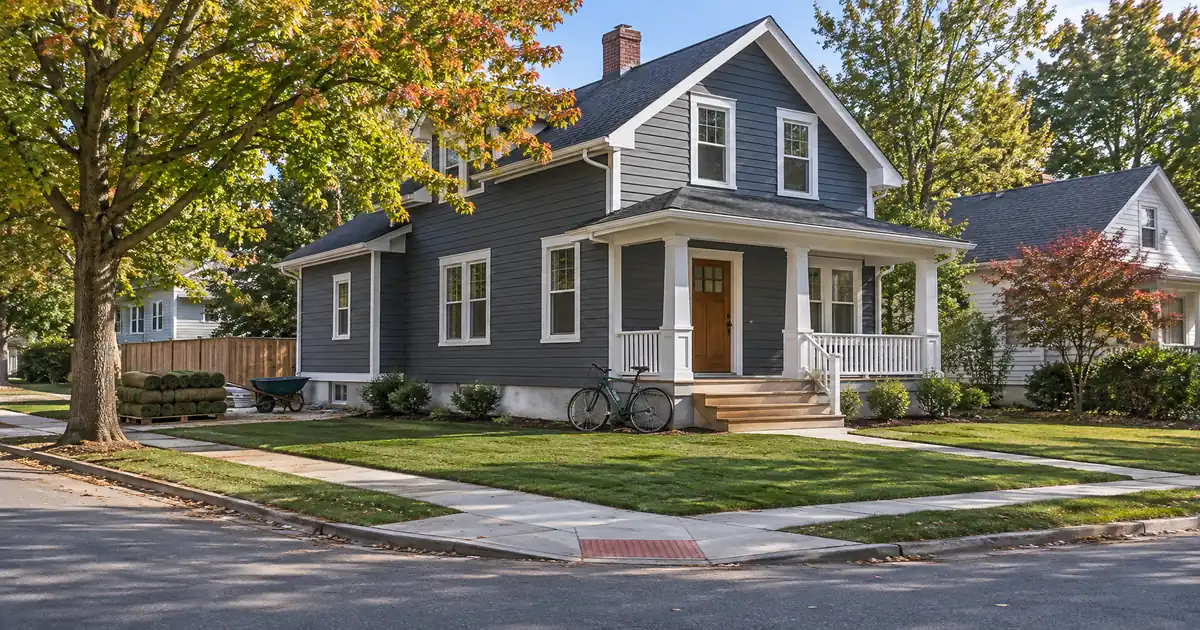
The Quick Read: Right after a finished rehab, most financed purchases generally cannot yet take cash out against the new appraised value, because lenders count seasoning from the deed, not from the last nail. Whether a bank or a non-bank writes the loan matters less than its seasoning rule, its income method, and its leverage cap.
- Seasoning is the waiting period before a lender will size a loan on appraised value. Across most of the wholesale network, about 6 months is the common expectation for a cash-out.
- Leverage on a short-term rental cash-out tops out at 70% LTV, which is below the purchase ceiling of 75% on the strongest files.
- Short-term rental files typically expect a 640+ credit score, about 12 months of hosting experience, and 1.00 coverage on a refinance.
- A payoff-only refinance can retire the bridge loan sooner, but no cash comes back at closing.
- A broker that shops several wholesale lenders can match your seasoning, income proof, and leverage to the program that fits.
Key Terms Defined
Seasoning is the length of time you must own a property before a lender will lend against its appraised value instead of what you paid and spent.
Cash-out refinance replaces your current loan with a larger one and hands you the difference in cash. A payoff-only (rate-and-term) refinance replaces the loan without returning any cash.
LTV (loan-to-value) is the loan amount divided by the property’s value. A lower cap means more of your capital stays in the deal.
DSCR (debt service coverage ratio) is monthly rent divided by the full monthly payment: principal, interest, taxes, insurance, and any HOA dues. Lenders call that payment PITIA.
ARV (after-repair value) is what you expect the property to be worth once the rehab is done. The appraiser’s number is the one that counts.
Delayed financing is a narrow exception for true cash buyers that lets them borrow soon after closing. It generally returns documented cost, not post-rehab value.
DSCR Cash-Out Calculator
Run the cash-out numbers in your market
Rate source: Freddie Mac 30-yr average via FRED® — Federal Reserve Bank of St. Louis · effective Nov 5, 2026
Prefilled with starting assumptions — enter your property’s value, balance, taxes, and insurance for a more accurate picture.
Program parameters update from Lendmire’s centralized guideline source. Taxes and insurance are editable estimates.
As of Nov 5, 2026 · General Freddie Mac market benchmark, not a Lendmire loan offer. Property value, balance, taxes, and insurance are editable estimates. Maximum loan-to-value varies by lender, program, property type, and seasoning. Not a Loan Estimate, approval, or commitment to lend. Program availability and eligibility are subject to lender guidelines, credit approval, property review, and underwriting.
Do Banks Actually Offer This?
The charter on the lender’s door matters less than the rules inside the program. Large retail lenders and depository institutions set their own seasoning windows and their own views on short-term income. Non-bank wholesale lenders do the same, and their rules differ from each other just as much.
That is why this search rarely ends with one institution. A cash-out sized on appraised value, backed by short-term rental income, on a property you finished renovating recently, hits three filters at once. The property must be seasoned. The income must be provable. The leverage cap must leave you with cash after the bridge payoff.
A mortgage broker like Lendmire does not lend. It arranges DSCR loans through a wholesale network of lenders and matches your file to the program whose rules fit. Which lenders write your loan depends on your seasoning, your hosting history, and your leverage need. A bank can say yes on the first call and still say no at underwriting, so the program rules deserve a check before you commit.
Qualification runs primarily on property-level rental income covering the payment, subject to lender guidelines. Lendmire’s complete DSCR loans guide covers the fundamentals if you are new to the product.
How Does Underwriting Actually Treat a Just-Finished Rehab?
Underwriting treats the property as freshly purchased, no matter how polished it looks. The ownership clock runs from the recorded deed. Finishing the rehab, furnishing the unit, or signing a first booking does not advance it.
Here is the sequence, step by step.
1. The title clock is checked. Most programs we see want about 6 months of ownership before they size a cash-out on new appraised value. Inside that window, a lender that will lend at all usually values the property at purchase price plus documented rehab spend. That is cost-based sizing, and it returns less cash than your ARV projection promised.
2. You choose an exit. You can pay off the bridge loan with a payoff-only refinance now, wait out seasoning for a value-based cash-out, or use delayed financing if you bought with all cash.
3. Income is documented. The lender picks an income method for the short-term rental (covered in the next section).
4. The appraisal is ordered. Value comes from sale comparables. Rent comes from a rent schedule: Form 1007 for a single unit or Form 1025 for two to four units. An appraiser needs an itemized list of what you improved. Without it, the report can miss the work that created the value.
5. Documents are collected. Expect the purchase settlement statement, the rehab scope and receipts, the bridge-loan payoff letter, insurance, and entity paperwork if the property sits in an LLC, subject to lender program eligibility. Short-term files add platform statements or a third-party projection.
6. The loan size is set. The loan is the lesser of what rental coverage supports and what the leverage cap allows.
Step 6 is where a clean-looking deal often shrinks. Clearing 1.00 coverage does not make the deal cash-flow positive. DSCR compares rent to PITIA only. Repairs, vacancy, management, utilities, and capex sit outside the calculation.
How Do Lenders Count Short-Term Rental Income?
Lenders count short-term income through a method the program allows, and the methods differ. Common ones include trailing booking history from a platform, a third-party projection, an appraiser’s short-term analysis, or the long-term market rent as a fallback. Some programs use the greater of two.
The appraisal rent form is the source of most confusion. Fannie Mae’s Appraiser Update explains that Form 1007 calls for monthly market rent drawn from comparables leased on a monthly basis, and that multiplying a nightly rate by 30 is incorrect. Agency rules do not govern DSCR files, so treat this as contrast and not as your program’s rulebook. The form tells you something useful anyway: a standard rent schedule is built for long-term leases.
McKissock, an appraiser-education provider, notes that the 1007 documents monthly rent for single-family homes, not nightly rent or business income. It adds that the lender decides the final income determination. Class Valuation, an appraisal management firm, goes further and says the 1007 cannot support a short-term rental appraisal and warns of compliance risk when it is used that way.
Two practical consequences follow. First, an appraisal rent schedule alone will often undersize a strong Airbnb property. Second, it can rescue a file where your projections look thin, because some programs will accept the lower, steadier long-term rent.
Projection tools such as AirDNA describe the buy, rehab, refinance pattern and its fit for short-term rentals. The vendor also says short-term rentals can earn more than long-term rentals in strong markets. Treat that as a market claim, since your lender may count a lower figure.
Across our network, short-term programs typically expect about 12 months of hosting or landlord experience, and some want booking history on the subject property. A newly finished, unbooked property sits in a gap here. Whether a program accepts a projection, your history on other units, or the long-term rent fallback is program-dependent, so ask early.
What Does the Cash-Out Math Look Like?
The cash you take out is the loan minus your bridge payoff and closing costs. The loan is capped by LTV on the appraised value. A lower appraisal shrinks the loan directly, and it hurts more than it seems.
Run it with index numbers instead of dollars. Set the value you projected at 100. Say your all-in cost, meaning purchase, rehab, and carry, equals 65. The cash-out ceiling on short-term-rental collateral is 70% LTV. Final terms depend on the lender’s guidelines, the property type, and the borrower’s complete credit picture. Two appraisal outcomes show the effect.
- Appraisal hits 100. At the 70% cap the loan is 70. After the bridge payoff of 65, about 5 comes back before closing costs, which can consume it.
- Appraisal lands at 90. The loan drops to 63. That is less than the 65 you owe. You would need to bring cash to close, or the refinance does not work as planned.
Same rehab, same rents, and a 10% appraisal miss turns a cash-out into a cash-in. The leverage cap is why a rehab budget built on a thin margin to ARV is fragile. If the margin is thin, the bridge loan can outlast your patience and your runway.
Coverage also has to clear. A DSCR floor of 1.00 is where many select short-term refinance programs start. A separate select-lender path takes coverage below 1.00, with leverage and terms adjusted. Stronger ratios open better pricing and leverage. A larger down payment or lower balance can lift coverage, but it never erases leverage caps, credit floors, reserve rules, or property eligibility. Each figure is subject to lender guidelines and a complete review of property type, leverage, and credit.
Reserves vary by lender, leverage, loan size, and transaction type. About 6 months of PITIA is common on many files.
What Are Your Exit Options?
You have four, and each fits a different situation. This table shows the tradeoffs.
| Exit | Cash back at closing? | Best fit |
|---|---|---|
| Payoff-only refinance now | No | Bridge loan is expiring or costly |
| Wait for seasoning, then cash-out | Yes, on appraised value | Strong ARV margin, bridge runway left |
| Cost-based refinance inside the window | Limited, tied to cost | You need to exit the bridge early |
| Delayed financing | Generally documented cost only | All-cash, arm’s-length purchase |
A payoff-only refinance now followed by a cash-out later means two closings and two sets of costs. It does stop bridge interest. That tradeoff is worth running before you pick.
Delayed financing is borrowed from agency rules, not a DSCR feature. It is built for true cash buyers, and it generally returns what you documented paying, not your post-rehab value. If you bought with a hard-money loan, you generally lose the cash-buyer exception. You can still refinance the hard-money loan, but extra cash typically waits until seasoning passes.
Where the General Rule Breaks
Seasoning is a lender-by-lender overlay, so exceptions exist. These are the edge cases worth knowing about.
- Cost-based early refinance. Some programs allow an earlier refinance capped at a share of purchase price plus documented rehab. It shrinks your cash-out but retires the bridge.
- Shorter title seasoning. A few lenders will take a shorter seasoning window on appraised value. Treat any short seasoning claim as specific to that lender and verify it in writing before you buy.
- Smaller residential properties. Some investors report that one-to-four-unit properties get refinanced on appraised value earlier than expected. That is anecdotal, so do not build a plan on it.
- Weak short-term market or conservative program. A program that counts only long-term rent will undersize a strong short-term rental. In a soft market, the same program can be your best path.
- Platform history versus projections. Some programs want booking history, and others accept a third-party projection. The difference can decide whether you wait or proceed.
- Local rules. Short-term rental rules can vary by city, county, HOA, and property type, so investors should confirm local rules before relying on projected rental income.
- Unfinished or unfurnished property. A property mid-rehab is generally not appraisable as finished. A furnished property with no bookings leans on projections.
- Ineligible property types. Manufactured homes, log homes, and barndominiums are not offered in the network’s DSCR programs, regardless of how good the rehab looks.
Appraisal forms also evolve. The 1007 name may fade over time, and the principle that a rent schedule is not an operating history will not.
What Does the Decision Look Like in Practice?
Pick your exit by asking three questions in order. How many months of runway does the bridge have left? How wide is the margin between all-in cost and a conservative appraisal? Does your income documentation match a program that counts it?
The common stall points are predictable. Seasoning misaligns with the bridge maturity. A lease or deposit document is missing. The appraiser never received the rehab list, so the value misses the improvements. Prepare for all three before you ask for a quote.
Questions to ask a lender before you buy:
- How many months of title seasoning do you require for a value-based cash-out?
- Do you offer a cost-based refinance inside that window, and how is it sized?
- Which income methods do you accept for short-term rentals, and do you require booking history?
- What is the cash-out LTV on short-term-rental collateral?
- Is there a prepayment penalty on the new loan?
Documents to have ready:
- Purchase settlement statement and bridge-loan payoff letter
- Rehab scope, receipts, and an itemized improvement list for the appraiser
- Platform statements or a third-party projection report
- Insurance, entity paperwork, and proof of reserves
A larger refinance can reach $3,000,000 on standard programs. Balances below the standard-program minimum route through select lenders in the network. Credit matters too. A 640 score is typically the short-term floor, and stronger tiers open better leverage.
Waiting is a legitimate strategy. If the margin to ARV is thin or booking history is missing, the extra months can improve the appraisal and the file together.
Frequently Asked Questions
Can I do a cash-out refinance on a short-term rental the day the rehab is finished?
Generally not on appraised value if you financed the purchase. Seasoning runs from the recorded deed, so completion of the rehab does not start or satisfy it. Most programs in the network expect about 6 months before sizing a cash-out on new value. Cost-based or payoff-only exits can bridge the gap, subject to lender guidelines.
Does a finished rehab qualify me for delayed financing?
Only if you bought with all cash in an arm’s-length purchase. Even then, delayed financing generally returns your documented cost, not your after-repair value. A hard-money or bridge purchase generally loses that exception, so the exit has to be a payoff-only refinance or a wait.
Will a bank count my Airbnb income?
It depends on the lender’s program. Some count booking history, some accept a third-party projection, and some use only long-term market rent. An appraisal rent schedule is built for monthly leases, so it will not capture nightly income by itself. Ask each lender which method it uses before you commit to a purchase.
What happens if the appraisal comes in below my after-repair estimate?
The loan shrinks with the value. Because short-term cash-out tops out at 70% LTV on short-term-rental collateral, a modest miss can erase your cash back and leave you bringing money to close. Give the appraiser an itemized rehab list and keep a margin in your plan. Leverage, reserves, and pricing vary by lender and program; the final terms follow the full file review.
Do short-term rental rules affect my refinance?
Yes. A projection built on income the property cannot legally earn will not hold up in review.
Next Step
If you are buying or refinancing a rental property and want to see how the numbers work, Lendmire can help you compare DSCR loan options based on the property income, credit profile, leverage, and investor goals. Reach the team at 828-256-2183. Programs change, every file is underwritten individually, and nothing here is a commitment to lend.
Investors weighing their equity options can start with Lendmire’s guide to cash-out refinance on an investment property.
About Lendmire
As a non-QM mortgage broker (NMLS# 2371349), Lendmire facilitates DSCR investor loans across 41 markets, including Washington, D.C. DSCR eligibility is generally reviewed around property-level rental income instead of personal income documentation, subject to lender guidelines, serving LLC-structured portfolios and self-employed borrowers who don’t fit conventional boxes. A two-time Scotsman Guide Top Mortgage Workplace (2025, 2026).
Get Started
Ready to find the right loan for you?
See your offer in seconds. No credit pull, no obligation.
Informational only. Not a Loan Estimate, approval, or commitment to lend. Program availability and eligibility are subject to lender guidelines, credit approval, property review, and underwriting.
References
1. Fannie Mae Appraiser Update
2. McKissock
This article is part of Lendmire’s investment property cash-out refinance program — full qualification details, guidelines, and scenarios live on the program page.
Related reading: Short-Term Rental Cash-Out Refinance vs Long-Term Rental Loan When the Appraisal Is Low · Banks That Offer a DSCR Cash-Out Refinance on a Newly Built Rental · Short-Term Rental Cash-Out Refinance Lenders When Borrowing Through an LLC
Brandon Miller
Founder & CEO, Mortgage Loan Originator, Lendmire LLC
- Mortgage Loan Originator · NMLS# 1129696 · Verify on NMLS Consumer Access
- North Carolina Real Estate Broker · License# 343312 · Verify on NCREC
- North Carolina Insurance Producer · License# 19053198 · Property, Casualty, Life, Health · Verify on NAIC SBS
- Lendmire LLC · Firm NMLS# 2371349 · Verify firm licensure
Legal disclosures. Lendmire (NMLS# 2371349) is a state-licensed mortgage brokerage that arranges financing through wholesale lender relationships. Lendmire is not a direct lender, depository institution, or registered financial advisor. The discussion above is general informational content about real estate financing — it is not financial, legal, or tax advice, and readers should consult licensed professionals for guidance on their individual circumstances. Loan inquiries are subject to lender underwriting; this article does not represent a commitment to lend. Loan terms, rates, and qualification standards vary by borrower, property, and state, and are subject to change at any time. Equal Housing Opportunity. NMLS Consumer Access: nmlsconsumeraccess.org.