
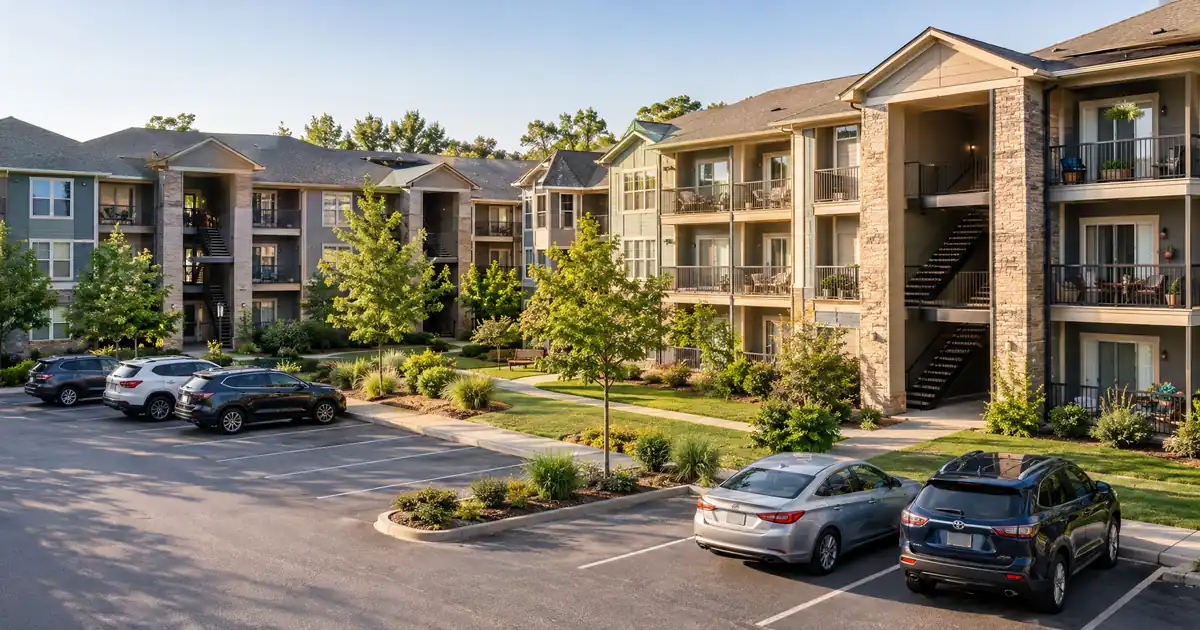
The Quick Read: It depends on which kind of jumbo loan you mean: on a non-owner-occupied rental, a legal and appraised basement unit’s rent can count toward qualifying under a DSCR program, subject to lender guidelines, while on a home you live in, each jumbo lender sets its own rule and many will not count the rent at all.
- “Jumbo” is only a size label for loans above the conforming limit. It is not a rulebook.
- On a rental, DSCR programs test the property’s rent against its full monthly payment, not your personal income.
- The unit has to be legal, habitable, and supported by the appraiser’s rent analysis, or the rent may be cut or excluded.
- If you live in the house, the loan is a consumer loan, and DSCR does not apply.
- Clearing 1.00x on coverage is a program test. It is not the same as positive cash flow.
Most of the confusion comes from mixing three questions. Is the loan jumbo? Do you live there? Is the basement unit legal? Answer those in order and the rest falls into place.
DSCR Calculator
Run the numbers in your market
Rate source: Freddie Mac 30-yr average via FRED® — Federal Reserve Bank of St. Louis · effective Oct 15, 2026
Prefilled with starting assumptions — enter your own rent or nightly figures, taxes, insurance, and HOA for a more accurate picture.
Program parameters update from Lendmire’s centralized guideline source. Taxes and insurance are editable estimates.
As of Oct 15, 2026 · General Freddie Mac market benchmark, not a Lendmire loan offer. Rent, nightly rate, occupancy, taxes, and insurance are editable estimates. Short-term rental figures are estimates only and vary significantly by season, property type, management approach, and local short-term-rental rules — confirm local regulations before relying on them. Qualifying income for short-term rentals varies by program — some use appraisal market rent, others use documented STR history or projections — and is confirmed in underwriting. Not a Loan Estimate, approval, or commitment to lend. Program availability and eligibility are subject to lender guidelines, credit approval, property review, and underwriting.
What Does “Jumbo” Actually Change?
Almost nothing about rent, by itself. A loan is jumbo when it exceeds the conforming limit that FHFA sets for loans bought by Fannie Mae and Freddie Mac. For the most recent cycle, the one-unit baseline is $832,750, up from $806,500 the year before, per Orrick’s summary of the FHFA announcement. The high-cost ceiling for one-unit homes is $1,249,125, which is 150% of the baseline, as reported from the FHFA release.
Those limits say nothing about income or documentation. Above them, each lender writes its own standards.
That is why you see conflicting answers online. Agency rules are one thing. A bank’s jumbo overlay is another. A DSCR investor program is a third. Same word, three different rulebooks.
Does It Matter Whether You Live in the House?
Yes. Occupancy decides the loan lane before anything else does.
If you will live in the home, it is an owner-occupied consumer loan. Jumbo underwriting in that lane leans on your income and debt-to-income ratio. Basement rent is up to each lender’s overlay, and some lenders do not credit it.
For contrast only: Fannie Mae’s Selling Guide allows one-unit accessory dwelling unit rent only with a one-unit primary residence. Its announcement SEL-2025-08 limits that rent to one unit, on a purchase or limited cash-out refinance, capped at 30% of total qualifying income. Those are agency rules. A jumbo lender may be stricter, looser, or silent. Do not assume they carry over.
If you will not live there, the loan is a rental. DSCR loans are designed for non-owner-occupied investment properties. Because they are business-purpose investor loans, they are reviewed differently from a standard owner-occupied mortgage. The CFPB’s Regulation Z exempts business-purpose credit, though the exemption turns on the loan’s purpose, not the property type.
One more point. Renting out a basement while you live upstairs makes the deal owner-occupied. That belongs in the consumer lane, not a DSCR loan.
How Does Basement Rent Work on a DSCR Loan?
On a rental, the basement rent is central. DSCR is the property’s rent used for lender review divided by its full monthly payment: principal, interest, taxes, insurance, and any association dues. Across the wholesale network Lendmire places files with, 1.00x is where select programs start. Stronger ratios open better pricing and leverage. A separate select-lender path takes coverage below 1.00 with leverage and terms adjusted.
Here is the practical effect. Picture a house with a main unit and a legal basement unit. Rent from the main unit alone lands a bit under 1.00x. Add the basement’s supported rent and the combined number clears 1.00x with room to spare. That is how a unit turns a marginal file into a passing one.
It only works if the lender can count the rent. That takes three things:
- The unit is legal and habitable.
- The appraisal’s market-rent analysis supports the number.
- The documents match: lease, permits, insurance.
Unsupported rent gets trimmed or dropped. When that happens, coverage falls, and so does the loan amount the property can support.
What Makes a Basement Unit Count?
A finished basement is not automatically a legal unit. A space can have a kitchen, bath, bedroom, and a separate entrance and still fail a legality check.
Lenders and appraisers look at:
- Zoning and permits
- Certificate of occupancy
- Egress (a safe way out, usually a code-sized window or door)
- Ceiling height
- A separate kitchen, bath, and entrance
Here is how common basement situations tend to sort out.
| Basement type | Rent typically counted? | What a lender wants to see |
|---|---|---|
| Legal, permitted unit | Usually, if appraised | Permit, certificate of occupancy |
| Finished but unpermitted | Often cut or excluded | Proof of legal status |
| Cellar or unfinished space | Rarely | Not treated as a rental unit |
| Room with shared access | Rarely | Treated as part of the main unit |
| Roommate or boarder | Generally no | Not a separate-unit lease |
Being on county records does not prove a unit is permitted. Verify permits before you go under contract. A unit that is not legal may add little to either rent or value.
A legal basement unit can also change the property’s classification. A house with a legal second unit may be treated as a 2-unit property, which changes the appraisal form from the single-family rent schedule (Form 1007) to the small residential income report (Form 1025).
Which Rent Number Does the Lender Use?
Not always the rent you actually collect. Depending on the program, a lender may use the in-place lease, the appraiser’s market rent, or a rent schedule. Collected rent is not automatic qualifying income. Support comes from the lease, the appraisal, and the program rules.
For a new or vacant unit with no history, lenders typically lean on the appraiser’s estimated rent. The appraiser can use similar rentals, adjusted for factors that affect market rent, when no basement units are available as comps. Treat that as a picture of how appraisers think, not as a DSCR rule.
Different programs set their own method, and many pair the lease against the appraisal. Plan for the lower of the two to matter. A lease far above market gets questioned.
What Else Controls Whether You Qualify?
Rent covers one test. Leverage, credit, and reserves cover the rest. Typical ranges across select lenders in the network:
- Purchase leverage: most files land at 75%–80% LTV on an investment property purchase. Select high-leverage programs reach 85% with roughly a 700+ score.
- Cash-out refinance: about 75% LTV on a standard rental, with about 6 months of seasoning the common expectation.
- Credit: a 620 floor exists in parts of the network, most programs want around 660, and 700+ unlocks the strongest tiers.
- Loan size: roughly up to $3,000,000 on standard programs. Above $2,500,000 the network generally holds to 30-year fixed structures.
- Reserves: commonly around 6 months of PITIA, stepping up to about 9 months above $1,500,000. PITIA means principal, interest, taxes, insurance, and association dues. Reserves vary by lender, leverage, loan size, and transaction type.
A bigger down payment lowers the payment and can lift coverage. It never erases leverage caps, credit floors, reserve rules, or property eligibility. The strongest files clear both tests: enough equity and enough rental coverage. For the full picture, see Lendmire’s complete DSCR loans guide.
Some properties are simply not offered. Manufactured homes, log homes, and barndominiums fall outside these programs.
What Do Lenders Differ On?
Here is the pattern from brokering these files. Lenders differ most on three things: whether an unpermitted unit gets any credit, whether they use lease rent or appraised rent, and how they treat a house with more than one extra unit.
Agency rules count rent from only one accessory unit. Non-agency lenders vary, and some are stricter on collateral than the agencies are. The strictest overlays want permits in hand before they run the ratio. More flexible lenders will lean on the appraiser’s rent analysis once legality is clear. Ask early, because the same basement can be a pass at one lender and a decline at another.
Do not read 1.00x as profit. DSCR compares rent to the payment only. Repairs, vacancy, management, utilities, and capital expenses sit outside the calculation. A basement unit that clears the ratio can still run thin on real cash flow.
When Rent Won’t Help, What Else Can?
If you live in the house and the lender will not credit basement rent, you have a few options. You can lean on your own income documentation under the lender’s owner-occupied rules. You can ask a different jumbo lender how it treats the unit. Or you can look at whether the deal makes more sense as a rental you do not occupy, where a DSCR loan tests the property’s rent instead of your personal income.
If your basement is unpermitted, the fix is usually legalization before you buy or refinance, not a cleverer application. Budget for code-compliance upgrades. Without them, the rent may be excluded.
For related ground, see Lendmire’s piece Does Rent From Other Units Help You Qualify for an FHA Cash-Out? and on qualifying for a jumbo DSCR loan when the lease is below market rent.
What Are the Risks After Closing?
The rent counted at qualification can stop. A tenant leaves. A vacancy runs long. A dispute drags on. The loan payment does not pause.
Confirm your insurance covers a tenant-occupied basement unit. Short-term rental rules can vary by city, county, HOA, and property type, so investors should confirm local rules before relying on projected rental income. If you plan to rent the basement short term, a hosting history and separate program terms may apply.
Tax treatment varies; consult a qualified professional.
Key Terms Defined
Jumbo loan: a mortgage above the conforming limit set by FHFA each year.
DSCR (debt service coverage ratio): the property’s qualifying monthly rent divided by its full monthly payment.
PITIA: principal, interest, taxes, insurance, and association dues, the full monthly payment.
LTV (loan-to-value): the loan amount as a share of the property’s value.
Egress: a code-compliant way to exit a room or unit in an emergency.
Accessory dwelling unit (ADU): a separate living unit on the same property as the main home, such as a basement apartment.
Checklist Before You Apply
1. Decide whether you will live in the home. That sets the loan lane.
2. Verify permits and the certificate of occupancy before you sign a contract.
3. Ask the appraiser to include the unit in the rent analysis.
4. Gather the lease, proof of legal status, insurance showing the unit is covered, and entity documents if you will vest in an LLC, subject to lender program eligibility.
5. Ask the lender how it counts the unit: lease rent or appraised rent, and whether an unpermitted unit gets any credit.
6. Check leverage, credit, and reserves against the ranges above.
Frequently Asked Questions
Can basement rent count for a jumbo loan?
On a non-owner-occupied rental, yes, when the unit is legal and the appraisal supports the rent, subject to lender guidelines. On a home you live in, it depends on the lender’s own overlay, and some lenders will not count it.
Does the unit have to be legal?
Generally, yes. Lenders can exclude or reduce rent from an unpermitted unit, and some programs decline the property. Permits and a certificate of occupancy are the cleanest proof.
Can I use a tenant who hasn’t moved in yet?
Often. With no operating history, lenders typically rely on the appraiser’s estimated market rent. A signed lease can help, but the appraisal usually sets the number.
Do roommates count?
Generally no. Rent from a room in a shared home is not treated as a separate unit’s income.
How much will it change what I can borrow?
It depends on how much of the combined rent the lender counts against the payment. A modest unit can nudge coverage past 1.00x on a marginal file, but it will not override leverage caps, credit floors, or reserve rules.
Next Step
If you are buying or refinancing a rental property and want to see how the numbers work, Lendmire can help you compare DSCR loan options based on the property income, credit profile, leverage, and investor goals. Lendmire is a broker arranging financing through select lenders in its wholesale network, with investor loan programs across 41 markets, including Washington, D.C. All programs are subject to lender guidelines and are not a commitment to lend.
About Lendmire
Lendmire, NMLS# 2371349, is a mortgage brokerage focused on investor financing, arranging DSCR loans in 40 states plus Washington, D.C. — 41 markets total. Qualification is based on the property’s income rather than personal income documentation, subject to lender guidelines, making it a fit for LLC-held rentals and scaling portfolios. Scotsman Guide named Lendmire a Top Mortgage Workplace in both 2025 and 2026.
Get Started
Ready to find the right loan for you?
In about 30 seconds you can review financing options available for your investment property. No commitment required.
Informational only. Not a Loan Estimate, approval, or commitment to lend. Program availability and eligibility are subject to lender guidelines, credit approval, property review, and underwriting.
References
1. Orrick: FHFA announces 2026 increases to conforming loan limits
2. Calculated Risk: FHFA announces baseline conforming loan limit
3. Fannie Mae Selling Guide B3-3.8-02
This article is part of Lendmire’s DSCR loan program — full qualification details, guidelines, and scenarios live on the program page.
Related reading: Can a Short-Term Rental Near a Hospital Qualify for a DSCR Loan? · Is a DSCR Loan Better Than a Bank Commercial Loan on a Fourplex? · Market-Rent Lease to a Relative vs. a Stranger on a DSCR Loan
Brandon Miller
Founder & CEO, Mortgage Loan Originator, Lendmire LLC
- Mortgage Loan Originator · NMLS# 1129696 · Verify on NMLS Consumer Access
- North Carolina Real Estate Broker · License# 343312 · Verify on NCREC
- North Carolina Insurance Producer · License# 19053198 · Property, Casualty, Life, Health · Verify on NAIC SBS
- Lendmire LLC · Firm NMLS# 2371349 · Verify firm licensure
Important disclosures. Lendmire (NMLS# 2371349) is a licensed mortgage brokerage. Lendmire is not a direct lender, depository institution, or financial advisor. All loan inquiries are subject to lender underwriting; this article does not constitute a commitment to lend. Rates, terms, and program guidelines are subject to change without notice and vary by borrower profile, property type, and state. Information in this article is general in nature and is not financial, legal, or tax advice. Equal Housing Opportunity. NMLS Consumer Access: nmlsconsumeraccess.org.