
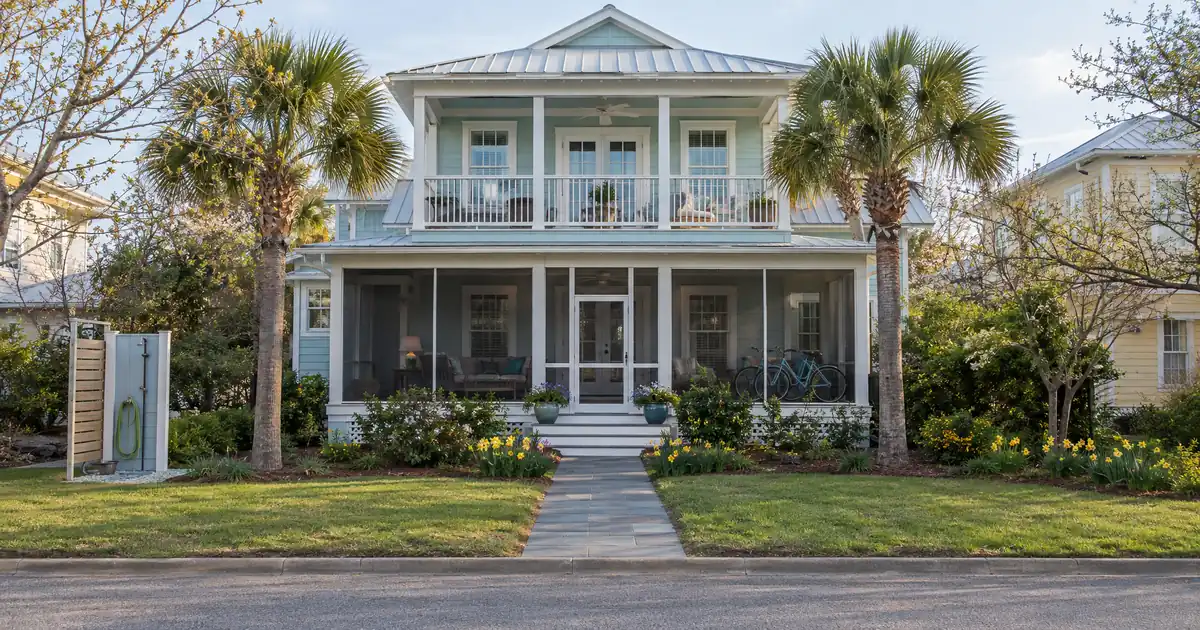
The Quick Read: A beach short-term rental loan typically needs a rental-rated property policy, flood coverage when the lender or flood map demands it, separate wind or named-storm coverage where the base policy excludes it, liability that fits paying guests, and proof of all of it naming the correct borrower before closing. Every premium lands in the monthly obligation that rent must cover. A high coastal quote can therefore sink a deal that looked fine on paper.
- Rental use must be disclosed. A policy that never mentioned paying guests can leave a claim denied.
- Flood is its own policy. Rising water is excluded from nearly all property policies.
- Wind may be separate too. Some coastal policies exclude wind and hail, and the buyer must find that cover elsewhere.
- Premiums sit on the debt side of the coverage ratio. A bigger quote lowers the number dollar for dollar.
- Quotes come first. Get real ones before leaning on any projected coverage ratio.
What Goes Into a Beach Rental Insurance Package?
A beach rental package is usually a set of separate pieces that work together. Each answers a different loss, and a lender may ask for proof of each.
Property coverage pays to repair or rebuild the structure. For a short-term rental, the policy should be rated for that use. A landlord policy that merely notes “short-term rental” is still built for a long-term tenancy. BiggerPockets draws the line this way: a true short-term rental policy is a commercial form whose general liability follows guests off the property. Buying insurance for a short-term rental is not the same as buying short-term rental insurance.
Liability coverage responds when a guest is hurt. Beach properties often have stairs, decks, pools, and docks, and each adds exposure.
Loss-of-rents coverage replaces income while the home is unlivable. BiggerPockets notes that short-term rental income cover is measured against the property’s real earnings, while a landlord policy is measured against average long-term rent. The gap can be large.
Wind and named-storm coverage is often split out on the coast. Some private policies exclude wind and hail on first-tier coastal property, and some areas run state wind pools that sell the cover separately, as Steadily explains.
Flood coverage is a standalone policy, either federal or private. It is not a rider on the hazard policy.
Platform host protection does not replace any of this. NC Coastal Insurance notes that platform programs rarely cover flood or wind.
How Does Underwriting Treat Insurance, Step by Step?
Underwriting treats insurance as a cost that sits in the monthly obligation, not as a deduction from rent. The annual premiums for hazard, wind, and flood are divided by 12 and added to principal, interest, taxes, and any association dues. Rent is then divided by that total.
The sequence on a typical file runs like this:
1. Flood determination. The lender orders a zone determination on the address. A listing site does not decide it. Zones A, AE, V, and VE are special flood hazard areas. Zones X, B, and C carry no federal requirement, though coverage is still recommended.
2. Policy structure. The investor assembles the rental-rated property policy, any separate wind policy, any flood policy, and liability and loss-of-rents cover.
3. Coverage amount. The lender checks limits against replacement cost, not market value. Limits tied to market value are a common reason files get sent back.
4. Documents. The file needs proof of the policy in the right name and form.
5. Coverage ratio. The total premium goes into the denominator, and the number is tested against the program floor.
The documents a lender typically asks to see look like this:
| Document | Purpose | Watch for |
|---|---|---|
| Declarations page or binder | Shows coverage and limits | Correct borrowing entity |
| Mortgagee clause | Names the lender on the policy | Exact wording and loan number |
| Effective-date evidence | Shows coverage is in force | Date at or before closing |
| Flood declarations page | Proves flood cover where required | Matches the zone determination |
| Replacement-cost evidence | Supports the dwelling limit | Not based on market value |
Insurance is needed at the start of underwriting, not at the closing table. Quotes gathered late are where coverage ratios fall apart.
One honest limit applies. DSCR compares rent to the full monthly obligation only. Clearing the program floor is not the same as positive cash flow. Repairs, vacancy, management, utilities, and a storm deductible all sit outside the calculation.
Who Requires What: Law, Lender, or Common Sense?
Flood is the one insurance item with a federal rule behind it. Everything else comes from the lender, the carrier, or plain prudence.
The mandatory purchase requirement applies to owners in a mapped special flood hazard area who take a federally backed mortgage. The Congressional Research Service explains it, and defines that area as one with a 1% or greater annual flood risk. Many DSCR loans come from investor channels rather than federally insured lenders. For those, flood is usually a term in the loan documents, set by the lender’s own overlay.
The federal minimum is the lesser of the outstanding loan balance or the maximum available under the federal flood program. For a one-to-four family building that is $250,000, according to the OCC’s consumer site. A lender may ask for more.
| Coverage | Who requires it | Typical expectation |
|---|---|---|
| Flood (mapped hazard area) | Federal rule, or loan documents | Required, to loan balance or program cap |
| Flood (outside hazard area) | Lender overlay or prudence | Often recommended, sometimes required |
| Wind / named storm | Lender overlay, carrier terms | Required where it is excluded elsewhere |
| Property (rental-rated) | Lender | Replacement-cost limit |
| Liability, loss of rents | Lender and prudence | Varies by file |
Structures and Variations on the Coast
The base setup varies by coast and by building. A few variations come up repeatedly.
Bundled versus separate wind. Some carriers write wind inside the main policy. Others exclude it, which forces a second policy or a pool placement. Two quotes mean two premiums, and both go into the denominator.
Private flood. A private policy can stand in for the federal one. A federally regulated lender must see it meet the “at least as broad” test. The Federal Reserve’s interagency guidance covers that standard. Investor lenders set their own acceptance terms, and acceptance varies across the network.
Excess flood. Many beach homes cost more to rebuild than the federal cap. Cover above that cap comes from a private carrier. Without it, the gap between the cap and rebuild cost is the investor’s own exposure.
Condos. A master policy, the owner’s interior policy, and association rental restrictions all matter. The lender will want to see how they fit together.
Larger buildings. Residential buildings of five or more units carry different federal flood limits than one-to-four family homes. Those usually route to a different loan structure anyway.
Where the General Rule Breaks
Several situations make the standard checklist misleading.
Percentage hurricane deductibles. Coastal wind deductibles are commonly a percentage of the dwelling limit, not a flat amount. Fudge Insurance gives an example: a $500,000 dwelling limit with a 5% named-storm deductible means a $25,000 deductible. It is a liquidity event for the owner, and a lender may cap the acceptable level.
Waiting periods and caps on lost rent. Some wind policies impose a time deductible before income payments begin. Rebuild periods after a major storm can also outlast a typical income cap. Federal flood policies do not cover lost rental income at all.
Occupancy misdescription. A claim on a policy that never disclosed rental use is the classic denial scenario. The fix is cheap if made before a loss and costly after one.
Mapping disputes. A flood zone designation can sometimes be challenged with an elevation certificate. Treat that as a possibility to explore, not a plan. Quote the property as mapped.
Premium volatility. A quote that changes between application and renewal changes the coverage ratio. If a file clears the floor by a thin margin, a renewal increase can matter.
Key Terms Defined
Declarations page: The summary page of a policy listing the insured, limits, deductibles, and effective dates.
Binder: Temporary proof that coverage is in force until the full policy is issued.
Mortgagee clause: The policy language naming the lender as a party with an interest in the property.
Named-storm deductible: A separate deductible, often a percentage of the dwelling limit, that applies only to hurricane-type losses.
Special flood hazard area: A mapped zone with a 1% or greater annual chance of flooding.
Replacement cost: What it would cost to rebuild the structure, which is different from what it would sell for.
Loss of rents: Coverage that replaces rental income while the home cannot be rented after a covered loss.
PITIA: Principal, interest, taxes, insurance, and association dues, the monthly obligation that rent is measured against.
What the Decision Looks Like in Practice
The best sequence is quotes first, coverage ratio second, offer third.
Picture an investor eyeing a beach house with rents that pencil near 1.15x on a placeholder insurance figure. The real quote arrives with a separate wind policy and a flood policy. The ratio slips toward 1.05x. The deal may still work, but with less room than the listing math suggested.
Now say a second buyer sees the ratio drop below 1.00x after the real quotes. Coverage below 1.00 is available through select lenders in the network, with leverage and terms adjusted. For that buyer, the question is whether to take lower leverage, find a different property, or walk. A larger down payment can lift the coverage ratio, but it does not remove leverage caps, credit floors, reserve rules, or property eligibility.
Here is how the network’s short-term rental programs typically look, subject to lender guidelines and each file’s own review:
- Purchase: up to 75% LTV on the strongest files, with a 1.00 coverage floor.
- Refinance and cash-out: up to 70% LTV on short-term rental collateral, with a 1.00 coverage floor on refinances.
- Credit: a 640 minimum score.
- Experience: about 12 months of hosting history is usually expected.
- Loan size: up to $3,000,000 on standard programs.
- Reserves: commonly around six months of PITIA, though they vary by lender, leverage, and loan size.
For a deeper walk through the product, see the complete DSCR loans guide. For how a beach property is classified as a business-purpose loan, see Lendmire’s piece How a Short-Term Rental DSCR Loan Treats a Beach House as Business Purpose.
A readiness checklist, in order:
1. Run the flood determination on the address.
2. Quote the rental-rated property policy, disclosing rental use.
3. Quote wind separately if the base policy excludes it.
4. Quote flood, including excess cover if the rebuild cost exceeds the cap.
5. Rerun the coverage ratio with all premiums in the denominator.
6. Confirm the policy names the correct borrowing entity, subject to program terms for LLC-titled properties.
7. Check short-term rental rules with the city, county, and association, since they vary and rental income projections depend on them.
Tax treatment varies; consult a qualified professional.
Frequently Asked Questions
Is flood insurance always required on a beach short-term rental loan?
No. Flood is required where the property sits in a mapped hazard area and the loan falls under the federal rule, or where the loan documents say so. Outside those zones, a lender overlay may still require it. Even when nothing requires it, coverage is often recommended for coastal property.
Does my homeowners or landlord policy count?
Rarely. Standard policies often exclude commercial short-term rental activity, and a landlord policy is built around a long-term tenancy. A rental-rated policy, disclosed as such, is the safer fit for a beach rental.
Can booking-platform host protection stand in for insurance?
No. Platform programs are supplements and rarely cover flood or wind. A lender will generally want a real policy with a declarations page.
How does a high hurricane deductible affect the loan?
The deductible itself does not enter the coverage ratio, but the premium does. A lender may also cap the acceptable percentage.
When should I get insurance quotes?
At the start, before relying on any projected ratio. Quotes feed the coverage calculation at the front of underwriting, and a late surprise can change the whole structure.
Next Step
If you are buying or refinancing a rental property and want to see how the numbers work, Lendmire can help you compare DSCR loan options based on the property income, credit profile, leverage, and investor goals. It is a mortgage broker arranging financing through select lenders in its wholesale network across 41 markets, including Washington, D.C. You can reach the team at 828-256-2183 or request a quote. Programs, eligibility, and terms are subject to lender guidelines. This is not a commitment to lend.
Of all the line items on a coastal rental, insurance is the one most likely to move between the listing and the offer, so it earns the first call.
For current guidelines and terms, see Lendmire’s DSCR loan programs page.
About Lendmire
A DSCR-focused mortgage broker, Lendmire (NMLS# 2371349) places investor financing across 41 markets — 40 states plus Washington, D.C. — with DSCR eligibility generally reviewed by the lender on property cash flow instead of tax returns, subject to lender guidelines. Scotsman Guide named Lendmire a Top Mortgage Workplace in 2025 and 2026.
Get Started
Ready to find the right loan for you?
In about 30 seconds you can review financing options available for your investment property. No commitment required.
Informational only. Not a Loan Estimate, approval, or commitment to lend. Program availability and eligibility are subject to lender guidelines, credit approval, property review, and underwriting.
References
1. BiggerPockets: Landlord and STR Insurance Policies
2. BiggerPockets: How to Compare Short-Term Rental Insurance
3. Steadily: Hurricane Insurance for a Rental
4. NC Coastal Insurance: Airbnb Short-Term Rentals
5. Congressional Research Service IF10988
6. OCC HelpWithMyBank: How Much Flood Insurance
7. Fudge Insurance: Short-Term Rental Insurance
This article is part of Lendmire’s short-term rental loan program — full qualification details, guidelines, and scenarios live on the program page.
Related reading: Can a Rental Condo in HOA Litigation Get a DSCR Loan? · How to Close a Short-Term Rental DSCR Loan in a Community-Property State · Do DSCR Lenders Add Price Adjustments on a Short-Term Rental?
Brandon Miller
Founder & CEO, Mortgage Loan Originator, Lendmire LLC
- Mortgage Loan Originator · NMLS# 1129696 · Verify on NMLS Consumer Access
- North Carolina Real Estate Broker · License# 343312 · Verify on NCREC
- North Carolina Insurance Producer · License# 19053198 · Property, Casualty, Life, Health · Verify on NAIC SBS
- Lendmire LLC · Firm NMLS# 2371349 · Verify firm licensure
Disclosure information. Lendmire is a state-licensed mortgage brokerage under NMLS# 2371349. Lendmire is not a depository institution, direct lender, or financial advisor — all loans referenced are placed through wholesale lender partners and are subject to each lender's underwriting standards. This article is provided for general informational purposes and is not a commitment to lend, nor does it constitute financial, legal, or tax advice. Loan programs, terms, rates, and qualification standards change without notice and depend on borrower profile, property type, and the state in which the subject property is located. Equal Housing Opportunity provider. NMLS Consumer Access: nmlsconsumeraccess.org.