
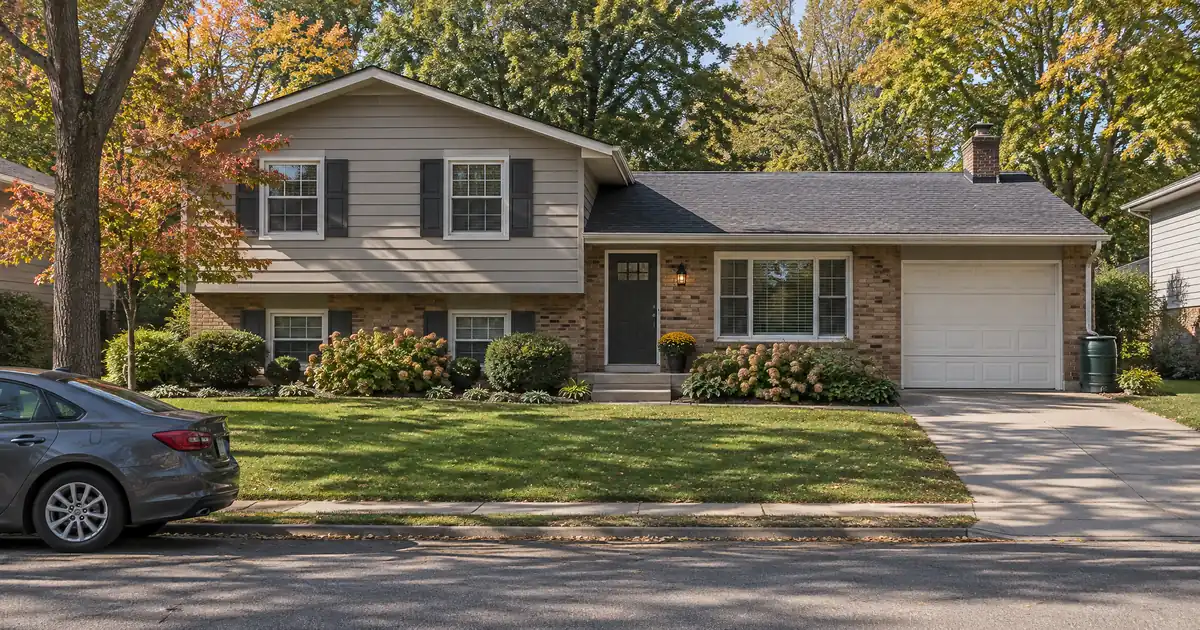
The Quick Read: A cash-out refinance turns equity in a rental you already own into down-payment cash, and the best program for scaling is the one whose leverage cap, coverage test, reserve rules and exit terms fit the files you actually hold and your next purchase. That fit depends on your situation, not on one headline feature. A broker that shops many wholesale lenders can match the scenario to the program.
- Cash-out leverage tops out around 75% LTV on a cash-out refinance of a standard investment property across most of the network.
- About 6 months of ownership, counted from title recording, is the common seasoning expectation.
- Coverage is tested on the new, larger payment, so every dollar you pull out compresses the ratio.
- Clearing the coverage test does not mean the property cash-flows. Repairs, vacancy and management sit outside the math.
- Reserves, credit tier and property type can each stop a file even when the equity is there. Every figure here is eligibility guidance, not a guarantee.
What a DSCR Cash-Out Refinance Does
A DSCR cash-out refinance replaces your existing loan on a rental with a larger one, pays off the old loan, and hands you the difference as cash. The loan is reviewed primarily on property-level rental income covering the payment, subject to lender guidelines. Your personal tax returns and debt-to-income ratio are not the main test.
DSCR Cash-Out Calculator
Run the cash-out numbers in your market
Rate source: Freddie Mac 30-yr average via FRED® — Federal Reserve Bank of St. Louis · effective Nov 5, 2026
Prefilled with starting assumptions — enter your property’s value, balance, taxes, and insurance for a more accurate picture.
Program parameters update from Lendmire’s centralized guideline source. Taxes and insurance are editable estimates.
As of Nov 5, 2026 · General Freddie Mac market benchmark, not a Lendmire loan offer. Property value, balance, taxes, and insurance are editable estimates. Maximum loan-to-value varies by lender, program, property type, and seasoning. Not a Loan Estimate, approval, or commitment to lend. Program availability and eligibility are subject to lender guidelines, credit approval, property review, and underwriting.
DSCR stands for debt service coverage ratio. You get it by dividing the property’s monthly rent by its full monthly obligation: principal, interest, taxes, insurance and any association dues. Lenders call that obligation PITIA. A result of 1.00 means the rent exactly covers the payment, and 0.80 means it covers only 80% of it. Wikipedia’s entry on the debt service coverage ratio lays out the general concept. It also notes that the commercial version, built on net operating income, is a different calculation from the residential rent-over-PITIA version used here.
DSCR loans are designed for non-owner-occupied investment properties. Because they are business-purpose investor loans, they are reviewed differently from a standard owner-occupied mortgage.
Why This Product Scales a Portfolio
The product scales because the loan is sized to the property, not to your personal borrowing capacity. Conventional underwriting counts how many properties you finance. Fannie Mae’s Selling Guide caps financed properties at 10 under its automated underwriting, counted by property rather than by loan. DSCR files carry no such count. The practical limit is whether each property’s own income qualifies.
That is the loop most scaling investors run:
1. Buy a rental, ideally under market value or with room to add value.
2. Hold it through the seasoning period.
3. Refinance on the new appraised value and the rent it produces.
4. Use the cash as the down payment on the next property.
5. Repeat the cycle with the next acquisition.
Because each purchase needs a down payment, each cycle has to produce a meaningful chunk of cash. Select high-leverage programs reach 85% LTV on a purchase with roughly a 700+ score. That helps the next acquisition but does nothing for the refinance side.
Key Terms Defined
LTV (loan-to-value): the loan amount divided by the property’s appraised value.
Seasoning: the waiting period a lender wants between buying a property and refinancing it for cash, measured from title recording.
PITIA: principal, interest, taxes, insurance and association dues, the full monthly obligation used in the coverage test.
Reserves: liquid funds, usually counted in months of PITIA, that you must hold after closing.
Prepayment penalty: a fee some loans charge if you pay off or refinance them within a set period.
Cash-out refinance: a refinance where the new loan is bigger than the old one and the difference comes to you as cash.
How Underwriting Treats a Cash-Out, Step by Step
Step 1: Classify the transaction. A refinance that only pays off the old loan and closing costs is a rate-and-term refinance. Any cash back to you makes it a cash-out. The Consumer Financial Protection Bureau’s guide to using home equity describes the mechanics plainly: a larger loan, the old mortgage paid off, the rest as cash, and a higher payment on new terms. Cash-out carries the lower leverage cap and the seasoning rule.
Step 2: Check seasoning. Across most of the network, about 6 months of ownership is the common expectation. It is lender policy, not law, and it decides whether the loan is sized on your purchase price or on a fresh appraisal.
Step 3: Order the appraisal and rent schedule. Nearly every file needs a standard appraisal plus an appraiser’s market-rent estimate. On two-to-four-unit properties the appraiser also completes an operating income statement. The appraisal sets the value the loan is sized on. Lenders commonly use the lower of the actual lease or the appraiser’s market rent as rent used for lender review.
Step 4: Apply the leverage cap. The maximum loan equals the appraised value times the cash-out LTV cap. Most of the network tops out at 75% LTV on a cash-out refinance of a standard rental. Short-term-rental collateral sits lower: cash-out on a short-term rental tops out at 70% LTV, while a standard long-term rental can go to 75%. Final terms depend on lender guidelines, property type, leverage, and the borrower’s complete credit picture.
Step 5: Test coverage on the new payment. This is where cash-out files get tight. The bigger loan raises the payment, and the rent has not moved. Most programs start at a 1.00 floor on the standard path. A separate select-lender path takes coverage below 1.00, with leverage and terms adjusted. Stronger coverage opens better pricing and higher leverage within a program.
Step 6: Compute net proceeds. Cash to you is the new loan minus the payoff minus closing costs, as Corporate Finance Institute’s cash-out overview also describes. Reserves and any prepayment-penalty terms then apply.
Step 7: Vest title. Most programs let you close in your own name or in an LLC, subject to lender program eligibility.
A Modeled Two-Round Example
This example uses modeled assumptions, not market data, and it stays in percentages and ratios on purpose.
Say you own a single-family rental held past the seasoning period. It appraises well, and your existing loan sits near 60% of the new value. A cash-out at the 75% LTV ceiling on a standard investment rental leaves roughly 15% of the appraised value as gross proceeds, before closing costs. These specifics are subject to lender guidelines and a full review of property, leverage, and credit.
Now the coverage side. Suppose that property covered its old payment at about 1.40x. The loan is now much larger, so the payment rises and coverage might land near 1.10x. It still clears a 1.00 floor, but with less margin. If taxes or insurance climb at the next renewal, that margin shrinks again.
Then the sizing problem. A purchase at 20%-25% down needs more than the 15% that one property yields in this example. Scaling therefore usually means pulling equity from several properties, or from one that gained a lot, to fund a single down payment. Each round also lowers your equity cushion and raises your monthly obligations across the portfolio.
Before you apply, run the stress test yourself. Take the qualifying monthly rent, divide it by the full PITIA on the proposed new loan, and see whether you still clear the floor with room to spare. If the answer is 1.02x, a small insurance increase can put you under.
DSCR vs. conventional financing
There are two common ways to finance an investment property, and they qualify you differently — here’s how investors weigh them.
Why investors choose it
- Qualifies on the property’s rental income — no personal tax returns, W-2s, or pay stubs needed to document income.
- No personal debt-to-income ceiling to clear, so existing mortgages and obligations don’t cap your borrowing the same way.
- Can be closed in an LLC, keeping the property inside a business entity.
- Built for scaling — not held to the limit on number of financed properties that conventional financing applies.
- Underwriting centers on the deal: generally qualifies when the rent covers the payment, a 1.00x coverage ratio being a common baseline (confirmed in underwriting).
- Designed specifically for investment property, including long-term and, where the program allows, short-term rentals.
Where it’s strong
- Often the lowest ongoing financing cost for a buyer who fully qualifies on personal income — a fit for a first property or a cost-first purchase.
Trade-offs for investors
- Requires full personal income documentation and must fit within a debt-to-income limit — salary, existing debts, and other mortgages all count.
- Typically held in your personal name rather than a business entity.
- Caps how many financed properties you can carry, which can become a ceiling as a portfolio grows.
- Evaluates you as a borrower as much as the property, which usually means more paperwork.
How investors usually choose: a first or single property often optimizes for the lowest financing cost; portfolio builders often optimize for leverage, vesting in an LLC, and scaling past conventional caps. The right answer depends on your goals, the property, and current guidelines — both paths run through select lenders in Lendmire’s wholesale network, with eligibility and terms confirmed in underwriting.
What Makes a DSCR Cash-Out Refinance Program Best for Scaling?
No single program wins for every investor. Judge a program on how it behaves across several rounds, not just the first. This scorecard covers the criteria that matter most.
| Criterion | What to look at | Why it matters for scaling |
|---|---|---|
| Cash-out LTV cap | Around 75% on standard rentals | Sets the cash each round yields |
| Coverage floor | 1.00 on most; sub-1.00 via select lenders | Decides which properties qualify |
| Credit tier | 620 floor in parts; ~660 typical; 700+ best | Higher tiers unlock leverage |
| Reserves | Often ~6 months PITIA; ~9 above $1,500,000 | Drains liquidity each round |
| Exit terms | Prepayment penalty length and structure | Restarts with each new loan |
| Loan structure | 30-year fixed, interest-only, longer terms | Shapes coverage and flexibility |
Reserves vary by lender, leverage, loan size and transaction type. Conservative rate-and-term files at modest leverage under $1,500,000 can see reserves waived. Ask whether cash-out proceeds may count toward reserves, since rules differ by lender.
Structures and Variations
The standard spine is the 30-year fixed. Several variations sit around it, and each trades one thing for another.
| Structure | How coverage is treated | Trade-off |
|---|---|---|
| 30-year fixed | Full PITIA | Steadiest payment, most predictable |
| Interest-only period | Often interest, taxes, insurance, dues | Better ratio now, balance doesn’t shrink |
| Extended term (40-year) | Lower payment, higher ratio | Slower paydown; select lenders only |
| ARM | Depends on structure | Payment can change; suits some plans |
Interest-only and 40-year structures are available through select lenders in the network. Investors who use them to stretch coverage are trading slower equity growth for room to buy sooner. That can make sense in a plan built on value-add, though it leaves a thinner buffer if the rent softens.
Loan sizes run up to $3,000,000 on standard programs. Above $2,500,000, the network generally holds to 30-year fixed structures. Balances below the standard-program minimum route through select lenders.
Where the General Rule Breaks
Passing seasoning does not buy full LTV. The rent test is separate. If coverage is thin, the loan can come in below the leverage cap and leave equity untouched.
Short-term rentals run on a different set of numbers. Purchases go to 75% LTV, refinances around 70%, and cash-out 70%. Expect a 640+ score and about 12 months of hosting history. Coverage floors are 1.00 on purchases and refinances, each tested separately. Short-term rental rules can vary by city, county, HOA and property type, so investors should confirm local rules before relying on projected rental income.
Some properties are not offered at all. Manufactured homes (single- and double-wide), log homes and barndominiums fall outside these programs.
A larger down payment helps, but only so far. Putting more down on the next purchase lowers the payment and can lift the ratio. It never erases leverage caps, credit floors, reserve rules or property eligibility. The strongest files clear both tests: enough equity and enough rental coverage.
Coverage above 1.00 is not cash flow. DSCR compares rent to PITIA only. Repairs, vacancy, management, utilities and capital expenses sit outside the calculation. A property can clear the test and still lose money in a bad year.
The Decision in Practice
Match the structure to where you are in the plan.
- One to three properties: Prioritize simple 30-year fixed structures and a coverage margin you can defend. Reserves are probably your tightest constraint.
- Four to ten properties: Compare exit terms carefully, since prepayment clocks multiply across loans. Stagger refinances so you are not stacking restarts.
- Larger portfolios: Watch total reserves across the whole book and credit tier, since 700+ unlocks the strongest leverage tiers.
- Thin coverage on a strong asset: Ask about the sub-1.00 path through select lenders, expecting adjusted leverage and terms. An interest-only period may also bring the ratio back above the floor.
Lendmire is a mortgage broker that arranges DSCR financing through select lenders in its wholesale network, across 41 markets, including Washington, D.C. A broker shopping several lenders can compare these criteria side by side and place the file where the fit is strongest. For program fundamentals, the complete DSCR loans guide covers the basics.
Pre-Application Checklist
- The current lease and a recent mortgage statement for each property
- Insurance declarations and tax information
- Entity documents if the property sits in an LLC
- Proof of reserves in liquid accounts
- Your own coverage calculation on the new loan size
- Confirmation that ownership has passed the seasoning window
Frequently Asked Questions
How much cash can I actually net from a DSCR cash-out refinance?
Net cash is the new loan minus the payoff minus closing costs. The 75% LTV ceiling on standard investment rentals caps the loan, and the coverage test can cap it lower. Reserves also come out of your liquidity. It is not a guaranteed figure, and every file is underwritten individually. Final terms depend on the lender’s guidelines, the property type, and the borrower’s complete credit picture.
Does cash-out lower my coverage ratio?
Yes. The new loan is larger, so the payment rises while rent stays flat, and the ratio compresses. Stress-test the new payment against rent used for lender review before you apply, and leave room for tax and insurance increases.
Can an LLC borrow on a cash-out refinance?
Most programs allow vesting in an LLC, subject to lender program eligibility. Expect to provide entity documents. Some lenders also require a personal guarantee.
Is a DSCR cash-out better than a conventional one?
It depends on the investor. A DSCR loan is reviewed primarily on property-level rental income, and it avoids the financed-property count that conventional underwriting applies. Conventional loans can suit investors with strong income and few properties. Program details change, so compare both on your own file.
What credit score do I need?
A 620 floor exists in parts of the network, though most programs want around 660. A 700+ score unlocks the strongest leverage tiers. Short-term rentals generally want 640+.
Investors weighing their equity options can start with Lendmire’s guide to cash-out refinance on an investment property.
About Lendmire
Lendmire is a non-QM mortgage brokerage (NMLS# 2371349) arranging DSCR investor loans in 41 markets, including Washington, D.C. DSCR eligibility is generally reviewed around property-level rental income rather than personal income, subject to lender and program guidelines, a fit for self-employed investors and LLC-owned portfolios. Lendmire was recognized as a Scotsman Guide Top Mortgage Workplace in 2025 and 2026.
Get Started
Ready to find the right loan for you?
See your offer in seconds. No credit pull, no obligation.
Informational only. Not a Loan Estimate, approval, or commitment to lend. Program availability and eligibility are subject to lender guidelines, credit approval, property review, and underwriting.
References
1. Wikipedia: Debt service coverage ratio
2. Fannie Mae Selling Guide B2-2-03: Multiple Financed Properties Same Borrower
3. CFPB: Using Home Equity Guide
4. Corporate Finance Institute: Cash Out Refinance
This article is part of Lendmire’s investment property cash-out refinance program — full qualification details, guidelines, and scenarios live on the program page.
Related reading: Best DSCR Cash-Out Refinance Program to Scale a 2-10 Door Portfolio · DSCR Cash-Out Refinance Options to Scale a Rental Portfolio · Top DSCR Cash-Out Refinance Providers to Scale a Rental Portfolio · Banks That Offer a DSCR Cash-Out Refinance to Scale a Rental Portfolio · Short-Term Rental Cash-Out Refinance Options to Scale a Rental Portfolio
Brandon Miller
Founder & CEO, Mortgage Loan Originator, Lendmire LLC
- Mortgage Loan Originator · NMLS# 1129696 · Verify on NMLS Consumer Access
- North Carolina Real Estate Broker · License# 343312 · Verify on NCREC
- North Carolina Insurance Producer · License# 19053198 · Property, Casualty, Life, Health · Verify on NAIC SBS
- Lendmire LLC · Firm NMLS# 2371349 · Verify firm licensure
Legal disclosures. Lendmire (NMLS# 2371349) is a state-licensed mortgage brokerage that arranges financing through wholesale lender relationships. Lendmire is not a direct lender, depository institution, or registered financial advisor. The discussion above is general informational content about real estate financing — it is not financial, legal, or tax advice, and readers should consult licensed professionals for guidance on their individual circumstances. Loan inquiries are subject to lender underwriting; this article does not represent a commitment to lend. Loan terms, rates, and qualification standards vary by borrower, property, and state, and are subject to change at any time. Equal Housing Opportunity. NMLS Consumer Access: nmlsconsumeraccess.org.