
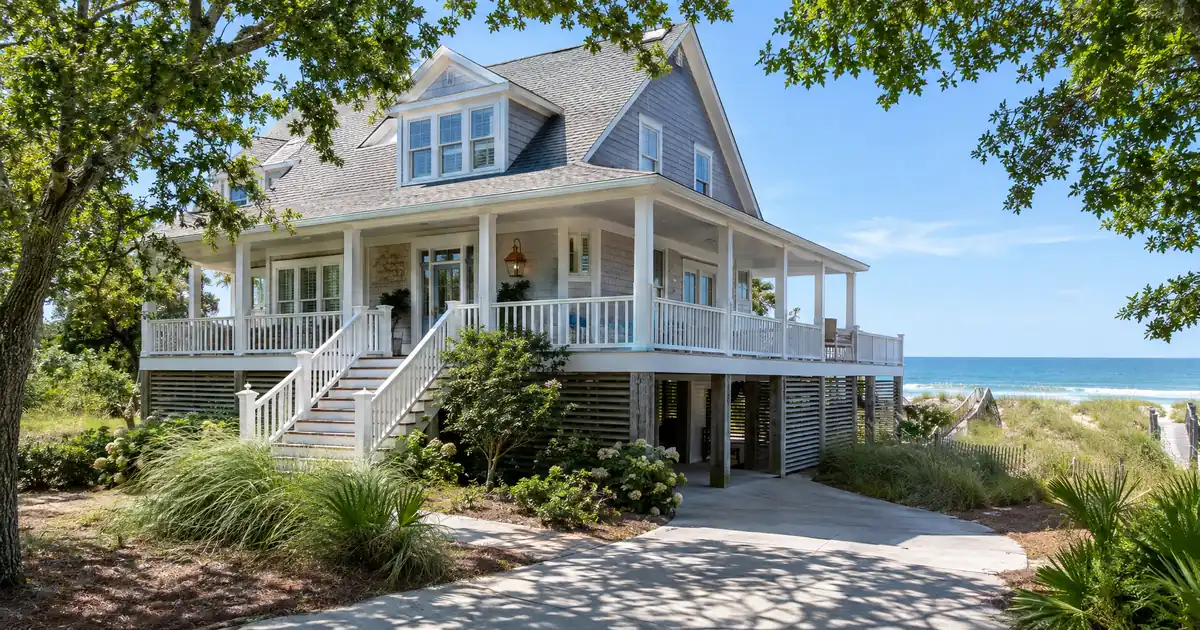
The Quick Read: No standalone storm-damage program exists, so the right path is a standard short-term rental DSCR cash-out refinance, sized at up to 70% LTV on short-term-rental collateral, that works only when the property is habitable, insured, and producing income that covers the payment, subject to lender guidelines. The loan is sized on value and rental coverage, not on what the cash buys. Condition and insurance status at appraisal decide most outcomes.
- Cash-out proceeds on a business-purpose investor loan can generally pay for a roof.
- An active leak, structural damage, or an unrentable unit usually has to be fixed before a cash-out refinance moves forward.
- Short-term-rental cash-out typically needs a 640+ credit score, about 12 months of hosting history, and 1.00 coverage on a refinance.
- An open insurance claim has to be reconciled with the new loan.
- Clearing the coverage test does not mean the property cash-flows after the repair.
A roof problem and a refinance idea tend to show up together. The investor has equity, a storm just hit, and a cash-out looks like the obvious tool. Sometimes it is. Other times the damage itself blocks the loan. This article explains how the mechanics work, step by step.
DSCR Cash-Out Calculator
Run the cash-out numbers in your market
Rate source: Freddie Mac 30-yr average via FRED® — Federal Reserve Bank of St. Louis · effective Oct 29, 2026
Prefilled with starting assumptions — enter your property’s value, balance, taxes, and insurance for a more accurate picture.
Program parameters update from Lendmire’s centralized guideline source. Taxes and insurance are editable estimates.
As of Oct 29, 2026 · General Freddie Mac market benchmark, not a Lendmire loan offer. Property value, balance, taxes, and insurance are editable estimates. Maximum loan-to-value varies by lender, program, property type, and seasoning. Not a Loan Estimate, approval, or commitment to lend. Program availability and eligibility are subject to lender guidelines, credit approval, property review, and underwriting.
What Is a Storm-Damage Cash-Out on a Short-Term Rental?
It is an ordinary DSCR cash-out refinance, applied to a rental that happens to need roof work. Across the wholesale network where Lendmire places files, no lender sells a special roof or storm product. The loan replaces the existing first mortgage and returns part of the equity as cash. The lender sizes it on appraised value and on whether rent covers the new payment.
DSCR stands for debt service coverage ratio. It divides monthly rent by the full monthly obligation: principal, interest, taxes, insurance, and any HOA dues. Lendmire’s complete DSCR loans guide covers the basics.
The “best program” question is really a fit question. The best program for your situation depends on the damage level, the hosting history, the credit profile, and the leverage you need. A broker that shops several wholesale lenders can match the scenario to the program. Lendmire is a mortgage broker arranging DSCR investor loans through select lenders in its network, covering 41 markets, including Washington, D.C.
Can the Cash Actually Pay for the Roof?
Yes, on a business-purpose investor loan the proceeds are generally yours to use on the property. The lender cares about collateral and coverage, not the receipt. The catch is that the collateral must be in acceptable shape when the appraiser arrives.
Refinance proceeds are not an emergency fund for a property that is already compromised. A lender will not advance new money against a roof that is actively leaking or a unit that cannot be occupied. In that case the usual sequence is repair first, using insurance proceeds, cash, or short-term rehab or bridge financing. The refinance then follows once the unit is rentable again.
A failing but not yet damaged roof is a different case. It may lower the appraised value or trigger a repair condition. The cash-out can then come in smaller than the repair bill.
Which Path Fits Which Damage Level?
Match the path to the damage. The table summarizes how select lenders in the network typically treat each situation. Each file is reviewed individually.
| Situation | Typical read | Likely path |
|---|---|---|
| Aging roof, no leaks | Appraisal may note it | Cash-out, then replace |
| Minor damage, still booked | Condition may need a repair note | Repair or cure, then cash-out |
| Active leak or structural damage | Usually blocks the loan | Repair first, refinance after |
| Uninhabitable, no bookings | No current income to test | Bridge or rehab, then DSCR |
| Open insurance claim | Must be reconciled | Resolve claim, then refinance |
Think of it as a ladder. The lower the property sits on it, the more the repair has to come before the refinance.
How Underwriting Treats a Damaged or Repair-Needed STR
Underwriting runs in a fixed order, and each step can stop the file. Here is how it works.
1. Condition gate. The lender looks at habitability first. Active damage or an unrentable unit usually pauses the file until repairs are done.
2. Insurance and claim status. Lenders typically want to see the adjuster’s scope of loss, the claim status, and evidence that repairs were completed. Exact documents vary by lender.
3. Appraisal. The appraiser reports the roof condition, and the value reflects it. The appraisal also includes a market rent schedule (Form 1007).
4. Income basis. For a short-term rental, lenders may count platform booking history, a market-based projection, or appraiser rent. Treatment varies a great deal from one lender to the next.
5. Coverage test. Short-term-rental refinances typically need 1.00 coverage. A unit that is closed for repairs has little current income to support that number.
6. Sizing. Value, the LTV tier, and reserves set the proceeds.
Pattern-level observation from the broker side: damaged-property files stall most often on the insurance paperwork, not on the loan itself. A file with a clear claim status and documented repairs moves through lender review far more smoothly than one with open questions.
What the Best Program Depends On
Several variables decide fit, and no single program wins on all of them. Most programs placed through the network share one spine: a 30-year fixed structure. Extended terms, interest-only periods, and ARM structures exist through select lenders. The strictest overlays tend to come from lenders that count only documented booking history. The more flexible ones will consider a market-based projection.
Here are the verified ranges that matter for this scenario, all subject to lender guidelines:
- Short-term-rental cash-out leverage: up to 70% LTV on short-term-rental collateral. Standard rentals sit higher, at around 75% on a cash-out.
- Credit: a 640+ score on short-term-rental files. Higher scores can open stronger leverage tiers.
- Hosting history: about 12 months is typical.
- Coverage: 1.00 on a refinance. Select programs start there. A separate select-lender path takes coverage below 1.00, with leverage and terms adjusted.
- Seasoning: about 6 months is a common expectation on cash-out.
- Loan size: up to $3,000,000 on standard programs.
- Reserves: commonly around 6 months of PITIA, but they vary by lender, leverage, loan size, and transaction type.
A larger down payment or lower leverage can lift the coverage ratio. It never erases credit floors, reserve rules, or property eligibility. The strongest files clear both tests: enough equity and enough rental coverage.
Manufactured homes, log homes, and barndominiums are not offered in these programs. The same goes for short-term-rental properties of those types.
Should You Repair First, Refinance First, or Bridge?
The right order depends on whether the property can pass appraisal today.
Refinance first makes sense when the roof is aging but sound. The cash-out funds the replacement, and the appraisal reflects the property as it stands. Check that the value still supports the leverage you need.
Repair first is the better call when there is active damage. Insurance proceeds, cash, or short-term rehab financing cover the work. The refinance then happens on a clean, rentable property with fresh booking history.
Bridge or rehab financing helps when the unit is uninhabitable and cash is short. It carries its own costs and a hard stop, so the investor needs a clear plan to reach a DSCR refinance afterward.
This is a genuine toss-up on moderate damage. Refinancing first preserves existing booking history. Repairing first avoids an appraisal haircut. Running both versions through a broker before committing is worth the effort.
How Insurance Interacts With the New Loan
An open claim complicates a refinance, and the existing mortgage often controls the money. Where a mortgage already exists, the insurer’s check for dwelling damage is typically payable to both the borrower and the servicer. The servicer may release funds in stages as repairs are verified. The mortgage agreement governs how that works, as Lexology’s overview of property insurance claims and loss drafts explains. That piece is dated legal commentary, so treat it as background and confirm specifics with your servicer.
A cash-out refinance pays off the old loan, which is the point where trapped funds could be resolved. How a servicer treats undisbursed funds at payoff varies, so ask before assuming.
Insurance also reaches the coverage ratio directly. A wind or hail exclusion, or a roof surcharge, raises the insurance line in PITIA. A higher denominator lowers the coverage number. A storm-prone property can see this effect on the same file that needed the roof.
Using cash-out to bridge a deductible gap can be logical. Using it to replace money the insurer already owes you is usually a poor trade, because the new balance stays after the claim pays out.
A Worked Example
Run the numbers on a modeled short-term rental. Assume it clears roughly 1.25x on its income basis before any cash-out. Assume the investor takes cash-out at the short-term-rental ceiling of 70% LTV to cover a roof replacement. Final terms depend on lender guidelines, property type, leverage, and the borrower’s complete credit picture.
The larger balance raises the monthly obligation, so coverage drifts toward the low-1.1 range. That still clears the 1.00 floor typical of refinances. Now add a wind exclusion that lifts the insurance line, and coverage slips closer to 1.00. The file may still work, but the margin is thin.
Here is the catch. Clearing 1.00 is not positive cash flow. The ratio compares rent to PITIA only. Repairs, vacancy, management, utilities, and capital costs all sit outside it. A property can pass the test and still strain the owner’s monthly budget.
If the modeled coverage landed below 1.00, a sub-1.00 structure is available through select lenders in the network, with leverage and terms adjusted. A lender would review that against credit approval and the property review. It is a structure to weigh, not a given.
Where the General Rule Breaks
A few edge cases change the answer.
- Vacant or unrentable unit. With no bookings, platform history is thin. The fallback is appraiser rent, which tends to run lower for short-term rentals.
- Short hosting history. Under about 12 months, many lenders will not treat the file as a short-term rental at all. Some may underwrite it on long-term rent instead.
- Owner-occupant programs. Programs designed for primary residences do not carry over to investor DSCR files, which qualify primarily on property-level rental income covering the payment, subject to lender guidelines.
- Local rules and HOA limits. Short-term rental rules can vary by city, county, HOA, and property type, so investors should confirm local rules before relying on projected rental income.
- Entity-held title. Trust or LLC ownership can change documentation, subject to lender program eligibility.
Key Terms Defined
Cash-out refinance: a new loan that pays off the existing mortgage and returns part of the equity as cash.
DSCR: monthly rent divided by the full monthly obligation of principal, interest, taxes, insurance, and HOA dues.
Seasoning: the time an owner has held the property or loan before a cash-out is allowed.
Loss draft: insurance money for dwelling damage, held and released by the mortgage servicer as repairs are verified.
Capital repair: a major replacement such as a full roof, as opposed to routine maintenance.
PITIA: principal, interest, taxes, insurance, and association dues, the denominator in the coverage ratio.
What the Investor Decision Looks Like
Start with the damage level, then the claim status, then the income picture. If the unit is rentable and the roof is the only issue, a cash-out at up to 70% LTV on short-term-rental collateral is a reasonable option to test. If the unit is down, fix it first. These specifics are subject to lender guidelines and a full review of property, leverage, and credit.
Tax treatment can depend on how the funds are used and how the property is held, and IRS Publication 527 addresses how improvements such as a roof are recovered over time, so investors should keep clear records and speak with a qualified tax professional before relying on any deduction.
Prepare a clean file: the adjuster’s summary or scope of loss, contractor proposals, booking history, and proof of insurance. Ask each lender what income it counts. A broker that places files across several wholesale lenders can steer the file toward programs that fit.
Frequently Asked Questions
Can I use a DSCR cash-out refinance to replace a roof on my Airbnb?
Generally yes, if the property is habitable and the roof is not already causing active damage. The loan is sized on value and rental coverage, not on how the money is spent. Short-term-rental cash-out typically tops out at 70% LTV, with a 640+ credit score and about 12 months of hosting history, subject to lender guidelines.
What if my short-term rental is vacant after a storm?
A vacant, unrentable unit usually has to be repaired before a cash-out refinance moves ahead. With no bookings there is no current income to test. The more common path is insurance proceeds or short-term rehab financing first, then a DSCR refinance once the unit is rentable.
Does an open insurance claim stop the refinance?
It does not always stop it, but it has to be reconciled. Lenders typically want claim status and evidence of completed repairs. Where a mortgage exists, the servicer may control the insurance check until repairs are verified.
Will my short-term rental income count if I only hosted for a few months?
Often not as short-term income. Many lenders look for about 12 months of hosting history. Some may fall back on appraiser rent, which can be lower. Ask each lender what income basis it uses.
Does coverage above 1.00 mean the property cash-flows after the repair?
No. The coverage ratio compares rent to PITIA only. Repairs, vacancy, management, utilities, and capital costs sit outside the calculation, so a property can clear the ratio and still run tight.
If you are buying or refinancing a rental property and want to see how the numbers work, Lendmire can help you compare DSCR loan options based on the property income, credit profile, leverage, and investor goals. Programs change, and every file is underwritten individually, so nothing here is a commitment to lend.
Storm seasons repeat, so the investors who handle roof risk best tend to document condition, claims, and booking history before they ever need to borrow against them.
A deeper walk-through of investment-property equity extraction lives in Lendmire’s guide to cash-out refinance on an investment property.
About Lendmire
As a non-QM mortgage broker (NMLS# 2371349), Lendmire facilitates DSCR investor loans across 41 markets, including Washington, D.C. DSCR eligibility is generally reviewed around property-level rental income instead of personal income documentation, subject to lender guidelines, serving LLC-structured portfolios and self-employed borrowers who don’t fit conventional boxes. A two-time Scotsman Guide Top Mortgage Workplace (2025, 2026).
Get Started
Ready to find the right loan for you?
See your offer in seconds. No credit pull, no obligation.
Informational only. Not a Loan Estimate, approval, or commitment to lend. Program availability and eligibility are subject to lender guidelines, credit approval, property review, and underwriting.
References
1. Lexology – Property Insurance Claims and Loss Drafts
This article is part of Lendmire’s investment property cash-out refinance program — full qualification details, guidelines, and scenarios live on the program page.
Related reading: Short-Term Rental Cash-Out Refinance Requirements for a First-Time Host · How to Walk Away With More Cash on a DSCR Cash-Out Refinance · DSCR Cash-Out Refinance Requirements to Fund a Renovation
Brandon Miller
Founder & CEO, Mortgage Loan Originator, Lendmire LLC
- Mortgage Loan Originator · NMLS# 1129696 · Verify on NMLS Consumer Access
- North Carolina Real Estate Broker · License# 343312 · Verify on NCREC
- North Carolina Insurance Producer · License# 19053198 · Property, Casualty, Life, Health · Verify on NAIC SBS
- Lendmire LLC · Firm NMLS# 2371349 · Verify firm licensure
Important disclosures. Lendmire (NMLS# 2371349) is a licensed mortgage brokerage. Lendmire is not a direct lender, depository institution, or financial advisor. All loan inquiries are subject to lender underwriting; this article does not constitute a commitment to lend. Rates, terms, and program guidelines are subject to change without notice and vary by borrower profile, property type, and state. Information in this article is general in nature and is not financial, legal, or tax advice. Equal Housing Opportunity. NMLS Consumer Access: nmlsconsumeraccess.org.