
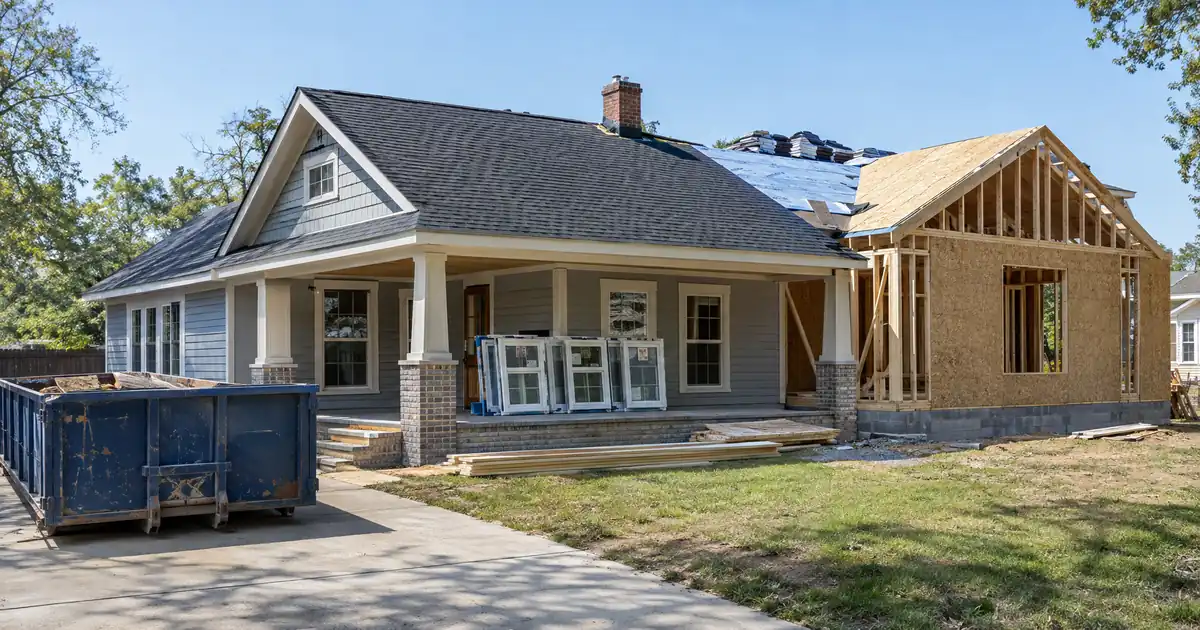
The Quick Read: The new long-term loan is sized as a percentage of one value figure, and the appraisal sets that figure. The loan has to pay off the private bridge or hard money debt first, then closing costs. Only what is left comes back to the investor, so a low appraisal shrinks cash returned before it ever threatens the payoff.
- The appraisal decides two things: whether the loan clears the private payoff, and how much cash returns.
- On a DSCR cash-out refinance, the ceiling is 75% LTV on a standard rental, subject to lender guidelines.
- A second test runs alongside value: rent must cover the full monthly obligation (PITIA).
- Seasoning, about 6 months from title recording, can change which value the lender uses.
- Rent coverage can cap the loan below the LTV ceiling, so a strong appraisal does not guarantee a clean exit.
Key Terms Defined
ARV (after-repair value): The investor’s projection of what the property is worth once the rehab is finished.
Appraised value: The licensed appraiser’s opinion of value, built from comparable sales, and the number the new loan is actually sized on.
Cost basis: Purchase price plus documented rehab spending.
Seasoning: The ownership period a lender expects before it will size a cash-out loan off appraised value rather than cost.
Payoff stack: Everything the refinance must clear on the private loan: principal, unfunded draws already advanced, accrued interest, and any exit charges.
Payoff-only vs. cash-out: A payoff-only (rate-and-term) refinance returns no cash at closing. A refinance that returns cash is a cash-out refinance, with a lower ceiling.
Coverage ratio (DSCR): Monthly rent divided by the full monthly payment of principal, interest, taxes, insurance and association dues.
DSCR Cash-Out Calculator
Run the cash-out numbers in your market
Rate source: Freddie Mac 30-yr average via FRED® — Federal Reserve Bank of St. Louis · effective Oct 8, 2026
Prefilled with starting assumptions — enter your property’s value, balance, taxes, and insurance for a more accurate picture.
Program parameters update from Lendmire’s centralized guideline source. Taxes and insurance are editable estimates.
As of Oct 8, 2026 · General Freddie Mac market benchmark, not a Lendmire loan offer. Property value, balance, taxes, and insurance are editable estimates. Maximum loan-to-value varies by lender, program, property type, and seasoning. Not a Loan Estimate, approval, or commitment to lend. Program availability and eligibility are subject to lender guidelines, credit approval, property review, and underwriting.
The Clearing Formula
The loan clears when the new loan covers the full payoff stack plus closing costs. The new loan equals the value basis times the LTV ceiling, or less if rent coverage binds. Cash released is what remains after the payoff and costs.
Most DSCR files in a wholesale network start from the appraisal as the value basis, but rent coverage can cap the loan below what value alone would allow. The investor’s own projection does not enter the math. Investors sometimes anchor on a conventional-bank shortcut: appraised value times a percentage, minus the loan balance. The shortcut is directionally right, but its percentage reflects bank lending, not DSCR programs.
Here is the payoff stack, item by item:
| Component | What it includes |
|---|---|
| Principal | Funds advanced on the private loan |
| Accrued interest | Interest owed through the payoff date |
| Exit charges | Any lender payoff or release fees |
| Refinance closing costs | Title, appraisal, and lender fees on the new loan |
The title or closing agent pays the old lender from the new loan’s proceeds, then sends the remainder to the borrower. The private lender’s payoff statement controls the number, and interest keeps accruing until the wire lands. Carrying cost is real: the bridge loan stays outstanding until the refinance closes.
Which Value Will the Lender Use?
Seasoning decides. Once a property has been owned about 6 months, measured from the recorded deed, most programs size a cash-out off appraised value. Earlier than that, some programs use the lower of appraised value or documented cost basis.
That distinction is the most important edge case in BRRRR. A large forced-equity gain is not recognized if the lender sizes off cost. Seasoning runs from the recorded deed, not from rehab completion or tenant move-in. Many investors assume the clock starts when the work wraps up. It does not.
| Situation | Likely value basis | Effect on proceeds |
|---|---|---|
| Inside seasoning window | Lower of value or cost (some programs) | Equity gain may not be recognized |
| Past about 6 months | Appraised value | Full forced-equity gain can count |
Where the Private Loan Fits
A typical hard money loan on a rehab project funds up to 93% of project cost at the top experience tier, capped at 75% of after-repair value, with up to 100% of the rehab budget released in draws against completed work. Terms run 6-18 months, interest-only, and the figures vary by lender, property, and experience. The exit has to be planned from day one, because the term is short.
On the way out, the DSCR cash-out refinance allows up to 75% LTV on a standard rental, and a DSCR rate-and-term refinance allows a higher ceiling but returns no cash. Compare those numbers. A hard money loan at 75% of ARV plus rehab funding can leave the investor with a payoff stack close to the entire 75% DSCR cash-out ceiling. That is why thin-margin deals fail at the appraisal: the ceilings nearly match, so any value miss comes out of the investor’s pocket. Exact terms depend on the lender’s guidelines, property type, leverage, and a full review of the borrower’s file.
Investors weighing that path can read about a hard money exit refinance as the structure built for it. Subject to lender guidelines and property review, many investors move from private money into long-term DSCR financing once the property is stabilized.
What a Value Miss Does to Cash Returned
A modeled sensitivity shows the effect. These are modeled assumptions indexed to an ARV of 100, not market data. Assume invested capital of 70, of which 60 is bridge debt, so the investor’s own cash is 10. Assume closing costs of 3 and a DSCR cash-out refinance at 75% LTV on a standard rental. Net cash released is the new loan, minus the 60 payoff, minus the 3 of costs. Every figure here varies by lender and program; guidelines, property type, leverage, and credit profile all apply.
| Appraised value | Net cash released | Recovery of the 10 own cash |
|---|---|---|
| 100 | 12 | 120% |
| 95 | 8.25 | 82.5% |
| 90 | 4.5 | 45% |
At full value, the investor gets all 10 of own cash back plus 2. A 10% value miss does not cost 10% of the cash back. It cuts cash released from 12 to 4.5, so recovery falls from 120% to 45%, because leverage magnifies every point of appraisal shortfall.
Keep working the table downward and a break-even appears. The new loan must cover the 60 payoff plus 3 of costs, which means 63. At a 75% ceiling, that takes an appraisal of about 84 on this deal. Below that, the investor brings cash to closing. The exact break-even depends on the investor’s own stack, so rebuild the table with real numbers before buying.
The Second Test: Rent
Value is gate one. Rent coverage is gate two. The DSCR is monthly rent divided by PITIA, and on many select programs 1.00 is where coverage starts. A separate select-lender path goes below 1.00 with leverage and terms adjusted.
Rent can cap the loan before value does. A property can appraise beautifully and still produce a smaller loan, because coverage binds the amount. Clearing a coverage floor is also not the same as positive cash flow. DSCR compares rent to PITIA only, so repairs, vacancy, management, utilities, and capex sit outside the number.
Lease documentation matters here. Appraisers on rental files typically build a market-rent opinion into the report. For context only, agency forms show how that exhibit looks. Fannie Mae’s forms list names Form 1007, the Single-Family Comparable Rent Schedule, and Form 1025, the Small Residential Income Property Appraisal Report. Form 1007 is the market-rent exhibit for one-unit investment properties. DSCR loans are not agency products, so those forms illustrate the concept rather than set the rules.
Short-term rental collateral works differently. On a short-term rental cash-out, the ceiling drops to 70%, while a standard rental sits at 75%. The lower cap shrinks the payoff cushion further.
When the Appraisal Falls Short
A low appraisal leaves five options, each with a tradeoff:
1. Accept less cash back. Works if the payoff still clears and the investor can live with trapped equity.
2. Bring cash to closing. Keeps the deal on schedule but ties up more capital.
3. Wait and re-appraise. Fits only if the private loan’s maturity allows it and carry costs stay manageable.
4. Challenge the value. Documented renovation invoices and before-and-after photos tend to help more than a pile of extra comps.
5. Extend the private loan. Buys time, if the private lender agrees.
Lendmire’s piece Appraisal Came In Low on a Rental Property Refinance: Rate-and-Term vs Cash-Out at the Lower Value walks through the rate-and-term versus cash-out choice at the lower value, and its piece BRRRR Refinance Denied Because The Appraisal Came In Too Low covers the harder case.
One pattern shows up across files. Trapped cash usually has one of three causes: a low appraisal, seasoning that has not run, or rent that does not cover the new payment. Diagnose which one before choosing an option, because the fix differs.
How to Support the Appraisal
Appraisers value what they can document. A tight file typically includes:
- An itemized rehab record with invoices and permits where applicable.
- Before-and-after photos showing the scope completed, not partial work.
- Comparable sales that match condition and finish, not raw neighborhood averages.
- A signed lease in place before the appraisal, with rent that fits the market.
- Correct bedroom count: a bonus room counts as a bedroom only with egress, heat, electrical, and adequate ceiling height. Otherwise it is finished square footage.
An appraisal made subject to completion items can stall closing, so finish the scope before the appraisal is ordered. Improvements may support a higher appraised value, depending on comps and underwriter review, but they do not add value dollar for dollar.
Plan Backward Before You Buy
Work from the payoff, not from the purchase. Start with the conservative end of the comps for ARV, apply the cash-out ceiling, and subtract the payoff stack. If that number does not cover the payoff and costs, the deal fails before it starts.
Then stress-test. Rerun the deal at a value 5% and 10% below the projection. AirDNA’s BRRRR overview notes that lenders evaluate value, rent, and credit together, which fits a two-gate view. A deal with a thin margin at the base case, such as roughly 3% of value, can flip to needing cash at closing when the appraisal lands 8% below projection.
The 70% rule is a screening tool, not a promise. It helps set a maximum purchase and rehab budget, but the lender’s appraisal has the final word. Credit also matters: a 620 floor exists in parts of the network, most programs want around 660, and 700+ opens the strongest leverage tiers. Reserves commonly run about 6 months of PITIA, rising to about 9 months above $1,500,000. Everything is subject to lender guidelines. This is not a commitment to lend.
Tax treatment can depend on how the funds are used and how the property is held; investors should keep clear records and speak with a qualified tax professional before relying on any deduction.
For the broader framework, see Lendmire’s complete DSCR loans guide.
Frequently Asked Questions
Does the refinance have to pay off the private loan?
Yes, in practice. The private lender holds a first lien, so the new loan has to clear the full payoff before any cash goes to the investor. The title or closing agent wires the payoff from the new loan’s proceeds.
Can I refinance right after the rehab?
Sometimes, but seasoning matters. Most programs expect about 6 months of ownership from the recorded deed for a cash-out sized on appraised value. Inside that window, some programs use the lower of value or cost basis.
What if the appraisal is low?
Proceeds shrink first, and the payoff can fall short if the margin was thin. The investor can accept less cash back, bring cash to closing, challenge the value with documentation, wait, or seek an extension on the private loan.
Is a payoff-only refinance different from cash-out?
Yes. A DSCR payoff-only refinance returns no cash at closing, and it generally allows more leverage than a cash-out refinance. The 75% ceiling that applies to DSCR loans is not a blanket maximum, because the ceiling varies by program, property type, and the borrower’s profile, and the highest leverage tiers are not available on every deal. If the payoff stack is large, the extra room under a payoff-only structure may matter more than the cash. Final terms depend on lender guidelines, property type, leverage, and the borrower’s complete credit picture.
Do the private loan’s costs get paid at the refinance?
Yes. Accrued interest and exit charges belong in the payoff stack, so the new loan has to cover them along with principal and refinance closing costs.
The investors who clear the payoff cleanly are usually the ones who modeled a below-projection appraisal before they bought, not after the bridge loan started ticking.
For current guidelines and terms, see Lendmire’s DSCR loan programs page.
About Lendmire
Lendmire is a non-QM mortgage brokerage (NMLS# 2371349) arranging DSCR investor loans in 41 markets, including Washington, D.C. DSCR eligibility is generally reviewed around property-level rental income rather than personal income, subject to lender and program guidelines, a fit for self-employed investors and LLC-owned portfolios. Lendmire was recognized as a Scotsman Guide Top Mortgage Workplace in 2025 and 2026.
Get Started
Ready to find the right loan for you?
In about 30 seconds you can review financing options available for your investment property. No commitment required.
Informational only. Not a Loan Estimate, approval, or commitment to lend. Program availability and eligibility are subject to lender guidelines, credit approval, property review, and underwriting.
References
1. Fannie Mae, Selling & Servicing Guide Forms
2. Fannie Mae Selling Guide B4-1.2-01
This article is part of Lendmire’s hard money loan program — full qualification details, guidelines, and scenarios live on the program page.
Related reading: Bank HELOC vs Broker HELOC for Rentals Held in an LLC · Investment Property HELOC Lenders for Investors Keeping a Low First Lien · Can You Qualify on Cash Flow and Keep the LLC in a DSCR Cash-Out?
Brandon Miller
Founder & CEO, Mortgage Loan Originator, Lendmire LLC
- Mortgage Loan Originator · NMLS# 1129696 · Verify on NMLS Consumer Access
- North Carolina Real Estate Broker · License# 343312 · Verify on NCREC
- North Carolina Insurance Producer · License# 19053198 · Property, Casualty, Life, Health · Verify on NAIC SBS
- Lendmire LLC · Firm NMLS# 2371349 · Verify firm licensure
Legal disclosures. Lendmire (NMLS# 2371349) is a state-licensed mortgage brokerage that arranges financing through wholesale lender relationships. Lendmire is not a direct lender, depository institution, or registered financial advisor. The discussion above is general informational content about real estate financing — it is not financial, legal, or tax advice, and readers should consult licensed professionals for guidance on their individual circumstances. Loan inquiries are subject to lender underwriting; this article does not represent a commitment to lend. Loan terms, rates, and qualification standards vary by borrower, property, and state, and are subject to change at any time. Equal Housing Opportunity. NMLS Consumer Access: nmlsconsumeraccess.org.