
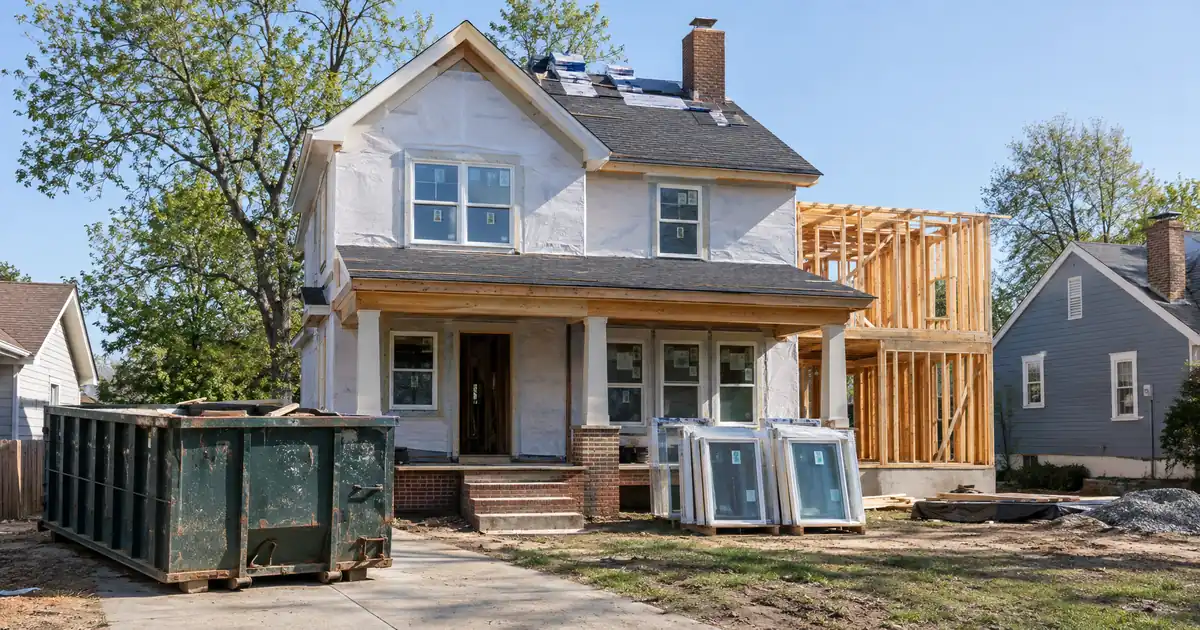
BRRRR Exit Hard Money Payoff — The Quick Read: The exit works when the appraised value times the refinance LTV cap is at least the hard money payoff plus refinance closing costs, plus any cash you want back. The appraiser sets that value, not the investor and not the contractor. A DSCR refinance adds a second test: market rent has to cover the new payment. Passing one test does not excuse failing the other.
Key Takeaways
- The break-even appraisal equals (payoff + closing costs) ÷ the LTV cap. Run it before you buy.
- Most of the wholesale network’s cash-out refinances top out around 75% LTV on standard rentals. A hard money bridge sized near its own cap leaves almost no room.
- The bridge payoff is bigger than the original loan. Interest, fees, and any extension charges stack on top.
- DSCR measures rent against the payment. It does not measure profit and it does not fix an LTV shortfall.
- Decide your plan B before closing on the purchase, not after the appraisal lands.
- Exact terms depend on the lender’s guidelines, property type, leverage, and a full review of the borrower’s file.
What Does the Exit Actually Have to Cover?
The refinance has to retire the bridge loan first. It then has to pay its own closing costs. Whatever is left is the cash you get back.
What this loan actually costs to carry in your market.
Hard money is sized against the project and priced by time. Enter the deal and see how much the program will lend, the cash required at closing, the carry while you hold it, and what is left at the exit.
Leverage tiers on the current program: 85% with fewer than 2, 90% with 2 or more, 93% with 5 or more completed projects — every tier capped at 75% of after-repair value. Loan amounts up to $5,000,000, larger by exception; terms of 6 to 18 months, interest-only, no prepayment penalty. The rehab portion funds in draws against completed work, not at closing.
Program parameters shown update from Lendmire’s centralized guideline source. Rate, points, and months are editable assumptions, not quoted terms.
Cost cap sets the loan · positive spread
Illustrative estimate only — not a quote, Loan Estimate, approval, or commitment to lend. Rate, points, and months are editable assumptions. Hard money is business-purpose financing for real estate investors, not a consumer mortgage. Leverage on the current program tops out at 93% of project cost for investors with a documented track record, capped at 75% of after-repair value, with rehab funding up to 100% of the documented budget released in draws; actual terms vary by lender, borrower experience, property, and exit. Lendmire is a mortgage broker, not a lender.
The formula:
Appraised value × maximum cash-out LTV ≥ hard money payoff + refinance closing costs + cash you want returned. Every figure here varies by lender and program — guidelines, property type, leverage, and credit profile all apply.
Flip it to find the minimum appraisal:
Minimum appraisal = (payoff + closing costs) ÷ LTV cap.
To recover all the cash you put in, swap “payoff” for “payoff plus your own cash in.”
The after-repair value has to support the refinance. Inman’s BRRRR explainer makes the same point. It adds that the new loan also has to be covered by rent after expenses, and that buying cheap does not make a BRRRR work on its own.
How Underwriting Treats It, Step by Step
Here is the path a file takes, from the investor’s side.
1. Back-solve before buying. Start with a conservative after-repair value, not the contractor’s number. Work backward to the maximum you can pay and spend.
2. Carry the bridge. Hard money terms typically run 6 to 18 months, interest-only, with no prepayment penalty (varies by lender, property, and experience). Interest and fees accrue the whole time. Track the projected payoff as of the refinance closing date, not the original balance.
3. Finish the rehab and lease it up. Keep contractor invoices, receipts, a signed lease, and proof of rent. A thin paper trail hurts most when a lender sizes off documented cost.
4. Order the appraisal package. Single-family rentals commonly use a full interior report on Form 1004, paired with the Form 1007 rent schedule and an operating income statement (Form 216). Two-to-four-unit properties use the Form 1025 small residential income report. Realvals’ appraisal form reference lists 1025 for two to four units and 1007 as the single-family rent schedule. Those are form names only. They do not set DSCR guidelines.
5. Size the loan on the qualifying value. The lender applies its LTV cap to the value it uses. That is not always the appraisal. See the edge cases below.
6. Run the coverage test. Market rent is compared to the full new payment: principal, interest, taxes, insurance, and any HOA dues. Some programs use the lease instead, depending on the lender.
7. Pay off and settle. Title obtains a payoff letter from the bridge lender. Proceeds pay that loan first, then closing costs. Any remainder goes to the borrower. Settlement reconciliation is where a stale payoff figure shows up.
Where the Numbers Get Tight on Network Terms
Fix-and-flip bridge leverage typically runs 85% to 93% of project cost depending on the borrower’s completed projects, with every tier capped at 75% of after-repair value. Those are loan-to-cost figures, not LTV on a purchase. They vary by lender, property, and experience.
Notice the collision. A bridge sized near its 75% ARV cap, plus accrued interest and fees, can leave the payoff at or above what a 75% cash-out refinance returns, even when the appraisal hits the projection. The investor then brings cash to the table. Plan for that. Final terms depend on lender guidelines, property type, leverage, and the borrower’s complete credit picture.
Most programs in the wholesale network cap cash-out at roughly 75% LTV on standard rentals. Short-term-rental collateral generally sits lower, around 70% on cash-out. Seasoning of about six months is the common expectation (subject to lender guidelines). If your bridge matures before seasoning clears, the maturity date is your problem. The hard money payoff dates piece covers how to track that clock.
Edge Cases: Where the Rule Breaks
The cost-basis cap. Some programs size the loan off the lower of the appraisal or documented cost basis (purchase price plus receipted rehab) while the property is still unseasoned. A big appraisal does not unlock more cash in that case. This is lender overlay territory. It varies, and it is the first thing to ask about.
Seasoning clocks. Lenders generally measure seasoning from the recorded deed, not from the day rehab ends. Confirm which date the lender uses before assuming the clock is running.
Delayed financing is not the same thing. Delayed financing for all-cash buyers can return purchase cost with little seasoning. It does not unlock post-rehab value. A purchase financed with hard money generally does not count as cash.
Leasing below market. Signing a quick below-market lease to get a tenant in can pull the appraiser’s market-rent conclusion down. That lowers coverage and can lower the loan. Lease at market, or be ready to explain the gap.
Comp selection. Appraisers pick comps. If the nearby sales are unrenovated, your renovated property can get dragged toward them. That is the usual cause of a low number, and it is where an appraisal reconsideration request earns its keep. Put together recent sales of renovated homes, the rehab scope, and photos. Submit through the lender, not directly.
Passes LTV, fails coverage, or the reverse. The value can clear the payoff and still miss the rent test. Coverage below 1.00 is available through select lenders in the network, with leverage and terms adjusted. Expect lower leverage if you go that route. No-ratio structures exist only through select lenders, generally for borrowers who already own a primary residence.
Property type. DSCR financing is not offered on manufactured homes, log homes, or barndominiums. A rehab plan that ends in one of those has no DSCR exit.
Why a Passing DSCR Is Not Proof the Deal Works
DSCR compares rent to the full monthly obligation. Repairs, vacancy, management, utilities, and capex sit outside it. A property can clear 1.00 and still lose money. Select programs start at 1.00 as a floor. Stronger ratios open better terms and more leverage, and a 700+ score unlocks the strongest leverage tiers. Most programs want around 660, and a 620 floor exists in parts of the network.
A larger equity position lowers the payment and can lift the coverage ratio. It never erases leverage caps, credit floors, reserve rules, or property eligibility. The files that close clear both tests: enough equity and enough rent.
Reserves vary by lender, leverage, loan size, and transaction type. Around six months of PITIA is common. Conservative rate-term files at modest leverage under $1,500,000 can see reserves waived. Larger loans often step up to roughly nine months. Document reserves before the file goes in. Gaps there stall files that looked clean.
Loan sizes generally run up to $3,000,000 on standard programs (smaller balances available through select lenders), and above $2,500,000 the network holds to 30-year fixed structures. Extended terms, interest-only periods, and ARM structures are available through select lenders.
DSCR loans are designed for non-owner-occupied investment properties. Because they are business-purpose investor loans, they are reviewed differently from a standard owner-occupied mortgage.
What an Operator Sees on These Files
The same failures repeat. The investor underwrote the after-repair value off a contractor or agent estimate. The hard money payoff was pulled from the original note, not a current payoff letter. The lease was signed under market. Seasoning was assumed away. And nobody had a plan B.
A cleaner habit: run the exit three ways before buying. Run it at your expected value. Run it with a 10% haircut. Run it with the haircut and rent at the low end of the range. If the third run still clears payoff plus costs, the file has margin. If only the first run clears, you are betting on one number.
Borrowing less than the maximum can also raise monthly cash flow. More cash out is not automatically better. Sometimes the stronger play is taking less and leaving the coverage ratio healthier.
Plan B: What If the Value Comes in Short?
Ask these before you close on the purchase:
- Can I bring cash to the table to cover the gap?
- Can the bridge lender discuss an extension, and what would it cost?
- Does a lower-leverage refinance still pay off the loan?
- Would a sale at the appraised value beat the carrying cost of waiting?
- Is there a different product that fits the property better?
The maturity exit options page walks through those paths in more detail. Many investors refinance out of hard money into long-term rental financing once the property is stabilized, and Lendmire brokers that path through its hard money exit refinance program.
Tax treatment can depend on how the funds are used and how the property is held; investors should keep clear records and speak with a qualified tax professional before relying on any deduction.
Key Terms Defined
After-repair value (ARV): The property’s estimated value once the rehab is finished.
Payoff: The full amount owed to the bridge lender on the closing date, including interest, fees, and any extension charges.
Cash-out LTV cap: The maximum share of qualifying value a lender will lend on a cash-out refinance.
Seasoning: The minimum time you must own the property before a lender sizes the loan off its new value.
Cost basis: Purchase price plus documented rehab spending. Some programs size off it while a property is unseasoned.
Form 1007: The single-family comparable rent schedule an appraiser attaches to estimate market rent.
Frequently Asked Questions
Does a high appraisal always mean more cash back?
No. If the program sizes off the lower of appraisal or documented cost basis during early ownership, a strong appraisal does not raise the loan. Ask the lender which value basis applies before you count on the appraisal.
What happens if the appraisal does not cover the hard money payoff?
The shortfall comes out of your pocket at closing, or the refinance does not work as planned. Options include bringing cash, asking the bridge lender about an extension, taking a lower-leverage loan, or selling. Each costs something, so model them before buying.
Do I need DSCR above 1.00 to refinance a BRRRR property?
Select programs start at 1.00, and stronger coverage opens better terms and leverage. Either way, passing the rent test does not fix an LTV shortfall against the payoff.
Does a signed lease matter for the appraisal?
Yes. Many programs lean on market rent from the appraisal, and some look at the lease. A below-market lease can pull the rent conclusion down and lower coverage. Lease at market and keep proof of rent.
Can I ask for a second look at a low appraisal?
Yes. Request appraisal reconsideration through the lender with recent comparable sales of renovated homes, the rehab scope, and photos. Success is not guaranteed, and the lender decides whether a re-review is available.
Ready to Run Your Own Exit Math?
If you are buying or refinancing a rental property and want to see how the numbers work, Lendmire can help you compare DSCR loan options based on the property income, credit profile, leverage, and investor goals. Lendmire is a broker arranging DSCR financing through select lenders in its wholesale network, across 41 markets including Washington, D.C. Programs vary by lender, property, and experience, and nothing here is a commitment to lend. The complete DSCR loans guide lays out the full set of requirements. The investor who wins on exit math is usually the one who modeled the appraisal low before the first dollar went into the rehab.
Short-term financing tends to work best when the long-term plan is decided early – see the hard money exit refinance program.
About Lendmire
Lendmire is a non-QM mortgage brokerage (NMLS# 2371349) arranging DSCR investor loans in 41 markets, including Washington, D.C. DSCR eligibility is generally reviewed around property-level rental income rather than personal income, subject to lender and program guidelines, a fit for self-employed investors and LLC-owned portfolios. Lendmire was recognized as a Scotsman Guide Top Mortgage Workplace in 2025 and 2026.
Lendmire’s Top Mortgage Workplace recognition is documented by Scotsman Guide 2025 Top Mortgage Workplace and Scotsman Guide 2026 Top Mortgage Workplace.
Get Started
Ready to find the right loan for you?
In about 30 seconds you can review financing options available for your home or investment property. No commitment required.
Informational only. Not a Loan Estimate, approval, or commitment to lend. Program availability and eligibility are subject to lender guidelines, credit approval, property review, and underwriting.
References
1. Inman – BRRRR Method Explained
This article is part of Lendmire’s hard money loan program — full qualification details, guidelines, and scenarios live on the program page.
Related reading: Luxury Rental DSCR Loans In New Jersey · Jersey Shore Vacation Rental Loans: DSCR Financing In Ocean City, Cape May And Long Beach Island · DSCR Cash-out Refinance In New Jersey: Pulling Equity From A Rental
Brandon Miller
Founder & CEO, Mortgage Loan Originator, Lendmire LLC
- Mortgage Loan Originator · NMLS# 1129696 · Verify on NMLS Consumer Access
- North Carolina Real Estate Broker · License# 343312 · Verify on NCREC
- North Carolina Insurance Producer · License# 19053198 · Property, Casualty, Life, Health · Verify on NAIC SBS
- Lendmire LLC · Firm NMLS# 2371349 · Verify firm licensure
Legal disclosures. Lendmire (NMLS# 2371349) is a state-licensed mortgage brokerage that arranges financing through wholesale lender relationships. Lendmire is not a direct lender, depository institution, or registered financial advisor. The discussion above is general informational content about real estate financing — it is not financial, legal, or tax advice, and readers should consult licensed professionals for guidance on their individual circumstances. Loan inquiries are subject to lender underwriting; this article does not represent a commitment to lend. Loan terms, rates, and qualification standards vary by borrower, property, and state, and are subject to change at any time. Equal Housing Opportunity. NMLS Consumer Access: nmlsconsumeraccess.org.