
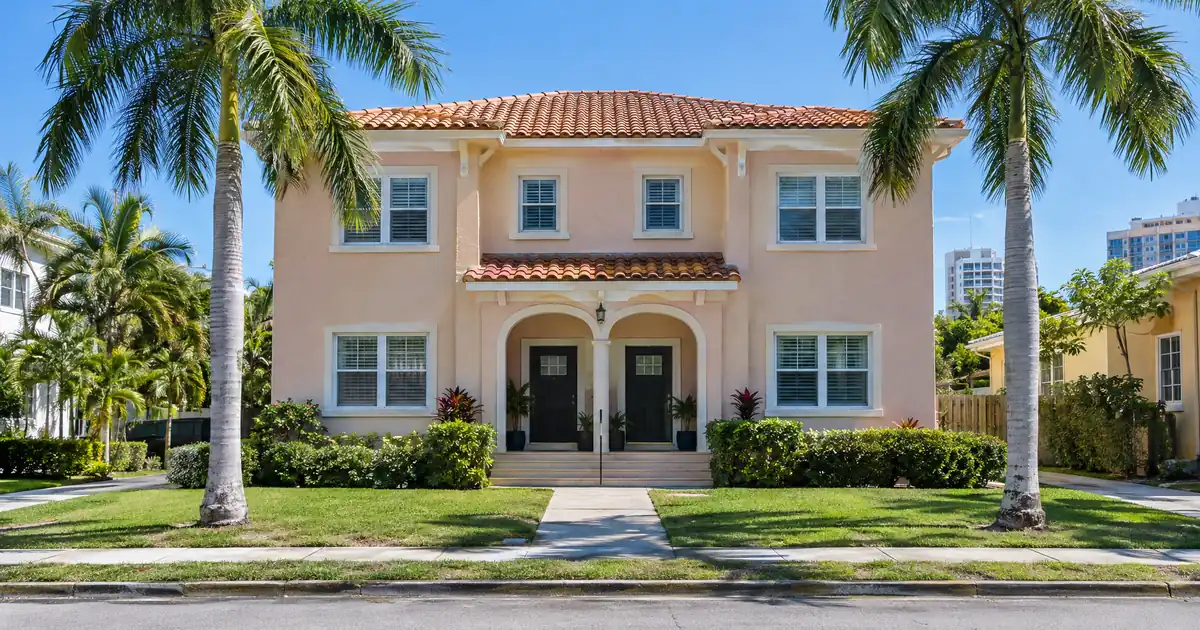
The Quick Read: A downtown Sarasota rental is almost always a condo, so the purchase turns on two tests: whether the unit’s rent covers its full monthly obligation, including HOA dues, and whether the building itself passes lender review. DSCR loans qualify primarily on property-level rental income covering the payment, subject to lender guidelines.
- Most purchase files land at 75%-80% LTV (20%-25% down), subject to lender guidelines.
- Coverage is rent divided by PITIA, and HOA dues count against you.
- Select programs start at 1.00 coverage. A separate select-lender path goes below 1.00, with leverage and terms adjusted.
- The declaration decides whether short-term rental income is usable, not the city.
- Florida’s structural reserve rules can move dues and assessments, so request building documents before you write the offer.
Downtown Sarasota is a useful worked example because it stacks the usual DSCR questions on top of condo-specific ones. The mechanics below apply to any urban condo purchase. Short-term rental rules can vary by city, county, HOA, and property type, so investors should confirm local rules before relying on projected rental income.
DSCR Calculator
Run the numbers in your market
Rate source: Freddie Mac 30-yr average via FRED® — Federal Reserve Bank of St. Louis · effective Oct 29, 2026
Prefilled with starting assumptions — enter your own rent or nightly figures, taxes, insurance, and HOA for a more accurate picture.
Program parameters update from Lendmire’s centralized guideline source. Taxes and insurance are editable estimates.
As of Oct 29, 2026 · General Freddie Mac market benchmark, not a Lendmire loan offer. Rent, nightly rate, occupancy, taxes, and insurance are editable estimates. Short-term rental figures are estimates only and vary significantly by season, property type, management approach, and local short-term-rental rules — confirm local regulations before relying on them. Qualifying income for short-term rentals varies by program — some use appraisal market rent, others use documented STR history or projections — and is confirmed in underwriting. Not a Loan Estimate, approval, or commitment to lend. Program availability and eligibility are subject to lender guidelines, credit approval, property review, and underwriting.
What Is a DSCR Loan, and How Is the Ratio Calculated?
A DSCR loan is a business-purpose investor loan that qualifies the property rather than the borrower’s paycheck. The ratio is monthly rent used for lender review divided by monthly PITIA: principal, interest, taxes, insurance, and HOA dues where they apply. Brokers like Lendmire arrange these loans through a wholesale network of lenders. DSCR loans are designed for non-owner-occupied investment properties, so they are reviewed differently from a standard owner-occupied mortgage.
The appraisal supplies the rent figure. For a condo, the appraiser documents market rent on a rent schedule, and the lender typically uses the lower of the lease rent and the appraised market rent. If a signed lease comes in above the appraiser’s number, expect the lower number to drive the ratio.
Two clarifications save investors trouble. First, DSCR compares rent to PITIA only. Clearing the benchmark is not the same as positive cash flow, because repairs, vacancy, management, utilities, and capital reserves sit outside the calculation. Second, a larger down payment lowers the payment and can lift the ratio, but it never erases leverage caps, credit floors, reserve rules, or property eligibility. The strongest files clear both tests: enough equity and enough rental coverage. For the full framework, see Lendmire’s complete DSCR loans guide.
Why Is Downtown Sarasota a Different Kind of DSCR Deal?
Downtown Sarasota is different because the denominator is heavy and the building is part of the underwriting. In a high-rise condo, HOA dues, insurance, and any assessment consume a large share of rent. A single-family rental has none of that. Run every downtown scenario with the actual dues figure from the budget, not an estimate.
The second difference is the building review. Lenders in the network look at the HOA questionnaire, the budget, master insurance, litigation disclosure, and the mix of owner-occupants and investors. A building with heavy investor concentration or pending litigation can reduce leverage or narrow the lender pool.
The third is that rental rules are layered. Zoning, city ordinances, and private HOA documents each say something different, and the strictest one controls what income you can count.
Key Terms Defined
- DSCR: the ratio of rent used for lender review to the full monthly housing obligation on the property.
- PITIA: principal, interest, taxes, insurance, and association dues, the monthly obligation in the denominator.
- Rent schedule: the appraisal exhibit that documents market rent for the unit.
- Non-warrantable condo: a condo building that falls outside conventional agency project standards, often because of investor concentration, litigation, or commercial space.
- SIRS: Florida’s Structural Integrity Reserve Study, a reserve-funding study required for many condo buildings.
- Milestone inspection: a structural inspection triggered by a building’s age and coastal proximity.
- Declaration: the recorded governing document that sets rental terms for the building.
Step by Step: How Does the Purchase Actually Run?
The sequence matters because the building can sink the deal before the unit’s rent ever does. Work in this order.
1. Pick the income strategy. Long-term rent runs off the lease or the appraiser’s market rent. Short-term income runs off hosting history or third-party projections, and lenders typically haircut it. Purchases of short-term rentals reach up to 75% LTV, and the network expects a 640+ score and about 12 months of hosting history.
2. Get a file-level read on credit and leverage. Most programs want around 660. A 620 floor exists in parts of the network. A score of 700+ unlocks the strongest leverage tiers, including select high-leverage programs that reach 85% LTV on a purchase.
3. Read the declaration before you offer. Look for minimum lease terms, rental caps, approval requirements, and pending amendments. A rental restriction is a title and contract matter, not an inspection item.
4. Request the building package. Ask for the HOA questionnaire, current budget, master insurance certificate, litigation disclosure, the milestone inspection status, and the SIRS.
5. Model the ratio with real dues. Use the budget figure, plus any assessment already approved or being discussed.
6. Decide on vesting. Buying in an LLC is common, and it is available subject to lender program eligibility. Entity documents are added to the file.
7. Go under contract and order the appraisal. The rent schedule and condo review run together.
8. Document reserves. Reserves vary by lender, leverage, and loan size, and commonly run around 6 months of PITIA, stepping up to about 9 months on loans above $1,500,000.
9. Close and plan the exit. A later cash-out refinance tops out around 75% LTV on standard rentals, with about 6 months of seasoning as the common expectation.
DSCR loans are business-purpose loans and are exempt from TRID consumer disclosure rules, which is one reason the file feels different from a primary-home purchase.
How Does a Downtown Condo Pencil?
Picture a downtown one-bedroom condo where the appraiser’s rent schedule supports a market rent that covers principal, interest, taxes, and insurance at roughly 1.35x before dues. Now add HOA dues. Because dues sit in the denominator, the same unit might land near 1.05x to 1.10x. Then the board announces a special assessment that raises monthly dues. The ratio drops again, and it may slip below 1.00.
That is the denominator problem in practice. The rent never changed, but the building’s finances moved the ratio.
Here is how the same unit reads under different structures.
| Scenario | Coverage read | What changes |
|---|---|---|
| Base case, current dues | Low 1.1x range | Clears 1.00 programs |
| Dues rise after assessment | Near or under 1.00 | Fewer programs fit |
| Larger down payment | Moves back above 1.00 | Lower payment lifts ratio |
| Sub-1.00 path | Under 1.00 | Select lenders, adjusted leverage and terms |
These figures are modeled, not quoted. The calculator on this site offers an illustrative estimate you can edit with real dues.
If the ratio falls short, the levers are straightforward. Put more down, pick a unit with lower dues, or negotiate on price. A sub-1.00 structure is available through select lenders in the network, with leverage and terms adjusted. Reaching for sub-1.00 only because the numbers fail everywhere is a signal to rethink the building, not the loan type. No-ratio structures exist only through select lenders, generally for borrowers who already own a primary residence.
Counting the Rent: Long-Term, Seasonal, or Short-Term?
Long-term rent is the cleanest input. Short-term income is the most fragile. Lenders discount it, and projections that overstate income are a common reason files fall apart.
| Income type | Typical basis | Main risk |
|---|---|---|
| Long-term lease | Lease or appraiser’s market rent | Lower of the two may apply |
| Seasonal or mid-term | Depends on lease length and program | Which rent figure counts |
| Short-term rental | Hosting history, third-party data | HOA bans, haircut to gross |
For short-term rentals, the network expects about 12 months of hosting history on many files, with purchase leverage up to 75% LTV, refinance around 70%, and cash-out at 70%. The purchase floor is 1.00 coverage, and refinances also sit at 1.00.
If you are buying a short-term rental whose permit or registration may not follow the property, Lendmire’s piece How to Buy a Short-Term Rental When the Permit Does Not Transfer covers that problem directly.
DSCR vs. conventional financing
There are two common ways to finance an investment property, and they qualify you differently — here’s how investors weigh them.
Why investors choose it
- Qualifies on the property’s rental income — no personal tax returns, W-2s, or pay stubs needed to document income.
- No personal debt-to-income ceiling to clear, so existing mortgages and obligations don’t cap your borrowing the same way.
- Can be closed in an LLC, keeping the property inside a business entity.
- Built for scaling — not held to the limit on number of financed properties that conventional financing applies.
- Underwriting centers on the deal: generally qualifies when the rent covers the payment, a 1.00x coverage ratio being a common baseline (confirmed in underwriting).
- Designed specifically for investment property, including long-term and, where the program allows, short-term rentals.
Where it’s strong
- Often the lowest ongoing financing cost for a buyer who fully qualifies on personal income — a fit for a first property or a cost-first purchase.
Trade-offs for investors
- Requires full personal income documentation and must fit within a debt-to-income limit — salary, existing debts, and other mortgages all count.
- Typically held in your personal name rather than a business entity.
- Caps how many financed properties you can carry, which can become a ceiling as a portfolio grows.
- Evaluates you as a borrower as much as the property, which usually means more paperwork.
How investors usually choose: a first or single property often optimizes for the lowest financing cost; portfolio builders often optimize for leverage, vesting in an LLC, and scaling past conventional caps. The right answer depends on your goals, the property, and current guidelines — both paths run through select lenders in Lendmire’s wholesale network, with eligibility and terms confirmed in underwriting.
Where the Rental Rules Actually Decide the Deal
The HOA usually decides, and zoning at a downtown tower can be unsettled. According to Suncoast Searchlight, a city official said condo rentals are not subject to the Vacation Rental Ordinance, yet city officials disputed whether one downtown tower’s three-day rental marketing was permitted under zoning. The same story shows why written confirmation matters.
A city-level exemption does not mean a building allows short-term use. Many declarations require longer minimum lease terms, and a short-term income calculation is worthless if the declaration forbids it. Pull the declaration and recent association minutes, and check for pending rental-restriction amendments. Rules can also change after you buy, which is a real risk to any projection.
If a seller or agent tells you a unit is “Airbnb friendly,” treat that as a claim to verify in the governing documents, not a fact.
What Do Florida’s Structural Rules Mean for a Condo Buyer?
They can raise dues and trigger assessments, and both land in the denominator. The Florida DBPR Division of Condominiums says condos and co-ops of three or more stories must complete a Structural Integrity Reserve Study, and milestone inspections apply based on building age and distance from the coast. Older associations were given statutory deadlines to complete their studies. The Florida House analysis of HB 913 describes the 2025 changes to those requirements.
What matters for your file is the funding plan. Ask for the milestone report, the SIRS, and the board’s plan to fund repairs. An underfunded reserve or a pending assessment can lift dues, pull the ratio down, and prompt lender overlays on the building.
An assessment is not automatically fatal. The type and status of the work, and owner delinquency, matter. Still, an unresolved large assessment narrows the field.
On practitioner experience: in condo files like this one, the building package usually moves the outcome more than the borrower’s profile does. Investors who request the budget, reserve study, and assessment history before contract tend to find problems while there is still room to renegotiate or walk. Waiting until the appraisal stage costs leverage on the deal.
DSCR or Conventional for a Downtown Condo?
Conventional financing requires a project that meets agency condo standards. DSCR programs review the building under their own guidelines, so a building that falls outside conventional standards may still be workable. Conventional can cost less for a W-2 borrower buying one rental in a clean building. DSCR becomes the more practical path for LLC buyers, self-employed investors, and portfolios past the conventional count, where personal income documentation becomes the bottleneck.
Cash to Close, Reserves, and What Comes After
Plan for the down payment (20%-25% on most purchases), reserves, appraisal, insurance, and closing costs. Reserves are the item investors forget. Document them early.
Property type matters too. Manufactured homes, log homes, and barndominiums are not offered in the network’s DSCR programs. Standard loan sizes run up to about $3,000,000, and above $2,500,000 the network generally holds to 30-year fixed structures. Term options also include extended terms and interest-only periods through select lenders, plus ARM structures.
After closing, the exit plan is usually a cash-out refinance to fund the next purchase. That works best when the next target clears coverage at current pricing, not only the one you already own.
Common Mistakes
- Using projected short-term income without confirming the declaration allows it.
- Modeling the ratio without the real HOA dues figure.
- Assuming a ratio above 1.00 means the unit cash-flows after repairs and vacancy.
- Skipping the building package until after contract.
- Treating a non-warrantable building as an automatic denial. It is not, though leverage and terms may adjust.
Tax treatment varies; consult a qualified professional.
Frequently Asked Questions
Can I buy a downtown Sarasota condo in an LLC?
Often yes, subject to lender program eligibility. The file adds entity documents, and the property still has to pass condo review.
Do HOA dues count in the DSCR calculation?
Yes. Dues sit in the monthly obligation alongside principal, interest, taxes, and insurance. A rise in dues lowers the ratio even if rent holds steady.
What if the building is non-warrantable?
It is often still workable, though leverage and terms may adjust. The reason matters: investor concentration is typically easier to work with than active litigation.
How much do I need down?
Most purchase files land at 75%-80% LTV, so 20%-25% down. Select high-leverage programs reach 85% LTV with roughly a 700+ score, subject to lender guidelines.
Can I use short-term rental income?
Only if the declaration permits it and the lender’s program fits. Expect a 640+ score, about 12 months of hosting history, and a 1.00 coverage floor on purchases.
For investors who want a second set of eyes on a specific building, Lendmire can help you compare DSCR loan options based on the property income, credit profile, leverage, and investor goals. Lendmire’s piece Can a W-2 and Self-Employed Couple Buy a Rental on a DSCR Loan? is a useful read if your household income mix is part of the question.
Downtown towers will keep trading on one variable above all others: how honest the building’s finances are, because the dues line moves the number more than the rent does.
About Lendmire
As a DSCR and non-QM mortgage broker, Lendmire — NMLS# 2371349 — connects investors with wholesale lending channels across 41 markets, including Washington, D.C. The property’s rental income, not the borrower’s tax returns, is central to lender review, which works for self-employed operators and portfolios beyond four financed properties. Scotsman Guide named Lendmire a Top Mortgage Workplace in both 2025 and 2026.
Get Started
Ready to find the right loan for you?
See your offer in seconds. No credit pull, no obligation.
Informational only. Not a Loan Estimate, approval, or commitment to lend. Program availability and eligibility are subject to lender guidelines, credit approval, property review, and underwriting.
References
1. Suncoast Searchlight, downtown Sarasota tower rental dispute
2. Florida DBPR Division of Condominiums, FAQs
3. Florida House of Representatives, HB 913 bill analysis
This article is part of Lendmire’s DSCR loan program — full qualification details, guidelines, and scenarios live on the program page.
Related reading: No-Ratio DSCR Loan vs Standard DSCR Loan for a Vacant Rental · Vacant Rental vs Leased Rental on a Jumbo DSCR Loan Purchase · How to Buy a Business and Its Rental Building With a DSCR Loan
Guides: DSCR Loans in Sarasota, FL · DSCR Loans in Florida
Brandon Miller
Founder & CEO, Mortgage Loan Originator, Lendmire LLC
- Mortgage Loan Originator · NMLS# 1129696 · Verify on NMLS Consumer Access
- North Carolina Real Estate Broker · License# 343312 · Verify on NCREC
- North Carolina Insurance Producer · License# 19053198 · Property, Casualty, Life, Health · Verify on NAIC SBS
- Lendmire LLC · Firm NMLS# 2371349 · Verify firm licensure
Compliance and disclosures. Lendmire (NMLS# 2371349) is a licensed mortgage broker and is not a direct lender, depository institution, financial advisor, or tax professional. Content in this article is general market analysis and educational information — not financial, legal, or tax advice for any specific situation. Lendmire does not guarantee loan approval; every transaction is subject to underwriting by the funding lender. Mortgage pricing and loan program guidelines are subject to change at any time without notice and vary by borrower characteristics, property type, and state regulations. Lendmire complies with Equal Housing Opportunity. Licensure verification: NMLS Consumer Access.