
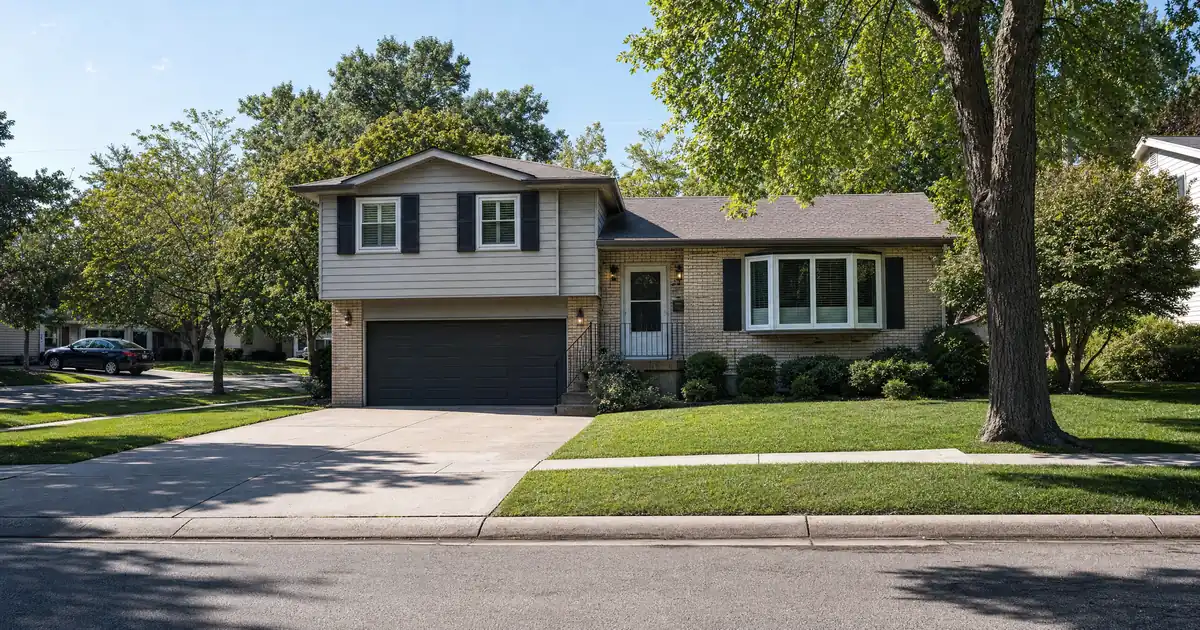
The Quick Read: Yes — rental properties can be refinanced, but the process runs on different rules than a primary-residence refinance because the loan is underwritten as business-purpose financing. Most investors use a DSCR loan, which qualifies primarily on the property’s rental income rather than the owner’s traditional personal-income documentation or pay stubs. Leverage caps lower on cash-out than on a purchase, and most lenders in the wholesale network expect a minimum ownership period before releasing equity through a cash-out refinance.
Key Terms Defined
- Rate-and-term refinance: replaces the existing loan with a new one to adjust the loan structure — no cash comes back to the borrower.
- Cash-out refinance: replaces the existing loan with a larger one, and the difference between the old payoff and the new loan amount goes to the borrower.
- DSCR (debt-service coverage ratio): the ratio of the property’s monthly rent to its full monthly obligation — principal, interest, taxes, insurance, and association dues (PITIA).
- Seasoning: the minimum period a lender requires an investor to have held title, or held the existing loan, before approving a cash-out refinance.
- Business-purpose loan: financing made to an investor for a non-owner-occupied property, which places the loan outside the disclosure timelines that govern a consumer mortgage on a primary residence.
Rental Refinance vs. Primary-Residence Refinance
The mechanics diverge on almost every point that matters — what the lender looks at, how fast leverage tightens on cash-out, and which disclosure rules apply.
DSCR Calculator
Run the numbers in your market
Rate is an editable market assumption — the live benchmark loads when available.
Prefilled with starting assumptions — enter your own rent or nightly figures, taxes, insurance, and HOA for a more accurate picture.
Program parameters update from Lendmire’s centralized guideline source. Taxes and insurance are editable estimates.
Fallback assumption · General Freddie Mac market benchmark, not a Lendmire loan offer. Rent, nightly rate, occupancy, taxes, and insurance are editable estimates. Short-term rental figures are estimates only and vary significantly by season, property type, management approach, and local short-term-rental rules — confirm local regulations before relying on them. Qualifying income for short-term rentals varies by program — some use appraisal market rent, others use documented STR history or projections — and is confirmed in underwriting. Not a Loan Estimate, approval, or commitment to lend. Program availability and eligibility are subject to lender guidelines, credit approval, property review, and underwriting.
| Factor | Rental Property Refinance | Primary Residence Refinance |
|---|---|---|
| Qualifying basis | Property rental income (DSCR) | Borrower income, traditional personal-income documentation, W-2s |
| Cash-out LTV ceiling | Typically around 75% | Set by agency guidelines, often higher |
| Regulatory treatment | Business-purpose, streamlined disclosure process | Consumer mortgage, full consumer disclosure timeline applies |
| Documentation | Rent survey, credit, entity docs | Full income, asset, and employment docs |
DSCR loans are built for non-owner-occupied investment property, so a rental refinance is documented and reviewed differently than a standard owner-occupied mortgage — the property’s rental income drives lender review work instead of the borrower’s personal financial history, which is a big part of why the process feels faster and less paperwork-heavy for an investor than a homeowner refinance.
Rate-and-Term or Cash-Out — What’s the Difference?
A rate-and-term refinance restructures the existing debt without pulling equity out; a cash-out refinance pays off the old loan and returns the remaining equity to the investor in a lump sum. Both are common exit strategies for an investor who bought with a hard-money or bridge loan and now wants permanent financing, and cash-out is the more common route for investors funding a renovation, buying a second property, or simply consolidating higher-cost debt against equity in an existing rental.
Cash-out carries the lower leverage ceiling of the two. Most programs across the wholesale network cap cash-out around 75% loan-to-value, while purchase transactions on the same property type often reach 80% and select high-leverage programs go to 85% for borrowers around a 700+ credit score. That gap exists because pulling equity out increases the lender’s exposure on day one — the file has to prove the rent still covers the new, larger payment. Investors comparing a cash-out refinance against selling outright can find a fuller breakdown of that tradeoff in Lendmire’s piece on refinancing versus selling a rental property.
How Lenders Actually Qualify a Rental Refinance
The core number is the debt-service coverage ratio — rent divided by the full monthly obligation. A ratio at or above 1.00 means the rent covers the payment on paper; below that, the file needs a compensating structure. Across the wholesale network, 1.00 is where select programs start, not a universal floor — it’s a baseline because it’s the point at which rent covers PITIA, and stronger ratios buy better pricing and higher leverage on the same file.
This is fundamentally different from how a conventional refinance gets qualified. There, the underwriter is running the borrower’s personal debt-to-income against traditional personal-income documentation and pay stubs. On a DSCR file, personal income documentation drops out of the equation almost entirely — the property carries the file. That shift is a big part of why non-QM production has grown as fast as it has: the average non-QM borrower closed with a 776 FICO score and a 75% average loan-to-value in the most recent reporting year, according to Scotsman Guide, numbers that look nothing like the subprime caricature the product sometimes gets tagged with. Terms vary by lender guidelines, property type, leverage, credit profile, and full file review.
Say a duplex refinance comes in with rent that comfortably clears 1.15x coverage. That cushion above 1.00 works twice in the investor’s favor — it strengthens the approval odds and often unlocks pricing and leverage that a file landing right at the floor won’t see. For a full walkthrough of how DSCR underwriting is built, Lendmire’s complete DSCR loans guide goes deeper than this article can on qualification mechanics, and the DSCR vs. conventional comparison lays out the two paths side by side.
How Soon Can You Refinance a Rental?
Seasoning — not a regulation, a lender overlay — is the real gatekeeper on cash-out timing. Across the wholesale network, roughly six months of ownership is the common expectation before a cash-out refinance closes, though the exact window is set lender by lender rather than by any single published standard. Rate-and-term refinances typically don’t carry the same waiting period, since no equity is leaving the deal.
For contrast: on the conventional/agency side, Fannie Mae requires the existing first mortgage being paid off to be at least 12 months old, measured note-date to note-date, for cash-out refinances closed after that rule took effect. DSCR programs run shorter and looser than that agency standard, which is one reason DSCR cash-out became the go-to tool for investors running buy-rehab-refinance strategies once that agency rule tightened. Investors who bought a first rental recently and are wondering whether ownership history even matters yet may find Lendmire’s piece on young investors doing a cash-out refinance on a first rental useful groundwork before running the numbers.
One nuance worth knowing: some lenders use the original purchase price to size loan proceeds, others use the new appraised value. That distinction matters most for an investor who bought at one price, renovated, and is refinancing at a materially higher value — ask the specific overlay before assuming the higher number applies.
What If the DSCR Comes in Below 1.00?
Coverage below 1.00 doesn’t automatically kill the file — it’s available through select lenders in the network, with leverage and terms adjusted to offset the weaker ratio. A property that doesn’t quite clear break-even on paper can still move forward with stronger credit, more reserves, or lower leverage doing the compensating work. Separately, no-ratio structures — where the property’s income isn’t measured against the payment at all — exist only through select lenders, generally for borrowers who already own a primary residence. Neither path is guaranteed on a given file; both are reviewed subject to lender guidelines, credit profile, and property review.
An investor sitting on a rental that’s under-rented relative to the market, and unwilling to wait for a lease renewal to reset the number, is exactly the kind of file where this matters. It’s worth running the numbers both ways — as a standard DSCR file at reduced leverage, and as a no-ratio file if a primary residence is already owned — before picking a lane.
Refinancing a Short-Term Rental
Short-term rental income doesn’t plug into the same appraisal tools as a traditional lease, and the leverage ceilings sit lower across the board. Purchase transactions on an STR typically top out around 75% LTV; refinances run lower, generally around 70%, and cash-out on an STR also lands near 70%. Most programs want a 640+ credit score and roughly 12 months of hosting history behind the property before it counts as an established STR for underwriting purposes.
Coverage works a bit differently, too. On a purchase, most STR programs look for coverage near 1.00; on a refinance, lenders separately look for coverage near 1.00 on that transaction’s own terms rather than carrying over the purchase-side number. The appraisal side has its own wrinkle: the standard rent-schedule form used on a traditional 1-4 unit refinance wasn’t built for nightly-rate properties, and appraisal-industry guidance notes it excludes vacancy rates and business expenses that actually drive STR income — appraisers working an STR file typically lean on nightly-rate platforms instead, per McKissock. Short-term rental rules can also vary by city, county, HOA, and property type, so investors should confirm local rules before relying on projected rental income in any refinance scenario.
Does an LLC Change the Refinance?
Holding a rental in an LLC doesn’t complicate a DSCR refinance the way people sometimes expect — DSCR loans are commonly originated directly to the entity, subject to lender program eligibility, which sidesteps the due-on-sale question that comes up when someone tries to move an already-mortgaged property into an LLC after the fact. Investors weighing whether entity ownership even changes their financing path from the start may also want to look at Lendmire’s guidance on whether you need to own a home before doing a cash-out refinance on a rental, which covers a related question a lot of first-time rental owners ask.
Worth understanding on the regulatory side, too: because these are business-purpose loans, they sit outside the framework — including TRID, the Truth in Lending/RESPA Integrated Disclosure rule — that requires the Closing Disclosure timeline on a consumer mortgage. The Consumer Financial Protection Bureau exempts credit extended primarily for a business purpose from Truth in Lending’s consumer disclosure requirements. That’s a structural reason a DSCR refinance moves differently than a homeowner refinance — not a shortcut around underwriting, just a different rulebook.
What Lenders Look At — A Practical Checklist
Loan sizes across the network typically run from the low six figures up to roughly $3,000,000 on standard programs, with balances above $2,500,000 generally structured as 30-year fixed rather than adjustable. Reserve requirements move with leverage and loan size — commonly around six months of PITIA, sometimes waived on conservative, lower-leverage rate-and-term files under $1,500,000, and stepping up toward nine months on larger loans. Credit floors run as low as 620 in parts of the network, though most programs want something closer to 660, and 700+ is where the strongest leverage tiers open up. A handful of states — Connecticut, Florida, Illinois, and New Jersey among them — carry additional overlay caps, generally near 75% LTV on purchases and lower maximum loan sizes on the file overall.
Not every property type is eligible. Manufactured homes — single- and double-wide — along with log homes and barndominiums are not offered through DSCR programs in the network today. And for investors weighing a smaller equity pull instead of a full refinance, investment-property HELOC lines are available but capped at $500,000 total across the network — there’s no tier above that for a rental-secured line.
If you’re comparing whether a refinance actually pencils against just selling and redeploying the equity elsewhere, that’s worth its own gut-check — Lendmire’s comparison of refinancing versus selling walks through that decision directly. And for anyone questioning whether a rental even needs to be the second property an investor buys, the guide “Why Your First Property Doesn’t Have to Be Your Home” is a useful companion read. All of the figures above are typical ranges from select lenders in Lendmire’s wholesale network, not universal terms — review details are subject to lender overlays and the specifics of the borrower, property, and program.
If you’re weighing a refinance on a rental and want to see how the property’s income, credit profile, and leverage actually line up, Lendmire (NMLS# 2371349) arranges DSCR investor loans through select lenders across 41 markets, including Washington, D.C. Reach the team at 828-256-2183 or request a quote to run the numbers on a specific property.
Rental investing is also, at scale, mostly a small-investor phenomenon rather than a Wall Street one — a point worth knowing before assuming financing rules are built around institutional buyers. A Government Accountability Office review found large-scale institutional investors own roughly 2% of the single-family rental stock nationally, a figure PolitiFact confirmed lines up with separate Federal Reserve and American Enterprise Institute analyses. DSCR refinance products are built for exactly the population that dominates this market: individual landlords with one to a handful of doors, not institutional portfolios.
Tax treatment on refinance proceeds can depend on how the funds are used and how the property is held; investors should keep clear records and talk with a qualified tax professional before relying on any deduction.
No refinance is guaranteed. Every scenario described here is subject to lender approval and to the borrower’s, property’s, and program’s specific guidelines — this article is general information, not financial, legal, or tax advice, and nothing here is a commitment to lend.
Frequently Asked Questions
Can I refinance a rental property that has a tenant in it currently?
Yes — an occupied rental with an active lease generally strengthens the file, since the lender can use actual rent rather than an appraiser’s estimate. A vacant property at settlement typically gets counted at a reduced share of appraised market rent, which can lower the resulting DSCR and cap the achievable loan amount.
Do I need a certain amount of equity to refinance a rental?
Cash-out refinances on rental property typically cap around 75% loan-to-value across the wholesale network, meaning the investor generally needs to retain roughly a quarter of the property’s value in equity after the new loan funds. Rate-and-term refinances can sometimes work with less equity cushion since no cash is leaving the deal.
Can I refinance a rental I bought with cash a few months ago?
It depends on the lender’s specific seasoning overlay, which commonly runs around six months across the network before a cash-out refinance is available. Some lenders offer reduced or no-seasoning paths for cash purchases documented by a clean settlement statement — that varies file by file rather than following one published rule.
Will refinancing my rental trigger a property tax reassessment?
Refinancing itself doesn’t typically trigger a reassessment the way a change in ownership can, since the property title generally doesn’t transfer during a standard refinance. Local assessment rules vary by jurisdiction, so it’s worth checking with the local tax authority if this matters for a specific deal.
Can I refinance a rental into a longer term to lower the monthly obligation?
Extended term structures, including 40-year options and interest-only periods, are available through select lenders in the network for investors who want a longer amortization schedule. Whether that structure fits a given file depends on the DSCR the property produces and the lender’s specific program guidelines.
About Lendmire
A non-QM mortgage broker (NMLS# 2371349), Lendmire arranges DSCR financing for real estate investors in 41 markets — 40 states plus Washington, D.C. Because deals are underwritten primarily on property cash flow rather than personal income documentation, the structure suits self-employed buyers and entity-owned portfolios. Lendmire places loans through wholesale investor lenders; it is not a direct lender. Scotsman Guide named Lendmire a Top Mortgage Workplace in both 2025 and 2026.
Get Started
Ready to find the right loan for you?
In about 30 seconds you can review financing options available for your investment property. No commitment required.
Informational only. Not a Loan Estimate, approval, or commitment to lend. Program availability and eligibility are subject to lender guidelines, credit approval, property review, and underwriting.
References
1. Scotsman Guide — Which Groups Are Driving Non-QM Lending?
2. Fannie Mae — Cash-Out Refinance Eligibility Update
3. McKissock Learning — Form 1007’s Impact on Short-Term Rental Appraisals
4. Consumer Financial Protection Bureau — 12 CFR § 1026.3, Regulation Z Business-Purpose Exemption
5. PolitiFact — Are Investors Buying Up a Quarter of U.S. Homes?
This article is part of Lendmire’s DSCR loan program — full qualification details, guidelines, and scenarios live on the program page.
Related reading: Can I Refinance A Rental House? · Business Refinance Investment Property · Can I Refinance An Investment Property?
Brandon Miller
Founder & CEO, Mortgage Loan Originator, Lendmire LLC
- Mortgage Loan Originator · NMLS# 1129696 · Verify on NMLS Consumer Access
- North Carolina Real Estate Broker · License# 343312 · Verify on NCREC
- North Carolina Insurance Producer · License# 19053198 · Property, Casualty, Life, Health · Verify on NAIC SBS
- Lendmire LLC · Firm NMLS# 2371349 · Verify firm licensure
Legal disclosures. Lendmire (NMLS# 2371349) is a state-licensed mortgage brokerage that arranges financing through wholesale lender relationships. Lendmire is not a direct lender, depository institution, or registered financial advisor. The discussion above is general informational content about real estate financing — it is not financial, legal, or tax advice, and readers should consult licensed professionals for guidance on their individual circumstances. Loan inquiries are subject to lender underwriting; this article does not represent a commitment to lend. Loan terms, rates, and qualification standards vary by borrower, property, and state, and are subject to change at any time. Equal Housing Opportunity. NMLS Consumer Access: nmlsconsumeraccess.org.