
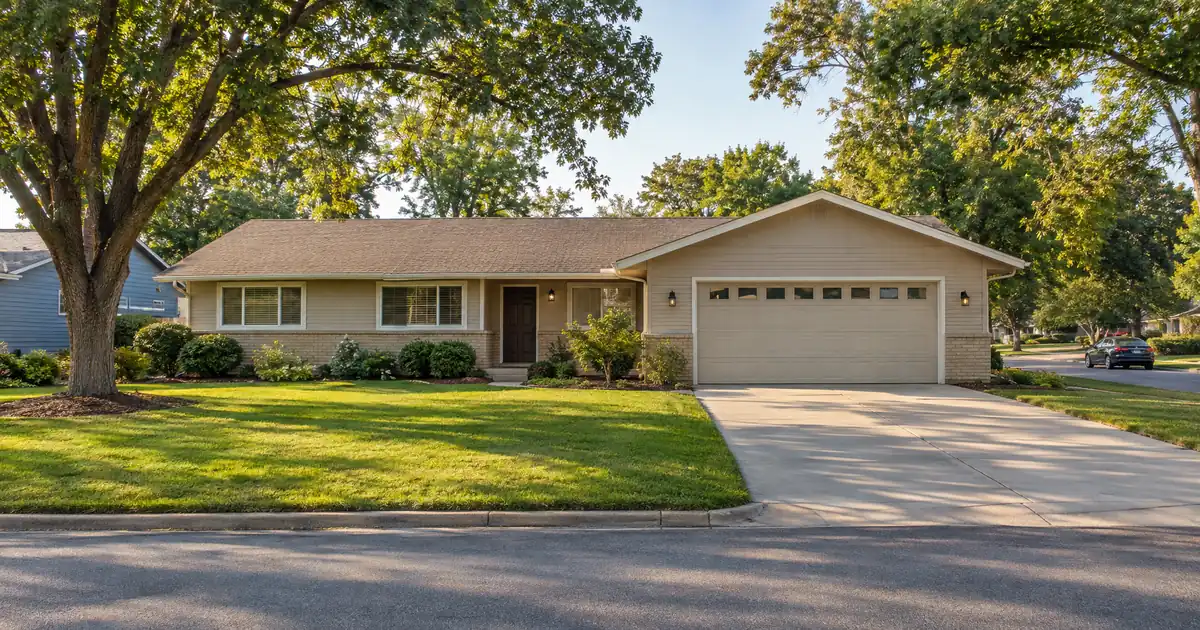
The Quick Read: A sale nets less than the headline price suggests, because commissions, the loan payoff, and federal tax on the gain come out before any cash lands. A cash-out refinance nets a smaller number that is borrowed, not taxed, and it leaves the property and its debt in your hands. The two numbers are not like for like, so compare cash after costs on both sides.
- A sale is a taxable event. A cash-out refinance is a new loan.
- On a standard rental, a cash-out refinance typically tops out around 75% LTV through select lenders in the network.
- The loan balance never lowers the taxable gain on a later sale.
- A cash-out loan is reviewed primarily on property-level rental income covering the payment, subject to lender guidelines, so a larger loan can be capped by coverage rather than leverage.
- Sellers who want to keep deferring tax can look at a 1031 exchange, which carries hard IRS deadlines.
The honest answer to who each option is for: sell if you want out of the asset, out of the market, or into all of the equity. Refinance if you want to keep the property, keep the depreciation running, and pull part of the equity without triggering a sale. This article walks through both ledgers on one property, the way a broker sees them across files. Tax treatment varies by situation, so confirm the details with a qualified local tax professional or attorney.
DSCR Cash-Out Calculator
Run the cash-out numbers in your market
Rate source: Freddie Mac 30-yr average via FRED® — Federal Reserve Bank of St. Louis · effective Oct 8, 2026
Prefilled with starting assumptions — enter your property’s value, balance, taxes, and insurance for a more accurate picture.
Program parameters update from Lendmire’s centralized guideline source. Taxes and insurance are editable estimates.
As of Oct 8, 2026 · General Freddie Mac market benchmark, not a Lendmire loan offer. Property value, balance, taxes, and insurance are editable estimates. Maximum loan-to-value varies by lender, program, property type, and seasoning. Not a Loan Estimate, approval, or commitment to lend. Program availability and eligibility are subject to lender guidelines, credit approval, property review, and underwriting.
Side-by-Side
Here is how the two paths compare on the points that shape a file. The cash-out column reflects typical select-lender guidelines in Lendmire’s wholesale network. The sale column describes how a sale generally works under published tax rules, with qualifiers.
| Factor | Sell | DSCR Cash-Out Refi |
|---|---|---|
| Nature of event | Taxable realization | New loan, not income |
| Review basis | Buyer’s financing, not yours | Rent vs. full payment (PITIA) |
| Personal income docs | Not applicable | Property-level focus |
| Documentation | Payoff, tax basis records | Appraisal, rent schedule, title, credit |
| Entity vesting | Seller entity signs conveyance | LLC package plus guaranty, subject to lender program eligibility |
| Property types | Any marketable property | Standard rentals; manufactured, log, barndominium not offered |
| Leverage | Not applicable | Up to about 75% LTV on a cash-out |
| Seasoning | None | About 6 months of ownership |
| Reserves | None required | Commonly around 6 months PITIA |
| Timeline | Buyer-driven; 1031 adds IRS deadlines | Property-level file; appraisal and title |
| Asset afterward | Gone | Kept, with more debt |
| Tax now | Gain, recapture, possible NIIT | None on proceeds |
What a Sale Actually Nets
A sale nets the price minus selling costs, minus the loan payoff, minus tax on the gain. Most investors compare the first number and forget the other three.
Start with the cost side. A Clever Real Estate survey of 806 agents put the average combined buyer-and-seller agent commission at 5.44%. Redfin’s commission data shows most sellers still pay the buyer’s agent roughly 3% or close to it. Title, transfer, and escrow costs sit on top and vary by market, so treat the all-in figure as commission plus those costs.
Then comes the gain. Gain is the net sale price minus adjusted basis. Adjusted basis is what you paid, plus capitalized improvements, minus the depreciation you took. Depreciation counts whether you claimed it or not. That matters on long-held rentals, where basis has been ground down and the gain is large.
The tax splits into layers:
1. Unrecaptured §1250 gain. This is the part of the gain tied to straight-line depreciation.
2. Remaining long-term capital gain. Gain above the depreciation taken is taxed at long-term capital gains rates, which depend on income.
3. Net investment income tax. IRS Topic 559 describes the 3.8% tax and its income thresholds. Nolo notes a rental sale gain counts as net investment income, which can push an owner over the threshold even when ordinary income sits below it.
4. State tax. It varies by state and sits outside this national piece.
Net cash is the sale price, less the payoff, less selling costs, less that tax. Tax treatment can depend on how the funds are used and how the property is held; investors should keep clear records and speak with a qualified tax professional before relying on any deduction.
What a Cash-Out Refinance Nets
A cash-out refinance nets the new loan minus the old payoff minus closing costs. Nothing is taxed at closing, because borrowed money is not income. It also does not reset depreciation or remove the gain you will owe if you sell later.
The math on the leverage side is simple. Appraised value times the leverage cap sets the ceiling on the new loan. Across most of the wholesale network that cap is around 75% LTV on a cash-out of a standard rental. Short-term-rental collateral typically sits lower, near 70%. Subtract the existing payoff and closing costs and you have the cash. The calculator on this site can run that conversion as an illustrative estimate.
The second test is where files stall. A DSCR loan qualifies primarily on property-level rental income covering the payment, subject to lender guidelines. The ratio is rent divided by PITIA: principal, interest, taxes, insurance, and any HOA dues. A bigger loan means a bigger payment, so a heavily appreciated property can clear the leverage cap and still get sized down by coverage. Select programs start at 1.00, and stronger ratios open better leverage and pricing. A separate select-lender path takes coverage below 1.00, with leverage and terms adjusted.
One caution on language: clearing 1.00 is not the same as positive cash flow. The ratio looks at rent against PITIA only. Repairs, vacancy, management, utilities, and capex sit outside it. A cash-out that pushes a thin property to the edge of coverage can turn real cash flow negative even though the file qualifies.
Other file mechanics for the refinance:
- Seasoning. About 6 months of ownership, measured from title recording, is the common expectation.
- Credit. A 620 floor exists in parts of the network, most programs want around 660, and 700+ unlocks the strongest tiers.
- Reserves. They commonly run around 6 months of PITIA, and loans above $1,500,000 typically step up to about 9 months. They vary by lender, leverage, and loan size.
- Loan size. Standard programs run up to $3,000,000. Smaller balances route through select lenders in the network.
- Rent evidence. The appraiser’s rent schedule (Form 1007 for single units, Form 1025 for small multifamily) sets market rent. Lenders typically work from the lower of in-place or market rent.
- Entity package. If the property sits in an LLC, expect articles, operating agreement, good standing, and EIN, plus a personal guaranty, subject to lender program eligibility.
Property type is a hard stop. Manufactured homes, log homes, and barndominiums are not offered in these DSCR programs.
When Selling Is the Better Fit
Selling is the better fit when the reason for owning has changed. If the property underperforms, needs capital you do not want to spend, or sits in a market you want to leave, a refinance only puts more debt on a weak asset. A cash-out cannot fix a property.
Selling also wins when you need all of the equity. A refinance pulls only part of it, because the leverage cap leaves a slice locked in. A sale releases every dollar after costs and tax.
Other cases where the sale side holds up:
- Thin coverage. If rent barely covers the existing payment, a larger loan can be sized down by the coverage test or leave the property cash-flow negative.
- Suspended passive losses. They can offset recapture gain on a sale, which softens the tax hit.
- A redeployment plan. Selling and moving into a replacement through a 1031 exchange redeploys all of the equity, not a capped portion.
- Concentration risk. One appreciated asset carrying a big share of net worth is a reason to diversify.
On the 1031 route, the IRS instructions for Form 8824 require replacement property to be identified within 45 days and received within 180 days, or by the return due date including extensions, whichever is earlier. Those are IRS statutory deadlines for the exchange, not loan timelines. An exchange defers tax; it does not erase it, and the original basis carries over.
Timing a refinance around an exchange is a CPA question. Practitioners generally treat a cash-out after the exchange as ordinary borrowing against equity, while a refinance before or during one raises step-transaction and boot concerns. Cash taken out mid-exchange can create taxable boot.
When a Cash-Out Refinance Is the Better Fit
A cash-out refinance is the better fit when the property still works and you want capital without ending the hold. Rent that comfortably covers a larger payment, a long horizon, and a plan for the cash make the case.
The tax asymmetry carries most of the weight. A refinance defers all sale-year tax while the asset, the appreciation, and the depreciation keep running. If you plan to hold, there is no reason to crystallize a large bill today.
It also fits when the cash has a job. Common uses are a down payment on the next rental, funding a renovation, or building reserves. A strong file here clears two tests: enough equity and enough rental coverage. A larger down payment on the next purchase can lower the payment and lift the ratio on that file, but it never erases leverage caps, credit floors, reserve rules, or property eligibility.
Some practical points:
- Term structures. The spine is the 30-year fixed. Extended terms and interest-only periods are available through select lenders in the network, and ARM structures exist for investors who want them.
- Entity timing. Moving a mortgaged property into an LLC before the refinance can raise due-on-sale questions, so sequence the vesting with the lender.
- Sub-1.00 and no-ratio files. Coverage below 1.00 is available through select lenders in the network, with leverage and terms adjusted. No-ratio is available only through select lenders, generally for borrowers who already own a primary residence.
The complete DSCR loans guide explains the product from the start.
How the Two Ledgers Compare
Put the two on common footing and the differences are plain:
| Line | Sale | Cash-Out Refi |
|---|---|---|
| Cash received | Larger, after costs and tax | Smaller, borrowed |
| Tax due now | Gain, recapture, possible NIIT | None on proceeds |
| Debt afterward | Paid off | Higher than before |
| Asset kept | No | Yes |
| Upside retained | No | Yes |
| Deferred tax | Realized | Still owed on a later sale |
| Main risk | Tax drag, lost asset | Coverage and cash-flow squeeze |
The comparison is cash after payoff, costs, and tax on a sale against cash after payoff and costs on a refinance. The refinance number is smaller, but the property stays. The sale number is larger, but the asset is gone and the tax is paid.
Three cases shift the answer:
1. Low basis, heavy depreciation. Recapture is the dominant cost, which pushes toward a refinance or an exchange.
2. High existing debt. Equity is thin, a refinance may return little cash, and selling may net little more.
3. Strong rent, low leverage. Coverage supports a bigger loan, so the refinance can reach the full leverage cap.
Appreciation widens the tax bill on a sale and raises the loan ceiling on a refinance, so it tends to favor the refinance when you plan to hold.
Mistakes That Distort the Comparison
These errors are the ones that skew a decision:
- Treating equity as cash. Equity is not what a sale or refinance delivers. Costs, payoff, tax, and the leverage cap all cut into it.
- Skipping the coverage test. Sizing the cash-out by LTV alone ignores that rent must cover the larger payment.
- Leaving out selling costs or recapture. Quoting the sale at the list price overstates the net.
- Assuming a refinance lowers future gain. Gain is figured from adjusted basis, not from the debt.
- Assuming a refinance resets depreciation. It does not.
- Ignoring seasoning on a recent purchase. The 6-month ownership expectation is measured from title recording, and files that assume it away get kicked back.
- Missing the entity paperwork. A thin LLC package or an unsigned guaranty stalls the file.
Frequently Asked Questions
Is cash-out refinance money taxable?
No. Proceeds are a loan you repay, not income. A refinance also does not trigger capital gains, depreciation recapture, or net investment income tax. It changes the financing, not the property’s tax treatment, and the gain is still there on a later sale.
Does a cash-out refinance reset depreciation?
No. Depreciation stays tied to your original cost basis plus improvements. Funding improvements with the proceeds can add new depreciable basis, but the schedule on the existing basis continues as before.
Can I refinance and then sell, or sell and then refinance?
Both are possible, but they are different plans. Refinancing before a sale puts more debt on a property you are leaving. Refinancing a replacement property after a 1031 exchange is generally treated as borrowing against equity, though timing relative to the exchange is a CPA question.
How much equity can a cash-out refinance reach?
Typically up to about 75% LTV on a standard rental, and it is not a guaranteed cash figure. The amount also depends on rent used for lender review, PITIA, reserves, and about 6 months of seasoning. Short-term-rental collateral sits lower, near 70%.
What if I own the rental in an LLC?
It can work, subject to lender program eligibility. Expect an entity package and a personal guaranty. Sort out the vesting before applying, since a title change on a mortgaged property can raise due-on-sale questions.
If you are buying or refinancing a rental property and want to see how the numbers work, Lendmire can help you compare DSCR loan options based on the property income, credit profile, leverage, and investor goals. Programs change, every file is reviewed individually, and nothing here is a commitment to lend.
For how equity extraction works on an investment property, see Lendmire’s guide to cash-out refinance on an investment property.
About Lendmire
Lendmire is a DSCR-focused mortgage brokerage, NMLS# 2371349, placing investor loans across 41 markets, including Washington, D.C. DSCR eligibility is generally reviewed by the lender around a property’s rental income rather than personal income documentation, which fits LLC-held rentals, self-employed investors, and portfolios scaling past conventional financed-property limits. Scotsman Guide named Lendmire a Top Mortgage Workplace in both 2025 and 2026.
Get Started
Ready to find the right loan for you?
In about 30 seconds you can review financing options available for your investment property. No commitment required.
Informational only. Not a Loan Estimate, approval, or commitment to lend. Program availability and eligibility are subject to lender guidelines, credit approval, property review, and underwriting.
References
1. Clever Real Estate survey of 806 agents
3. IRS Topic 559, Net Investment Income Tax
4. Nolo, Medicare tax on a home sale
5. IRS Instructions for Form 8824
This article is part of Lendmire’s investment property cash-out refinance program — full qualification details, guidelines, and scenarios live on the program page.
Related reading: Do All DSCR Cash-Out Loans Carry an Early Exit Fee? · How to Cash-Out Refinance a 2–4 Unit Rental From Start to Close · How to Document a Cash Purchase for Delayed Financing on a Duplex
Brandon Miller
Founder & CEO, Mortgage Loan Originator, Lendmire LLC
- Mortgage Loan Originator · NMLS# 1129696 · Verify on NMLS Consumer Access
- North Carolina Real Estate Broker · License# 343312 · Verify on NCREC
- North Carolina Insurance Producer · License# 19053198 · Property, Casualty, Life, Health · Verify on NAIC SBS
- Lendmire LLC · Firm NMLS# 2371349 · Verify firm licensure
Disclosures. The information presented in this article is general market commentary, not financial, legal, or tax advice. Lendmire is a mortgage brokerage (NMLS# 2371349) — not a direct lender or depository institution — and loan placement is subject to lender underwriting. Nothing in this content represents a commitment to lend. Loan terms, pricing, and program availability vary based on borrower qualifications, property characteristics, and state of subject property, and are subject to change at any time. Lendmire complies with Equal Housing Opportunity requirements. Consumer access: nmlsconsumeraccess.org.