
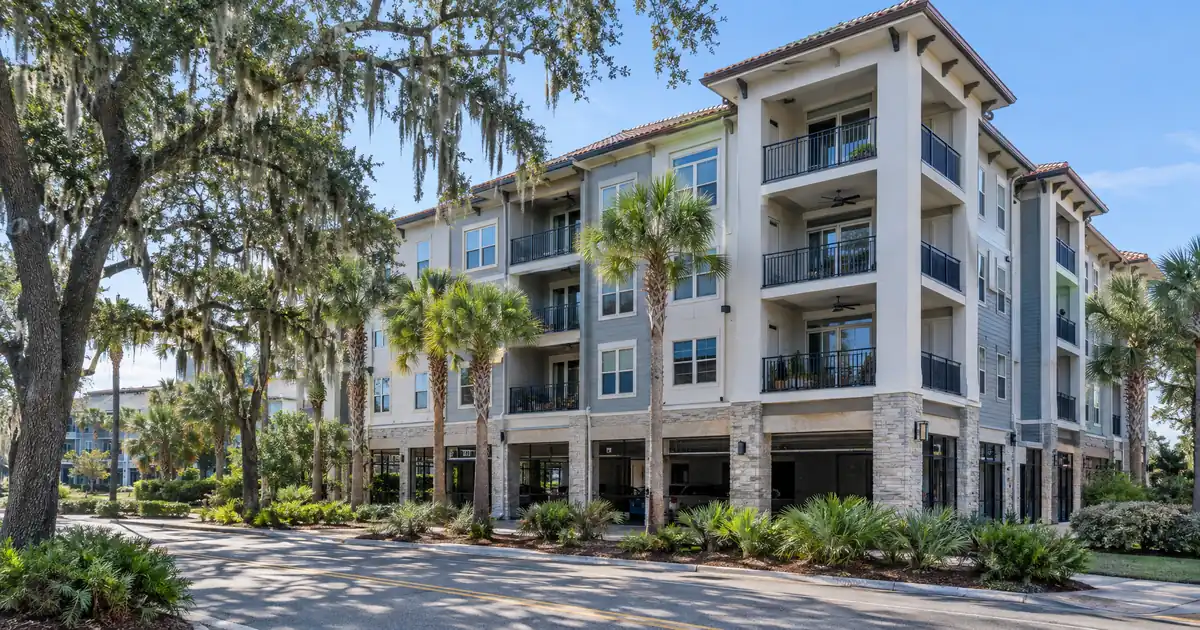
A rental in Old Town hits the DSCR math like this. Picture a duplex valued near the city’s $635K median sale price, per Redfin’s Fernandina Beach market data. Assume two units renting for a modeled $2,000 each (a planning assumption, not a sourced rent). At the 75% cash-out ceiling, coverage including taxes and insurance lands just under 1.00x. Swap in a single-family home at the area’s median rent and coverage drops to roughly 0.6x. Same equity, same leverage, very different file. Final terms depend on lender guidelines, property type, leverage, and the borrower’s complete credit picture.
That gap is the whole story for anyone pulling equity out of a Fernandina Beach rental. The town has real demand and unusually thin small-multifamily supply, but its prices sit high against its rents.
DSCR Cash-Out Calculator
Run the cash-out numbers in Fernandina Beach, FL
Rate source: Freddie Mac 30-yr average via FRED® — Federal Reserve Bank of St. Louis · effective Sep 24, 2026
Prefilled with starting assumptions — enter your property’s value, balance, taxes, and insurance for a more accurate picture.
Program parameters update from Lendmire’s centralized guideline source. Taxes and insurance are editable estimates.
As of Sep 24, 2026 · General Freddie Mac market benchmark, not a Lendmire loan offer. Property value, balance, taxes, and insurance are editable estimates. Maximum loan-to-value varies by lender, program, property type, and seasoning. Not a Loan Estimate, approval, or commitment to lend. Program availability and eligibility are subject to lender guidelines, credit approval, property review, and underwriting.
Key Takeaways:
A cash-out refinance on a Fernandina Beach, Florida rental is underwritten primarily on the property’s rental income measured against its full monthly obligation, after roughly six months of ownership and within a 75% loan-to-value ceiling, so the process runs from rent comps and appraisal through lender review to proceeds that fund the next acquisition.
- Island single-family at median price and median rent typically models well below 1.00x, taxes and insurance included.
- Duplexes are scarce here, which makes them valuable but also means thin appraisal comps.
- Mainland Yulee rents sit well under island medians, which shapes where proceeds get redeployed.
- Cash-out caps at 75% LTV with about six months of seasoning, subject to lender guidelines.
Fernandina Beach Market Snapshot
A quick read on the Fernandina Beach investor landscape — figures come from the cited sources below. Confirm current property-level numbers before underwriting.
| Metric | Detail |
|---|---|
| Population | 101,000+ residents (Nassau County EDB) |
| Employment | 300+ employees (EVOLVE Magazine) |
Why Island Single-Family Struggles on Coverage
Single-family rentals on the island are the hardest place in town to make a cash-out file clear 1.00x, because rents sit well below what the price level implies. Zumper puts median rent at $2,422, down 10% year over year. Zillow Rental Manager shows an average of $2,595, down $205 from a year earlier. Those are gross yields near 4.6% to 5.3% of price, before debt service, taxes, and insurance. These specifics are subject to lender guidelines and a full review of property, leverage, and credit.
Price direction is mixed. Redfin’s city median is down 17.9% year over year, but that is a thin monthly sample. The ZIP 32034 page shows $636K, down 5.0%, which is steadier. Zillow’s value index reads $592,132, up 4.3%. Read together: flat to softening, not a crash. Days on market at 45 versus 27 a year earlier tells you buyers have more leverage than they did.
Run the numbers on a single-family home priced near the local median and renting near the local median. Even stepping cash-out leverage down to 50% LTV only nudges modeled coverage to around 0.8x. Lowering the loan amount doesn’t fully fix a price-to-rent gap this wide, and the price direction shown in the ZIP 32034 page and Zillow’s value index does not change that picture. Terms vary by lender guidelines, property type, leverage, credit profile, and full file review.
So what are the options? If a file lands below 1.00x, a lender may review sub-1.00 programs, interest-only structures, or lower leverage with stronger credit and reserves. Whether any of those fit depends on lender guidelines, credit approval, and property review. The better question is whether the asset should be the one you refinance at all.
The Equity Math: What You Can Actually Pull
Cash-out proceeds here depend on four things: appraised value, the 75% LTV ceiling, the rent used for lender review against full PITIA, and reserves of about six months. Seasoning of roughly six months from title recording applies, and credit typically starts at a 620 floor with better tiers at 660, 680, and 700. Standard programs run up to $3,000,000 in loan amount.
Appraised value is the variable that deserves the most skepticism. With the city median softening and days on market lengthening, an investor who bought near the recent peak should expect the appraisal to be the swing factor, not the rent. An owner who bought years ago and sits on a large equity cushion has room even if values slip another few points. Someone who bought recently with thin equity may find there’s nothing to pull.
Working DSCR brokers see a recurring pattern in high-priced coastal markets with soft rents: the appraisal clears, the rent roll doesn’t. Borrowers anchor on equity (“I own it at 60% of value”) and then discover the rent used for lender review against full PITIA is the binding constraint. The files that go smoothly are the ones modeled on coverage first and equity second.
For the mechanics of seasoning and proceeds, the cash-out refinance walkthrough covers the general structure. If you’re weighing a rate-and-term move instead, refinancing options lays out the difference.
The Duplex Is the Scarce Asset
Small multifamily is rare in Fernandina Beach, and that scarcity cuts both ways. A county-commissioned housing assessment from the UF Shimberg Center found only 9% of occupied units in the county sit in buildings with two or more units. It also found that what rental stock exists concentrates on the island, where rents and sale prices run highest. The report dates to 2018, so treat it as directional.
The upside: a legitimate duplex or fourplex on the island is a differentiated asset, and multi-unit rent roll is the most direct way to close the coverage gap shown above. The downside is thin comparable-sale depth. Appraisers have few true comps, which can cut into the value that drives cash-out proceeds. Conservative underwriting is the right posture here, because an optimistic value assumption is where these files come apart.
A few submarkets worth knowing:
- Historic Downtown and Centre Street. Walkable, Victorian, and close to the marina, with an eight-block district holding 400+ historic buildings per the Nassau County Economic Development Board. Converted multi-unit buildings are where a rent roll could pencil, but each one needs its own local rent comps.
- Old Town. Larger lots and older homes along the Amelia River, a small, tightly held market. Few transactions means few comps.
- Amelia Park. A newer-construction community likely priced at a premium. Expect coverage pressure similar to the median single-family math.
- South-end resort product. Condo and resort inventory where pricing tends to outrun long-term rents. A weak fit for this type of loan.
Who Rents Here (and Why It Matters)
The renter base is workers, not retirees or vacationers, and their wages set the ceiling on rents. Data USA lists the top resident employment sectors as accommodation and food service (744 workers), health care and social assistance (663), and public administration (658). The Economic Development Board’s workforce overview describes an economy built on tourism plus two pulp and paper mills that have operated for 75+ years. The town has a population of roughly 13,420 per Census Bureau QuickFacts, inside a regional health system of 101,000+ residents.
Hospitality pay is modest. A current Ritz-Carlton housekeeping listing on Glassdoor shows a $28K to $36K salary band. That points to workforce-priced units fitting tenant incomes better than luxury single-family rentals. The demand side is real, though. The Nassau County Chamber reports only 44% of the county’s workforce lives in the county, with teachers, first responders, and hospitality staff commuting long distances. That supports durable long-term demand for modestly priced rentals. It is a demand argument, not proof of rent growth, and current rents are flat to falling.
One supply-side caution: Omni Amelia Island Resort has been building a 75-unit employee housing complex on Sadler Road, per The Yulee News, with an estimated completion that was not verified. Employer-built housing can pull some hospitality tenants out of the private rental pool. Before assuming resort-staff demand for a refinanced unit, check where that project stands.
The Mainland Question: Where Proceeds Might Go
If the island’s price-to-rent ratio is the problem, mainland Yulee is the obvious alternative for redeploying equity. Yulee is outside the city, but it’s where workforce and newer-build rental math tends to work better. The tradeoff is that rents are lower: Apartments.com puts the average Yulee asking rent at $1,484, with new-build three-bedrooms around $2,243. Those are listing-site asking rents, so use them for comparison only.
Supply is the other wrinkle. Nassau County approved Station 904 in Yulee, a 360-unit apartment project with 17 live-work cottages, per The Yulee News. I couldn’t confirm construction or delivery. Large new mainland apartment supply competes for the same commuter tenants, which can cap rent growth on entry-level rentals.
This one’s a genuine toss-up. The mainland likely offers cleaner coverage today, but the island’s limited new supply (the city is reportedly nearing build-out within its limits) could make island duplexes more resilient over time. Investors who weight coverage now over durability later will lean mainland. Those who’d rather hold a scarce asset and accept thin early coverage could argue the opposite.
When a Cash-Out Makes Sense Here (and When It Doesn’t)
A cash-out works cleanly when the subject property already clears 1.00x on its own and the proceeds go toward an asset that does too. A well-bought duplex refinanced to fund a mainland acquisition with stronger coverage is a defensible pairing. Pulling equity from an island single-family that barely services its own debt, then buying another asset with the same problem, is a different decision and one worth stress-testing first.
Conventional financing may be the better lane for a W-2 borrower with one or two rentals and strong personal income. It can carry a lower cost and no coverage test at all. DSCR becomes the practical path for entity-held portfolios, self-employed investors, or anyone whose traditional personal-income documentation doesn’t show rental income cleanly. Lendmire’s DSCR-versus-conventional breakdown walks through where that flip point falls, and the guide “What Is a DSCR Loan” covers how coverage is calculated: monthly rent divided by full monthly debt service, including taxes, insurance, and any HOA dues.
A 1.00x benchmark is common because rent covers the payment at that level. Some lenders review lower ratios with compensating factors such as lower leverage or more reserves, but exact eligibility depends on lender guidelines, credit, and property review. For a file-specific look, see how the DSCR math pencils or call 828-256-2183. Verify current local rental rules, taxes, and insurance, including flood exposure, with qualified local professionals before committing.
Frequently Asked Questions
Can I pull cash out of a single-family rental in Fernandina Beach if it doesn’t reach 1.00x?
Possibly, but it’s a narrower path. A sub-1.00 program, an interest-only structure, or lower leverage may be reviewed, typically alongside stronger credit and more reserves. Modeled single-family coverage at the median price and rent falls well below 1.00x, so these options are worth testing before applying. Approval depends on lender guidelines and property review.
How does the six-month seasoning rule affect a recent Fernandina Beach purchase?
Seasoning is typically measured from title recording, at about six months of ownership. With the city median down 17.9% year over year, a recent buyer should expect the appraisal, not the clock, to decide how much equity is available. Equity is never a guaranteed cash figure.
DSCR vs. conventional financing
There are two common ways to finance an investment property in Fernandina Beach, FL, and they qualify you differently — here’s how investors weigh them.
Why investors choose it
- Qualifies on the property’s rental income — no personal tax returns, W-2s, or pay stubs needed to document income.
- No personal debt-to-income ceiling to clear, so existing mortgages and obligations don’t cap your borrowing the same way.
- Can be closed in an LLC, keeping the property inside a business entity.
- Built for scaling — not held to the limit on number of financed properties that conventional financing applies.
- Underwriting centers on the deal: generally qualifies when the rent covers the payment, a 1.00x coverage ratio being a common baseline (confirmed in underwriting).
- Designed specifically for investment property, including long-term and, where the program allows, short-term rentals.
Where it’s strong
- Often the lowest ongoing financing cost for a buyer who fully qualifies on personal income — a fit for a first property or a cost-first purchase.
Trade-offs for investors
- Requires full personal income documentation and must fit within a debt-to-income limit — salary, existing debts, and other mortgages all count.
- Typically held in your personal name rather than a business entity.
- Caps how many financed properties you can carry, which can become a ceiling as a portfolio grows.
- Evaluates you as a borrower as much as the property, which usually means more paperwork.
How investors usually choose: a first or single property often optimizes for the lowest financing cost; portfolio builders often optimize for leverage, vesting in an LLC, and scaling past conventional caps. The right answer depends on your goals, the property, and current guidelines — both paths run through select lenders in Lendmire’s wholesale network, with eligibility and terms confirmed in underwriting.
Are duplexes easier to refinance here than single-family homes?
They usually cover better, since two rents sit against one property’s taxes and insurance. The catch is comps. With only 9% of occupied county units in multi-unit buildings, per the Shimberg assessment, appraisers have few sales to lean on, which can pressure value.
Does Yulee make more sense than the island for redeploying proceeds?
On coverage alone, often yes, since mainland prices are lower and the average asking rent is around $1,484. The tradeoff is competing apartment supply, including the planned Station 904 project, and lower rent ceilings than the island’s $2,422 to $2,595 medians.
Do mill and hospitality jobs support long-term rental demand?
Yes, in the workforce-priced band. Accommodation and food service, health care, and public administration lead resident employment, and two mills anchor industrial payrolls. Wages skew modest, so units priced for those incomes hold up better than high-end rentals.
If you only take one thing from this piece, it’s this: in Fernandina Beach, the equity is usually there but the coverage isn’t, so the duplex that clears 1.00x on local rent comps is the asset worth refinancing and the median single-family is the one worth stress-testing first.
For current guidelines and terms, see Lendmire’s DSCR loan programs page.
About Lendmire
As a non-QM mortgage broker (NMLS# 2371349), Lendmire facilitates DSCR investor loans across 41 markets, including Washington, D.C. DSCR eligibility is generally reviewed around property-level rental income rather than personal income documentation, subject to lender guidelines, which suits LLC-structured portfolios and self-employed borrowers who don’t fit conventional boxes. Lendmire has been recognized as a 2025 Scotsman Guide Top Workplace and a top-ranked workplace in 2026, making it a two-time Scotsman Guide Top Mortgage Workplace.
Get Started
Ready to find the right loan for you?
In about 30 seconds you can review financing options available for your investment property. No commitment required.
Informational only. Not a Loan Estimate, approval, or commitment to lend. Program availability and eligibility are subject to lender guidelines, credit approval, property review, and underwriting.
References
1. Redfin: Fernandina Beach Housing Market
2. Nassau County Economic Development Board: Workforce Overview
4. Zumper: Fernandina Beach Rent Research
5. Zillow Rental Manager: Fernandina Beach
6. Redfin: ZIP 32034 Housing Market
8. Nassau County Economic Development Board
10. Census Reporter: Fernandina Beach
11. Glassdoor
13. The Yulee News
14. Apartments.com
15. The Yulee News
16. a 2025 Scotsman Guide Top Workplace
17. Scotsman Guide — Top Workplaces 2026
This article is part of Lendmire’s investment property cash-out refinance program — full qualification details, guidelines, and scenarios live on the program page.
Related reading: DSCR Cash Out Refinance in Fernandina Beach, Florida: How DSCR Coverage Works on a Fernandina Beach Refi · Cash Out Refinance Investment Property in Singer Island, Florida: The 2026 DSCR Financing Guide to Ocean Drive · DSCR Cash Out Refinance in Singer Island, Florida: The 2026 Refi Guide to Ocean Drive Condos
Guides: Investment Property Cash-Out Refinance in Florida
Brandon Miller
Founder & CEO, Mortgage Loan Originator, Lendmire LLC
- Mortgage Loan Originator · NMLS# 1129696 · Verify on NMLS Consumer Access
- North Carolina Real Estate Broker · License# 343312 · Verify on NCREC
- North Carolina Insurance Producer · License# 19053198 · Property, Casualty, Life, Health · Verify on NAIC SBS
- Lendmire LLC · Firm NMLS# 2371349 · Verify firm licensure
Required disclosures. Lendmire (NMLS# 2371349) operates as a licensed mortgage broker, not a direct lender or depository. The discussion in this article is general in nature and should not be relied upon as financial, legal, or tax advice — every investment scenario is unique and should be reviewed by a qualified professional. Any loan inquiry is subject to lender underwriting, and this article is not a commitment to lend or a guarantee of approval. Mortgage rates, loan terms, and program guidelines vary by borrower, property, and state, and may change without notice. Equal Housing Opportunity. Verify licensure at NMLS Consumer Access.