
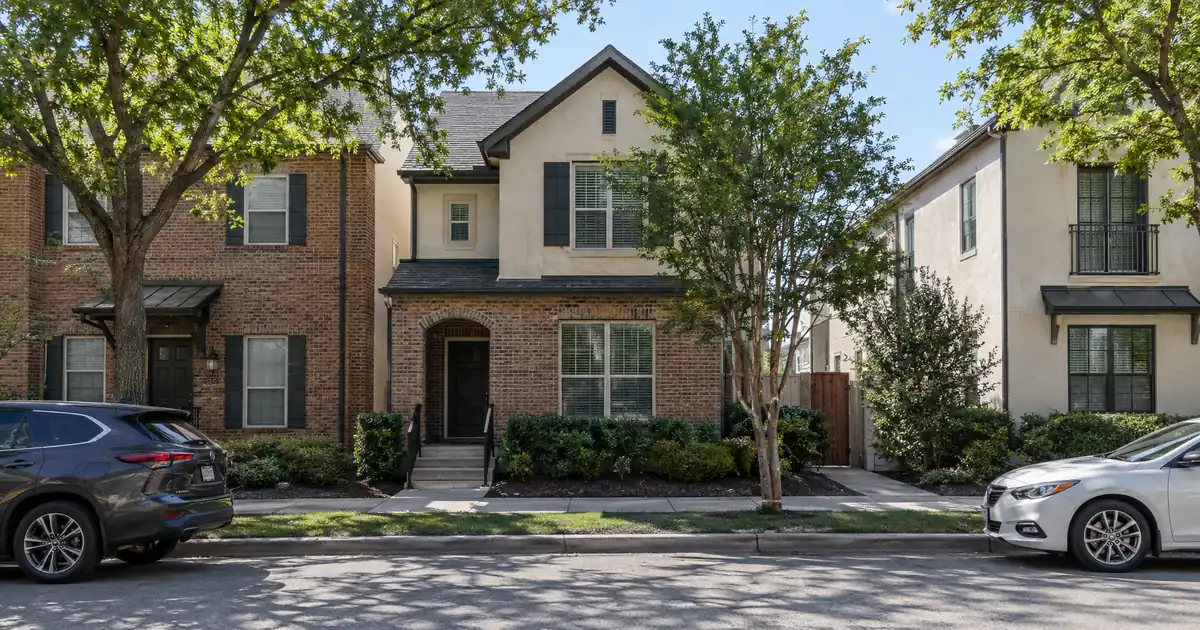
Apartment List shows Hurst rents up 2.0 percent year over year while the wider Dallas-Fort Worth metro slid 2.5 percent. That is a rare split. A small inner-ring suburb is holding rents better than its own metro, yet Zillow’s index has home values flat. Equity here comes slowly. Investors planning a cash out refinance on an investment property in Hurst need to know which side of that split their numbers sit on.
At a Glance: A cash out refinance on a Hurst, Texas rental is underwritten primarily on the property’s rental income measured against its full monthly obligation, so flat local values and steady rents shape the outcome more than appreciation does.
DSCR Cash-Out Calculator
Run the cash-out numbers in Hurst, TX
Rate source: Freddie Mac 30-yr average via FRED® — Federal Reserve Bank of St. Louis · effective Sep 24, 2026
Prefilled with starting assumptions — enter your property’s value, balance, taxes, and insurance for a more accurate picture.
Program parameters update from Lendmire’s centralized guideline source. Taxes and insurance are editable estimates.
As of Sep 24, 2026 · General Freddie Mac market benchmark, not a Lendmire loan offer. Property value, balance, taxes, and insurance are editable estimates. Maximum loan-to-value varies by lender, program, property type, and seasoning. Not a Loan Estimate, approval, or commitment to lend. Program availability and eligibility are subject to lender guidelines, credit approval, property review, and underwriting.
- Hurst’s average home value has been essentially flat year over year, which leaves little appreciation to lean on when sizing a refinance.
- Rents for three-bedroom homes have held firm and remain the most relevant current rent benchmark for single-family rentals.
- The 75 percent loan-to-value ceiling applies, with about 6 months of seasoning from title recording.
- Modeled against full PITIA, with Texas property taxes and insurance included, coverage on median-priced homes tends to fall short of 1.00 at maximum leverage, so borrowers often need a lower loan amount or stronger rent to qualify.
Hurst Market Snapshot
A quick read on the Hurst investor landscape — figures come from the cited sources below. Confirm current property-level numbers before underwriting.
| Metric | Detail |
|---|---|
| Home prices | Median value $315,200 (Data USA) |
| University enrollment | 40,131 students (Tarrant County College) |
| Population | 39,861 population (Census Reporter) |
| Employment | 1,300+ employees (GuideStar) |
Start With the Lower-Basis Pockets: Valentine Oaks and South-Side Streets
Hurst’s best refinance candidates are the lower-basis homes where rent covers the full obligation with room to spare. Valentine Oaks is the clearest example. Zumper calls it the most affordable hurst neighborhood, averaging $1,301 a month. That number blends unit types and is not a 3-bedroom house rent, so treat it as a floor rather than a target.
Why does basis matter more than rent in a cash-out? The new loan is sized off appraised value, capped at 75 percent. A property that cost an investor less years ago leaves more room between the payoff and that ceiling. A property bought near today’s median leaves almost none. Secondary market commentary also suggests south Hurst sits at a lower price level than the north side. That source is a vendor blog, so it works as direction only. Pull the actual MLS comps before building a file around it.
Valentine Oaks gets a clean reputation in neighborhood-platform descriptions, but demand arguments belong in employment data, not adjectives. The relevant fact is proximity: the neighborhood sits inside a roughly 10-square-mile suburb where the Bell plant, North East Mall and the community college are all a short drive away. Tenants who work in those places don’t need to commute across the Metroplex.
Hurst Hills and Hurst Park: Higher Rents, Higher Basis
Zumper shows Hurst Park and Hurst Hills both averaging $1,517 a month, about $216 above Valentine Oaks. Nextdoor describes Hurst Hills as quiet and tree-lined with easy freeway access. The freeway access matters for tenants: it ties these streets to Bell, DFW Airport (about 13 miles away per the city’s own profile) and the hospital corridor.
Here’s the catch. Higher rents usually travel with higher purchase prices, and the refinance math follows the price. A house in these pockets that appraises well above the citywide average carries a larger loan at 75 percent LTV, and the rent has to climb proportionally to keep coverage level. Frequently it doesn’t. Investors who bought here before the recent flat stretch may hold decent equity, while recent buyers at asking price likely don’t.
Central, Mayfair and the River Trails Side
Central and Bellaire Park sits at the geographic middle of town, close to Bell, North East Mall and TCC Northeast. Mayfair, Mayfair North and Mason Park lie north-central. No reliable price or rent data exists at the neighborhood level for these areas, and anyone claiming otherwise is estimating. The research here is qualitative: they are established single-family streets within minutes of the main employers.
The River Trails, Lakes of River Trails and The Boulders area on the east and southeast side runs closest to Loop 820 and the hospital. Texas Health Harris Methodist Hospital Hurst-Euless-Bedford sits immediately adjacent to Hurst, not inside city limits. Per GuideStar, it is a 275-bed acute care facility with more than 1,300 employees and more than 670 physicians on staff. Nurses, technicians and allied-health workers from that campus are a natural tenant pool for the eastern side of town.
What Anchors the Tenant Base
Hurst is a one-company aerospace town inside a metro of millions. The City of Hurst’s own profile credits the Bell helicopter plant as the catalyst for the city’s growth boom, with DFW Airport, TCC Northeast and North East Mall adding to it. Bell is still the largest private employer, with an estimated 4,000 employees according to the HEB ISD annual financial report. That same report notes American Airlines’ headquarters campus sits within district boundaries, with space for about 12,000 team members. That campus is on the Fort Worth side of the district, not in Hurst, but it feeds the same regional rental pool.
Data USA shows the resident workforce at about 21,200 people, with retail trade the largest industry at 3,267 workers, then transportation and warehousing at 2,376 and health care at 2,035. The same source puts the median property value at $315,200 and homeownership at 58 percent, so roughly 42 percent of households rent. RentCafe counts 6,617 renter-occupied households against 9,146 owner-occupied.
That mix has a skeptical read. Retail is the biggest resident industry, and the older department-store employers at North East Mall have shrunk. Bell is a single point of concentration. A rental portfolio here is a bet on aerospace payroll holding steady. Population is flat too: Census Bureau QuickFacts shows the current resident count slightly under what the last decennial census counted. Hurst isn’t a growth story. It’s a stability story, and stability has a price ceiling.
Why the Math Often Fails at Maximum Leverage
Single-family rent against a median-priced basis frequently falls short of full coverage at the 75 percent ceiling. Run the numbers on a home valued near Zillow’s $341,011 average renting at Zumper’s 3-bedroom figure of $1,995. These are modeled assumptions, not a quote. Counting principal, interest, taxes and insurance together on a 30-year term, coverage lands in the mid-to-high 0.8s at 75 percent LTV. Trim leverage to 65 percent and the ratio moves to just under 1.00. Taxes and insurance in the model use statewide Texas averages, so parcel-level numbers will differ, particularly because Hurst spans several school districts.
Most standard DSCR programs are built around a 1.00 baseline, because at that level the rent covers the payment. Some lenders review lower ratios with compensating factors such as lower leverage, stronger reserves or a larger cash position, though pricing and terms typically shift. Investors below 1.00 usually look at one of three routes: a reduced-LTV cash-out, an interest-only structure, or a program designed for sub-1.00 coverage. Each is subject to lender guidelines, credit approval and property review. None is a given.
Zillow’s rental data puts 3-bedrooms slightly higher at $2,060, so the rent side has some range. The difference moves coverage by only a few hundredths. Even at that rent, the maximum-proceeds scenario stays tight on a house bought at or near today’s prices.
Large apartment complexes also cap what single-family landlords can charge. RentCafe’s figures, which cover only buildings with 50 or more units, show a 2-bedroom at $1,423 and a 3-bedroom at $1,892. Landlords with a house need a visible edge, such as extra space or a better-kept property, to price above those anchors.
Equity Is Thin When Values Are Flat
Appreciation is a weak engine for equity here. Sources disagree on direction, which is itself a warning. Zillow shows the average value flat. Orchard reports a median sale price of $365,000, up 7.4 percent year over year, but price per square foot down 3.8 percent. Orchard also shows median days on market at 21, up from 9.6 a year earlier, with 44.7 percent of listings carrying price drops. A median that rises while per-square-foot value falls often signals a mix shift toward larger homes rather than real appreciation.
For a refinance, that points to a practical rule: assume flat values and underwrite to the lowest defensible appraisal. The 75 percent LTV ceiling applies to appraised value, not to what an owner hopes the house is worth. Investors with a purchase from several years back and a paid-down balance may have real room. Investors who bought recently at list may find the six-month seasoning clock runs out before the equity shows up.
Working DSCR brokers see a recurring pattern in flat-value inner-ring suburbs: the appraisal, not the rent, decides the proceeds. Files tend to clear on income and then get trimmed on value. Experienced investors in these markets budget for a conservative appraisal, and the stronger files arrive with recent comparable sales already in hand.
Where Proceeds Go (And Where They Shouldn’t)
A cash-out only makes sense if the capital finds a better job than the equity had sitting in the house. In Hurst that question is hard. Small multifamily is scarce: the city is fully built out at roughly 10 square miles, and a Zillow duplex search for the area returned no listings at the time of research. An investor hoping to roll proceeds into a fourplex down the street may be waiting a long time. Redeploying into another Texas metro, or into a lower-basis Hurst single-family purchase, is more realistic.
Refinancing also resets the carrying cost on the keeper property. An investor who pulls maximum proceeds at 75 percent LTV may turn a property that cash flowed into one that doesn’t. Reserves matter too: programs typically look for about 6 months of PITIA in reserves, and that rises toward 9 months on larger balances. Before choosing an amount, see what the numbers look like across several leverage levels instead of defaulting to the cap.
What Does Vacancy Look Like Here?
Vacancy data is thin, and the available numbers point in different directions. The most recent decennial census recorded a Hurst rental vacancy rate of 6.3 percent, per Wikipedia’s summary of census data, and that figure is dated and covers all rentals. For the metro, Tactica, citing Apartment List, puts Dallas-Fort Worth apartment vacancy near 9.0 percent. Hurst’s rent growth against a falling metro suggests it is holding up, but a sensible model still carries a vacancy factor in the 5 to 10 percent range rather than assuming full occupancy.
Program Parameters That Matter Here
For a Hurst cash-out, these guidelines typically do the work, subject to lender overlays and program changes:
- LTV: a ceiling of 75 percent on cash-out, below the purchase cap.
- Seasoning: about 6 months of ownership from title recording.
- Coverage: a 1.00 DSCR benchmark, rent against full PITIA.
- Credit: a 620 floor, with better terms at 660, 680 and 700.
- Loan size: up to $3,000,000 on standard programs, with smaller balances routed through select lenders.
Frequently Asked Questions
How do you qualify for a DSCR cash-out refinance in Hurst, Texas?
Lenders look at whether the rent covers the full monthly obligation, usually against a 1.00 benchmark, plus a credit score at or above the 620 floor, about 6 months of seasoning and reserves near 6 months of PITIA. Maximum LTV is 75 percent. On Hurst’s typical 3-bedroom rents, coverage at full leverage often falls short, so many borrowers reduce the loan amount. Final eligibility rests with the lender.
What are the requirements for an investment property loan in Hurst, Texas?
Expect a property-level review of rent, value and condition, a credit pull, and documented reserves. Single-family homes fit best here; manufactured homes, log homes and barndominiums are excluded. Terms vary by borrower, property and loan scenario, and nothing here is a commitment to lend.
DSCR vs. conventional financing
There are two common ways to finance an investment property in Hurst, TX, and they qualify you differently — here’s how investors weigh them.
Why investors choose it
- Qualifies on the property’s rental income — no personal tax returns, W-2s, or pay stubs needed to document income.
- No personal debt-to-income ceiling to clear, so existing mortgages and obligations don’t cap your borrowing the same way.
- Can be closed in an LLC, keeping the property inside a business entity.
- Built for scaling — not held to the limit on number of financed properties that conventional financing applies.
- Underwriting centers on the deal: generally qualifies when the rent covers the payment, a 1.00x coverage ratio being a common baseline (confirmed in underwriting).
- Designed specifically for investment property, including long-term and, where the program allows, short-term rentals.
Where it’s strong
- Often the lowest ongoing financing cost for a buyer who fully qualifies on personal income — a fit for a first property or a cost-first purchase.
Trade-offs for investors
- Requires full personal income documentation and must fit within a debt-to-income limit — salary, existing debts, and other mortgages all count.
- Typically held in your personal name rather than a business entity.
- Caps how many financed properties you can carry, which can become a ceiling as a portfolio grows.
- Evaluates you as a borrower as much as the property, which usually means more paperwork.
How investors usually choose: a first or single property often optimizes for the lowest financing cost; portfolio builders often optimize for leverage, vesting in an LLC, and scaling past conventional caps. The right answer depends on your goals, the property, and current guidelines — both paths run through select lenders in Lendmire’s wholesale network, with eligibility and terms confirmed in underwriting.
Will Hurst’s flat home values limit my cash-out proceeds?
Yes, often. Zillow shows values essentially unchanged, and Orchard shows price per square foot falling, so appraisers have little momentum to lean on. Proceeds depend on the appraised value times 75 percent, minus the existing payoff, and that gap is smallest for recent buyers. Underwrite to a conservative appraisal.
Does the Bell plant make Hurst rentals risky?
It concentrates risk and supports demand at the same time. Bell employs an estimated 4,000 people, which anchors tenant demand across the city, but a single-employer dependency means a downturn in aerospace would hit rental demand directly. Healthcare, airline and retail jobs in the surrounding Mid-Cities dilute that exposure.
What loan-amount ranges may DSCR lenders review for Hurst rental properties?
Lendmire arranges DSCR investor loans. Standard programs generally review loan amounts up to $3,000,000, and smaller balances route through select lenders in the network.
The Real Choice
An owner with equity in a Hurst rental has two honest options. Pull the maximum 75 percent and redeploy the capital, accepting thinner coverage on the keeper and appraisal risk in a market where values have stopped moving. Or cap leverage near 65 percent and keep the property comfortably cash-flowing, accepting less capital to put to work. Either way, Hurst rewards investors who treat it as a steady Bell-and-hospital rental town rather than an appreciation play.
For current guidelines and terms, see Lendmire’s DSCR loan programs page.
About Lendmire
As a DSCR and non-QM mortgage broker, Lendmire (NMLS# 2371349) connects investors with wholesale lending channels across 41 markets, including Washington, D.C. Lender review centers on the property’s rental income rather than the borrower’s traditional personal-income documentation, which suits self-employed operators and portfolios beyond four financed properties. Lendmire was named a top-ranked workplace in 2026 and a 2025 Scotsman Guide Top Mortgage Workplace. Questions on Hurst files can go to 828-256-2183.
For broader investor-financing rules and property-type coverage across the state, see Texas DSCR loans.
For the mechanics of pulling equity out of a rental property, see cash-out refinance on an investment property.
Get Started
Ready to find the right loan for you?
In about 30 seconds you can review financing options available for your investment property. No commitment required.
Informational only. Not a Loan Estimate, approval, or commitment to lend. Program availability and eligibility are subject to lender guidelines, credit approval, property review, and underwriting.
References
1. Apartment List, Hurst Rent Report
5. GuideStar, Texas Health Harris Methodist HEB
6. Zumper, Hurst Rent Research
7. Texas Health Harris Methodist Hospital HEB
8. City of Hurst, Hurst Profile
9. HEB ISD Annual Comprehensive Financial Report
10. RentCafe, Hurst
13. Zillow Rental Manager, Hurst
14. Orchard, Hurst Market Report
15. Tactica RES, Vacancy Rates and Multifamily Supply
16. Scotsman Guide — Top Workplaces 2026
17. a 2025 Scotsman Guide Top Mortgage Workplace
This article is part of Lendmire’s investment property cash-out refinance program — full qualification details, guidelines, and scenarios live on the program page.
Related reading: DSCR Cash Out Refinance in Hurst, Texas: The 2026 DSCR Financing Guide to the Bell Helicopter Belt · DSCR Cash Out Refinance in Cedar Hill, Texas: How the Rent Math Clears at 75% LTV · DSCR Cash Out Refinance in North Richland Hills, Texas: Pulling Equity from a Cash-Flow Market
Guides: Investment Property Cash-Out Refinance in Texas
Brandon Miller
Founder & CEO, Mortgage Loan Originator, Lendmire LLC
- Mortgage Loan Originator · NMLS# 1129696 · Verify on NMLS Consumer Access
- North Carolina Real Estate Broker · License# 343312 · Verify on NCREC
- North Carolina Insurance Producer · License# 19053198 · Property, Casualty, Life, Health · Verify on NAIC SBS
- Lendmire LLC · Firm NMLS# 2371349 · Verify firm licensure
Required disclosures. Lendmire (NMLS# 2371349) operates as a licensed mortgage broker, not a direct lender or depository. The discussion in this article is general in nature and should not be relied upon as financial, legal, or tax advice — every investment scenario is unique and should be reviewed by a qualified professional. Any loan inquiry is subject to lender underwriting, and this article is not a commitment to lend or a guarantee of approval. Mortgage rates, loan terms, and program guidelines vary by borrower, property, and state, and may change without notice. Equal Housing Opportunity. Verify licensure at NMLS Consumer Access.