
The Quick Read: Yes, you can, once the lender’s seasoning window has cleared and the rental meets both an equity test and a rent-coverage test. Across Lendmire’s wholesale network, cash-out on a standard investment rental tops out around 75% LTV, and the clock typically runs about 6 months from the recorded deed. Before that clock clears, most lenders size the loan on your cost, not on your finished value.
- Finishing the rehab does not start or shorten the seasoning clock.
- The lender’s own appraisal sets value. Your projected after-repair value (ARV) does not.
- Cash comes back only if the new loan exceeds your payoff plus closing costs.
- Rent must cover the full new payment. Strong rent does not waive seasoning.
- A payoff-only refinance is the fallback if you need out of the bridge loan early.
BRRRR stands for buy, rehab, rent, refinance, repeat. Nobody owns the term. As Advice Only’s glossary notes, no agency defines it, so the refinance lender’s rules decide whether your plan works. That is why the timing details matter more than the acronym.
DSCR Cash-Out Calculator
Run the cash-out numbers in your market
Rate source: Freddie Mac 30-yr average via FRED® — Federal Reserve Bank of St. Louis · effective Oct 22, 2026
Prefilled with starting assumptions — enter your property’s value, balance, taxes, and insurance for a more accurate picture.
Program parameters update from Lendmire’s centralized guideline source. Taxes and insurance are editable estimates.
As of Oct 22, 2026 · General Freddie Mac market benchmark, not a Lendmire loan offer. Property value, balance, taxes, and insurance are editable estimates. Maximum loan-to-value varies by lender, program, property type, and seasoning. Not a Loan Estimate, approval, or commitment to lend. Program availability and eligibility are subject to lender guidelines, credit approval, property review, and underwriting.
Key Terms Defined
Seasoning is the waiting period a lender requires between buying a property and refinancing it for cash.
Cost basis is your purchase price plus documented rehab spending.
ARV (after-repair value) is your estimate of what the property is worth once the work is done.
Appraised value is what the lender’s own appraiser says the property is worth. It is the number that counts.
Cash-out refinance is a new loan larger than your payoff, with the extra returned to you.
Payoff-only refinance replaces the old loan and covers closing costs, but returns no cash.
DSCR (debt service coverage ratio) compares monthly rent to the full monthly payment: principal, interest, taxes, insurance and any HOA dues.
PITIA is that full monthly payment, abbreviated.
When Does the Seasoning Clock Start?
It starts when the deed records in your name. It does not start when the rehab ends or when the tenant signs a lease. In Lendmire’s network, about 6 months of ownership from title recording is the common expectation for a cash-out.
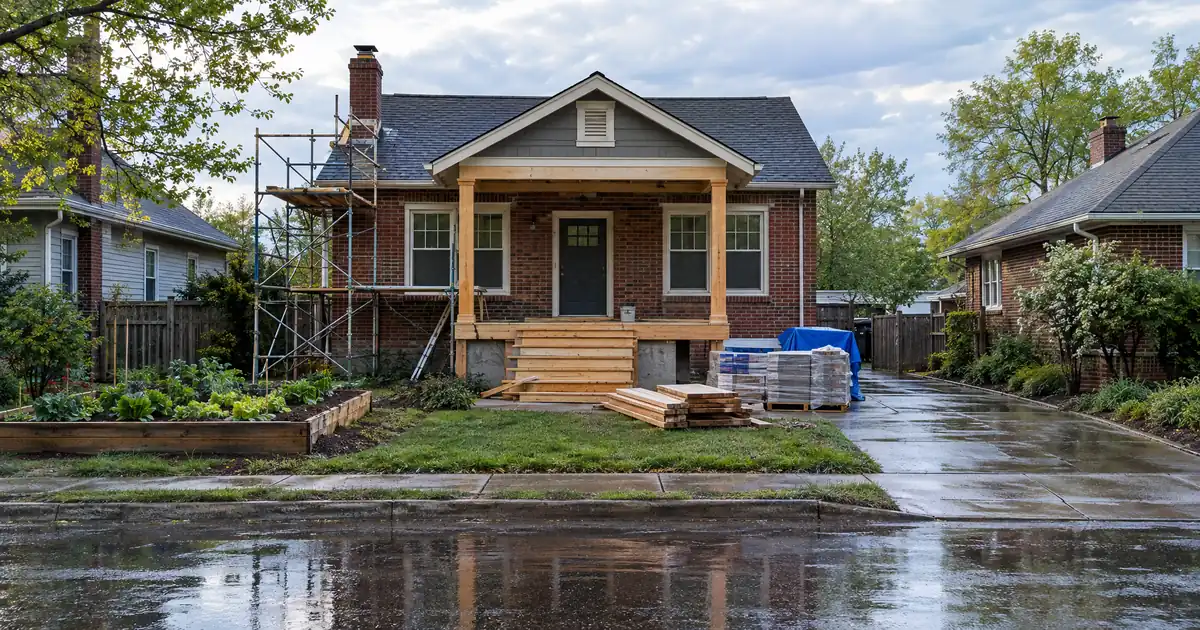
Picture a duplex bought with hard money in month zero. The rehab takes three months. A tenant moves in during month four. You are already four months into a six-month clock, with two months still to go. Every month of that wait is a month of bridge-loan carry.
Market surveys describe full BRRRR cycles of 6 to 12 months before the refinance. That matches what brokers see in practice: rehab, lease-up, seasoning, appraisal and underwriting all stack up in sequence. A delay in any one pushes the others back.
Seasoning is lender policy, not law. Programs differ, and a few lenders shorten it on smaller properties. Treat that as a bonus, not a plan.
Which Value Does the Lender Use?
Before seasoning clears, lenders generally size the loan on your cost basis. After it clears, they size it on appraised value. InvestFourMore describes the same pattern: seasoning limits the loan to the lower of appraisal or what you paid in.
| Stage | Value the lender uses | Cash back? |
|---|---|---|
| Inside seasoning window | Cost basis (price plus documented rehab) | Limited |
| After seasoning clears | Lender’s appraised value | Yes, if proceeds exceed payoff |
| Payoff-only at any stage | Enough to retire the bridge loan | None |
Your ARV never sizes the loan. If you projected a high finished value and the appraiser disagrees, the appraiser wins. The appraisal is the one number the strategy depends on. A weak one leaves your capital stuck in the property.
How Is the Cash-Out Amount Calculated?
Start with the new loan. Subtract the payoff on your bridge loan. Subtract closing costs. What remains is your cash back.
The new loan is capped at about 75% LTV on a cash-out for a standard investment rental. That ceiling applies to the appraised value after seasoning, or to cost before it. Every figure here varies by lender and program — guidelines, property type, leverage, and credit profile all apply.
Run the numbers this way, using modeled assumptions. Say a rental appraises at $300,000 after seasoning. At the 75% ceiling, the largest possible new loan is 75% of that value. If your bridge payoff plus closing costs eat most of that, little cash returns. If you bought and rehabbed with a thin margin, you may only get payoff-only.
This is why the purchase and rehab budget matter before you buy. A BRRRR that leaves 25% of value as equity cannot return every dollar. Many investors recover most of their capital, not all of it. That can still be a good deal.
Does Rent Have to Cover the New Payment?
Yes. This is the second test, and it is separate from equity. DSCR lenders look at whether the property’s rent covers the full new payment. The loan is reviewed primarily on property-level rental income covering the payment, subject to lender guidelines.
Select programs start at a 1.00 coverage floor. That means rent roughly equals the full payment. A separate select-lender path takes coverage below 1.00, with leverage and terms adjusted. Stronger ratios generally open better pricing and leverage.
Here is the trap. A bigger cash-out means a bigger loan, which means a bigger payment, which lowers your ratio. You can have plenty of equity and still fail on coverage. The strongest files clear both tests.
One more point. Clearing 1.00 does not mean positive cash flow. DSCR compares rent to PITIA only. Repairs, vacancy, management, utilities and capex sit outside it.
Credit matters too. A 620 floor exists in parts of the network, most programs want around 660, and 700 or higher unlocks the strongest leverage tiers. Reserves commonly run around 6 months of PITIA, and about 9 months on loans above $1,500,000. All of this varies by lender and file. For the full picture, see Lendmire’s complete DSCR loans guide.
What If the Appraisal Comes in Low?
You have four choices:
1. Wait. Extend the bridge loan and let time or rent growth help. This costs carry.
2. Refinance payoff-only. Retire the bridge loan with no cash back. You can often do this before seasoning clears.
3. Bring cash to close. Cover the gap between the loan and the payoff.
4. Pursue a second cash-out later. This means two sets of closing costs, plus any prepayment penalty.
| Exit path | Cash back | Main cost |
|---|---|---|
| Cash-out after seasoning | Yes, if equity allows | Carry while you wait |
| Payoff-only now | None | A second refinance later |
| Extend the bridge | None yet | Higher short-term debt cost |
A payoff-only refinance can reach higher leverage than a cash-out, but it returns nothing. If your goal is to get out of expensive short-term debt, it may be the right move. If your goal is to recycle capital into the next deal, it only solves half the problem.
Can You Skip Seasoning?
Sometimes, in narrow cases. Some lenders waive or shorten it on smaller properties. Agency programs have a delayed-financing exception for cash buyers, which caps the new loan near what you actually paid rather than ARV. It is designed for cash purchases, so a financed hard-money purchase generally does not fit. Those are agency rules, not DSCR rules, and they are mentioned here only as contrast.
Across the network, the planning assumption is simple: seasoning applies, and you build your timeline around it.
What Documents Will You Need?
Gaps here delay more refinances than most investors expect. Prepare these early:
- Scope of work, receipts and draw records for the rehab
- A signed lease, deposit verification and proof of first month’s rent
- Your bridge-loan payoff letter
- Entity documents, if the property sits in an LLC, subject to lender program eligibility
- Verified reserves
- The appraisal with a rent schedule
Missing rehab records are a common reason an appraiser struggles to credit your improvements. An improvement may support a higher appraised value, depending on comps and underwriter review. It never guarantees one.
Why BRRRR Refinances Stall
- Bridge loan too short. The term must outlast rehab, lease-up, seasoning, appraisal and underwriting. Line up the exit before you buy.
- Appraisal shortfall. The investor priced the exit off ARV, not off comps.
- Coverage miss. Cash-out size pushed the payment above what rent supports.
- Clock confusion. The investor counted from rehab completion, not from the recorded deed.
- Thin paperwork. No lease, no deposit proof or no itemized rehab list.
Work backward from the exit. Before buying, ask what the property must appraise for, what rent it must support, and how long you can afford to carry the debt. If those three answers do not line up on paper, they will not line up at closing either. If a title issue is part of your plan, Lendmire’s piece Title Change Before vs After Closing a Rental Cash-Out Refinance is worth a read.
Tax treatment varies; consult a qualified professional.
Frequently Asked Questions
Do I have to pull out every dollar for BRRRR to work?
No. With cash-out capped around 75% LTV on a standard investment rental, a thin purchase margin will leave some money in the deal. The strategy still works if the property cash flows after expenses and your remaining equity is acceptable. Final terms depend on lender guidelines, property type, leverage, and the borrower’s complete credit picture.
Does a strong DSCR let me skip the waiting period?
No. Coverage and seasoning are separate tests. Strong rent helps you pass the coverage test, but it does not shorten the clock. A larger down payment does not erase it either.
Can I use a short-term rental income to qualify?
Sometimes. Short-term rental programs typically cap cash-out at 70% LTV, and expect a 640+ score and about 12 months of hosting history. Short-term rental rules can vary by city, county, HOA and property type, so confirm local rules before relying on projected rental income.
Is there a difference between cash-out and rate-and-term here?
Yes. A rate-and-term refinance returns no cash at closing and can reach up to 85% LTV. A refinance that returns cash is a cash-out and falls under the 75% ceiling and the seasoning expectation. These specifics are subject to lender guidelines and a full review of property, leverage, and credit.
Can I refinance before six months if I just need out of the bridge loan?
Often, through a payoff-only refinance. Select lenders in the network may review earlier exits on adjusted terms. Expect to pay closing costs again if you later do a cash-out.
If you are buying or refinancing a rental property and want to see how the numbers work, Lendmire can help you compare DSCR loan options based on the property income, credit profile, leverage and investor goals. Lendmire is a mortgage broker arranging DSCR investor loans through select lenders in a wholesale network covering 41 markets, including Washington, D.C. Qualification is subject to lender guidelines. This is not a commitment to lend.
A deeper walk-through of investment-property equity extraction lives in Lendmire’s guide to cash-out refinance on an investment property.
About Lendmire
Lendmire — NMLS# 2371349 — is a mortgage brokerage specializing in DSCR investor loans, helping arrange financing across 41 markets, including Washington, D.C., through wholesale and investor-lending channels. The model centers on property-level rental income reviewed by the lender rather than W-2 documentation, subject to lender guidelines, suiting entity-owned and multi-property investors. Lendmire holds Scotsman Guide Top Mortgage Workplace recognition for 2025 and 2026.
Get Started
Ready to find the right loan for you?
In about two minutes you can review financing options available for your investment property. No commitment required.
Informational only. Not a Loan Estimate, approval, or commitment to lend. Program availability and eligibility are subject to lender guidelines, credit approval, property review, and underwriting.
References
1. Advice Only: BRRRR method glossary
2. SellToHomePros: BRRRR strategy framework
3. InvestFourMore: BRRRR method
This article is part of Lendmire’s investment property cash-out refinance program — full qualification details, guidelines, and scenarios live on the program page.
Related reading: How to Refinance a Ten-House Rental Pool Into One DSCR Loan · Is There a Rescission Period on an Investor Cash-Out Refinance? · How Much Equity a DSCR Cash-Out Releases on a 2-4 Unit Rental
Brandon Miller
Founder & CEO, Mortgage Loan Originator, Lendmire LLC
- Mortgage Loan Originator · NMLS# 1129696 · Verify on NMLS Consumer Access
- North Carolina Real Estate Broker · License# 343312 · Verify on NCREC
- North Carolina Insurance Producer · License# 19053198 · Property, Casualty, Life, Health · Verify on NAIC SBS
- Lendmire LLC · Firm NMLS# 2371349 · Verify firm licensure
Compliance and disclosures. Lendmire (NMLS# 2371349) is a licensed mortgage broker and is not a direct lender, depository institution, financial advisor, or tax professional. Content in this article is general market analysis and educational information — not financial, legal, or tax advice for any specific situation. Lendmire does not guarantee loan approval; every transaction is subject to underwriting by the funding lender. Mortgage pricing and loan program guidelines are subject to change at any time without notice and vary by borrower characteristics, property type, and state regulations. Lendmire complies with Equal Housing Opportunity. Licensure verification: NMLS Consumer Access.